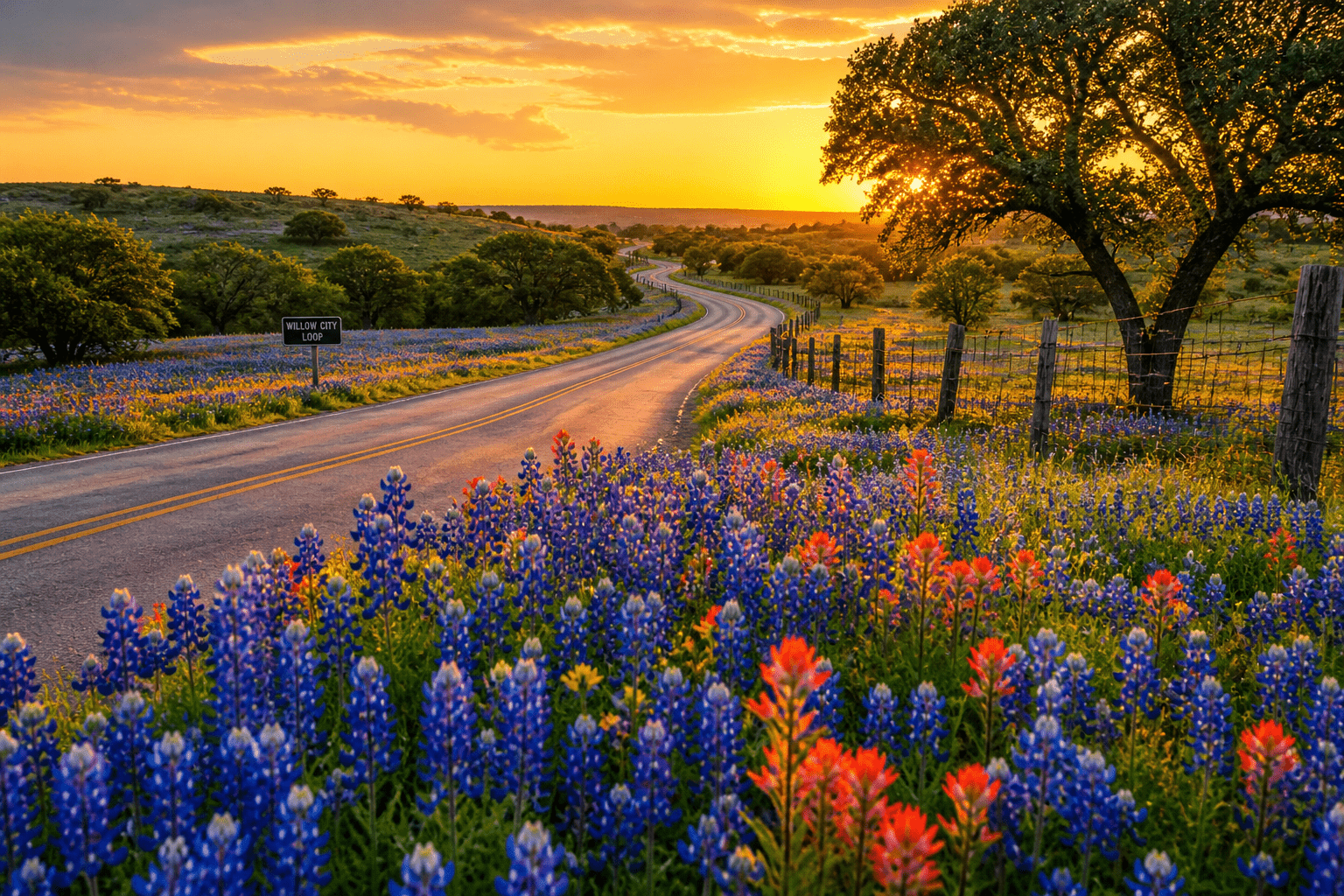
Texas country road surrounded by blooming bluebonnets and wildflowers at sunset

Hill Country Drives Bursting with Bluebonnets

If you want that classic Texas wildflower moment, the Hill Country delivers every single time. Around Fredericksburg and Llano, you’ll find rolling hills covered in bluebonnets, Indian paintbrush, and coreopsis like something out of a postcard.

The Willow City Loop is one of the best-known wildflower routes, and for good reason. During peak bloom, usually late March through mid-April, the entire drive lights up with color. That said, go early in the morning or on a weekday if you can, because folks come from all over Texas to see it.

As you cruise those backroads, slow down and take it in. You’ll pass ranch gates, creeks, and open land that feels untouched. It’s the kind of drive where you don’t need a destination, just a full tank and a little patience.

Ennis Bluebonnet Trails That Locals Swear By

Now if you want something a little more organized, head toward Ennis. This town doesn’t play around when it comes to wildflower season. Their official bluebonnet trails stretch over 40 miles, with clearly marked routes that make it easy to catch the best blooms.

The timing here usually peaks in April, and the variety is impressive. You’ll see fields packed with bluebonnets, sure, but also evening primrose and Indian blanket mixed in.

Every year, Ennis hosts the Ennis Bluebonnet Trails Festival, which brings in vendors, live music, and plenty of small-town charm. It can get busy, but honestly, that energy is part of the experience.

Coastal Prairie Blooms Near the Gulf

A lot of people forget about the Texas coast, but it quietly puts on one of the prettiest shows in the state. Around Brenham and Chappell Hill, you’ll find wildflowers stretching across open prairie with wide skies overhead.

This area tends to bloom a little earlier than the Hill Country, so it’s a good option if you’re trying to catch the season before it peaks elsewhere. Plus, the roads are flatter and easier to drive, which makes it perfect for a relaxed day trip.

And let’s be real, you’re not far from a stop at Blue Bell Creameries, which might be the best reward after a long drive.

Big Bend’s Rugged Desert Surprise

Out west, things look a little different—but that doesn’t mean less beautiful. Big Bend National Park comes alive with desert blooms when conditions are right. Think cactus flowers, ocotillo, and bright bursts of color against rough desert terrain.

The timing here depends heavily on rainfall, so it’s not as predictable. Still, when it hits, it’s something you won’t forget. Fewer crowds, wide open views, and that quiet desert feel make it worth the trip.

If you’re up for a longer drive, this route feels more like an adventure than just a scenic cruise.

Related: Texas Routes That Tourists Usually Skip

Tips for Catching Peak Wildflower Season

Timing matters more than anything. In most parts of Texas, peak bloom runs from late March through April, but weather can shift that window a bit. A warm winter usually means earlier blooms, while cooler temps can push things back.

Try to go midweek if you can, especially on popular routes. Bring water, watch for traffic when pulling over, and never step into private property just to get a picture. Those fields might look open, but a lot of them are still working land.

And one more thing—leave the flowers where they are. Texas wildflowers are part of what makes these drives special, and they stick around longer when folks respect them.

Why These Routes Never Get Old

There’s just something about a Texas spring that hits different. Maybe it’s the color after a long winter, or maybe it’s the way these drives slow you down for a bit.

Either way, these wildflower routes aren’t just about the views. They’re about taking the long way home, rolling the windows down, and remembering that sometimes the best parts of Texas aren’t the ones you plan.

Lisa Crow contributed to this article. She is a true crime junkie and lifestyle blogger based in Waco, Texas. Lisa is the Head of Content at Gigi’s Ramblings and Southern Bred True Crime Junkie. She spends her free time traveling when she can and making memories with her large family which consists of six children and sixteen grandchildren.
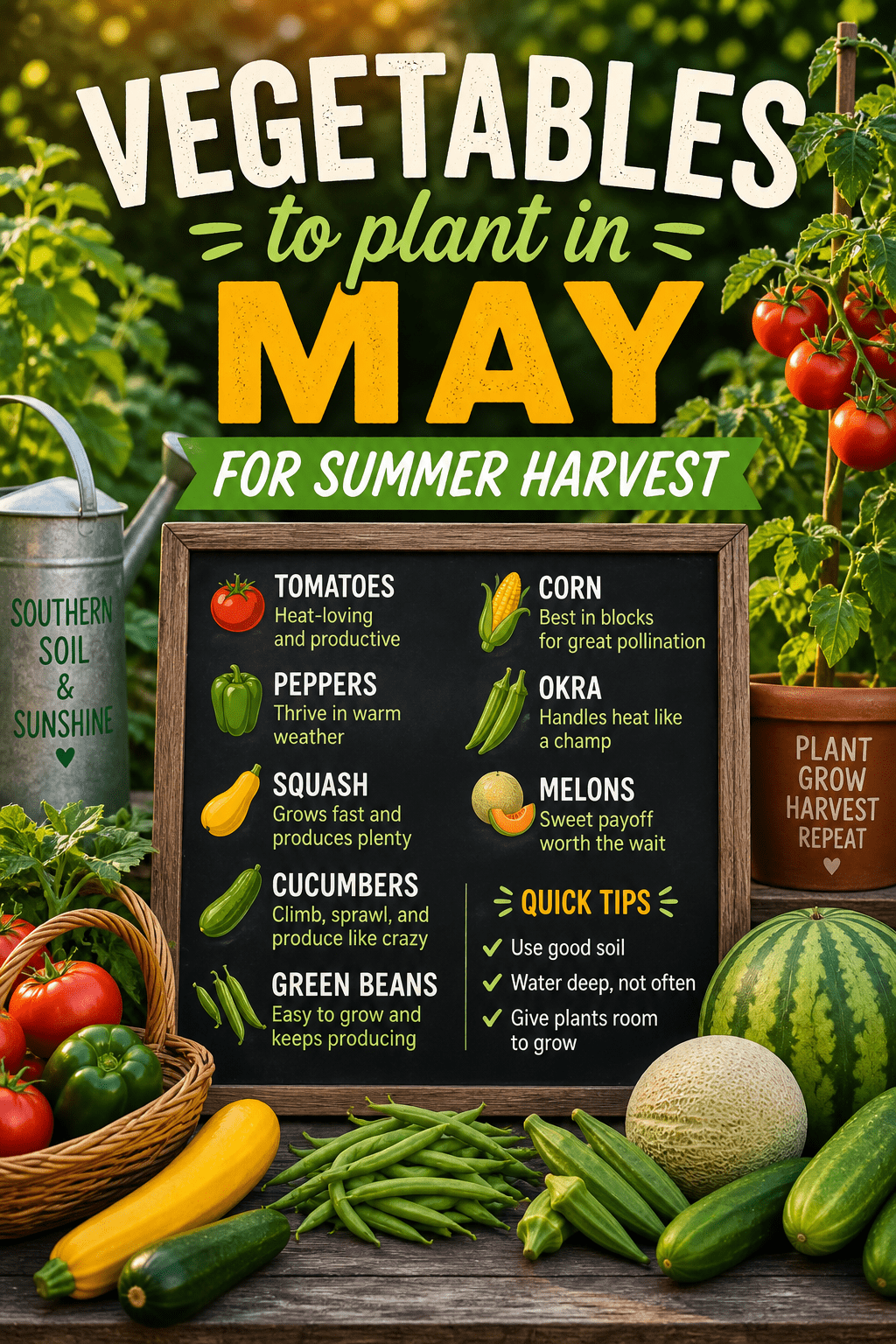

Colorful garden scene with baskets of fresh vegetables including tomatoes, peppers, squash, cucumbers, green beans, corn, watermelon, cantaloupe, and okra, with bold text reading “Vegetables to Plant in May for Summer Harvest” and a rustic sign that says “Plant Now. Water Well. Harvest Big.”

If you’re in Texas or anywhere with a long, hot growing season, May is go-time. The soil is warm, the sun is sticking around longer, and just about everything is ready to take off if you plant it now. So instead of overthinking it, let’s get straight into what actually thrives when you stick it in the ground this time of year.

Tomatoes That Can Handle The Heat

First up, you already know tomatoes deserve a spot in your garden. By May, you want varieties that won’t throw a fit once that summer heat rolls in. Look for heat-tolerant types like Roma, cherry, or beefsteak.

Now here’s the thing, tomatoes need full sun and consistent watering or they’ll start acting dramatic. Go ahead and mulch around the base to keep that soil from drying out too fast. Also, give them support early so you’re not wrestling vines later.

Related: DIY Gardening: Tips for Starting Your Spring Garden

Peppers That Thrive In Southern Summers

Peppers absolutely love May planting. Bell peppers, jalapeños, serranos, all of them do just fine once that heat kicks up.

While tomatoes can get a little fussy, peppers are a bit more forgiving. Still, they need sunlight and warm soil to really get moving. If your nights are staying above 60, you’re in business. Keep them watered, but don’t drown them. They like a steady routine, not a swamp.

Squash That Grows Like It Means It

Squash is one of those vegetables you plant once and then suddenly you’ve got more than you know what to do with. Zucchini and yellow squash both do great when planted in May.

Give them space, because they will spread whether you planned for it or not. Also, check them often. If you let squash sit too long, it turns into something closer to a baseball bat than dinner.

Cucumbers For Easy Summer Harvests

Cucumbers are another solid May choice. They grow fast, climb well, and produce like crazy when they’re happy.

You can let them sprawl or train them up a trellis if you want to save space. Either way works. Just make sure they get plenty of water, especially once they start flowering. Dry cucumbers turn bitter, and nobody wants that.

Green Beans That Keep Producing

Green beans are about as low-maintenance as it gets. Bush beans or pole beans, take your pick.

Plant them in May and you’ll be picking before you know it. Then, if you stay on top of harvesting, they’ll keep producing all summer. It’s one of those crops where the more you pick, the more you get.

Corn If You’ve Got The Space

Now, if you’ve got room, corn is worth it. It does best when planted in blocks instead of rows so it can pollinate properly.

Corn needs full sun, good soil, and regular watering. It’s not the most forgiving plant on this list, but when it works, it really works. Fresh corn straight off the stalk hits different.

Okra That Laughs At The Heat

If you live in the South, okra is about as reliable as it gets. It doesn’t just tolerate heat; it thrives in it.

Plant it in May and by the time summer is in full swing, it’ll be growing like it owns the place. Just keep picking it while it’s tender. Wait too long, and it turns tough quick.

Melons For A Sweet Payoff

Cantaloupe and watermelon both do well when planted in May, especially in warmer climates.

They need space, sunshine, and patience. You’re not getting instant results here, but once they start producing, it’s worth every bit of the wait. Make sure they’ve got room to spread because those vines will take over if you let them.

Related: Rooted in Spring: Gigi’s Guide to Starting Your Garden Right

A Few Quick Tips To Keep It All Growing

Now before you run out there and plant everything at once, keep a couple things in mind. First, your soil matters more than anything. If it’s dry and lifeless, your plants will struggle no matter what you put in.

Next, water deep instead of often. That helps roots grow stronger and handle the heat better. And finally, don’t overcrowd your plants. It’s tempting, but giving them space makes a huge difference once they start growing.

Wrapping It Up

May is one of the best times to get a summer garden going, especially down here where the heat sticks around. If you stick with vegetables that actually like warm soil and long days, you’re setting yourself up for a solid harvest.

So grab what you can, get it in the ground, and let that garden do its thing. Before long, you’ll be bringing in more than you expected and probably giving some away to the neighbors too.

Lisa Crow contributed to this article. She is a true crime junkie and lifestyle blogger based in Waco, Texas. Lisa is the Head of Content at Gigi’s Ramblings and Southern Bred True Crime Junkie. She spends her free time traveling when she can and making memories with her large family which consists of six children and sixteen grandchildren.

Kentucky Derby party setup with mint juleps, finger sandwiches, roses, and hat with racetrack in background

A Little History Before the Race

The Kentucky Derby has been running since 1875 at Churchill Downs in Louisville, and not much about the heart of it has changed. It is still a mile and a quarter, still three-year-old thoroughbreds, and still over in about two minutes flat. What has grown over the years is everything around it. The crowds got bigger, the hats got bolder, and the traditions stuck.

You have the garland of roses waiting for the winner, the crowd singing “My Old Kentucky Home,” and the kind of buildup that makes even casual viewers pay attention. It is one of the few sporting events where the atmosphere matters just as much as the race itself.

Derby Fashion Is Half the Fun

Even if you are watching from your couch, Derby Day is a good excuse to lean into it a little. Big hats, bright colors, floral prints, seersucker, all of it fits right in.

Some folks go all out, others keep it simple, but either way, it adds something to the day. Around here, it is usually a mix of cute but comfortable. No need to be fancy, just something that feels like spring and a little bit festive.

Related: Hosting a Kentucky Derby Party

Do Not Skip the Oaks

If you missed the Kentucky Oaks last night, that is the race for the fillies, and it is always worth watching. It has its own energy, a little different from Derby Day, but just as competitive. The crowd shows up in pink, the stakes are high, and more often than not, you see some serious talent on that track.

It also gives you a good feel for how the weekend is shaping up before the main event even starts.

What We’re Eating and Drinking

We are keeping things easy this year. Finger sandwiches are already made, and they are perfect for a day like this. No fuss, no heavy cooking, just grab one and keep watching.

Mint juleps are on standby because that is just part of the deal. Cold, a little sweet, and they go down easy while you are sitting there waiting on the race.

Stylish group in Derby fashion with wide-brim hats, floral dresses, and suits at racetrack holding mint juleps

Horses Everyone’s Talking About

There are always a few names that come into Derby Day with a lot of attention. The favorites usually have strong runs leading up to this, good speed figures, and a whole lot of eyes on them. That also means the pressure is on, and sometimes that is when things go sideways.

Then you have the underdogs. The ones that are not getting as much attention but have just enough in them to shake things up. Every year, at least one horse surprises people, and that is part of what makes it fun to watch.

My Picks This Year

Now for my own lineup. I am going to go ahead and admit it, I will be rooting for Great White on the side. I cannot help it. I have always liked the grays and the roans. They catch your eye right away, and I end up pulling for them every single time. Realistically, he is a long shot, but that has never stopped me before.

For my actual pick, I am going with Further Ado. He has been looking solid coming into this, and he feels like a smart choice if you are trying to back someone who can really compete down the stretch.

Why Derby Day Still Works Every Year

There is a reason people keep coming back to this race year after year. It is quick, it is unpredictable, and you do not have to be an expert to enjoy it. You can show up for the food, stay for the race, and still have a good time.

It is one of those traditions that does not ask much from you, but still gives you something to look forward to.

Settling In for the Run

At this point, everything is ready. Food is out, drinks are poured, and picks are made. Now it is just about watching it all play out and seeing if the favorites hold on or if one of those underdogs makes a move when it counts.

Either way, it is Derby Day, and that is reason enough to sit down and enjoy it.

Lisa Crow contributed to this article. She is a true crime junkie and lifestyle blogger based in Waco, Texas. Lisa is the Head of Content at Gigi’s Ramblings and Southern Bred True Crime Junkie. She spends her free time traveling when she can and making memories with her large family which consists of six children and sixteen grandchildren.
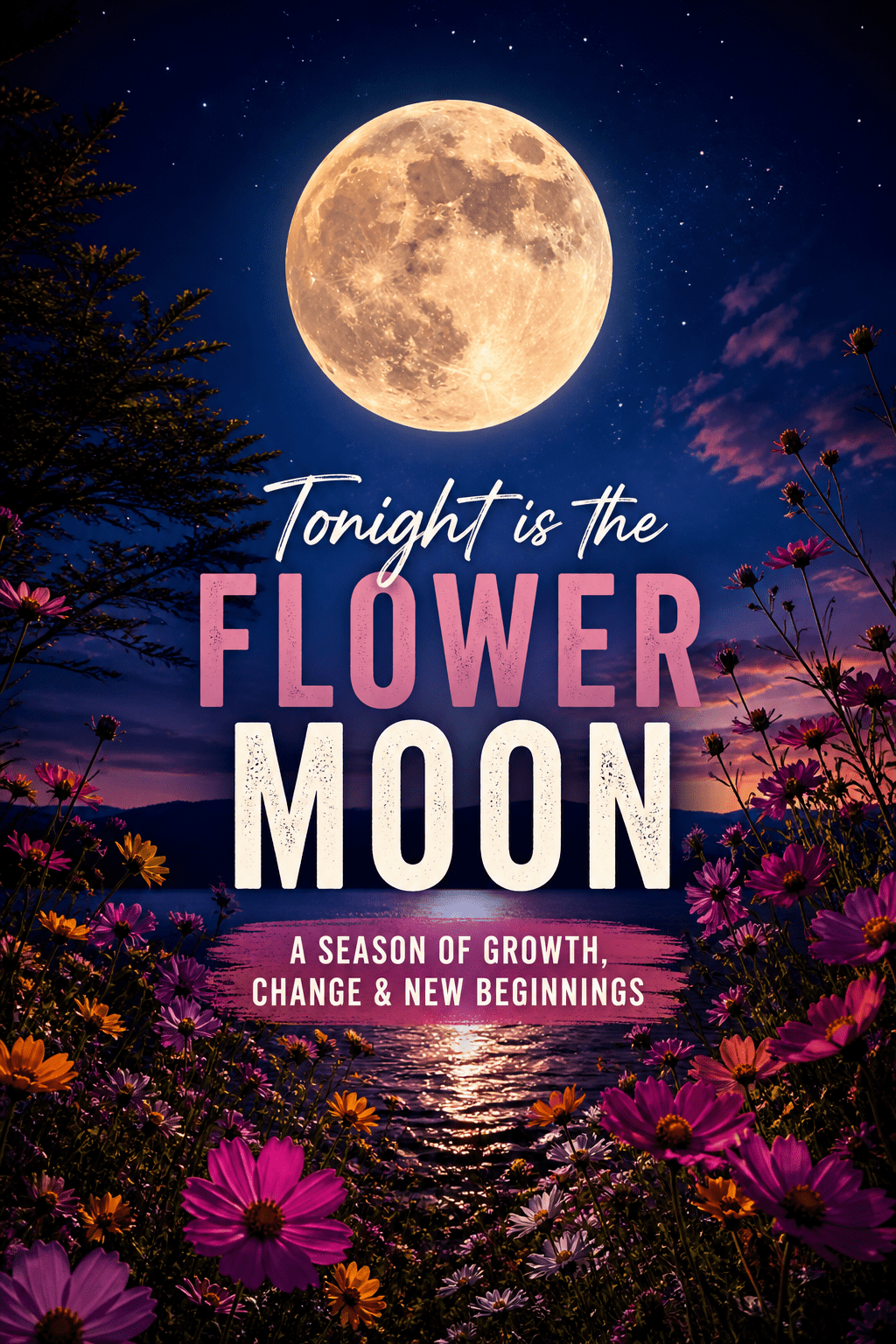
Bright full Flower Moon glowing over a calm lake at night, surrounded by blooming wildflowers, with bold text reading “Tonight is the Flower Moon – A Season of Growth, Change and New Beginnings.”

The Flower Moon is the full moon that rises in May, named for the explosion of wildflowers that blanket the land this time of year. Indigenous tribes gave each full moon a name tied to nature, and this one reflects growth, color, and life in full swing.

Unlike some moons tied to folklore or superstition, the Flower Moon feels a little more down-to-earth. It marks a season where things are blooming, warming up, and stretching toward something new.

Why Tonight’s Flower Moon Feels Different

Even if you’re not big on moon phases, there’s something about a full moon that shifts the energy. Tonight’s Flower Moon carries that classic bright, glowing presence, but it also lands right in the heart of a season focused on movement and change.

Because of that, people tend to feel a little more restless or reflective. You might notice your mind wandering, your emotions sitting closer to the surface, or a sudden urge to start something new.

That’s not random. This time of year naturally pushes us forward.

Related: Do Full Moons Really Influence Crime Rates?

The Meaning Behind the Flower Moon

At its core, the Flower Moon is about growth. Not the forced kind, but the kind that happens when the conditions are finally right.

It represents:

  • Fresh starts that actually feel doable
  • Letting go of what didn’t take root
  • Recognizing how far you’ve come without realizing it

While January gets all the attention for “new beginnings,” May is where those intentions either bloom or fade. This moon is a checkpoint, not a starting line.

Related: The Pink Moon is Here: Why April’s Full Moon is the Internet’s Favorite Spectacle

Simple Ways to Enjoy the Flower Moon Tonight

You don’t need a full ritual or anything fancy to appreciate it. In fact, the simpler, the better.

Step outside for a few minutes and just look up. Let your eyes adjust and take it in without distractions.

If you’re feeling reflective, sit quietly and think about what’s changed in your life over the past few months. Not what you planned, but what actually happened.

You can also write a few thoughts down. Nothing structured, just whatever comes to mind. Sometimes that’s where the clarity shows up.

If you’re more of a “do something” person, light a candle, open a window, or just sit on the porch for a bit. Let the night air do its thing.

What the Flower Moon Reminds Us Of

More than anything, the Flower Moon is a reminder that growth doesn’t always look dramatic. Sometimes it’s subtle. Sometimes it’s messy. Sometimes you don’t even notice it until you stop and look back.

Still, it’s happening.

Tonight is less about chasing meaning and more about noticing what’s already there. The progress, the shifts, the quiet changes that didn’t need attention to take root.

And if nothing else, it’s a good excuse to slow down for a minute and enjoy a sky that’s doing its thing whether we’re paying attention or not.

Lisa Crow contributed to this article. She is a true crime junkie and lifestyle blogger based in Waco, Texas. Lisa is the Head of Content at Gigi’s Ramblings and Southern Bred True Crime Junkie. She spends her free time traveling when she can and making memories with her large family which consists of six children and sixteen grandchildren.
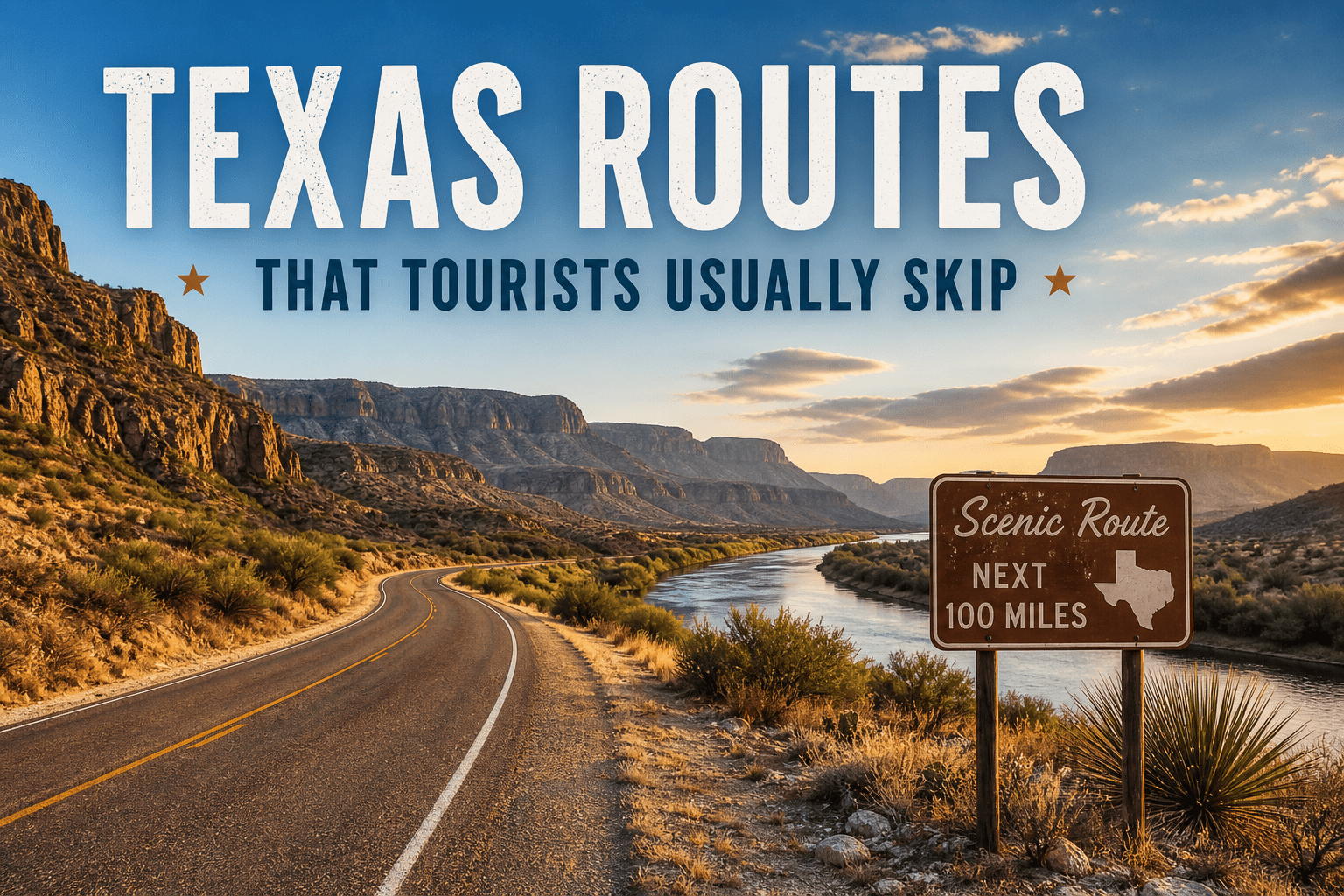
Wide scenic view of a winding Texas highway running alongside a river through rugged desert cliffs at sunset, with a roadside sign reading “Scenic Route Next 100 Miles” and bold overlay text “Texas Routes That Tourists Usually Skip.”

Most folks rolling through Texas stick to the same big-name stops. They hit the interstates, snap a photo or two, and keep it moving. But if you slow it down just a little, take a turn off the obvious path, you’ll find some of the best parts of this state hiding in plain sight. These are the routes that don’t make the brochures but leave a mark on you anyway.

Highway 16 Through the Hill Country

If you want that real-deal Texas scenery without fighting crowds, take Highway 16 running through the Hill Country between Fredericksburg and Kerrville.

Instead of tour buses and packed tasting rooms, you’ll get winding roads, low water crossings, and stretches where the only thing out there is you and the land. Along the way, you’ll pass roadside stands selling peaches in season, old dance halls that still open on weekends, and views that don’t need a filter.

Then again, it’s not flashy—and that’s exactly why it’s worth it.

Related: Seasonal Bucket List for Spring in Texas

Ranch Road 337 Loop

Now, if you’re the kind that enjoys a drive with a little edge to it, Ranch Road 337 out near Leakey is about as good as it gets.

This stretch twists and turns through canyons and over ridges like it’s showing off. One minute you’re climbing up high with a wide-open view, the next you’re dropping down into shaded valleys. It’s popular with motorcyclists for a reason, but you don’t have to be on two wheels to appreciate it.

Even better, there are plenty of pull-offs where you can stop, breathe, and take it all in without a crowd pressing in behind you.

The Forgotten Stretch of Route 66

Most people don’t realize Texas even has a piece of Route 66, and that’s exactly why it stays quiet.

Out in the Panhandle near Shamrock, you can drive a stretch that still feels stuck somewhere between then and now. Old gas stations, faded signs, and motels that have seen better days line the road—but that worn-down look tells a story.

It’s not polished, and it’s not trying to be. Still, that’s part of the charm. You’re seeing history as it really is, not cleaned up for a postcard.

Highway 90 Along the Border

Running west out of Del Rio, Highway 90 gives you a side of Texas most travelers never touch.

This road follows close to the border, stretching through wide, open country that feels almost untouched. You’ll pass through places like Langtry, where time seems to slow down whether you like it or not.

There’s a quiet out here that hits different. Fewer people, fewer stops, and a whole lot of sky. It’s not for folks looking for constant entertainment—but if you want space to think, you’ll find it.

FM 170 Through Big Bend Ranch

If you’re willing to go a little out of your way, FM 170 between Lajitas and Presidio might be one of the most underrated drives in the entire state.

This road hugs the Rio Grande, cutting through Big Bend Ranch State Park with views that don’t even look real half the time. Desert cliffs rise up on one side while the river winds along the other.

It’s remote, no doubt about it. Gas up before you go, and don’t expect much in the way of services. But what you get instead is something a lot harder to find—true quiet and scenery that hasn’t been overrun.

Highway 87 to the Coast

Everybody talks about the big beach towns, but Highway 87 down toward Port Bolivar gives you a different kind of coastal drive.

This stretch runs narrow and close to the Gulf, where the road feels like it’s barely holding onto the land. On one side, you’ve got the water rolling in. On the other, marshland stretching out as far as you can see.

It’s not built up, and it’s not fancy. Still, that’s what makes it feel real. You’re not just visiting—you’re passing through something that hasn’t been completely turned into a destination.

Why These Roads Stick With You

The thing about these routes is they don’t try to impress you. They’re not packed with attractions or lined with things begging for your attention.

Instead, they give you space. Space to notice things, to slow down, and to actually experience where you are instead of rushing past it.

And honestly, that’s what most folks miss when they stick to the usual paths. Texas isn’t just in the big cities or the famous stops—it’s in the miles between them.

Lisa Crow contributed to this article. She is a true crime junkie and lifestyle blogger based in Waco, Texas. Lisa is the Head of Content at Gigi’s Ramblings and Southern Bred True Crime Junkie. She spends her free time traveling when she can and making memories with her large family which consists of six children and sixteen grandchildren.

Dark, rain-soaked small town main street at night with glowing streetlights, a water tower in the distance, and bold text reading “Small Town Cases That Never Fully Closed,” alongside a missing person poster and police tape creating a tense, eerie true-crime atmosphere.

Some cases never leave the conversation, no matter how much time passes. Take Missy Bevers out of Midlothian. She was killed inside a church in 2016, and the surveillance footage of someone walking around in tactical gear still gets picked apart to this day. Despite all the attention, no arrest has ever stuck, and people still argue over who that person really was.

Then there’s Brandon Swanson, who disappeared in 2008 after a late-night phone call with his parents. He said he was walking toward the lights in the distance, then suddenly the call dropped. Search teams found almost nothing, and even now, folks question whether they were ever looking in the right place to begin with.

When “Closed” Doesn’t Mean Finished

Some cases technically reach a conclusion, but it doesn’t settle much. The murder of Ken Rex McElroy in Skidmore is a perfect example. He was shot in broad daylight in front of a crowd of people, and not a single person claimed to see who did it. Law enforcement closed the case, but everyone knows that silence was a choice.

Situations like that leave a different kind of mark. The paperwork may say “unsolved,” but the town has already decided what happened—and why nobody ever spoke up.

The Details Nobody Could Explain

Then you’ve got cases like Asha Degree. She vanished in 2000 after leaving her home in the middle of the night. Witnesses reported seeing her walking along a highway in the rain, which alone raises questions that never got clear answers. Despite renewed efforts over the years, the case still hangs on those same strange details.

It’s those pieces—the ones that don’t quite fit—that keep people revisiting the story long after the headlines fade.

How Time Changes the Story

With time, these cases start shifting. Look at D.B. Cooper, who hijacked a plane in 1971, took ransom money, and vanished. While not exactly a small-town case, the way his story has evolved shows how mystery turns into legend. Every few years, a new theory pops up, and people latch onto it like it might finally be the answer.

In smaller communities, that same pattern plays out on a more personal level. The difference is, the people involved aren’t just names—they’re neighbors, classmates, or someone’s cousin.

Related: The Kind of Stories You Only Hear on a Front Porch

The Weight of Silence

Cases like McElroy’s prove how powerful silence can be, but it shows up in quieter ways too. In many small towns, there’s always talk about someone who “knew more than they said.” Whether that’s true or not almost doesn’t matter anymore—it becomes part of the story itself.

And once that idea takes hold, it’s hard to shake. Every unanswered question starts pointing back to the same thing: somebody knows something.

Why They Still Matter

These aren’t just mysteries for entertainment—they stick because they never gave people a clean ending. Families are left in limbo, communities carry the tension, and every so often, something new brings it all back to the surface.

Even years later, tips still come in on cases like Asha Degree’s or Missy Bevers’. That alone tells you they’re not really over—not to the people paying attention.

The Line Between Truth and Legend

Over time, the facts stay the same on paper, but the way people talk about them changes. Stories grow, details get debated, and theories take on a life of their own. What’s official and what’s believed start drifting further apart.

That’s where these cases live now—in that space between documented truth and local memory.

And It Never Fully Leaves

In the end, that’s what makes these cases different. They don’t just sit in a file somewhere—they linger. In conversations, in suspicions, and in the quiet understanding that some things never really got answered.

And in a small town, that kind of thing doesn’t fade. It just becomes part of the place itself.

Lisa Crow contributed to this article. She is a true crime junkie and lifestyle blogger based in Waco, Texas. Lisa is the Head of Content at Gigi’s Ramblings and Southern Bred True Crime Junkie. She spends her free time traveling when she can and making memories with her large family which consists of six children and sixteen grandchildren.

Close-up promotional image of a woman in her 40s sitting at a desk in soft natural light, looking thoughtful and calm. On the left side, bold text reads “HORMONE TESTING PANELS FOR WOMEN OVER 40” in a clean, modern layout. The background is bright and minimal with a subtle green plant for a natural, wellness-focused feel, and blood test tubes are slightly visible in the foreground.

When you hit your 40s, your body starts shifting in ways that don’t always come with a clear warning label. Energy changes, sleep gets lighter or more broken, moods can swing faster, and your cycle might start acting unpredictable. That’s usually when hormone testing stops being “optional curiosity” and starts being useful information.

Why Hormone Testing Matters At This Stage

Hormones in your 40s don’t just gently decline. They fluctuate. Estrogen, progesterone, and even testosterone can move up and down in patterns that feel random day to day.

That’s why symptoms often feel inconsistent. One week you’re fine, the next you’re exhausted, anxious, or just off. Testing helps connect those dots instead of guessing.

On top of that, thyroid changes and insulin resistance often start showing up around this age too, which can intensify everything else going on.

Core Hormones Most Panels Check

Most standard hormone panels focus on a few key hormones that give a general snapshot of what’s happening.

Estrogen (Especially Estradiol)

Estrogen affects mood, sleep, skin, and cycle regularity. In your 40s, it doesn’t just decline steadily. It can spike and drop, which is why symptoms can feel unpredictable.

Progesterone

Progesterone helps balance estrogen and supports calm, sleep, and cycle stability. When it drops, it can show up as anxiety, irritability, or restless sleep.

Testosterone

Women need testosterone too. It plays a role in energy, motivation, libido, and muscle tone. Low levels can feel like fatigue or just a general lack of drive.

Thyroid Testing Is Just As Important

A lot of people focus only on sex hormones and miss the thyroid entirely, which is a mistake.

A solid thyroid panel usually includes:

  • TSH
  • Free T3
  • Free T4
  • Thyroid antibodies (when needed)

Even small thyroid shifts can feel big. Weight changes, brain fog, hair thinning, and low energy often trace back here.

Blood Sugar And Insulin Markers

This part gets ignored too often, but it matters a lot in your 40s.

Common tests include:

  • Fasting glucose
  • Fasting insulin
  • Hemoglobin A1C

When insulin is out of balance, it can mess with energy, cravings, weight, and even hormone stability overall.

Optional But Helpful Add-On Tests

Depending on symptoms, some providers also check a few extras.

Cortisol

This is your stress hormone. When it’s off, you might feel tired but wired, or completely drained in the afternoon.

DHEA

Supports energy and hormone production. It tends to decline with age and long-term stress.

Vitamin D

Not technically a hormone, but it behaves like one in the body. Low levels can affect mood, immunity, and hormone balance.

Timing Actually Matters

Hormones shift throughout the month, so when you test can change the results.

For example, progesterone is most useful when tested about a week after ovulation. If timing is off, the numbers can look misleading even if something is actually wrong.

Related: Perimenopause Is Kicking My Ass: A Survival Story 11 Years in the Making

What These Tests Really Help You Do

Hormone testing isn’t about chasing perfect numbers. It’s about spotting patterns.

Once you see what’s high, low, or fluctuating, you can make better decisions about diet, stress, sleep, supplements, or medical treatment if needed.

Final Thought

Your 40s aren’t about everything going wrong. They’re about your body changing the rules. Hormone testing just helps you understand those new rules instead of guessing every time something feels off.

Lisa Crow contributed to this article. She is a true crime junkie and lifestyle blogger based in Waco, Texas. Lisa is the Head of Content at Gigi’s Ramblings and Southern Bred True Crime Junkie. She spends her free time traveling when she can and making memories with her large family which consists of six children and sixteen grandchildren.

A warm, nostalgic small-town main street at golden sunset, with a quiet empty road lined by old storefronts and a distant water tower. In the foreground, a wooden rocking chair sits on a porch next to a small table with a coffee cup and flowers, creating a peaceful rural life mood. Bold text over the image reads “EVERY SMALL TOWN HAS A STORY” and “YOU WON’T FIND ONLINE… Let’s Discover This One,” emphasizing hidden small-town stories and offline history.

Every small town has a story you won’t find online, and that’s just the truth of it. You can search all day long, scroll through articles, and dig through history pages, but the real small-town stories usually live in people’s voices, not search engines. They come out slow, usually sitting on a porch, maybe over coffee or sweet tea, when somebody finally decides to talk.

That’s where you hear about old family feuds, strange happenings down dirt roads, and the kind of rural life memories that never make it into neat little summaries. Small-town America doesn’t hand you its history in bullet points. It drips it out in conversation.

Related: The Charm of Porch Sittin’

Small-Town America Moves Slower for a Reason

Out in rural life, things don’t move at internet speed. That slower pace is exactly why the stories last so long. When life isn’t rushing, people notice more. They remember more. And they pass it down instead of posting it.

Small-town America has always worked like that. You don’t just “read” the history, you live near it. It’s in the names of roads, the empty buildings on Main Street, and the way older folks talk like they’ve already seen every version of the world come and go.

And because of that, a lot of small-town stories stay off the internet completely. They don’t get archived. They get remembered.

Everybody Knows Everybody, and That Changes Everything

One thing about small towns is how connected everybody is. In rural life, you don’t really get to be anonymous. Folks know your family, your business, and sometimes your business before you even do.

That kind of closeness creates a different kind of storytelling. It’s not just “what happened,” it’s “who it happened to” and “who their people are.” That’s why small-town stories carry weight. They’re tied to real names, real reputations, and real consequences.

And honestly, that’s also why a lot of those stories never make it online. Some things just stay local on purpose.

The Local History Nobody Bothered to Write Down

Every small town has pieces of hidden history that never made it into books or websites. Maybe it was a storm nobody talks about anymore, or a business that once held the whole place together. Sometimes it’s just a house on the edge of town that everybody avoids, but nobody explains.

That’s the thing about rural life. Not everything gets documented, but that doesn’t mean it didn’t matter.

So when people say “there’s nothing to do in small town America,” they’re usually missing the point. The stories are still there. They’re just not packaged for the internet. You’ve got to ask the right person, at the right time, and be willing to listen longer than you planned.

Related: Why Some Small Towns Have the Craziest Mysteries

Why Small-Town Stories Stick With You

Small-town stories hit different because they feel close. Even if you didn’t grow up there, you can picture it. A gravel road, a faded sign, a place where time feels like it’s moving sideways instead of forward.

That’s why people keep coming back to rural life themes in books, blogs, and conversations. There’s something real in it. Something unpolished. Something you can’t fake.

And once you’ve heard enough of those stories, you start to realize something simple. Small-town America isn’t empty of history. It’s just full of stories that chose to stay spoken instead of posted.

Lisa Crow contributed to this article. She is a true crime junkie and lifestyle blogger based in Waco, Texas. Lisa is the Head of Content at Gigi’s Ramblings and Southern Bred True Crime Junkie. She spends her free time traveling when she can and making memories with her large family which consists of six children and sixteen grandchildren.

Homesteader feeding chickens at sunrise while holding a basket of fresh eggs, with a cow grazing nearby, a pot cooking over an open fire, and a rustic farm scene in the background.

Early Mornings Are Non-Negotiable

Living off the land starts early, whether you like it or not. Instead of alarms, it’s usually animals, sunlight, or the simple fact that there’s too much to get done. Right away, you’re feeding livestock, checking water sources, and walking the property to make sure nothing went wrong overnight.

Because mornings set the tone, skipping tasks isn’t really an option. If you fall behind early, the rest of the day becomes harder to manage. So, even when you’re tired, you get up and handle it.

Food Takes Real Work

At first, growing your own food sounds simple. However, the reality is constant effort. You’re planting, watering, weeding, and dealing with pests on a regular basis. Then, once crops are ready, you still have to harvest and preserve them.

In addition, raising animals for food comes with its own responsibilities. Feeding, cleaning, and monitoring their health becomes part of your routine. As a result, every meal carries a deeper appreciation because you know exactly what went into it.

Maintenance Never Really Stops

Things break all the time, and that’s just part of the deal. Fences get damaged, tools wear out, and equipment doesn’t always cooperate. Because of this, a good portion of your day is spent fixing or improving something.

Over time, you naturally pick up skills. You learn how to repair what you can instead of replacing it. Otherwise, costs add up fast, and that kind of lifestyle isn’t sustainable.

Related: Forgotten Skills Grandparents Used Daily

Weather Controls Everything

No matter how well you plan, the weather has the final say. A sudden storm can wipe out a garden, while a dry stretch can slow everything down. Because of that, flexibility becomes a daily mindset.

You start paying close attention to patterns. Instead of ignoring the forecast, you plan your tasks around it. For example, you might rush to harvest before rain or hold off planting until conditions improve.

It’s Physically Demanding

There’s no way around it—living off the land is hard on your body. You’re lifting, digging, carrying, and walking constantly. Even routine tasks can take more effort than expected.

That said, your body adapts over time. While the work doesn’t get easier, you get stronger and more efficient. Still, it’s not a lifestyle for anyone expecting comfort or convenience.

Simple Living Doesn’t Mean Easy Living

A lot of people assume simple equals easy, but that’s not how it works. Instead of trading time for money, you’re trading time for survival and independence. While that can be fulfilling, it also means there’s always something that needs attention.

Even downtime feels different. You might be resting, but you’re also thinking about the next task, the next repair, or the next season.

Why People Still Choose It

Despite the challenges, many people stick with it. There’s a sense of control and connection that’s hard to find elsewhere. You know where your food comes from, you rely on your own effort, and you build something real over time.

More importantly, it creates a different kind of satisfaction. It’s not about convenience—it’s about purpose. And for some, that trade-off is absolutely worth it.

Lisa Crow contributed to this article. She is a true crime junkie and lifestyle blogger based in Waco, Texas. Lisa is the Head of Content at Gigi’s Ramblings and Southern Bred True Crime Junkie. She spends her free time traveling when she can and making memories with her large family which consists of six children and sixteen grandchildren.

“A cozy, real-life comfort scene inside a warm home. A soft throw blanket draped over a couch, a lit wax melt burner on a side table, a warm glowing lamp, and a relaxed, lived-in feel. A phone resting nearby, a simple snack like grilled cheese or a bowl of soup on a tray, and soft neutral tones throughout the room. The atmosphere feels calm, comforting, and real, not staged or perfect. Natural lighting, slightly moody but warm, inviting and peaceful.”

Some days just hit different. You’re tired, overstimulated, or just not in the mood for anything complicated. That’s where simple, real-life comfort comes in. Not expensive, not time-consuming, just things that genuinely make you feel a little better.

Create a Cozy Corner You Actually Use

You don’t need a whole Pinterest-worthy setup. Just claim a spot in your house that feels good to you.

It could be your favorite chair, a corner of the couch, or even your bed piled up with soft blankets. Add a throw, a dim lamp, and maybe your favorite wax melts going. Suddenly, you’ve got a place your brain associates with slowing down.

The key is making it easy. If it’s too much effort, you won’t use it.

Put Something Familiar On in the Background

Comfort doesn’t always mean silence. Sometimes it’s the opposite.

Turn on a show you’ve seen a hundred times, a movie you love, or even a podcast that feels like company. There’s something about familiar voices that takes the edge off a long day.

You don’t have to sit and watch. Let it play while you fold laundry, scroll your phone, or just sit there doing nothing.

Related: How Clutter Affects Thinking (And Why It’s Draining You More Than You Realize)

Take a Shower That Feels Like a Reset

Not a rushed, get-in-get-out kind of shower. A real one.

Let the water run hot, stay in longer than usual, and actually relax your shoulders for once. Use your favorite scents and just let the day rinse off.

It sounds simple, but it works every single time.

Cook Something Easy and Comforting

You don’t need a full spread. In fact, simple is better.

Make something warm and familiar. Think grilled cheese, a bowl of soup, or even just heating up leftovers that hit the spot. The goal isn’t to impress anyone, it’s to feel taken care of.

Bonus points if you sit down and actually enjoy it instead of eating on the go.

Step Outside for a Few Minutes

Even if you don’t feel like it.

Fresh air has a way of breaking up whatever funk you’re in. Sit on the porch, walk to the mailbox, or just stand outside for a minute and breathe.

You don’t need a full workout or a long walk. A small reset is still a reset.

Wrap Up in Something Soft

There’s a reason people reach for blankets when they’re stressed.

A soft hoodie, fuzzy socks, or your favorite blanket can instantly make you feel more grounded. It’s a small thing, but your body notices.

Comfort is physical too, not just mental.

Do One Tiny Thing That Feels Productive

When everything feels off, doing one small task can help more than you think.

Make the bed. Clear off a table. Start a load of laundry.

You’re not trying to fix your whole life in one afternoon. You’re just giving yourself a small win.

Let Yourself Be Quiet

Not every moment needs to be filled.

Sometimes comfort looks like sitting in a quiet room, no noise, no expectations, just being still for a bit. It might feel weird at first, but it gives your mind a chance to catch up.

Reach Out to Someone You Trust

You don’t have to carry everything by yourself.

Send a quick text, make a short call, or even just check in with someone who gets you. You don’t need a deep conversation. Sometimes a simple “hey” is enough to feel a little less alone.

Give Yourself Permission to Do Less

This one matters more than anything else.

Not every day is meant to be productive or perfect. Some days are just about getting through and taking care of yourself the best you can.

And honestly, that’s more than enough.

Real comfort isn’t complicated. It’s those small, familiar things that help you breathe a little easier and feel a little more like yourself again.

Lisa Crow contributed to this article. She is a true crime junkie and lifestyle blogger based in Waco, Texas. Lisa is the Head of Content at Gigi’s Ramblings and Southern Bred True Crime Junkie. She spends her free time traveling when she can and making memories with her large family which consists of six children and sixteen grandchildren.