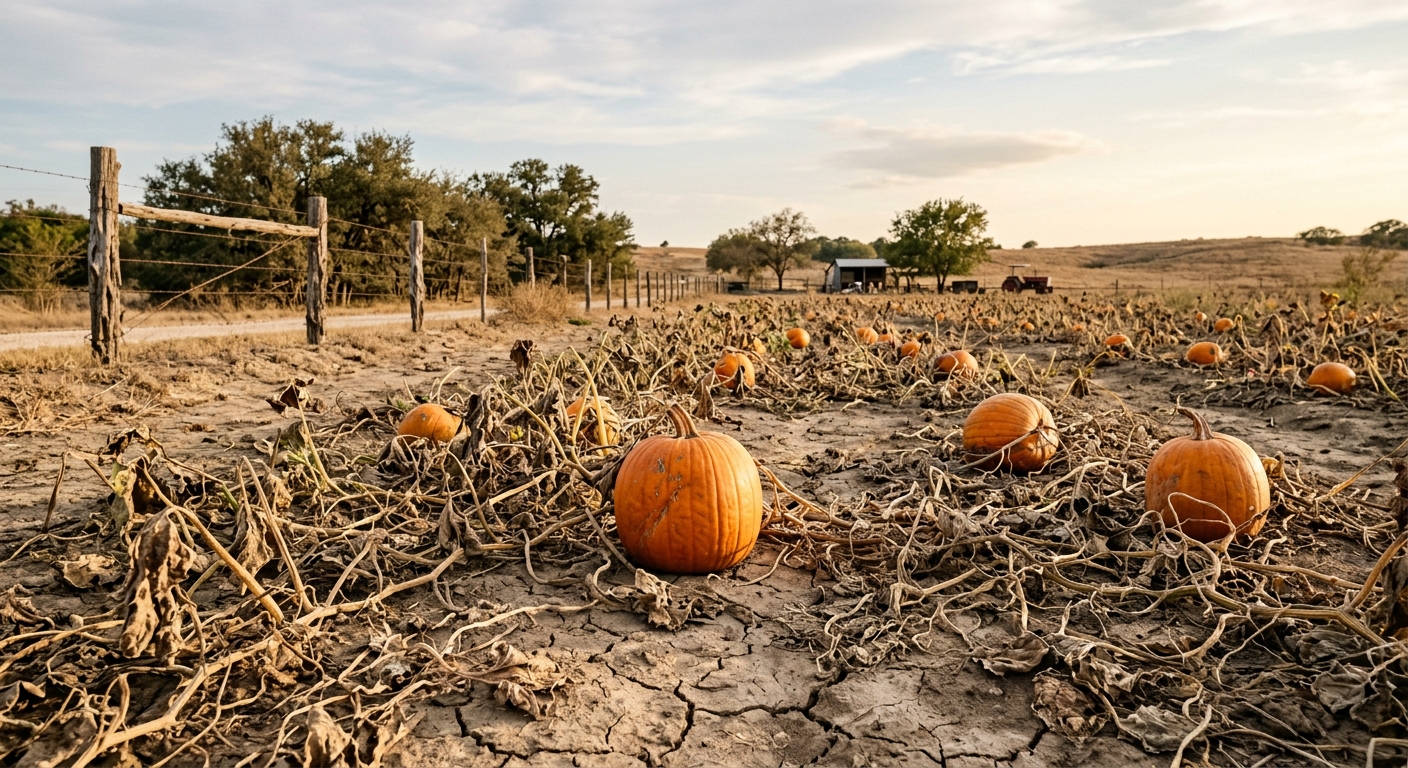
Pumpkin season is supposed to be one of the busiest times of the year for farms across Texas, but this fall, the weather has thrown a serious wrench into those plans. One local pumpkin farm lost its entire crop after extreme heat and drought conditions left its plants without the water they needed to survive. Months of planting, watering, tending vines, and preparing for autumn visitors came down to a harvest that never happened.
For a family farm, that’s a heartbreaking financial hit. Pumpkin growers spend money long before they have anything to sell, from seeds and irrigation to labor, equipment, and field preparation. Many also build their fall attractions around the pumpkin crop, counting on visitors to come out for pumpkin picking, photographs, hayrides, and other seasonal activities. When the pumpkins fail, the farm loses more than its produce.
Here in Central Texas, we know summer can be downright brutal. We’ve watched lawns turn brown, gardens struggle, and the ground crack beneath weeks of relentless heat. Pumpkins might be a symbol of cooler weather and everything we love about October, but they have to survive the summer before they ever make it to a porch or carving table. When the weather refuses to cooperate, even experienced farmers can find themselves watching an entire season go down the drain.
Is There Really A Pumpkin Shortage?
The short answer is yes, in some growing regions, but the situation isn’t quite as simple as every pumpkin in America suddenly disappearing. Texas has experienced significant crop losses, and those losses can affect local availability, particularly when shoppers want pumpkins grown close to home.
Texas A&M AgriLife Extension reported that drought reduced pumpkin yields in Floyd County, the state’s primary pumpkin-producing region, by an estimated 30% to 40% in 2026. Extremely dry soil and limited rainfall created difficult growing conditions, and irrigation couldn’t completely make up the difference. The reduced harvest also meant growers finished their season earlier than usual.
Those numbers help explain why the pumpkin shortage conversation has gained attention. When a major production area harvests substantially fewer pumpkins, the effects can reach wholesalers, retailers, farm stands, and pumpkin patches that depend on those supplies.
However, a poor harvest in Texas doesn’t automatically mean every state has the same problem. Pumpkins are grown across several regions, and weather conditions vary considerably. Some sellers can purchase pumpkins from farms outside the affected areas, while others may have fewer options or face higher costs.
The distinction matters because a shortage of locally grown pumpkins isn’t necessarily the same thing as a nationwide shortage. Both can affect shoppers, but understanding the difference gives us a much clearer picture of what’s happening this fall.
Why Pumpkins Struggle Through Extreme Heat
Pumpkins are warm-season crops, which makes them a reasonable choice for Texas gardens and farms. However, there’s a big difference between warm weather and weeks of excessive heat combined with little or no rainfall.
Pumpkin plants need consistent moisture to develop healthy vines, produce flowers, and grow fruit. When soil dries out, roots have a harder time supplying the plant with enough water to keep up with its needs. High temperatures increase water loss, leaving plants under even greater stress.
The damage can happen at several stages of growth. Young plants may struggle to establish themselves, mature vines can wilt, and developing pumpkins may fail to grow to their expected size. In severe cases, plants can die before producing a harvestable pumpkin.
Heat can also interfere with pollination. Pumpkin flowers depend on bees and other pollinators to transfer pollen, allowing fruit to develop. Excessive temperatures can affect pollen viability, while hot conditions may limit pollinator activity during the parts of the day when flowers need attention. A field can have plenty of vines and flowers without producing nearly as many pumpkins as the farmer expected.
Timing makes a difference, too. A few cooler days or a late rain shower cannot necessarily repair damage that occurred during a critical growing stage. Pumpkins need time to mature, and the growing season has a deadline. If plants fail when the harvest window is approaching, there may not be enough time to start over.
Texas growers have faced similar problems during previous drought-stricken seasons. The combination of extreme heat, limited moisture, and difficult growing conditions has repeatedly challenged pumpkin production across the state. This year’s losses are another reminder that a crop can struggle even when farmers do everything they can to keep it alive.
Why Farmers Can’t Simply Water Their Way Out Of A Drought
It’s easy to look at a dry field and wonder why the farmer can’t run the sprinklers until everything greens up again. Unfortunately, irrigation depends on having enough water available, and that becomes a serious problem during a prolonged drought.
Farms may rely on wells, reservoirs, tanks, or other water sources, all of which have limits. When temperatures stay high and rainfall remains scarce, the demand for water can outpace what a farm can reasonably supply. Pumping and distributing water also costs money, particularly when irrigation systems must run frequently to keep crops from drying out.
Even a farm with a reliable irrigation system cannot always replace moisture as quickly as extreme heat removes it. Water availability, soil conditions, equipment capacity, and the stage of crop development all influence how effective irrigation can be.
When supplies become limited, farmers may have to make difficult decisions about which parts of their operations receive the water that remains. Those decisions aren’t easy when every section of a field represents an investment of money and labor.
There is also the problem of time. Pumpkins planted in spring need months to grow and mature before autumn visitors arrive. If the crop dies late in the season, replanting may not be practical because new plants won’t have enough time to produce mature fruit before the weather changes.
Rain would certainly be welcome, but a storm arriving after months of drought cannot turn back the calendar. Once the growing window closes, the opportunity to produce that year’s crop may be gone.
The Financial Hit Behind A Failed Pumpkin Harvest
A failed pumpkin crop can affect an entire seasonal business, particularly when a farm depends on autumn visitors to bring in much of its annual revenue. Pumpkins may be the main attraction, but they often work alongside other activities that encourage families to spend an afternoon at the farm.
Think about everything involved in preparing for fall. Farmers may hire seasonal workers, maintain equipment, build attractions, prepare parking areas, advertise events, and purchase supplies months before opening day. Those expenses are part of the plan because the farm expects pumpkin sales and visitor spending to help cover them.
When the crop fails, those bills still have to be paid. The farmer may lose the income expected from thousands of pumpkins while also dealing with reduced attendance if the farm cannot offer the experience visitors anticipated.
Some farms can purchase pumpkins from other growers to keep their operations going. Although that allows customers to continue shopping, replacement pumpkins come with their own costs. Transportation, wholesale prices, and handling expenses can eat into already limited profits.
Small farms also have less room to absorb major losses than large agricultural operations. A single bad season can affect their ability to invest in next year’s crop, repair equipment, or maintain attractions that bring visitors back.
That’s why a pumpkin shortage is more than an inconvenience for shoppers. Behind every empty field or reduced selection is a farmer trying to recover the money and work already invested in the season.
Will Pumpkin Prices Be Higher This Year?
When a crop becomes harder to produce, prices can rise, but there isn’t one universal price increase that applies to every pumpkin. The cost depends on the supply available, the distance pumpkins must travel, the size and variety being sold, and the expenses involved in getting them to customers.
If a local farm loses its crop and needs to purchase replacement pumpkins, it may pay more than it would have spent growing them itself. Transportation adds another expense, particularly when supplies must come from farms farther away. Retailers and market vendors face similar pressures when their usual suppliers have fewer pumpkins available.
Extreme heat can also cause losses after harvesting. Pumpkins must survive handling, storage, and transportation before they reach a store or farm stand. When hot conditions contribute to deterioration, sellers may lose part of a shipment and need additional stock to replace it.
That doesn’t mean every pumpkin will suddenly become expensive. Stores supplied by healthy harvests in other regions may have plenty of inventory, and smaller pumpkins may remain easier to find than unusually large carving varieties. Prices can differ from one seller to another, even within the same town.
If you’re planning to buy several pumpkins for decorating or carving, shopping before the final rush may give you a better selection. Waiting until the last few days before Halloween can be risky when a particular size or variety is already in limited supply.
Why Some Pumpkin Patches Are Bringing In Pumpkins From Elsewhere
For many families, visiting a pumpkin patch is about more than buying something orange to sit on the porch. It’s an October tradition involving photographs, children searching through the pumpkins, hayrides, games, and the occasional debate over which pumpkin is worth taking home.
When a farm loses its homegrown crop, purchasing pumpkins from another grower may be the only way to preserve part of that experience. The pumpkins might arrive by truck rather than growing in the field where visitors expected to pick them, but the farm can still offer a seasonal outing.
There is nothing unusual about farms adjusting their operations when weather damages a crop. Agricultural businesses regularly have to make changes in response to conditions they cannot control. What matters is being clear with customers about whether the pumpkins are homegrown or purchased from another farm.
If picking a pumpkin directly from the vine is your main reason for visiting, check availability before making the drive. Ask whether field picking is possible and whether the farm has changed its usual activities. If you’re more interested in spending the afternoon outdoors, taking family pictures, and enjoying fall attractions, a farm with purchased pumpkins may still be worth visiting.
For the farm itself, bringing in replacement pumpkins can help preserve at least part of the fall season. It won’t erase the cost of losing an entire crop, but it can give the business a chance to keep serving customers rather than shutting down every pumpkin-related activity.
How To Shop Smart During Pumpkin Season
If you’re determined to find the perfect pumpkin this October, a little planning can save you a disappointing trip. Check local farm announcements before leaving home, particularly if you want a specific variety or hope to pick your own. Availability may change throughout the season, and a quick update can tell you whether a farm has enough pumpkins for the experience you’re looking for.
When choosing a pumpkin, look for firm skin without soft spots, deep bruises, or areas that appear to be rotting. An intact stem is helpful, although you should avoid carrying the pumpkin by the stem because it can break away. A sturdy pumpkin with undamaged skin will generally hold up better than one that already has signs of deterioration.
Think about what you plan to do with it, too. A carving pumpkin needs enough room for your design and a shape that suits the job, while smaller decorative varieties can work beautifully on tables, steps, and shelves. If you want a pumpkin that will last through Halloween, keep it in a cool, dry location and wait until closer to the holiday to carve it.
You can also support local farms by purchasing refreshments, admission tickets, or other products they offer. When a farm loses its crop, spending money on the rest of its seasonal business may help offset some of the lost revenue. You don’t have to buy something you don’t need, but if you’re already planning a visit, those purchases can help keep a local operation going.
And don’t assume your first choice is your only option. If one farm has limited supplies, another may have a better selection. Grocery stores, farmers markets, and garden centers can also be useful alternatives when you’re mainly looking for pumpkins to decorate or carve.
What This Pumpkin Shortage Says About Farming In Texas
The trouble facing pumpkin growers this year highlights how much agricultural production depends on weather conditions that can change dramatically from one season to the next. Farmers can plan carefully, choose suitable varieties, maintain irrigation, and work long hours, but none of those measures guarantees a successful harvest when extreme heat and drought persist.
Texas growers face particular challenges because water availability can become a limiting factor during long stretches without meaningful rainfall. A crop that performs well in a milder season may struggle when temperatures remain high and the soil loses moisture faster than irrigation can replace it.
The consequences reach beyond pumpkins. The same combination of heat and drought can affect gardens, hay production, pasture conditions, and other crops. When water becomes scarce, farms and ranches throughout a region may find themselves competing with difficult growing conditions at the same time.
For consumers, it is easy to think of pumpkins as a seasonal decoration that appears in stores when the calendar turns to October. For the people growing them, pumpkin season begins months earlier, with planting decisions, field preparation, water management, and constant attention to the weather.
A failed harvest makes that work visible in a way a successful season often doesn’t. When pumpkins are plentiful, shoppers rarely stop to consider how much could have gone wrong before those pumpkins reached the market. When the crop disappears, the connection between weather and the food and products we buy becomes much harder to ignore.
The Great Pumpkin Shortage Is About More Than Halloween
The loss of a local pumpkin crop is a hard reminder that farming doesn’t always reward the people who work the hardest. A family can prepare for months, invest in the season, and do everything within its control, yet still lose an entire harvest when extreme weather takes over.
This year’s pumpkin troubles don’t mean every store will run out or every pumpkin patch will close. They do mean that some Texas growers are facing real losses, local supplies may be tighter, and farms that depend on homegrown pumpkins may have to change their plans.
For shoppers, the season may require a little more flexibility. You might need to visit a different patch, choose another variety, or buy your pumpkins from a seller who sources them elsewhere. For farmers, the challenge is considerably bigger because the money already spent growing a failed crop cannot simply be recovered.
Around Central Texas, we know a summer can be tough on just about anything growing outdoors. This year, some pumpkin farmers got a particularly painful demonstration of that fact. The orange pumpkins that make October look like October may seem ordinary when they’re stacked in a field or lined up outside a store, but every successful harvest represents months of work and a whole lot of cooperation from the weather.
Sometimes the pumpkin patch is full, the vines are thriving, and everybody gets the fall season they planned for. Other years, the Texas heat has the final say, and farmers are left figuring out how to move forward with what they have. This October, that’s the story behind the great pumpkin shortage.
Lisa Crow contributed to this article. She is a true crime junkie and lifestyle blogger based in Waco, Texas. Lisa is the Head of Content at Gigi’s Ramblings and Southern Bred True Crime Junkie. She spends her free time traveling when she can and making memories with her large family which consists of six children and sixteen grandchildren.