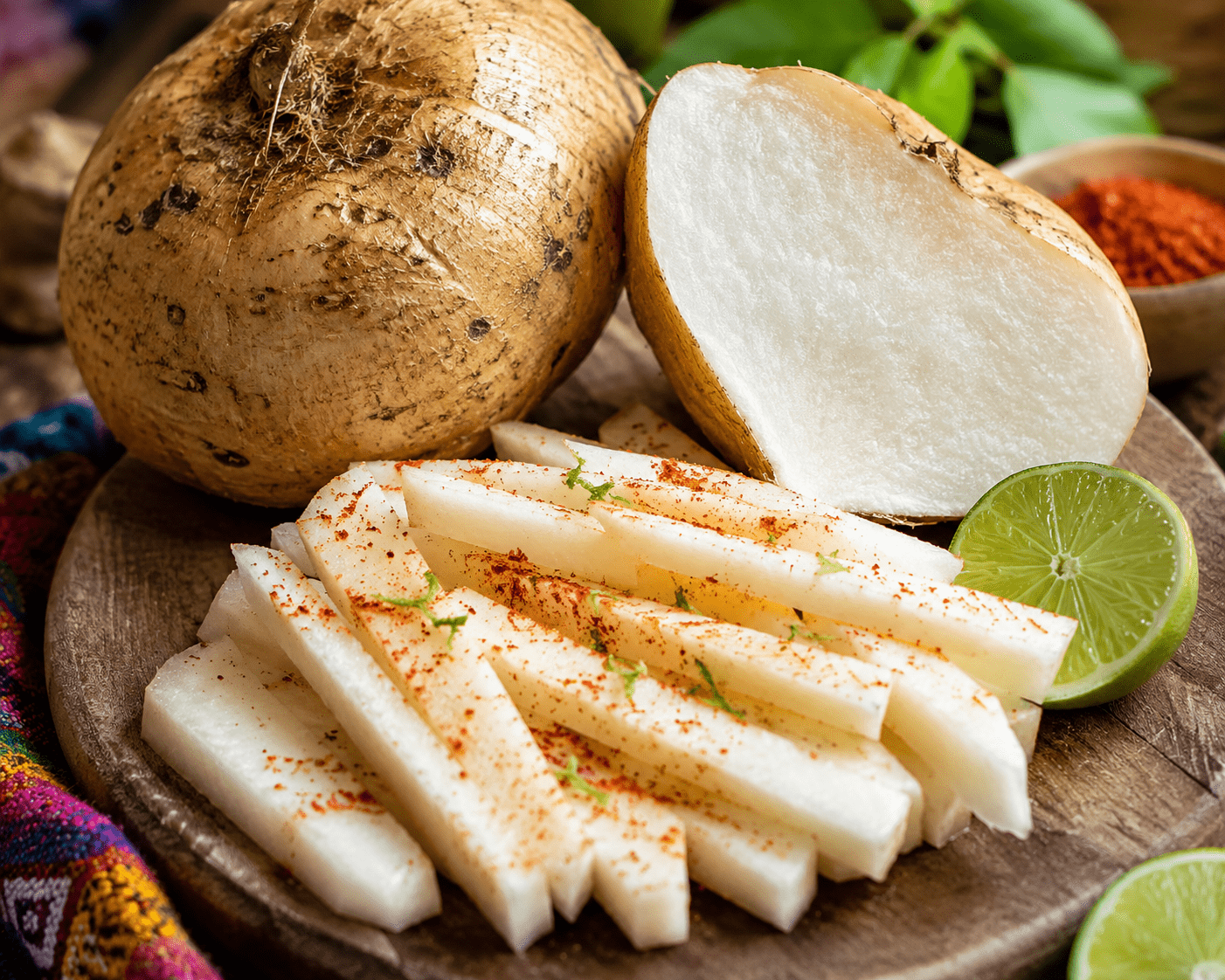
The image shows fresh sliced jicama with chili seasoning and lime in a vibrant, food-focused style.

I have to admit, a lot of people here in the United States have absolutely no idea what jicama even is. If you say the word out loud, you’ll probably get a confused look and a, “A what now?” I discovered jicama years ago while spending a lot of time in Mexico, and honestly, I could not believe I had gone so long without trying it.

Once I had my first bite, I was hooked.

It is crunchy, refreshing, slightly sweet, and incredibly versatile. Plus, after learning all of the health benefits packed into this strange-looking root vegetable, I started wondering why it is not sitting in every grocery cart in America.

If you have never tried jicama before, you may be missing out on one of nature’s most underrated foods.

What Exactly Is Jicama?

Jicama (pronounced HEE-kah-ma) is a root vegetable native to Mexico and parts of Central America. It grows underground as part of a climbing vine plant and belongs to the bean family.

The outside looks a little rough at first glance. It has a thick tan skin that almost resembles a potato crossed with a turnip. Inside, however, is where the magic happens. Once peeled, the flesh is bright white, crisp, juicy, and refreshing.

The texture reminds many people of a water chestnut or a very crunchy pear.

Taste-wise, jicama has a mild sweetness with a fresh, slightly nutty flavor. It is one of those foods that somehow feels both like a fruit and a vegetable at the same time.

Fun fact: while the root itself is edible, the seeds and other parts of the plant are toxic and should never be eaten.

Related: A Frugal Kitchen Experiment: Acorn Squash

Why Jicama Is So Popular In Mexico

If you spend time in Mexico, you’ll notice jicama sold in markets, roadside stands, and snack carts. Vendors often slice it into sticks and pile it into cups with lime juice and chili seasoning.

That was exactly how I first discovered it.

And to this day, my favorite way to eat jicama is still simple:

Fresh jicama sticks covered with Tajín and a squeeze of fresh lime.

That sweet, juicy crunch mixed with tangy lime and chili seasoning is ridiculously good. Once you try it, you understand immediately why people love it.

Ways To Eat Jicama

One of the best things about jicama is how easy it is to use.

You can eat it raw or cooked, and it works in all kinds of dishes.

Some delicious ways to enjoy it include:

  • Jicama sticks with Tajín and lime (my fave)
  • Sliced into fresh fruit cups
  • Added to salads for crunch
  • Mixed into coleslaw
  • Added to tacos
  • Diced into salsa
  • Served with chili powder and chamoy
  • Stir-fried with vegetables
  • Used as a low-carb fry substitute
  • Added to spring rolls
  • Eaten plain with a little sea salt

Most people enjoy it raw because it keeps that refreshing crunch.

Related: Vegetables To Plant In May For Summer Harvest

Jicama Is Loaded With Nutritional Benefits

Now let’s talk about why this crunchy little root deserves more attention.

Jicama may taste like a treat, but it quietly packs a pretty impressive nutritional punch.

Rich In Fiber

Jicama contains a large amount of dietary fiber, especially a prebiotic fiber called inulin.

Prebiotics feed the beneficial bacteria in your gut, helping support:

  • Better digestion
  • Healthier gut bacteria
  • Improved regularity
  • Reduced constipation
  • Better overall digestive health

Fiber also helps you stay full longer, which can help reduce unnecessary snacking.

Great Source Of Vitamin C

People often think oranges get all the vitamin C attention, but jicama contains a surprisingly healthy amount too.

Vitamin C helps support:

  • Immune system health
  • Collagen production
  • Skin health
  • Wound healing
  • Antioxidant protection

Many people are not getting enough vitamin C daily, so every little boost helps.

Supports Healthy Blood Sugar Levels

Despite its naturally sweet flavor, jicama actually has a relatively low glycemic impact.

Because it contains fiber and inulin, it may help slow blood sugar spikes compared to highly processed snacks.

That makes it a smart choice when cravings hit.

Hydrating And Low In Calories

Jicama is made up of a lot of water.

That means you get:

  • Crunch
  • Hydration
  • Fiber
  • Nutrients

Without a huge calorie load.

One cup of raw jicama contains relatively few calories while still feeling filling.

Contains Important Nutrients

Jicama also provides smaller amounts of several helpful nutrients including:

  • Potassium
  • Magnesium
  • Folate
  • Iron
  • Manganese

Your body relies on these nutrients for everything from nerve function to muscle health.

Full Of Antioxidants

Jicama contains antioxidants that help fight oxidative stress in the body.

Antioxidants may help protect cells from damage caused by free radicals and support overall long-term health.

Can You Grow Jicama At Home?

Surprisingly, yes.

Jicama can be grown at home if you have plenty of warmth and patience.

The plant grows as a vigorous vine and loves long, hot growing seasons. Since we are talking about a tropical plant, it does best in warmer climates with plenty of sunlight.

A few growing basics:

  • Plant after danger of frost has passed
  • Use well-draining soil
  • Give vines plenty of room
  • Provide full sun
  • Expect a long growing season

Jicama takes several months to mature, sometimes up to five to nine months depending on conditions.

The root develops underground while vines spread above ground.

Gardeners in warmer southern states often have better success because of the longer growing season.

Final Thoughts

Jicama is one of those foods many Americans simply have never been introduced to, which is a shame because it checks almost every box.

It tastes good.

It is refreshing.

It is loaded with fiber and nutrients.

It works in both healthy recipes and snack cravings.

And honestly, if you have never tried fresh jicama with Tajín and lime, put it on your grocery list immediately.

You may end up wondering the same thing I did after discovering it in Mexico:

How did I go this long without eating this stuff?

Lisa Crow contributed to this article. She is a true crime junkie and lifestyle blogger based in Waco, Texas. Lisa is the Head of Content at Gigi’s Ramblings and Southern Bred True Crime Junkie. She spends her free time traveling when she can and making memories with her large family which consists of six children and sixteen grandchildren.
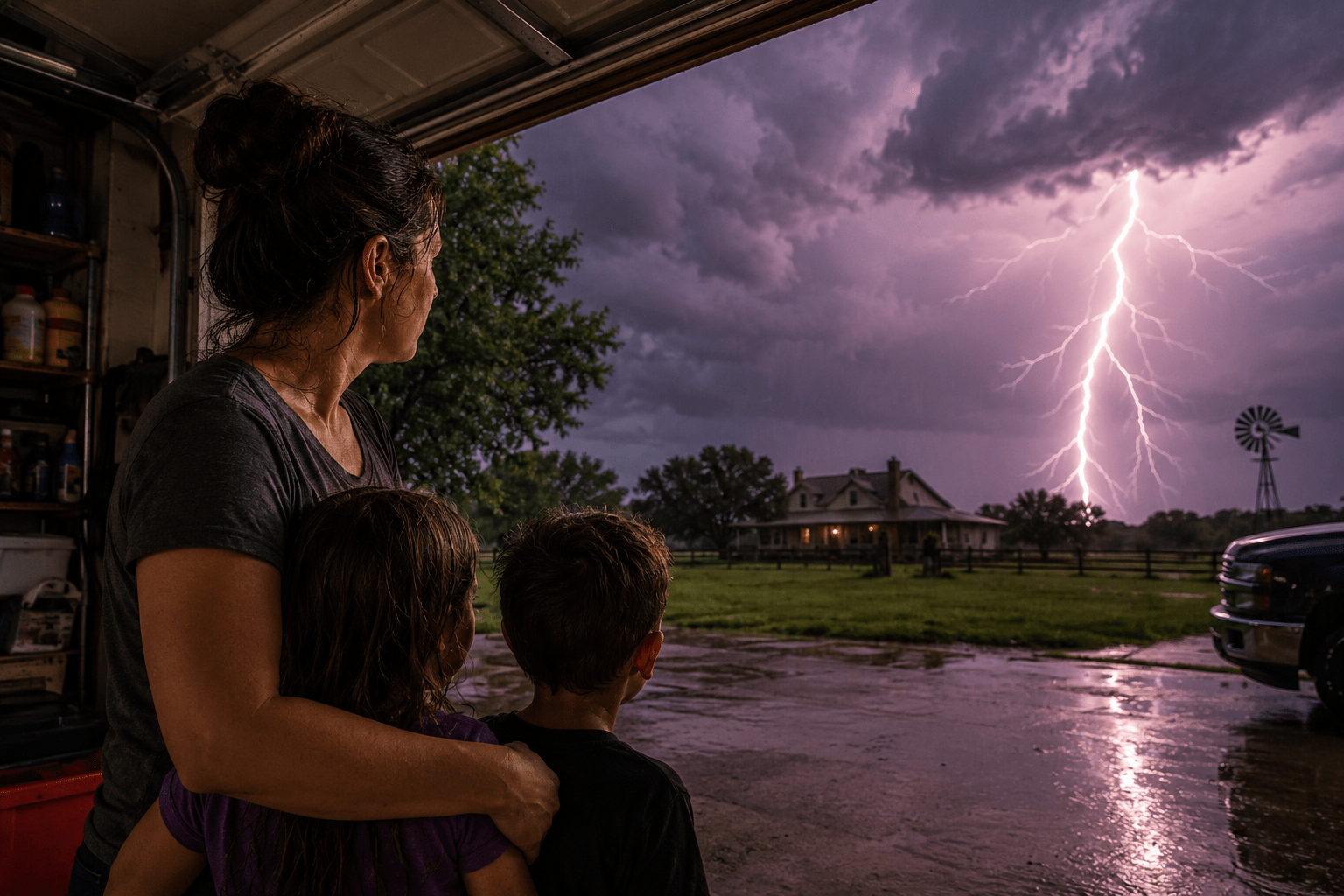

Family watching a powerful Texas lightning storm safely from inside a garage.

I Learned To Respect Lightning The Hard Way

I have always been amazed by lightning and scared to death of it at the same time. There is just something about a storm rolling in that gets me. Watching the sky light up from a distance is beautiful, but after what I witnessed years ago, I can tell you there is a whole lot of respect mixed in with that fascination too.

Years ago, I watched my children’s father get struck by lightning while holding my son, and to this day, I still cannot believe I saw it happen right in front of me.

We were at my grandparents’ house, waiting in the garage for the rain to slow down so we could load up the kids and leave. He and I had been arguing over who even knows what because back then we argued about everything. I honestly cannot remember what started it now, but I do remember one part clear as day. He said, “I swear to God,” and I immediately got irritated because I hated when he used that saying while lying. I told him, “Don’t you dare swear to God if you’re lying.”

Well, that disgusting waste of skin got mad and yelled something I will never forget… “F-%k God!”

Y’all, I am not exaggerating when I say what happened next felt instant. Lightning struck the garage door and hit him. One second we were arguing, and the next second everything turned into complete chaos. I completely froze because my brain could not even process what had happened.

What scared me most was not him. It was my son. He had my son tucked inside his shirt, trying to keep him dry while we waited for the rain to stop. My heart dropped straight into my stomach because all I could think was, my baby was in his arms. Somehow, my son was physically okay. Shocked and terrified, absolutely, but okay. To this day, I still call that a miracle.

His dad ended up with a nasty burn across his chest, and the lightning had literally blown a hole through his shirt. His heart rate was through the roof and completely out of rhythm. The ambulance came and somehow he survived the whole thing. If I ever had doubts in my faith before that day, they disappeared right there in my grandma’s garage.

Now my poor grandma is the part that still makes me laugh. Bless her heart, she already had the fear of God in her soul and did not want that man in her house – possibly dying or not. While we sat there waiting on the ambulance, she wanted absolutely no part of what she probably considered Satan’s spawn hanging around in her living room. I think she was worried God might want to get his point across with another bolt. Looking back now, I can still picture her face and laugh.

That experience changed me. I still think lightning is one of the most incredible things nature creates, but I also learned firsthand that storms are not something to play around with. As it turns out, a lot of what people believe about lightning is completely wrong.

Related: Tornado Alley Explained: What It Is and Why It Matters

Myth: Lightning Never Strikes The Same Place Twice

This one has been around forever, and it simply is not true. Lightning absolutely can strike the same place repeatedly. Tall objects actually become repeated targets because they are easier for lightning to reach.

Buildings, radio towers, trees, and even the same patch of ground can be hit multiple times during a storm. Lightning is not avoiding places it already visited. If conditions are right, it can strike there again and again.

Myth: If It Is Not Raining Yet, You Are Safe

This myth gets people in trouble because storms do not always stay directly overhead. Lightning can travel miles away from the center of a storm, which means you can still see sunshine and suddenly hear thunder.

That is why weather experts often say if you can hear thunder, you are close enough to be struck. It sounds simple, but that advice can save lives.

Myth: Trees Are Safe During Storms

People run toward trees all the time thinking they have found shelter, especially if they are caught outside unexpectedly. Unfortunately, trees are actually one of the worst places you can stand.

Because trees are usually among the tallest objects around, they attract lightning. Even worse, electricity can spread outward through the ground after impact and injure people standing nearby.

Myth: Rubber Tires Protect You

A lot of us grew up hearing that car tires protect us from lightning because rubber blocks electricity. The truth is, the tires are not doing the work.

The metal frame of an enclosed vehicle helps redirect electricity around the passengers. That means motorcycles, tractors, and convertibles do not provide the same protection.

Myth: People Struck By Lightning Stay Electrically Charged

Television really confused people with this one. Someone who has been struck by lightning does not hold electricity afterward.

If someone is injured by lightning, you can safely touch them and help immediately. I can personally attest to this. Calling emergency services and giving aid quickly can make a huge difference.

Lightning Is Beautiful, But It Deserves Respect

Even now, I still love watching storms roll across the Texas sky. I still think lightning is beautiful and fascinating. At the same time, I learned firsthand that nature can humble you in a split second. I also learned God can use nature to humble you.

After watching somebody get struck standing just feet away from me, I can tell you one thing for sure. I will never casually stand around waiting out a storm again.

And somewhere up above, I still think my grandma is shaking her head saying, “I told you I don’t want that man in my house.”

Lisa Crow contributed to this article. She is a true crime junkie and lifestyle blogger based in Waco, Texas. Lisa is the Head of Content at Gigi’s Ramblings and Southern Bred True Crime Junkie. She spends her free time traveling when she can and making memories with her large family which consists of six children and sixteen grandchildren.

Shopper with a full grocery cart and coupon binder looking shocked at huge savings from extreme couponing.

Most of us have used a coupon at some point. Maybe you clipped one from a newspaper years ago, scanned a store app before checkout, or got excited over a buy-one-get-one deal. However, there is a whole other side of couponing that most people never see. Hidden beneath those little discounts is a surprisingly intense world filled with strategy, planning, organization, and people who somehow walk out of stores with hundreds of dollars in products after spending less than a family dinner at a fast-food restaurant.

If you have ever watched someone on social media show a grocery haul worth $400 that cost only $38, you probably wondered if it was fake. Believe it or not, many of those savings are absolutely real. Extreme couponing is not just clipping paper coupons anymore. It has evolved into a serious hobby and, for some people, practically a second job.

Extreme Couponing Is More Like A Strategy Game

People often assume extreme couponers simply collect stacks of coupons and hand them over at checkout. In reality, the process is much more complicated than that. Successful couponers spend time studying sales cycles, checking weekly ads, comparing store policies, and planning shopping trips in advance.

The real magic happens when multiple discounts work together. A product may already be on sale, then a manufacturer coupon gets applied, followed by a store coupon, a loyalty reward, and finally a cash-back app rebate. Separately, those discounts may not look impressive. Combined, they can create jaw-dropping totals that seem impossible.

That is why experienced couponers often describe it like solving a puzzle. They are constantly looking for ways to make deals stack together in the perfect order.

Related: Frugal Living: Smart Habits to Save Money and Thrive

The Organization Behind It Can Be Surprisingly Intense

One thing television shows did get right was the organization. Extreme couponers are not throwing random coupons into kitchen drawers and hoping for the best. Many use giant binders packed with plastic sleeves sorted by category, expiration date, and product type.

Some people organize by dairy, frozen foods, household items, beauty products, and cleaning supplies. Others color-code sections or maintain spreadsheets that track upcoming sales and expiration dates. While that may sound excessive, there is a reason behind it. When you are standing in a busy checkout lane trying to pull together several discounts, you need to know exactly where everything is.

These systems may look over-the-top to outsiders, but for couponers, organization can mean the difference between huge savings and missed opportunities.

Extreme Couponers Rarely Shop Just One Store

Another thing that surprises people is how much planning goes into shopping trips. Most of us make a list, head to one store, and try to get everything done in a single stop. Extreme couponers often do the opposite.

Instead, they build routes around deals. One store may have the best household products sale while another has digital coupons that pair perfectly with grocery discounts. Someone serious about couponing might stop at three or four stores in one afternoon if the savings make it worthwhile.

To many people, that sounds exhausting. Yet for couponers, finding an amazing deal creates the same kind of excitement bargain hunters feel during holiday shopping events. There is a rush that comes from seeing a receipt with huge savings printed across the bottom.

Home Stockpiles Can Get A Little Wild

One of the most recognizable parts of extreme couponing is the stockpile. You have probably seen photos of spare bedrooms or garage shelves packed with toothpaste, paper towels, laundry detergent, soap, canned foods, and cleaning products stacked almost floor to ceiling.

At first glance, it can seem ridiculous. Why would anyone need that much toothpaste?

The answer actually makes sense. Extreme couponers buy extra products when prices hit their absolute lowest points. Rather than paying full price six months later, they shop from their own supply at home. For larger families, stockpiling can save serious money over time.

Of course, there is definitely a point where practical savings turn into buying things just because they are cheap. No family needs fifty bottles of mustard sitting in a closet.

Probably.

Digital Couponing Completely Changed The Game

Couponing today looks very different from what people remember years ago. Newspapers and scissors used to be essential tools, but now many shoppers build deals entirely through apps and rewards programs.

Store loyalty programs, digital coupons, rebate apps, and rewards systems opened couponing up to people who never wanted piles of paper scattered around the house. Many younger couponers now manage everything from their phones and never clip a physical coupon at all.

As a result, couponing feels more accessible than it once did. You no longer need giant binders to save money.

Although some people still love the binders.

Related: A Frugal Kitchen Experiment: Acorn Squash

The Biggest Secret Is Knowing When Not To Buy

Perhaps the smartest lesson experienced couponers learn has nothing to do with coupons themselves. Saving money is not about buying everything simply because there is a discount attached to it.

That excitement can be dangerous. Grabbing random products because they are cheap can quickly turn into spending money you never intended to spend in the first place. Experienced couponers eventually learn to focus on products they genuinely use instead of chasing every deal that appears.

After all, saving three dollars on something you never needed is not really saving money.

Final Thoughts

The world of extreme couponing looks a little mysterious from the outside. Between the binders, deal spreadsheets, shopping routes, and giant stockpiles, it can seem almost unbelievable. Yet beneath all the strategy is a simple goal most of us can understand: making money stretch a little further.

With grocery prices feeling expensive these days, it is easy to understand why people become fascinated by couponing. Even if you never become someone carrying a binder thicker than a phone book through the store, learning a few coupon tricks might make checkout feel a whole lot better.

And who knows? Today it starts with clipping one coupon. Next thing you know, you are explaining sales cycles to strangers in the cereal aisle.

Lisa Crow contributed to this article. She is a true crime junkie and lifestyle blogger based in Waco, Texas. Lisa is the Head of Content at Gigi’s Ramblings and Southern Bred True Crime Junkie. She spends her free time traveling when she can and making memories with her large family which consists of six children and sixteen grandchildren.

Stressed cruise passenger holding a pillow and coffee in a ship hallway surrounded by warning signs about cabin locations people regret booking, including under the pool deck, near elevators, nightclub areas, crew spaces, front cabins, and obstructed views.

Booking a cruise is one of the fun parts of vacation planning. You start scrolling through photos, checking out restaurants, picturing yourself sitting on a balcony with coffee, and mentally spending money you haven’t even paid yet. Then you get to cabin selection and think, “Well, a room is a room, right?” Not exactly. Cruise cabin location matters a whole lot more than first-time cruisers realize, and plenty of people learn that lesson after several nights of bad sleep.

Some rooms look perfectly fine on the deck map until you actually move in. Suddenly you’re dealing with weird noises overhead, nonstop hallway traffic, stronger ship movement, or views that are not quite what you expected. Cruise groups are full of travelers saying the same thing: they wish someone had warned them before booking certain cabin locations.

If you’re planning a cruise vacation, here are some cabin spots passengers often regret choosing.

Under the Pool Deck

This one gets mentioned constantly by experienced cruisers, and after hearing enough stories, it’s easy to understand why. A room underneath the pool deck might seem harmless when you’re looking at a deck plan. After all, it’s just a floor above you.

Then vacation starts and you realize people are moving lounge chairs at sunrise. Crew members clean the deck early in the morning, furniture gets dragged around, kids run overhead, and flip-flops seem to stomp across the ceiling all day long. Some travelers say they were shocked at how much sound traveled into their room.

The pool deck is fun when you’re on it. Sleeping underneath it is another story.

Near Elevators

People often choose cabins close to elevators because it sounds convenient. Nobody wants to walk a mile down a cruise hallway after a long day in the sun. The logic makes sense.

The problem usually is not the elevator itself. Modern ships are pretty good about keeping mechanical noise down. What catches people off guard is the constant traffic around those areas. Families gather there, people stop and chat while waiting, and late-night passengers wander back from shows and bars, talking louder than they think they are.

A slightly longer walk to your cabin can end up feeling like a fair trade for extra peace and quiet.

Related: Cruise Essentials for First-Timers

Directly Above or Below Entertainment Venues

Cruise ships have something happening almost around the clock. There are comedy clubs, dance lounges, bars with live music, theaters, and late-night entertainment that can stay active well after midnight.

Booking a cabin directly above or below these spaces can turn into an unpleasant surprise. Even if you cannot hear every word or song, bass vibrations and crowd noise sometimes travel farther than people expect. A low thumping sound at midnight may not seem terrible on night one. By night four, people start regretting their decision.

Checking the deck plan before booking can save a lot of frustration later.

Front Cabins and Rough Seas

Cabins at the front of the ship sound exciting because they feel unique and often seem like they would offer incredible views. However, many first-time cruisers do not realize that certain areas of the ship feel movement more strongly.

Passengers who deal with motion sickness often say front cabins can become uncomfortable when seas get rough. Higher decks can make the feeling even stronger. Suddenly, that dream cabin becomes the place where you’re trying to keep your stomach settled.

Many experienced travelers recommend midship cabins on lower decks because they generally feel more stable.

Cabins Beside Crew Work Areas

This is one people sometimes miss completely while booking. Cruise deck maps occasionally show strange blank spaces or oddly shaped sections that don’t look like passenger areas. Those spots can sometimes hide service stations, housekeeping areas, supply rooms, or crew workspaces.

Throughout the day, carts move through hallways, doors open and close, and staff activity can create more noise than travelers expect. Most cruise staff work incredibly hard, but behind-the-scenes areas stay busy, and being right next to one may not be ideal if you want quiet surroundings.

Obstructed View Rooms That Surprise People

Everyone loves a bargain, especially when a balcony cabin suddenly drops in price. The problem is that some travelers click too fast and miss words like “partially obstructed” or “obstructed view.”

Then vacation begins and they pull open the curtains expecting ocean views, only to find a lifeboat or giant piece of ship equipment sitting directly outside.

The room itself may be completely fine, but expectations can make a big difference. Saving money feels good. Feeling disappointed every time you look outside doesn’t.

The Cruise Rule Experienced Travelers Swear By

Ask frequent cruisers for advice and you’ll hear one recommendation over and over. Book a cabin with cabins above you, below you, and beside you.

It may sound boring while you’re choosing rooms, but cabins surrounded by other cabins usually avoid many of the noise issues that come from public spaces, entertainment venues, and high-traffic areas. It is not the flashy choice, but people who cruise often swear it leads to a better trip.

Because after a few nights of uninterrupted sleep, suddenly the boring cabin starts sounding pretty smart.

Lisa Crow contributed to this article. She is a true crime junkie and lifestyle blogger based in Waco, Texas. Lisa is the Head of Content at Gigi’s Ramblings and Southern Bred True Crime Junkie. She spends her free time traveling when she can and making memories with her large family which consists of six children and sixteen grandchildren.
This vintage-style cast iron cooking guide features cozy country kitchen artwork with small skillet illustrations and short, easy-to-read food labels.

There’s just something about cast iron cooking that makes food hit differently. Maybe it’s the way the pan holds heat, or maybe it’s because generations of Southern kitchens practically lived around one. Either way, some foods simply taste richer, crispier, and more flavorful when they’re cooked in cast iron.

If you’ve got a trusty skillet sitting on your stove, this is your sign to start using it more often. From crispy cornbread to perfectly seared steak, cast iron gives certain foods that little extra something you just can’t get from regular pans.

Cornbread Gets Crispy In All The Right Ways

Nothing compares to cornbread baked in a hot cast iron skillet. The edges turn golden and crunchy while the inside stays soft and buttery. That crispy crust is honestly half the reason people love skillet cornbread so much.

A preheated cast iron pan also helps the batter start cooking immediately when it hits the skillet. That creates the kind of texture Southern cooks swear by. Whether you like sweet cornbread or the old-school savory kind, cast iron makes it better.

Steak Develops A Better Crust

Cast iron and steak belong together. Since the skillet gets extremely hot and stays hot, it creates that dark, flavorful crust people spend restaurant money trying to get.

At the same time, the inside stays juicy and tender. You can also move the whole skillet straight into the oven to finish thicker cuts without dirtying extra dishes. Ribeyes, New York strips, and even cheaper cuts taste more expensive when cooked this way.

Fried Potatoes Turn Extra Crispy

Breakfast potatoes in cast iron are on another level. The outside gets crispy and browned while the inside stays fluffy. Nonstick pans just don’t seem to give the same texture.

Plus, cast iron handles high heat beautifully, so you can get those crispy edges without everything sticking or steaming itself soggy. Throw in onions and peppers, and the flavor gets even better as everything caramelizes together.

Burgers Taste More Like Diner Burgers

Smash burgers cooked in cast iron develop those crispy edges people love. The skillet helps lock in juices while giving the meat a deep seared flavor that tastes almost grilled.

If you’ve ever wondered why homemade burgers sometimes taste flat compared to restaurant burgers, the pan might be the problem. Cast iron creates the kind of browning that adds serious flavor fast.

Related: Forgotten Skills Grandparents Used Daily

Pizza Crust Gets Golden And Crunchy

Skillet pizza deserves way more attention than it gets. Cast iron creates a crispy, golden crust while still keeping the inside chewy.

The pan holds enough heat to mimic some of the effects of a pizza oven, especially for homemade dough. Even store-bought dough tastes better baked in a cast iron skillet. Deep dish styles work especially well this way too.

Chicken Thighs Get Perfect Crispy Skin

Cast iron is amazing for bone-in chicken thighs because it evenly browns the skin without drying out the meat. The skin crisps up beautifully while the inside stays juicy.

Then once everything is seared, you can slide the skillet into the oven to finish cooking. Fewer dishes and better flavor is always a win.

Bacon Cooks More Evenly

Some people swear bacon tastes better in cast iron, and honestly, they’re right. The skillet distributes heat evenly, so you don’t end up with random burnt strips and raw spots.

Over time, seasoned cast iron also seems to add a little extra flavor depth. Plus, bacon grease helps maintain the skillet’s seasoning, so it’s almost like the pan enjoys it too.

Cobbler Has Better Texture

Fruit cobblers baked in cast iron get those bubbling edges and crisp buttery toppings that make homemade desserts feel extra cozy.

Peach cobbler especially shines in cast iron because the fruit caramelizes slightly around the edges. The skillet also keeps desserts warm longer after they come out of the oven, which is perfect for family dinners and holidays.

Grilled Cheese Browns Beautifully

A cast iron skillet makes grilled cheese sandwiches evenly golden and crispy without scorching the bread too quickly.

The steady heat gives cheese enough time to melt completely while the bread slowly develops that buttery crunch everybody wants. Add tomato soup on the side and suddenly it feels like comfort food weather no matter the season.

Biscuits Bake More Evenly

Cast iron biscuits develop lightly crisp bottoms while staying fluffy inside. The skillet creates a nice even bake and gives biscuits a more homemade texture compared to baking sheets.

Many Southern cooks still use large cast iron pans for biscuits because the results are just consistently good. Once you try them this way, it’s hard to go back.

Why Cast Iron Cooking Still Holds Up

Even with all the fancy cookware out there now, cast iron still earns its place in the kitchen. It’s durable, versatile, and honestly hard to beat when it comes to flavor and texture.

Some foods simply cook better in it. The crispier crusts, richer browning, and even heat make a noticeable difference. Plus, there’s something satisfying about cooking with a pan that can last generations if you take care of it properly.

Once you start experimenting with cast iron cooking, you’ll probably find yourself reaching for it more than anything else in the kitchen.

Lisa Crow contributed to this article. She is a true crime junkie and lifestyle blogger based in Waco, Texas. Lisa is the Head of Content at Gigi’s Ramblings and Southern Bred True Crime Junkie. She spends her free time traveling when she can and making memories with her large family which consists of six children and sixteen grandchildren.
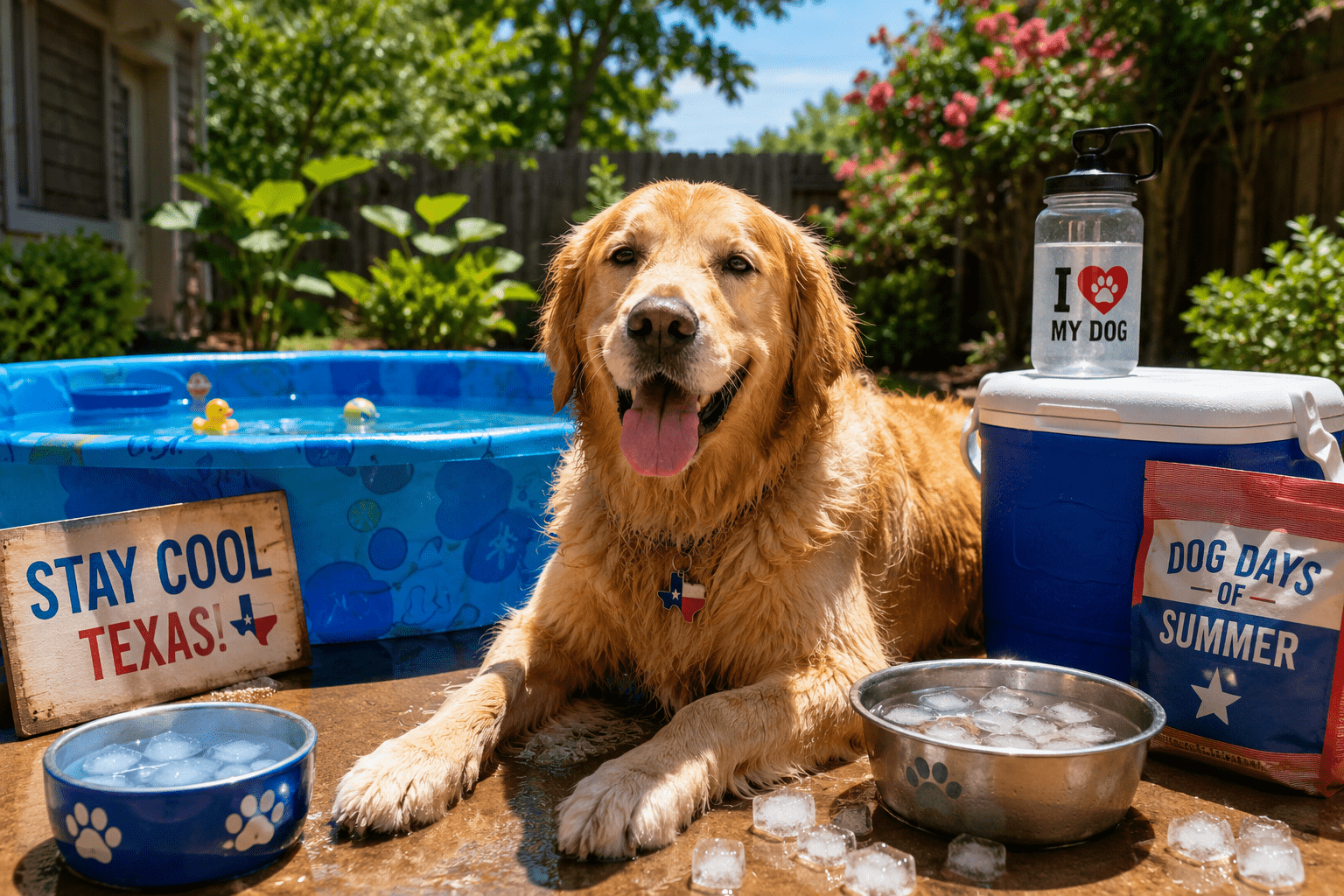
Golden retriever staying cool beside a kiddie pool during an extreme summer heat day.

When summer heat settles in hard, it does not just make people miserable. Dogs struggle with extreme temperatures too, especially in places like Texas, where those triple-digit days seem to drag on forever. Unlike humans, dogs cannot cool themselves efficiently through sweating. Most of their cooling happens through panting, which means heat can overwhelm them fast.

If you have ever watched your dog stretch out across cool tile floors, refuse to move during the afternoon, or stare at you like you personally caused the weather, they are trying to survive the heat the best way they know how.

The good news is there are plenty of simple ways to help keep dogs cool, comfortable, and safe during brutally hot days.

Related: Campground Reservation Tips For Summer

Avoid Walking During Peak Heat

One of the biggest mistakes dog owners make in summer is walking dogs during the hottest part of the day. Pavement gets dangerously hot fast, especially asphalt. Even when the air temperature seems manageable, sidewalks and parking lots can burn paw pads within seconds.

Early mornings and late evenings are usually the safest times for walks. If the pavement feels too hot for your hand after a few seconds, it is too hot for your dog’s paws too.

Dogs with thick coats, short snouts, or older dogs may still struggle even during cooler hours, so shorter walks are often better during heat waves.

Keep Fresh Water Available Everywhere

Dogs need constant access to cool, clean water during hot weather. Not just one bowl either. Many pet owners keep extra bowls throughout the house and yard during summer because dogs tend to drink more frequently when temperatures climb.

Adding ice cubes can help keep water cooler longer outside. Some dogs even enjoy licking ice cubes as a little summer treat.

Portable water bottles made for dogs are also great if you are traveling, hiking, or spending time outdoors.

Never Leave Dogs Inside Vehicles

Even for “just a minute.”

Vehicles heat up terrifyingly fast in summer weather. Cracking windows barely helps. Temperatures inside a car can become deadly within minutes, even when it does not feel extremely hot outside.

Every summer there are heartbreaking stories about dogs suffering heatstroke because someone underestimated the danger. It is simply not worth the risk.

If your errands cannot include your dog safely, it is usually better to leave them home in the air conditioning.

Watch For Signs Of Heat Exhaustion

Dogs cannot tell you when they are overheating, so owners have to watch carefully for warning signs.

Common symptoms include:

  • Excessive panting
  • Thick drooling
  • Bright red gums
  • Weakness
  • Vomiting
  • Disorientation
  • Rapid heartbeat
  • Trouble standing

Heatstroke in dogs can become deadly quickly. If your dog shows severe symptoms, getting veterinary help immediately matters.

Meanwhile, move them somewhere cool, offer water, and use cool towels on their body. Avoid ice-cold water because cooling too fast can sometimes create additional problems.

Cooling Mats And Kiddie Pools Really Help

Some dogs absolutely love water, while others act personally offended by it. Either way, cooling products can make a big difference during extreme heat.

Cooling mats give dogs a cooler place to rest indoors, especially if they tend to overheat easily. Kiddie pools are another favorite for many dogs during summer afternoons. Even dogs that do not swim sometimes enjoy standing in shallow, cool water.

Shade also matters more than people realize. If dogs spend time outside, make sure they have a shaded area that stays cooler throughout the day.

Grooming Matters During Summer

A lot of people assume shaving dogs completely helps them stay cooler, but that is not always true. Certain coats actually help protect dogs from overheating and sunburn.

Regular brushing is usually more helpful because it removes trapped undercoat and improves airflow through the fur.

Dogs with very heavy coats may benefit from professional grooming during summer, but it depends on the breed. When in doubt, ask a trusted groomer or veterinarian before shaving them down.

Some Dogs Are More Vulnerable Than Others

Not all dogs handle heat the same way.

Breeds with short snouts like bulldogs and pugs often struggle the most because breathing is already harder for them. Senior dogs, overweight dogs, puppies, and dogs with health issues are also at higher risk during extreme temperatures.

Dark-colored dogs may absorb more heat from sunlight too, especially during long outdoor periods.

Knowing your own dog’s limits matters more than following general advice online.

Frozen Treats Can Make Summer Easier

Simple frozen treats can help dogs cool off while giving them something fun to do.

Some popular ideas include:

  • Frozen watermelon chunks
  • Ice cubes with treats inside
  • Frozen peanut butter in enrichment toys
  • Frozen broth cubes
  • Dog-safe frozen yogurt treats

Just make sure ingredients are safe for dogs and avoid anything with xylitol, excessive sugar, grapes, or chocolate.

Honestly, some dogs get more excited over frozen snacks than kids do with ice cream trucks.

Indoor Play Is Better On Brutally Hot Days

When temperatures become extreme, outdoor activity sometimes needs to be limited altogether.

Indoor games help burn energy without exposing dogs to dangerous heat. Tug-of-war, puzzle toys, training sessions, hide-and-seek, and hallway fetch all work surprisingly well.

Some dogs actually become happier once they realize they are not expected to function outside in swampy heat all afternoon.

Summer Heat Can Sneak Up Fast

One thing about heat exhaustion is how quickly it can happen. Dogs may seem fine one minute and suddenly become overwhelmed the next.

That is why prevention matters so much during high heat days. Plenty of water, shade, cooler activity times, and paying attention to behavior changes can prevent serious problems before they start.

At the end of the day, most dogs are pretty simple. Give them cool air, cold water, a shady spot, and maybe a frozen treat, and they are usually convinced life is still pretty good even during a brutal summer.

Lisa Crow contributed to this article. She is a true crime junkie and lifestyle blogger based in Waco, Texas. Lisa is the Head of Content at Gigi’s Ramblings and Southern Bred True Crime Junkie. She spends her free time traveling when she can and making memories with her large family which consists of six children and sixteen grandchildren.
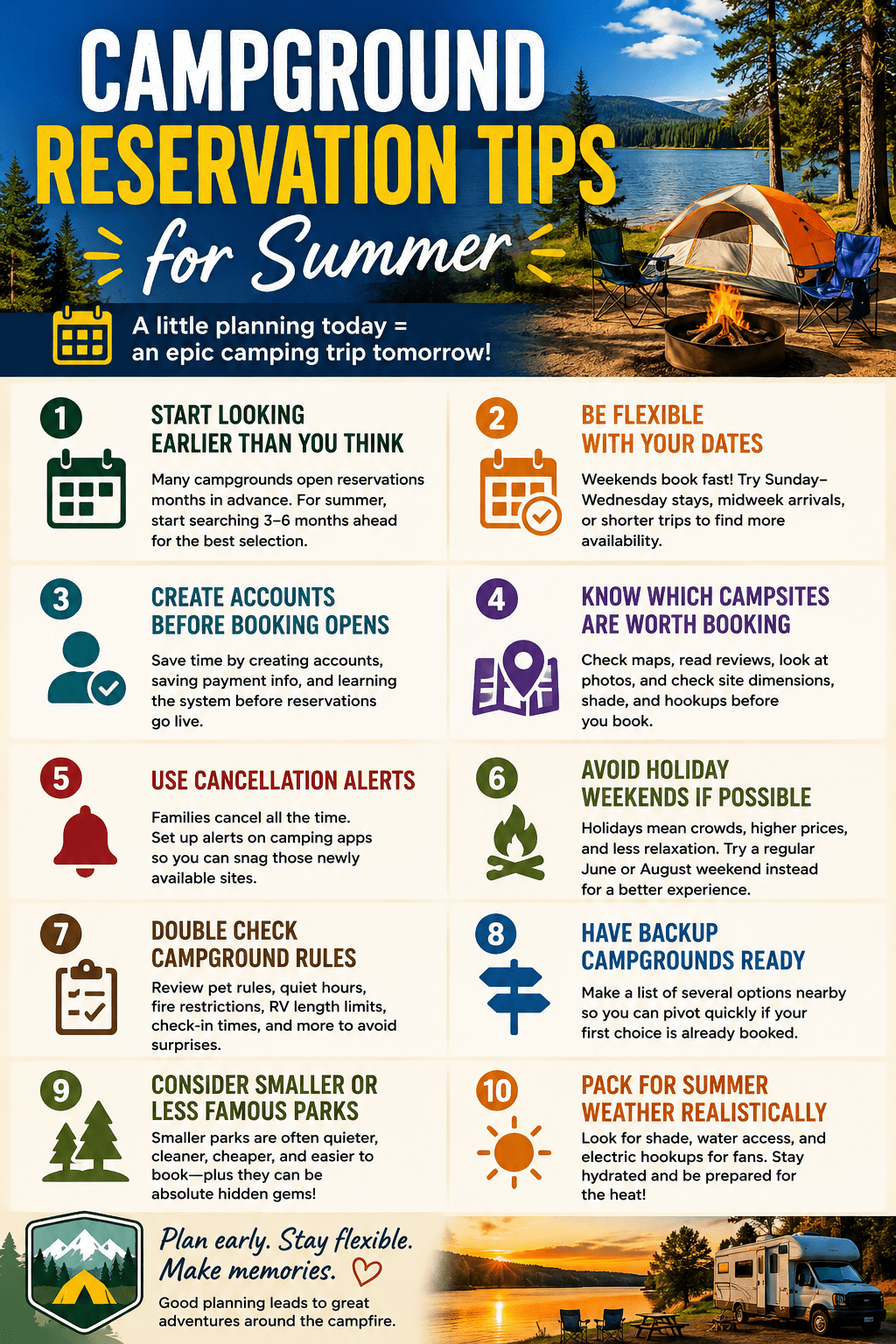
Family camping scene beside a lake at sunset with a tent, campfire, RV, and colorful infographic tips for booking summer campground reservations early and avoiding crowded weekends.

If you’ve tried booking a campground lately, then you already know summer camping season is no joke. The good spots disappear fast, especially around lakes, national parks, rivers, and popular Texas camping areas. One minute you’re casually browsing campsites with coffee in hand, and the next, everything is booked solid until September.

Still, there are ways to beat the rush without stressing yourself completely out. A little planning, some flexibility, and a few smart tricks can make a huge difference when it comes to snagging the campsite you actually want.

Start Looking Earlier Than You Think

This is probably the biggest mistake people make with summer campground reservations. Folks wait until school lets out or Memorial Day weekend rolls around before they even start searching.

By then? The waterfront RV spots, shaded tent sites, and family-friendly campgrounds are usually gone.

For summer camping, especially in popular areas, start searching several months ahead. Some campgrounds open reservations six months in advance, while others release sites even earlier. If you already know your vacation dates, go ahead and set reminders on your phone so you’re ready the minute reservations open.

This matters even more for:

  • National parks
  • State parks
  • Holiday weekends
  • Campgrounds near beaches or lakes
  • Places with cabins or glamping tents

The earlier you start, the better your options will be.

Related: Mistakes First-Time Campers Usually Make (And How to Avoid Them)

Be Flexible With Your Dates

Weekend camping trips disappear first. Friday and Saturday nights are the hardest reservations to grab during summer.

However, weekday camping can completely change the game.

If your schedule allows it, try:

  • Sunday through Wednesday stays
  • Midweek arrivals
  • Shorter trips
  • Last-minute weekday openings

You’d be surprised how many beautiful campsites suddenly become available once you stop focusing only on weekends.

Flexibility with location helps too. Sometimes the campground 20 minutes away from the “famous” one is quieter, cheaper, and honestly prettier.

Create Accounts Before Booking Opens

This sounds simple, but it saves valuable time.

Before reservation day arrives:

  • Create campground website accounts
  • Save payment information
  • Log into reservation systems early
  • Learn how the booking site works

Summer reservations can disappear within minutes for high-demand areas. You do not want to be typing in your credit card number while somebody else grabs the last shaded campsite.

A lot of experienced campers treat reservation mornings like concert ticket sales now.

Know Which Campsites Are Actually Worth Booking

Not all campsites are equal, even inside the same campground.

Some are right beside the bathrooms with nonstop foot traffic. Others sit in direct sunlight with zero shade during a Texas summer. Some are tiny and awkward for larger RVs.

Before booking:

  • Look at campground maps
  • Read reviews carefully
  • Search photos from real campers
  • Check site dimensions
  • Look for shade coverage
  • Verify hookups if needed

People who camp often usually know the “good sites” inside a campground, and those disappear first.

Use Cancellation Alerts

This tip saves camping trips every single summer.

Families cancel reservations constantly because of weather, work schedules, sports tournaments, or changing plans. That means sold-out campgrounds can suddenly reopen.

Several camping apps and websites offer cancellation alerts that notify you when a campsite becomes available. Some campers even score premium lakefront sites this way.

If you missed early reservations, do not give up immediately. Check often because openings pop up daily.

Avoid Holiday Weekends If Possible

Summer holidays sound fun in theory. In reality, campgrounds during major holiday weekends can get packed, loud, and stressful.

Memorial Day, Fourth of July, and Labor Day weekends usually mean:

  • Crowded campgrounds
  • Long check-in lines
  • Noise late into the night
  • Higher prices
  • Limited availability

If your goal is relaxing around a campfire and enjoying nature, you may enjoy a random June or August weekend far more than a major holiday.

Plus, reservations are usually easier to get.

Related: How to Camp Without Losing Your Everlovin’ Mind

Double Check Campground Rules

Every campground has different policies, and missing details can ruin a trip fast.

Before confirming reservations, check:

  • Pet rules
  • Generator hours
  • Quiet hours
  • Fire restrictions
  • Tent limits
  • RV length restrictions
  • Check-in times
  • Swimming rules

Summer heat and drought conditions can also lead to temporary burn bans, especially in Texas. It’s always smart to know what restrictions are active before arriving.

Have Backup Campgrounds Ready

This is one of the smartest campground booking strategies out there.

Instead of obsessing over one exact campground, make a list of several options nearby. If your first choice fills up, you can quickly move to the next one without starting over from scratch.

Try organizing:

  • First-choice campground
  • Backup campground
  • Nearby private RV parks
  • Army Corps of Engineers campgrounds
  • Smaller county parks

Some lesser-known campgrounds are absolute hidden gems that tourists completely overlook.

Consider Smaller Or Less Famous Parks

Everybody rushes toward the big-name camping destinations, but smaller parks can be incredible during the summer.

Many local or regional campgrounds offer:

  • Cleaner bathrooms
  • More privacy
  • Better fishing
  • Quieter campsites
  • Easier reservations
  • Lower camping fees

Sometimes the best summer camping memories happen at places nobody is posting nonstop on social media.

Pack For Summer Weather Realistically

Summer camping sounds dreamy until you’re sweating through the night in a tent that feels like a sauna.

When making campground reservations, think realistically about weather conditions and campsite setup.

Look for:

  • Shade trees
  • Water access
  • Electric hookups for fans
  • Swimming areas
  • Early morning shade

And seriously, do not underestimate Texas summer heat. Hydration, airflow, and shade matter way more than people think.

Final Thoughts

Summer campground reservations have definitely become more competitive over the past few years, but good planning still gives you a solid advantage.

The biggest thing is starting early and staying flexible. A perfect campsite may not always happen, but with the right strategy, you can still land a relaxing summer camping trip without fighting crowds or settling for a terrible site beside the dumpsters.

Sometimes the best camping memories come from the places you almost skipped over entirely.

Lisa Crow contributed to this article. She is a true crime junkie and lifestyle blogger based in Waco, Texas. Lisa is the Head of Content at Gigi’s Ramblings and Southern Bred True Crime Junkie. She spends her free time traveling when she can and making memories with her large family which consists of six children and sixteen grandchildren.
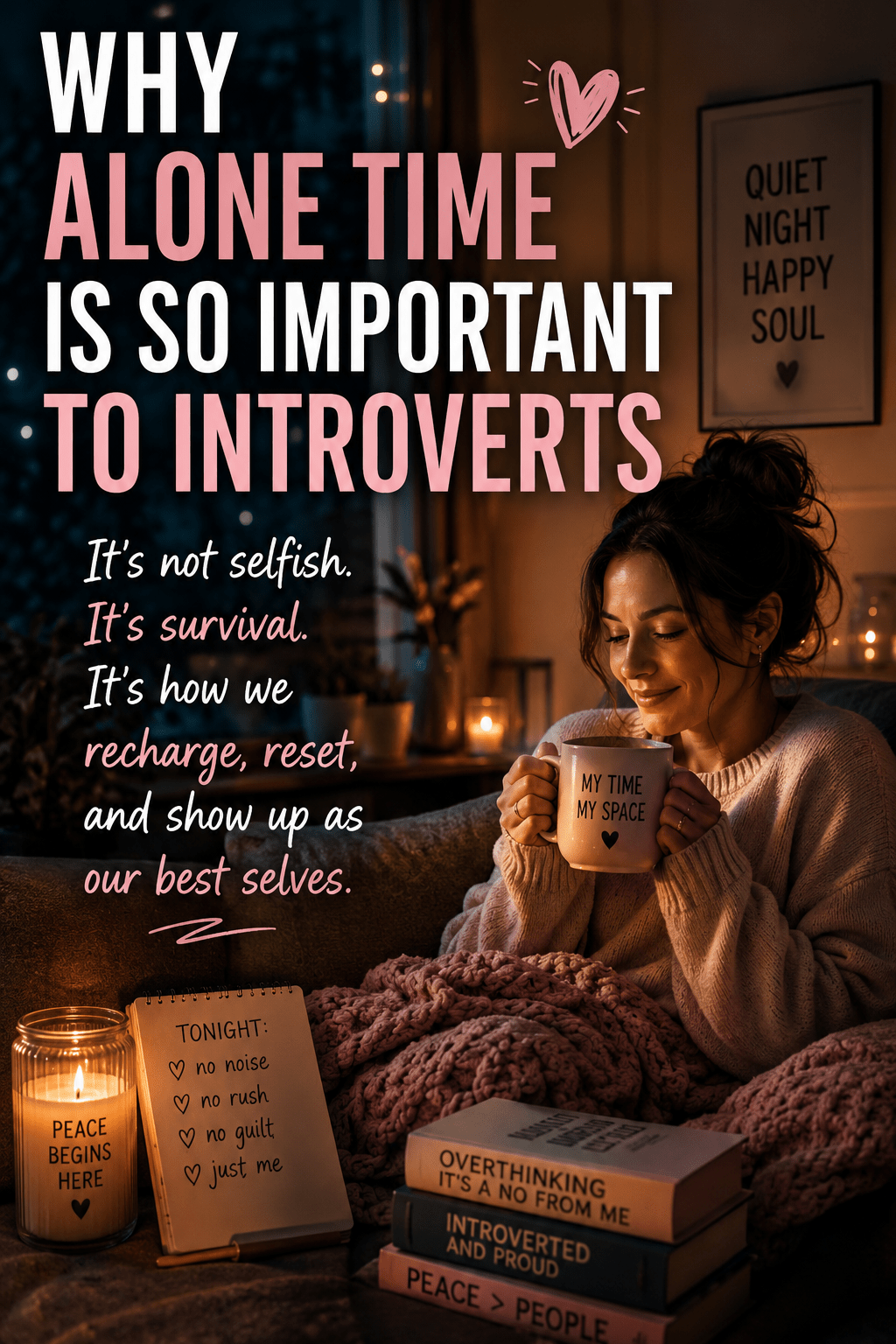
A cozy nighttime scene showing a relaxed woman wrapped in a blanket on a couch, holding a mug that says “My Time My Space.” Warm candlelight and soft lights glow around the room while large text explains why alone time is important to introverts. The peaceful setting captures the quiet comfort of late-night solitude and recharging after a long day.

Some people recharge by going out, being around friends, and staying busy all the time. Introverts are usually the exact opposite. We recharge by finally getting a little peace and quiet. Not because we hate people or don’t love our families, but because constant interaction can feel mentally exhausting after a while.

And honestly? Sometimes the best part of the day does not even start until everybody else goes to sleep.

Introverts Need Quiet To Recharge

For introverts, alone time is not some dramatic “escape from the world” thing. It is more like plugging your phone into a charger after the battery hits 5%.

When you spend all day talking, helping people, answering questions, working, parenting, cleaning, texting, and dealing with noise nonstop, your brain gets overloaded. Eventually, you just need a little silence to reset.

That reset looks different for everybody. Some people read. Some scroll TikTok in silence. Some craft, journal, watch crime documentaries, or just sit there enjoying the fact that nobody is asking them for anything for five whole minutes.

The point is simple. Alone time gives introverts breathing room.

Nighttime Feels Different

There is something magical about late-night quiet. The house feels calmer. The world slows down. No notifications going off every second. No errands. No expectations.

For a lot of introverts, nighttime becomes the only time that truly belongs to them.

I love my husband dearly, but I thank goodness he goes to bed early because I absolutely cherish that quiet nighttime window. It has always been that way for me.

Back when my kids were little, late night was literally the only alone time I could get. During the day, somebody always needed something. Snacks, homework help, rides, laundry, attention, more snacks somehow five minutes later. Moms barely get time to hear themselves think sometimes.

So I stayed up late.

Honestly, I almost never went to bed before 2 AM when my kids were younger. That was my decompression time. My brain finally got to unclench a little. I could watch what I wanted, work on my own hobbies, think my own thoughts, or just enjoy the silence without hearing “Mommmm” every twelve seconds.

Those quiet nighttime hours saved my sanity more than once.

Alone Time Does Not Mean You Love People Less

This is something introverts constantly have to explain.

Wanting alone time does not mean you are mad at your spouse. It does not mean you dislike your kids. It definitely does not mean you are antisocial.

Actually, a lot of introverts are deeply loving people. We just get emotionally drained faster from nonstop interaction.

That quiet hour at night is what helps many introverts show back up as better partners, better parents, and better humans in general.

Without that reset time, everything starts feeling overstimulating. Even little noises can become irritating when your mental battery is empty.

Meanwhile, after a little alone time? Suddenly, you feel human again.

Related: Simple Habits That Improve Mental Health

Moms Especially Understand This

Mothers, especially moms with multiple kids, know how rare true alone time can be.

Even when you technically have “free time,” somebody usually still needs something. You are still mentally on call all day long. That constant responsibility is exhausting, especially for introverts.

That is why so many moms end up becoming nighttime people.

The house finally gets quiet, and your brain immediately relaxes because nobody is touching you, asking questions, fighting over snacks, or yelling from another room.

You finally get to exist as a person instead of being needed every second.

Honestly, those little nighttime rituals become sacred after years of motherhood.

Getting Older Changes It A Little

These days, I do not stay up until 2 AM anymore. I am older now, and sleep matters a whole lot more than it used to.

But I still need that quiet nighttime decompression time.

Now I am perfectly happy squeezing in an hour or two before bed. Sometimes that is all it takes. A little silence, a little scrolling, maybe watching something nobody else in the house wants to watch, and suddenly the whole day feels balanced again.

That peaceful alone time still matters just as much as it always did.

Maybe even more.

Introverts Should Stop Feeling Guilty About Needing Space

Somewhere along the way, people started acting like wanting alone time is selfish. It is not.

Everybody has different ways of recharging emotionally. Extroverts often feel energized around people. Introverts usually recover in quiet spaces.

Neither one is wrong.

If your favorite part of the day is when the house finally gets quiet at night, you are definitely not alone. A lot of introverts understand that feeling completely.

Sometimes, the most peaceful moment of the entire day is sitting in silence while everybody else is asleep, finally getting a little time that belongs only to you.

Lisa Crow contributed to this article. She is a true crime junkie and lifestyle blogger based in Waco, Texas. Lisa is the Head of Content at Gigi’s Ramblings and Southern Bred True Crime Junkie. She spends her free time traveling when she can and making memories with her large family which consists of six children and sixteen grandchildren.

Seasonal Bucket List for Spring in Texas

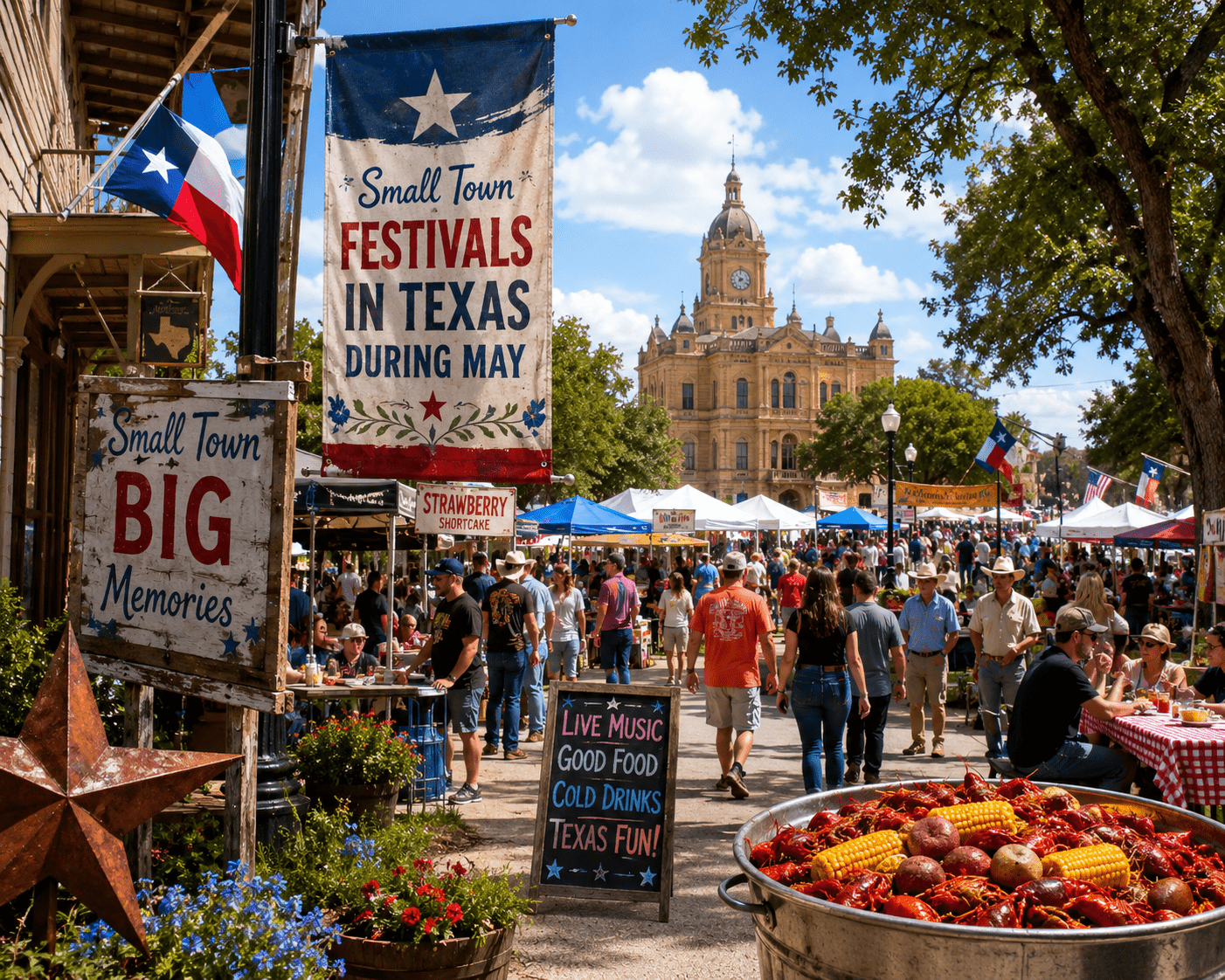
Texas starts showing off in May. The bluebonnets are hanging on, the weather still feels decent before summer turns everything into an oven, and small towns across the state come alive with festivals that locals wait on all year. Some celebrate crawfish, some celebrate music, and others are built around traditions that go back generations. Either way, these small-town festivals in Texas are where you’ll find homemade food, live bands, dusty boots, and stories worth hearing.

If you’re looking for weekend road trip ideas or just want something different from the usual city events, these May festivals are worth adding to your list.

Fredericksburg Trade Days Feels Like A Treasure Hunt

Fredericksburg is already one of the prettiest small towns in Texas, but during Trade Days, it gets even more lively. Vendors set up with everything from antique furniture and handmade soaps to old signs, candles, and vintage Texas décor. You can spend hours wandering around without even realizing it.

Meanwhile, local food trucks fill the air with the smell of smoked brisket, roasted nuts, and fried pies. Live music usually drifts through the grounds too, which gives the whole place that laid-back Hill Country atmosphere people love.

It’s one of those festivals where you show up saying you’re “just looking” and leave with a truck bed full of stuff you didn’t plan to buy.

Related: Seasonal Bucket List for Spring in Texas

The Poteet Strawberry Festival Is Pure Texas Tradition

Every spring, Poteet turns into strawberry central. The Poteet Strawberry Festival has been around for decades, and people from all over Texas still make the trip every May.

Of course, strawberries are everywhere. Strawberry shortcake, strawberry lemonade, strawberry funnel cakes, and probably things nobody thought should even contain strawberries somehow work anyway.

However, the real draw is the mix of rodeos, Tejano music, country concerts, carnival rides, and small-town charm. It doesn’t feel polished or overly commercialized, which honestly makes it better.

Families love it because there’s always something going on, while adults usually come for the music lineup and food alone.

Crawfish Festivals Take Over East Texas

Once May hits, crawfish boils start popping up all over East Texas. Small towns like Jefferson and surrounding communities lean hard into Louisiana-style flavor this time of year.

Long tables get covered in crawfish, potatoes, sausage, and corn while local bands play under tents nearby. The atmosphere stays casual and loud in the best way possible. Nobody’s worried about fancy clothes. People come hungry and leave full.

In addition, many of these festivals include classic car shows, local craft booths, and cook-off competitions that get surprisingly competitive.

If you’ve never spent a spring evening in East Texas peeling crawfish with live music playing nearby, you’re missing out on one of the best small-town experiences in the South.

Czech Heritage Festivals Bring Old Traditions Back To Life

Texas has deep Czech roots, especially in small towns around Central Texas. During May, communities celebrate that heritage with festivals packed full of polka music, homemade kolaches, dancing, and traditional foods.

Places like West, Taylor, and surrounding areas know how to throw these events right. Grandparents dance beside teenagers, old family recipes get passed around, and everybody somehow ends up eating more sausage than they planned.

At the same time, these festivals remind people how much culture shaped Texas long before giant cities took over the spotlight.

The homemade desserts alone are reason enough to stop by.

Small Town Music Festivals Feel More Personal

One thing people notice quickly about small-town Texas festivals is how personal they feel. You’re not fighting massive crowds just to hear music from half a mile away.

Instead, local music festivals in towns across the Hill Country and East Texas usually feel relaxed and welcoming. You can actually talk to vendors, meet musicians, and enjoy yourself without spending half the day stuck in traffic.

Many of these events feature Texas country, Red Dirt artists, blues bands, and local singers trying to make a name for themselves. Sometimes the unknown performers end up being the ones everybody remembers most.

Plus, there’s just something different about hearing live music while sitting under courthouse lights in a small Texas town.

Related: Top 5 Texas Spring Break Destinations for Families

Food Is Half The Reason People Show Up

Honestly, Texas festival food deserves its own category.

In May alone, you’ll find barbecue cook-offs, taco contests, pie competitions, smoked turkey legs, peach cobblers, roasted corn, and enough homemade salsa to clear your sinuses for a week.

Small towns don’t hold back either. Church groups, local pitmasters, and longtime cooks treat these festivals like serious business. Recipes that have been around for generations suddenly show up on folding tables for strangers to try.

As a result, some people plan entire road trips around festival food alone.

And honestly, that’s understandable.

These Festivals Keep Small Town Texas Alive

Beyond the music and food, these festivals matter because they help small towns stay connected. Local businesses get support, volunteer groups raise money, and communities get a reason to gather together.

In a world where everything feels rushed and digital now, small town festivals still feel real. Kids run around with snow cones, older folks sit in lawn chairs talking for hours, and nobody seems overly concerned about being in a hurry.

That slower atmosphere is part of what keeps people coming back every year.

Some families have attended the same Texas spring festivals for generations.

Why May Is One Of The Best Months For Texas Road Trips

By June, the heat starts getting brutal across most of Texas. That’s why May is such a sweet spot for road trips and festivals. Wildflowers still hang around, evenings stay pleasant, and outdoor events are actually enjoyable.

You can hit several small town festivals in one weekend if you plan it right. Drive through the Hill Country one day, East Texas the next, then stop at random roadside diners along the way.

Half the fun ends up being the small towns you discover between festivals.

Sometimes those unplanned stops become the best memories of the whole trip.

Final Thoughts On Small Town Festivals In Texas

Small town festivals in Texas during May aren’t about flashy attractions or perfectly curated experiences. They’re about music drifting through downtown streets, homemade food served on paper plates, and communities celebrating the traditions that still matter to them.

That’s what makes them memorable.

Whether you’re chasing strawberry festivals, crawfish boils, live music, or old Texas traditions, May might honestly be the best time all year to explore the smaller towns most tourists drive right past.

Lisa Crow contributed to this article. She is a true crime junkie and lifestyle blogger based in Waco, Texas. Lisa is the Head of Content at Gigi’s Ramblings and Southern Bred True Crime Junkie. She spends her free time traveling when she can and making memories with her large family which consists of six children and sixteen grandchildren.

Dark, cinematic poster featuring a space theme with a rocket launch, astronaut, and shadowy figure, overlaid with bold text about NASA-linked disappearances and classified files suggesting mystery and conspiracy.

There’s something about space that gets under people’s skin. Maybe it’s the mystery, maybe it’s the silence, or maybe it’s the fact that once you get far enough away, nobody can hear a thing. Over the years, a handful of disappearances have been loosely tied to NASA, space programs, or people working around them. Some are real cases with strange details. Others lean more into theory and speculation. Either way, they’ve kept folks talking.

Let’s dig into what’s actually documented and where things start drifting into rumor.

The Astronauts Who Didn’t Come Back the Same

Now to be clear, NASA keeps tight records. Astronauts don’t just vanish without a paper trail. However, there are cases where missions ended in ways that left more questions than answers.

Take the tragic loss of crews in accidents like the Challenger and Columbia disasters. Those weren’t disappearances, but they did spark a wave of conspiracy theories. Some people still claim crew members survived under different identities, though there’s no solid evidence backing that up.

What makes these situations stick is how quickly speculation fills the gaps when something catastrophic happens in space. When the public doesn’t fully understand the science, imagination takes over.

The Case of Missing Researchers and Contractors

Here’s where things get a little more grounded. Over the years, there have been scattered reports of scientists, engineers, and contractors connected to aerospace work who later disappeared under unclear circumstances.

Some of these cases involve individuals who worked on classified projects. That alone is enough to raise eyebrows. When someone with sensitive knowledge vanishes, people start connecting dots whether they belong together or not.

That said, most of these disappearances are handled the same way as any other missing persons case. Financial stress, personal issues, or mental health struggles often play a role, even if it doesn’t make headlines the same way “NASA-linked disappearance” does.

The “Astronaut Lost in Space” Urban Legends

You’ve probably heard one of these before. A lone astronaut drifting endlessly after losing contact. A secret mission that went wrong and got buried. These stories float around online and get passed off as real more often than you’d think.

The truth is, NASA tracks everything. Spacecraft don’t just slip off radar without anyone noticing. Missions are monitored down to the smallest detail. So while these stories are eerie, they don’t hold up under scrutiny.

Still, they stick around because they tap into a real fear. Being completely alone in space with no way back is about as unsettling as it gets.

Cold War Stories and Soviet Shadows

Now this is where things get interesting. During the Cold War, both the United States and the Soviet Union were racing to dominate space. The secrecy on both sides was intense.

There are long-standing claims about “lost cosmonauts” from the Soviet program. Some believe there were failed launches and unreported deaths that never made it into official records. While this isn’t directly tied to NASA, it feeds into the broader idea that space agencies might not always tell the full story.

On the American side, NASA has generally been more transparent, especially after public scrutiny ramped up in the later decades. Even so, that early era left enough mystery behind to keep conspiracy theories alive.

Related: The Psychology Behind Crimes of Passion

High-Profile Conspiracies and Internet Theories

Once the internet got involved, things really took off. Forums, videos, and blogs started connecting unrelated events into bigger narratives.

Some theories claim certain astronauts discovered something in space and were silenced. Others suggest secret missions that never made it into official records. You’ll even see claims about hidden bases or classified encounters.

Here’s the reality check. There’s no verified evidence supporting these ideas. They’re built on speculation, coincidences, and sometimes outright misinformation. Still, they spread fast because they’re entertaining and just believable enough to make you pause.

Why These Stories Stick Around

So why do people keep coming back to these stories?

For one, space is still largely unknown. Even with all our technology, there’s a lot we don’t fully understand. That leaves room for imagination.

Also, NASA represents something bigger than everyday life. It’s cutting-edge, it’s secretive at times, and it deals with environments most of us will never experience. That naturally creates a sense of distance and mystery.

Then there’s human nature. When something doesn’t have a clear answer, we tend to fill in the blanks ourselves.

What’s Actually Confirmed

If you strip away the rumors, here’s what we know for sure.

NASA has had tragic losses, but they’re documented and investigated publicly. Astronauts and personnel are accounted for through official records. Disappearances tied directly to NASA operations are extremely rare and not supported by credible evidence.

Most “NASA-linked” cases fall into one of three categories. Regular missing persons cases with a loose connection. Misinterpreted historical events. Or straight-up fiction that took on a life of its own.

Final Thoughts

There’s no shortage of strange stories when it comes to space and the people who work around it. Some are rooted in real events, while others drift way off course.

It’s fine to be curious. Honestly, that curiosity is what drives discovery in the first place. Just make sure you’re separating what’s documented from what’s just good storytelling.

Because out there in the dark, the truth is already wild enough without adding extra pieces to it.

Lisa Crow contributed to this article. She is a true crime junkie and lifestyle blogger based in Waco, Texas. Lisa is the Head of Content at Gigi’s Ramblings and Southern Bred True Crime Junkie. She spends her free time traveling when she can and making memories with her large family which consists of six children and sixteen grandchildren.