There is something special about a family recipe that goes beyond the ingredients written on the page. Maybe it is your grandmother’s handwritten recipe for biscuits, the casserole somebody brings to every Thanksgiving, or a dessert that somehow tastes better when a certain person makes it. Family recipes carry stories, memories, traditions, and sometimes a little bit of kitchen chaos right along with them.
Unfortunately, those recipes have a way of disappearing. A handwritten card gets tucked into a drawer, a recipe gets scribbled on the back of an envelope, or somebody remembers the ingredients but not quite how Grandma actually made it. Before those little pieces of family history vanish, why not give them a proper home?
A family recipe binder is an easy, inexpensive way to collect those recipes in one place. Better yet, you can turn it into something your family will treasure for years.
Start With the Recipes You Already Have
You do not need to wait until you have a huge collection of recipes. Start with whatever is already floating around your kitchen.
Pull out the recipe cards in your cabinets, the printed recipes shoved into cookbooks, screenshots on your phone, and those mysterious handwritten notes that have been sitting on the refrigerator for three years.
Then ask relatives what recipes they have tucked away.
This is where the project can get especially fun. Ask Mom for her holiday recipes. Ask Grandma about the dish she made when everyone came over on Sundays. Ask your siblings what they remember eating growing up. Even recipes that seem ordinary can become meaningful when they are attached to a particular person or memory.
You might be surprised by how many stories come out of a simple question about a pot of beans or a pan of cornbread.
Choose the Right Binder
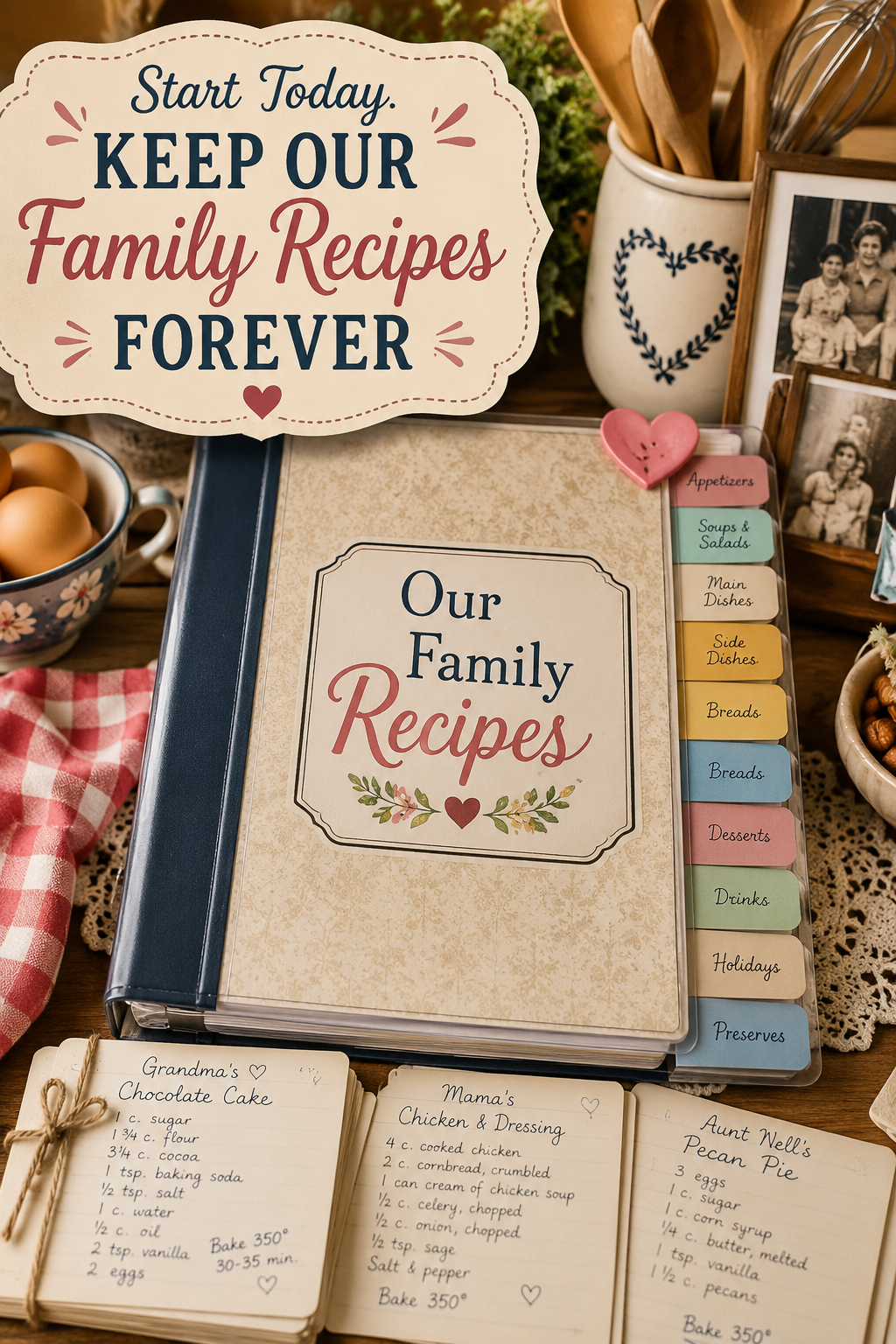
You certainly do not need to spend a fortune on a fancy recipe organizer. A basic three-ring binder works beautifully and gives you plenty of room to expand your collection.
Choose a size based on how ambitious you want to get. A one-inch binder is perfect for starting small, while a larger binder gives you room for recipes, photographs, notes, and family stories.
You can also personalize the cover. Add the family name, a meaningful phrase, or even a photograph of the family kitchen. If you are feeling crafty, decorate the cover with scrapbook paper, fabric, stickers, or anything else that makes it feel like yours.
The goal is not perfection. The goal is creating something that feels like your family.
Divide the Binder Into Sections
Once you start collecting recipes, having some basic organization will save you from digging through fifty pages looking for the Thanksgiving dressing.
Use tabbed dividers to create sections such as appetizers, soups and salads, main dishes, side dishes, breads, desserts, drinks, holiday recipes, and preserves.
You can also create sections based on family members. A section for Grandma’s recipes, another for Mom’s, and another for your own favorites can make the binder feel much more personal.
There is no rule saying every recipe has to fit neatly into a traditional category. If your family has a famous Christmas candy recipe or a particular Sunday dinner tradition, give it its own section.
Preserve the Original Recipes
If you have handwritten family recipes, do not throw away the originals just because you are making copies.
Instead, protect them.
Place original recipe cards inside protective plastic sleeves whenever possible. You can then make photocopies or scans for everyday cooking while keeping the original handwriting safely preserved.
Those little imperfections are often what make old recipes so valuable. The faded ink, coffee stains, crossed-out ingredients, and handwriting can tell a story that a typed recipe never could.
If someone in your family has beautiful handwritten recipes, consider scanning them so you have a digital backup too.
Add the Stories Behind the Recipes
This might become the best part of the entire binder.
Do not just write down what goes into the recipe. Write down why it matters.
Maybe Aunt Mary always made the cake for birthdays. Perhaps your dad burned the first batch of biscuits every Sunday until he finally figured them out. Maybe a particular soup was the meal everyone ate when someone was sick.
Those details turn a recipe collection into a family history book.
You can add a small section beneath each recipe called “The Story Behind It” and record anything you know. Include who created the recipe, where it came from, when your family usually makes it, and any memories connected to it.
Years from now, those stories may be even more valuable than the recipes themselves.
Include Family Photographs
A recipe binder does not have to be nothing but food.
Add photographs whenever you can. A picture of Grandma standing at the kitchen counter can sit beside one of her recipes. A photograph from Thanksgiving can accompany the family dressing recipe. Pictures of children helping make Christmas cookies can bring an entire section to life.
You could even add photographs of the finished dishes.
If you have older photographs, make copies rather than putting irreplaceable originals into a binder that will be handled frequently.
Related: Old Kitchen Trends That Are Making a Comeback
Leave Room for Future Recipes
One mistake people make is filling every available page immediately.
Resist the urge.
Leave plenty of room for new recipes because your family collection is not finished. Someone will discover a new favorite. Somebody will finally write down that recipe they have been making from memory for twenty years. A new generation will eventually add its own dishes.
Leave several blank pages in each section or keep a supply of empty sheet protectors behind the dividers.
Think of the binder as a living family cookbook rather than a finished project.
Create a Holiday Section
Holiday recipes deserve special treatment because they are often connected to the strongest family traditions.
Create a dedicated section for Thanksgiving, Christmas, Easter, birthdays, family reunions, and other celebrations your family observes.
You could include everything from the turkey seasoning to Grandma’s famous pecan pie. Add notes about when dishes are prepared, who usually makes them, and any traditions surrounding them.
This can eventually become the binder everyone pulls out when the holidays roll around.
Make Copies for Family Members
Once your binder starts filling up, consider making copies for relatives.
You do not necessarily need to reproduce the entire binder. You could create smaller collections containing recipes from a particular grandparent or a favorite group of family dishes.
A personalized copy can make a wonderful gift for a child moving into their first home, a newlywed couple, or a family member who wants to carry on a particular tradition.
There is something pretty wonderful about handing someone a collection of recipes and saying, “These are ours.”
Keep a Digital Backup
Even the most carefully stored binder can eventually become damaged. Kitchens involve water, grease, spills, and the occasional unidentified substance that somehow ends up on everything.
Take photographs or scans of important recipes and store them digitally.
You can keep copies on your computer, an external drive, or a cloud storage service. Make sure the most irreplaceable handwritten recipes are backed up separately.
That way, even if something happens to the physical binder, the family recipes do not disappear with it.
Let the Binder Grow Naturally
Most importantly, do not turn this into another project that has to be completed perfectly.
Start with five recipes if that is what you have.
Add another recipe when you remember one. Call a relative and ask for an old favorite. Write down the recipe you make every Christmas but somehow have never actually recorded.
Over time, the binder will grow.
Eventually, you may find yourself flipping through it and realizing that you are not just looking at recipes. You are looking at pieces of your family. There are familiar names, familiar handwriting, old traditions, favorite meals, and stories that might otherwise have disappeared.
That is what makes a family recipe binder worth creating. It is not really about organizing recipes. It is about making sure the things your family has cooked, celebrated, laughed over, and passed down do not get lost along the way. And honestly, that is one cookbook worth keeping messy.
Lisa Crow contributed to this article. She is a true crime junkie and lifestyle blogger based in Waco, Texas. Lisa is the Head of Content at Gigi’s Ramblings and Southern Bred True Crime Junkie. She spends her free time traveling when she can and making memories with her large family which consists of six children and sixteen grandchildren.