America turns 250. Celebrate the Fourth with fireworks, traditions, TV specials, and a look at what makes this birthday unforgettable.

There are Fourth of Julys, and then there’s this one.

This year isn’t just another excuse to fire up the grill or stock the cooler. America is celebrating its 250th birthday, a milestone that most of us never imagined we’d get to see. For one summer, communities from coast to coast are pulling out all the stops with bigger fireworks, special events, historical celebrations, concerts, and hometown traditions that remind us why Independence Day has always been one of the country’s favorite holidays.

Whether you’re spending the day at the lake, sitting under a shade tree at the family reunion, or trying to keep the grandkids from eating dessert before supper, this year’s celebration feels like one worth remembering.

A Birthday 250 Years in the Making

When delegates adopted the Declaration of Independence on July 4, 1776, they probably weren’t thinking about what the country would look like two and a half centuries later. They certainly couldn’t have imagined interstate highways, smartphones, Major League Baseball, space travel, or millions of Americans gathering every July to celebrate with fireworks and barbecue.

Over 250 years, America has seen incredible triumphs, heartbreaking losses, technological revolutions, and generations of families working to build better lives. Through it all, Independence Day has remained one of the few holidays that brings just about everybody outside.

For one day, neighborhoods come alive. Flags appear on front porches. Kids ride decorated bicycles through local parades. Someone is always arguing over whose brisket recipe is best, and somebody inevitably forgets the lighter fluid.

Some traditions never change.

Small Towns Know How to Do the Fourth Right

Ask just about anyone who’s grown up in a small town, and they’ll tell you there’s nothing quite like a hometown Fourth of July celebration.

Main Streets fill with antique tractors, marching bands, classic cars, veterans’ groups, beauty queens riding convertibles, and kids scrambling after candy tossed from parade floats. Local churches host pancake breakfasts before the festivities begin, civic groups organize cook-offs, and parks fill with families staking out the perfect spot for fireworks hours before sunset.

It’s not fancy.

That’s exactly why people love it.

There’s something comforting about seeing familiar faces year after year, watching children experience the same traditions their parents grew up with, and ending the evening under a sky full of fireworks.

Related: Texas America250

Fire Up the Grill

If there’s one thing Americans know how to do, it’s celebrate around food.

The Fourth of July menu doesn’t have to be complicated. In fact, the classics are classics for a reason. Burgers sizzling over charcoal, hot dogs wrapped in foil, smoked brisket that’s been cooking since sunrise, racks of ribs, baked beans, potato salad, deviled eggs, corn on the cob, watermelon, homemade ice cream, peach cobbler, and apple pie have become part of the holiday itself.

Every family has that one recipe everyone expects to see. Maybe it’s your grandmother’s potato salad that nobody else can quite duplicate. Maybe it’s the homemade barbecue sauce that’s been passed down for years. Whatever it is, those recipes become part of the memories.

Baseball, Back Roads, and Americana

Some things simply feel American.

A lazy afternoon baseball game on television while somebody naps in the recliner. A drive down a country road with the windows rolled down. County fairs, roadside diners, old grain elevators, Route 66, family road trips, and evenings spent on the front porch as the sun goes down.

The Fourth of July has always celebrated more than history. It celebrates everyday life.

It’s about neighbors checking on one another after a storm, grandparents telling stories that somehow get better every year, kids chasing lightning bugs after dark, and families gathering around picnic tables that have seen decades of birthdays, reunions, and holidays.

Those ordinary moments are what many people treasure most.

A Big Year for Celebrations

Communities across the country have spent months planning events for America’s 250th birthday, and many are going bigger than usual.

Expect larger fireworks displays, historical reenactments, patriotic concerts, museum exhibits, community festivals, military flyovers, and special programs honoring the people and events that helped shape the nation. Some cities are even hosting multi-day celebrations with food vendors, live music, and family activities leading up to Independence Day.

If your town has never been one to make a big fuss over the Fourth, this may be the year that changes.

What to Watch on Television

Not everyone wants to fight traffic or claim a spot at the park hours before the fireworks begin. Thankfully, television has become part of the holiday tradition too.

ABC is starting the celebration early on Friday. They will begin airing specials and 7 pm and run for 24 hours straight. This is a must-see!

Many families gather each year to watch A Capitol Fourth, featuring performances from some of the country’s biggest musical artists before the fireworks over Washington, D.C. Others tune in for Macy’s 4th of July Fireworks, which lights up the New York skyline with one of the nation’s largest fireworks shows. Depending on your local station, you’ll also find hometown fireworks broadcasts, patriotic concerts, documentaries about American history, and plenty of classic movies throughout the day.

More Than Fireworks

The fireworks may be the grand finale, but they’re only part of what makes the holiday special.

The best memories usually happen long before the first shell explodes overhead.

They’re made while everybody gathers in the kitchen trying to steal a bite before supper. They’re made around folding tables covered with red-and-white checkered tablecloths. They’re made while cousins challenge each other to cornhole, grandparents rock on the porch, and little ones wave sparklers with huge smiles on their faces.

Years from now, most people won’t remember exactly how many fireworks were launched or what song was playing during the finale.

They’ll remember who they spent the day with.

Looking Ahead

A 250th birthday naturally makes people look back, but it also invites us to look ahead.

Every generation leaves its mark on the country in its own way. Today’s children will someday tell stories about where they were during America’s 250th birthday, just as older generations remember bicentennial celebrations, moon landings, championship seasons, and other moments that brought people together.

That’s what makes this Independence Day feel different.

It’s a once-in-a-lifetime celebration that reminds us how much history has unfolded over the last 250 years while giving us another reason to gather with the people who matter most.

So fill your plate one more time. Stay outside a little longer. Watch the fireworks, wave to your neighbors, and enjoy the kind of summer evening that reminds you why the Fourth of July has remained one of America’s most beloved traditions.

After all, you only get one chance to celebrate your country’s 250th birthday.

Lisa Crow contributed to this article. She is a true crime junkie and lifestyle blogger based in Waco, Texas. Lisa is the Head of Content at Gigi’s Ramblings and Southern Bred True Crime Junkie. She spends her free time traveling when she can and making memories with her large family which consists of six children and sixteen grandchildren.

Family enjoying Halloween festivities at a tropical resort in Mexico and the Caribbean with festive decorations and ocean views.

It’s time to start planning those fall trips!

Halloween with kids does not have to mean staying close to home. While neighborhood trick-or-treating and local haunted attractions are classics for a reason, traveling during Halloween can turn an already exciting holiday into something unforgettable. Families looking for a seasonal getaway can find plenty of festive experiences throughout Mexico and the Caribbean that combine Halloween fun with beautiful destinations and unique local traditions.

Whether your family wants costumes and candy or cultural celebrations and memorable activities, these destinations offer something beyond the ordinary.

Halloween on the High Seas

For families who want a traditional Halloween celebration with a vacation built in, a Halloween-themed cruise can be an exciting option. Several cruise lines offer seasonal sailings throughout the Caribbean during the fall months, complete with themed entertainment, decorations, costume events, and special treats.

One of the most popular experiences is Disney Cruise Line’s Halloween celebration at sea, which transforms select sailings with festive décor, family activities, character appearances, themed entertainment, and seasonal dining options. Kids can dress in costume, enjoy Halloween-themed games, and experience all the fun of the holiday while exploring tropical destinations.

Because cruise schedules and onboard events change each season, it is always a good idea to review current offerings before booking.

Explore Caves and Natural Wonders in Barbados

Families who prefer adventure over haunted houses can create their own spooky fun in Barbados. The island offers memorable experiences that feel perfectly suited to Halloween season without relying on traditional scares.

One standout experience is exploring the island’s famous underground cave systems. Guided cave tours allow families to discover dramatic rock formations, hidden streams, and fascinating natural spaces that feel mysterious and exciting for children and adults alike.

After a day of exploring, many resorts and family-friendly properties host seasonal activities during late October, including costume contests, scavenger hunts, themed dinners, and outdoor movie nights.

Resort Halloween Activities for Kids

Family resorts throughout the Caribbean often embrace Halloween with special events designed specifically for younger travelers.

Depending on the property and season, families may find activities such as:

  • Costume contests
  • Pumpkin decorating
  • Treasure and scavenger hunts
  • Halloween-themed crafts
  • Outdoor movie nights
  • Dance parties and family entertainment
  • Trick-or-treat events around the resort

Checking activity calendars ahead of time can help families choose a destination that matches their children’s ages and interests.

Related: Day of the Dead vs. Halloween: The Differences & Connections

Experience Day of the Dead in Mexico

For families with older children, Mexico offers an opportunity to experience a celebration that is different from traditional Halloween while still embracing themes of remembrance, color, creativity, and community.

Day of the Dead, or Día de los Muertos, takes place around the beginning of November and honors loved ones through vibrant altars, flowers, artwork, music, and gatherings. While it is often grouped together with Halloween, the tradition has its own history and meaning.

Visitors can find family-friendly celebrations in many parts of Mexico that include public art displays, local performances, decorative markets, and traditional foods. It can be a meaningful way for children to learn about another culture while enjoying a festive atmosphere.

Make Halloween a Family Trip to Remember

Halloween travel gives families a chance to create traditions that go beyond costumes and candy. Whether that means celebrating at sea, exploring caves, enjoying resort activities, or experiencing cultural festivities in Mexico, a seasonal getaway can turn an ordinary holiday into something unforgettable.

With a little planning, Halloween can become more than a single night and turn into an experience the whole family talks about long after the costumes are packed away.

Lisa Crow contributed to this article. She is a true crime junkie and lifestyle blogger based in Waco, Texas. Lisa is the Head of Content at Gigi’s Ramblings and Southern Bred True Crime Junkie. She spends her free time traveling when she can and making memories with her large family which consists of six children and sixteen grandchildren.

A festive Christmas in July scene with glowing holiday lights, a decorated Christmas tree, cozy Christmas decor, and a tropical sunset in the background. A large “Christmas in July” title fills the image while holiday favorites are listed in an open notebook. Seasonal details include a red mug topped with whipped cream, ornaments, a Santa hat, and a sign celebrating Hallmark movie magic and the start of Fall melt pouring season.

Every single year it happens.

Summer is doing its thing, it’s approximately one thousand degrees outside, I’m pretending I enjoy being outdoors, and then Hallmark quietly rolls in with Christmas in July and suddenly my entire personality shifts.

The movies officially started airing Friday and I could not be happier.

This has become one of my absolute favorite parts of summer. Some people count down to vacations or pool season. Me? I count down to the point where Hallmark starts showing snowy small towns, twinkle lights, suspiciously attractive bakers, and people falling in love while decorating trees.

The second Christmas in July starts, something in my brain immediately says: okay… it’s time.

Time to think Fall.

Time to think Christmas.

Time to start planning scents.

And somehow… time to accept that this year has absolutely flown by.

Related: The Christmas Movie I Never Skip

Christmas In July Feels Like The Official Start Of Holiday Planning

I know logically it sounds ridiculous.

Christmas movies in July?

But if you know, you know.

There is something weirdly comforting about putting on a Hallmark movie while sitting under a ceiling fan in triple-digit weather and pretending the air outside smells like cinnamon instead of hot pavement.

Christmas in July always flips the switch for me creatively too. Once those movies start airing, my mind immediately starts moving toward Fall and holiday scents.

That means planning fragrance blends, deciding what stays, figuring out what comes back, and dreaming up new ideas. And this year, we’re starting to pour Fall melts next weekend.

NEXT WEEKEND.

Honestly, that sentence feels fake because wasn’t it just March?

One minute it’s New Year’s and the next minute I’m making Fall plans and realizing the holidays are basically speeding toward us whether I’m ready or not.

My Hallmark Favorites I’m Hoping Show Up This Year

Every year I end up watching way too many movies and saying, “Okay, this is the last one,” before immediately starting another.

But there are definitely favorites I hope make plenty of appearances over the next month.

Right now, my top comfort-watch list includes:

• Haul Out the Holly
• Haul Out the Holly: Lit Up
• Biltmore Christmas
• Snow Bride
• The Nine Lives of Christmas
• Christmas in Evergreen
• Christmas Town
• Sugarplummed

Haul Out the Holly and Haul Out the Holly: Lit Up are still sitting at the top for me right now. They are ridiculous in the best possible way and somehow became instant favorites.

Also… I am once again putting it out into the universe:

Please give us a sequel.

I know I’m not alone.

Fall Melts, Holiday Dreams And Pretending There’s A Chill In The Air

Christmas in July always feels like permission to start thinking ahead.

Not rushing summer.

Just opening the door a little.

Suddenly I’m thinking about warm bakery scents, cozy evenings, holiday collections, and all the things that make the second half of the year feel fun.

There’s something exciting about planning now and knowing before long the house will smell like Fall candles, Christmas movies will actually make sense seasonally, and everybody will suddenly act shocked that the holidays arrived so fast.

Meanwhile I’ll be over here acting surprised too… despite literally starting holiday planning in July.

If you need me for the next month, I’ll probably be somewhere between Hallmark movie marathons and testing Fall scents while pretending it’s fifty degrees outside.

And honestly?

That sounds like a pretty good summer tradition.

Lisa Crow contributed to this article. She is a true crime junkie and lifestyle blogger based in Waco, Texas. Lisa is the Head of Content at Gigi’s Ramblings and Southern Bred True Crime Junkie. She spends her free time traveling when she can and making memories with her large family which consists of six children and sixteen grandchildren.

Vintage-style historical Juneteenth poster showing the June 19, 1865 announcement of freedom in Galveston, Texas, with Union troops reading General Order No. 3 to newly freed Black Texans. The image transitions into early Juneteenth celebrations and Central Texas community traditions with churches, parades, music, and family gatherings in rich sepia tones.

Every year on June 19, Texans gather for cookouts, music, parades, family reunions, and community celebrations. But Juneteenth did not begin as a festival. It began with a delayed announcement, a crowded Texas port city, and a moment that changed thousands of lives forever.

The story of Juneteenth starts in Galveston, but it quickly spread inland across Texas, where Black communities turned freedom into tradition and remembrance into celebration. In Central Texas, especially, Juneteenth became more than a holiday. It became a yearly declaration that freedom deserved to be seen, honored, and passed down.

Why Freedom Came Late To Texas

When President Abraham Lincoln issued the Emancipation Proclamation on January 1, 1863, it declared enslaved people in Confederate states to be free. However, freedom on paper and freedom in practice were not the same thing.

Texas sat far from most Union military control during the Civil War. Because there were fewer federal troops present to enforce emancipation, slavery continued across much of the state. In fact, Texas became a place where some enslavers relocated during the war because they believed it would remain insulated from federal action.

By spring 1865, the Civil War was effectively ending elsewhere, but in Texas, daily life remained largely unchanged for many enslaved people.

That finally changed in June.

Check Out My Latest Book: Free on the Brazos

June 19, 1865: The Day Everything Changed In Galveston

On June 19, 1865, Union Major General Gordon Granger arrived in Galveston with federal troops and issued General Order No. 3. The order announced that all enslaved people in Texas were free and stated there would now be an “absolute equality of personal rights.”

For an estimated 250,000 enslaved Texans, the announcement came more than two years after emancipation had officially been declared.

History often compresses moments into neat stories, but the reality was more complicated.

Some people heard the news immediately and celebrated. Others learned days or weeks later as word spread across farms, plantations, churches, and towns. In certain places, enslavers delayed sharing the information or tried to maintain control as long as possible. Still, the meaning could not be undone.

People left plantations to search for family members. Some traveled north. Others simply walked away because movement itself became an act of freedom. Churches filled with prayer, songs, and gatherings that marked the beginning of a new chapter.

Although Galveston was the location of the announcement, the celebration that became Juneteenth would take shape elsewhere.

The First Juneteenth Celebrations Began To Take Form

One year later, Black Texans organized commemorations of June 19, 1865.

Early celebrations were sometimes called Jubilee Day or Emancipation Day. They included prayer services, processions, music, speeches, community meals, and gatherings centered around both joy and remembrance. Many participants wore their finest clothing because for generations enslaved people had not been allowed to dress freely or publicly celebrate themselves.

Recent historical research uncovered evidence that one of the earliest large public Juneteenth celebrations happened in Houston in 1866. Thousands reportedly joined a parade featuring music, patriotic symbols, banners, and a public celebration of newly claimed citizenship and freedom.

Those gatherings created a blueprint that spread across Texas.

How Juneteenth Took Root In Central Texas

As freed Black Texans built communities across the state, Juneteenth became deeply rooted in Central Texas.

Cities and towns throughout the region began holding annual celebrations that blended faith, family, education, and community pride. Churches often became the center of events because they served as gathering places, organizing hubs, and safe spaces during Reconstruction and afterward.

In places including Waco, Austin, Temple, Belton, and surrounding communities, Juneteenth celebrations evolved into annual traditions that included picnics, prayer services, music performances, baseball games, educational programs, and family reunions.

These events carried even more meaning during segregation.

Because Black Texans were often excluded from public spaces, communities created their own places to gather and celebrate. Across Texas, land was purchased specifically for emancipation celebrations and community events. Those traditions helped preserve the holiday through decades when it received little official recognition.

Central Texas celebrations became acts of memory as much as celebration. Families returned year after year, children learned stories from elders, and Juneteenth remained alive through the community long before national recognition arrived.

More Than A Holiday, A Texas Story

Today, Juneteenth is recognized across the United States and became a federal holiday in 2021, but its roots remain unmistakably Texan.

What began with the arrival of Union troops in Galveston became something larger than a single historical event.

Juneteenth endured because generations of Black Texans chose not to let the story disappear. They turned delayed freedom into an annual remembrance. They gathered in churches, parks, neighborhoods, and town squares and made sure each generation knew that June 19 was not simply the end of something.

It was the beginning of something entirely new.

And in Central Texas, that tradition still carries forward today.

Lisa Crow contributed to this article. She is a true crime junkie and lifestyle blogger based in Waco, Texas. Lisa is the Head of Content at Gigi’s Ramblings and Southern Bred True Crime Junkie. She spends her free time traveling when she can and making memories with her large family which consists of six children and sixteen grandchildren.

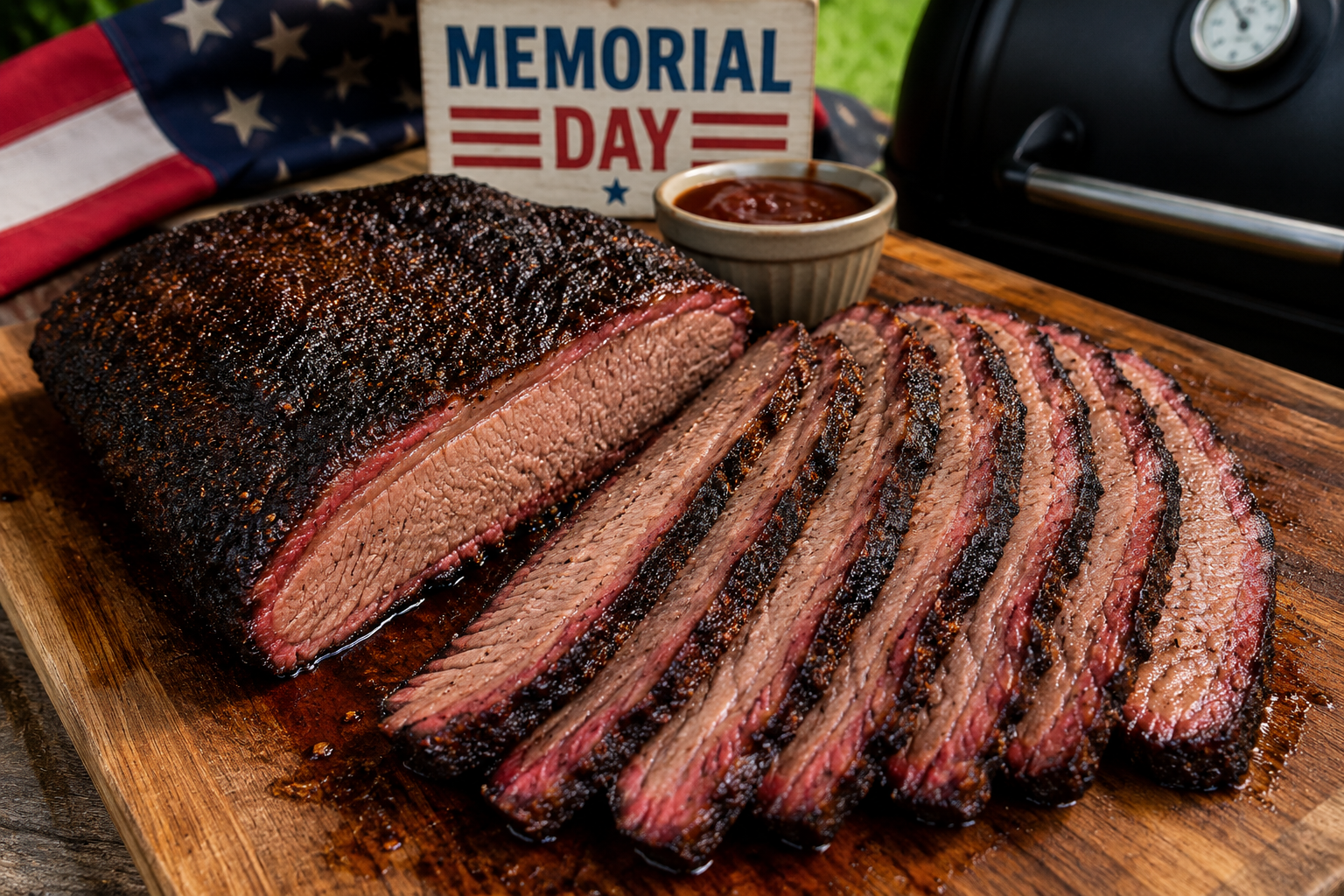
Smoked brisket sliced on a wooden cutting board beside a smoker with a dark bark, juicy center, barbecue sauce, and Memorial Day decorations in the background.

Brisket is one of those cuts of meat that can either make you feel like a backyard pitmaster or have you standing outside questioning all your life choices at 2 a.m. While most people focus on those giant packer briskets that take all day and half the night to cook, smaller trimmed briskets come with their own set of challenges.

This Memorial Day, we decided to go with a small brisket instead of one of the massive full-size cuts. For one thing, it was just the two of us. Secondly, brisket prices right now are enough to make anybody choke on their sweet tea. The regular-sized briskets were hovering around the $100 mark, which felt downright criminal. We ended up choosing a trimmed brisket around 4.5 pounds that still cost about $50, which honestly still hurt a little.

On top of that, we had taken a short weekend getaway and had just gotten back home. The last thing we wanted was to babysit a smoker for 12 to 16 hours after unpacking bags and getting settled back in. A smaller brisket made a whole lot more sense.

Still, cooking a small trimmed brisket is not always easier. In fact, sometimes they are harder to get right because they can dry out quickly if you are not careful.

Why Small Briskets Are Trickier

A full packer brisket has more fat and thickness, which gives it some protection during those long smoking sessions. Smaller trimmed briskets do not have that luxury. Once a lot of the fat cap has been removed, there is less insulation keeping the meat moist.

That means timing matters more. Temperature matters more. Even how often you check it matters more.

The good news is that if you cook it low and slow and pay attention to moisture, you can still end up with tender slices packed with smoky flavor.

Low and Slow Still Wins

No matter the size, brisket is still a tough cut of meat. It comes from a hardworking muscle, which means it needs time for all that connective tissue to break down properly.

Trying to rush brisket almost always leads to disappointment.

We kept the smoker running around 225 degrees and let the brisket slowly do its thing. Even with a smaller cut, patience still matters. While a giant brisket may take 12 to 16 hours, our little 4.5-pound brisket cooked much faster, which honestly fit the holiday weekend perfectly.

Our brisket smoked for around 6 hours total and turned out just right. A smaller brisket can typically finish in around 5 to 8 hours, depending on thickness, smoker temperature, and whether you wrap it.

Related: Memorial Day Isn’t Just About BBQ and Beach Trips

Choosing the Right Wood

One thing that makes a huge difference when smoking brisket is the type of wood you use. Around Texas, mesquite is a favorite and honestly, that’s what we prefer too. Mesquite gives brisket that bold Texas barbecue flavor a lot of people love.

That said, mesquite is not exactly forgiving.

It burns hotter than many other woods and creates a much more intense smoke flavor. If you are not careful, especially with a smaller trimmed brisket, it can overpower the meat pretty quickly. Since small briskets cook faster and have less fat protection, too much mesquite smoke can become bitter if the fire is not managed properly.

If mesquite feels a little too strong, there are several other great options for brisket:

  • Oak is probably the most popular overall choice because it gives a steady burn and a classic smoky flavor without overpowering the meat.
  • Post oak is especially popular in Central Texas-style barbecue and produces a balanced smoke flavor perfect for brisket.
  • Pecan adds a slightly sweet and nutty flavor that works really well with beef.
  • Hickory is another popular option with a rich, smoky taste, though it can become strong if overused.

A lot of pitmasters actually mix woods together to get the flavor profile they want.

Don’t Skip the Spritz

One thing that becomes even more important with a trimmed brisket is spritzing.

Since there is less fat protecting the meat, the outside can dry out fast. Spritzing helps keep the surface moist while also helping that bark develop nicely.

We used a simple apple cider vinegar and water mixture every hour or so after the first couple of hours. Some people use apple juice, beef broth, or other vinegar mixtures, but honestly, there are several good options depending on the flavor you want.

The key is not soaking the brisket. You just want enough moisture to keep the exterior from drying out while the inside slowly becomes tender.

Seasoning a Small Brisket

You really do not need anything fancy.

Brisket shines when you keep things simple. We usually use Salt Lick or Chupacabra Brisket Rub, but you can also make your own.

A simple mix works perfectly:

  • Salt
  • Black pepper
  • Garlic powder
  • Onion powder
  • Paprika

Make sure you season all sides evenly and give it a little time to sit before it goes on the smoker.

Wrapping Helps Smaller Briskets

Once the brisket hit the stall and the bark looked good, he wrapped it to help lock in moisture and move the cook along.

With a small brisket, wrapping can really help prevent drying out toward the end of the cook. Butcher paper is great if you want to preserve bark texture, while foil holds in more moisture.

Either option works. It really comes down to personal preference.

Internal Temperature Matters More Than Time

One mistake people make with brisket is focusing too much on the clock.

Every brisket cooks differently.

Instead of obsessing over exact hours, pay attention to internal temperature and tenderness. Generally, brisket becomes tender somewhere around 195 to 205 degrees, but the real test is probe tenderness.

When that thermometer slides in like softened butter, you are getting close.

Let It Rest

This part is torture because the brisket smells incredible by this point, but resting is important.

Once it came off the smoker, we wrapped it in a towel and placed it in an empty cooler for about an hour and a half. Resting is a vital step because it allows the juices to redistribute through the meat instead of running all over the cutting board the second you slice into it. Make sure you slice against the gra

Even a small brisket benefits from a good, long rest.

Small Briskets Make Sense Right Now

Honestly, smaller briskets are becoming a lot more appealing these days. Meat prices are wild, and not everybody needs enough brisket to feed a football team.

For couples, smaller families, or holiday weekends when you do not want to dedicate your entire day to the smoker, a trimmed brisket can be a great option.

You just have to treat it a little differently than those giant briskets you see all over YouTube.

Cook it low and slow, keep it moist, do not rush it, and you can still end up with smoky, tender brisket that tastes like summer in Texas.

My husband outdid himself. It was delicious. As the granddaughter of a Purple Heart Veteran, my heart is with the families of those who never came home.

Lisa Crow contributed to this article. She is a true crime junkie and lifestyle blogger based in Waco, Texas. Lisa is the Head of Content at Gigi’s Ramblings and Southern Bred True Crime Junkie. She spends her free time traveling when she can and making memories with her large family which consists of six children and sixteen grandchildren.
Rustic Easter table with pastel eggs, deviled eggs, fajitas, homemade banana pudding, spring flowers, and Happy Easter sign in soft morning light

This Easter looked a little different than most. Instead of a full house, loud laughter, and a packed schedule, the day unfolded slowly and quietly at home. Most of the kids had a lot going on in their personal lives, and a couple of them had to work, so everyone ended up doing their own thing this year. It was not the big family gathering we usually have, but that is just how life goes sometimes.

And honestly, it was okay.

Holidays do not always have to be loud to be meaningful. There will be more Easter Sundays, more backyard get-togethers, more crowded kitchens, and more memories made. God willing, we will all be around the table together again soon.

Starting the Day Before Sunrise

I woke up before dawn, and the world already felt alive. The birds were chirping, the air was calm, and everything felt peaceful. There is something special about those early morning moments, especially on a day like Easter. It felt like a quiet reminder to slow down and be thankful.

Sometimes the stillness says more than the noise ever could.

It was one of those mornings where you just sit with your thoughts, take a deep breath, and appreciate the simple things. God is good, and that peaceful start to the day was a blessing all by itself.

Related: Family Resorts for Egg-cellent Easter Escapes

A Non-Traditional Easter Meal

This year, we skipped the ham and went in a completely different direction. Easter fajitas were on the menu, and they did not disappoint. Sizzling meat, warm tortillas, and all the fixings made for a laid-back, easy meal that everyone could enjoy whenever they stopped by.

Honestly, it might become a tradition. There is something about fajitas that just feels relaxed and comfortable, which matched the whole vibe of the day.

Of course, some things never change. Deviled eggs still made an appearance because it just would not feel like Easter without them. And for dessert, I made homemade banana pudding. That sweet, creamy classic never lasts long around here.

Between the fajitas, deviled eggs, and banana pudding, it ended up being the perfect mix of casual and comforting.

Try These: Easter Bunny Burps Wax Melts

A Slow and Simple Afternoon

The rest of the day stayed just as easygoing. We watched some baseball, flipped through a few religious documentaries, and just enjoyed being home. No rushing around, no tight schedule, no stress. Just a quiet day doing whatever felt right in the moment.

Sometimes those slower holidays end up being the ones you remember most. There was time to think, time to relax, and time to appreciate the meaning of the day without distractions.

Finding the Good in a Different Kind of Holiday

Even though this Easter looked different, it was still a good day. Not every holiday has to be big to be meaningful. Sometimes it is the quiet ones that leave the biggest impact.

Life changes. Schedules get busy. Kids grow up and have their own responsibilities. But family is still family, whether everyone is in the same room or scattered across town doing their own thing.

There will be more holidays, more meals, and more memories ahead. This one just happened to be slower, quieter, and filled with simple blessings.

And in its own way, it was exactly what it needed to be.

Lisa Crow contributed to this article. She is a true crime junkie and lifestyle blogger based in Waco, Texas. Lisa is the Head of Content at Gigi’s Ramblings and Southern Bred True Crime Junkie. She spends her free time traveling when she can and making memories with her large family which consists of six children and sixteen grandchildren.

Folksy St. Patrick’s Day scene with rustic wooden table, shamrocks, green beer, leprechaun hat, pot of gold coins, and a vintage sign reading Happy St. Patrick’s Day.

Every year on March 17th, people around the world celebrate St. Patrick’s Day. What began as a religious feast day in Ireland has grown into a lively celebration filled with green clothing, shamrocks, parades, and plenty of Irish pride.

While today’s celebrations often include festivals and parties, the holiday actually has deep historical roots tied to Irish culture, religion, and folklore. Along with traditions that have been passed down for centuries, St. Patrick’s Day also carries a few fun superstitions that many people still follow today.

The Meaning Behind St. Patrick’s Day

St. Patrick’s Day honors Saint Patrick, the patron saint of Ireland. According to historical accounts, Patrick was born in Britain in the late 4th century. As a teenager, he was kidnapped by Irish raiders and taken to Ireland, where he was enslaved for several years.

After eventually escaping and returning home, Patrick later went back to Ireland as a Christian missionary. His work played a major role in spreading Christianity across the country.

One of the most famous legends surrounding Saint Patrick involves the shamrock, a small three-leaf clover. According to tradition, Patrick used the shamrock to explain the concept of the Holy Trinity — the Father, the Son, and the Holy Spirit. Because of this story, the shamrock became one of the most recognizable symbols of Ireland and the holiday itself.

Today, St. Patrick’s Day is celebrated not only as a religious holiday but also as a celebration of Irish heritage and culture.

Related: Ash Wednesday and the Start of Lent

Popular St. Patrick’s Day Traditions

Over the years, many traditions have become closely associated with St. Patrick’s Day celebrations.

Wearing Green

One of the most recognizable traditions is wearing green clothing on March 17th. Green represents Ireland’s famously lush landscape, which is why the country is often called the Emerald Isle.

There is also a playful superstition behind it. Some people believe that wearing green makes you invisible to mischievous fairies or leprechauns, which is why those who forget to wear green sometimes get a friendly pinch.

Parades and Festivals

Parades are another major part of St. Patrick’s Day celebrations. Some of the largest parades actually take place in the United States rather than Ireland. Cities like New York City, Chicago, and Boston host massive celebrations every year.

Chicago is especially famous for dyeing its river bright green, a tradition that has become one of the most iconic images of the holiday.

Traditional Foods

Food is another big part of the celebration. Popular dishes often served on St. Patrick’s Day include:

  • Corned Beef and Cabbage
  • Irish Soda Bread
  • Shepherd’s Pie

Interestingly, corned beef and cabbage became popular through Irish-American communities rather than in Ireland itself.

St. Patrick’s Day Superstitions and Folklore

Like many traditional holidays, St. Patrick’s Day also includes plenty of folklore and superstition.

Leprechauns and Hidden Gold

One of the most well-known figures connected to the holiday is the mischievous Leprechaun. In Irish folklore, leprechauns are small fairy shoemakers who hide their gold at the end of a rainbow.

Legend says that if someone manages to catch one, the leprechaun must grant three wishes. However, they are known for being clever tricksters and often escape before that happens.

The Luck of the Four-Leaf Clover

A regular clover has three leaves, but finding a Four-leaf Clover is considered extremely lucky. Each leaf is traditionally believed to represent something meaningful:

  • Faith
  • Hope
  • Love
  • Luck

Because four-leaf clovers are rare, discovering one has long been thought to bring good fortune.

The Pinching Tradition

The playful tradition of pinching someone who isn’t wearing green is believed to come from folklore about leprechauns. According to the story, wearing green makes you invisible to them. If they can see you, they might give you a mischievous pinch.

While it is mostly just a fun joke today, the tradition continues to be part of many St. Patrick’s Day celebrations.

Related: What Is Fat Tuesday? Meaning, History, and Why It Still Matters

Why People Still Celebrate St. Patrick’s Day

Although the holiday started as a religious observance, St. Patrick’s Day has evolved into a celebration of Irish culture, heritage, and community around the world.

From parades and traditional foods to folklore and lucky symbols, the holiday blends history with fun traditions that bring people together every year.

Whether someone has Irish roots or simply enjoys the festive spirit, St. Patrick’s Day continues to be one of the most recognizable cultural celebrations in the world. 🍀

Lisa Crow contributed to this article. She is a true crime junkie and lifestyle blogger based in Waco, Texas. Lisa is the Head of Content at Gigi’s Ramblings and Southern Bred True Crime Junkie. She spends her free time traveling when she can and making memories with her large family which consists of six children and sixteen grandchildren.

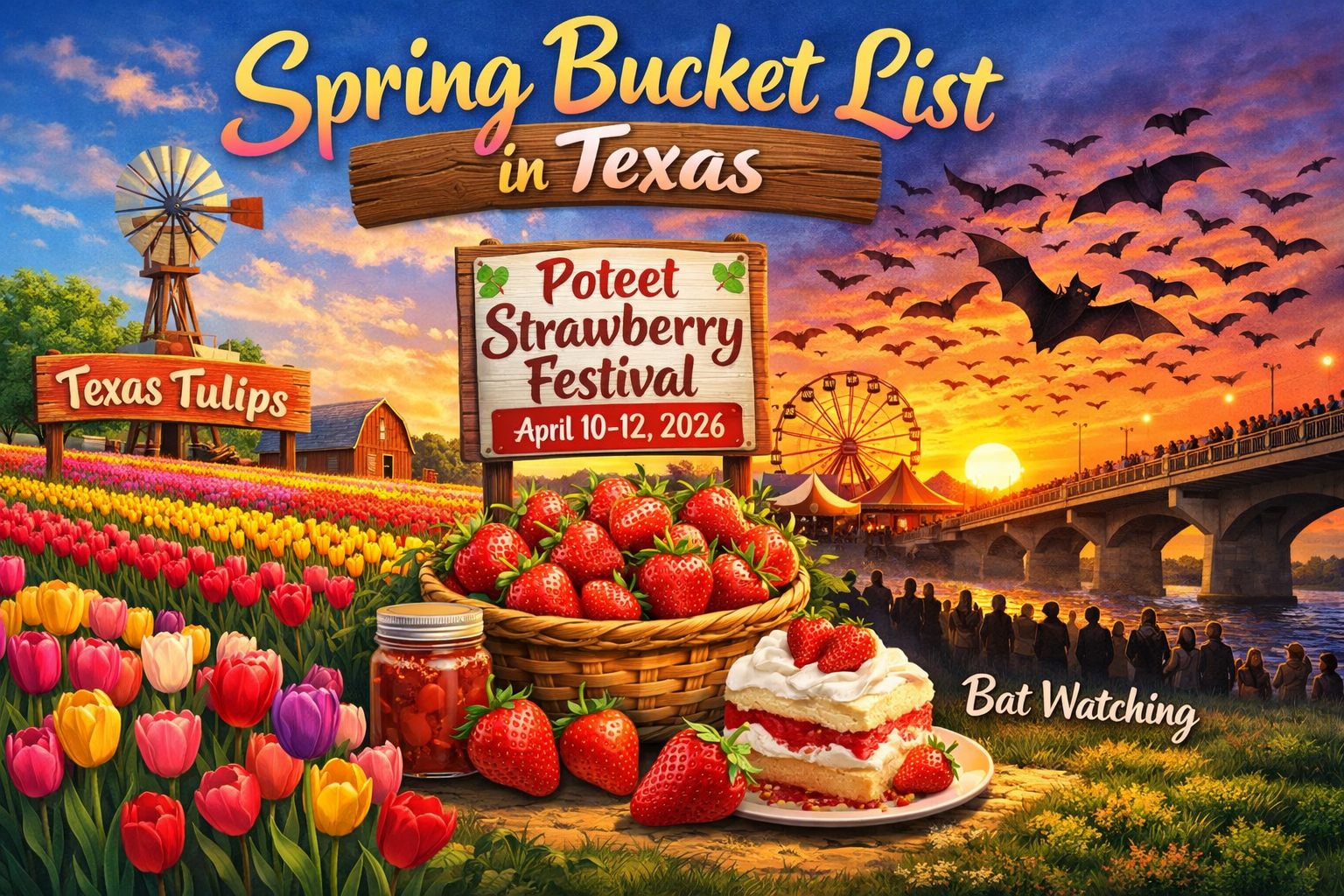
Texas spring bucket list collage featuring colorful tulip fields at Texas Tulips farm, fresh strawberries and desserts from the Poteet Strawberry Festival, and thousands of bats flying at sunset from Congress Avenue Bridge in Austin.

Spring in Texas is a magical time. The weather is warming up, flowers are blooming, and the state comes alive with festivals, outdoor adventures, and unique experiences you won’t want to miss. If you’re looking to make the most of this season, here’s a bucket list to guide your Texas springtime adventures.

Visit a Tulip Farm

Nothing says spring quite like fields of vibrant tulips. Texas Tulips in Pilot Point, just north of Dallas, is the largest pick-your-own tulip farm in the state, boasting over one million tulips and more than 100 varieties. The farm reopens for the 2026 season in mid-to-late February, offering the perfect spot for stunning photos and a relaxing stroll among colorful blooms.

Other notable tulip destinations include the Texas Tulip Fest at Robinson Family Farm in Temple and Poston Gardens in Waxahachie, both providing a charming mix of tulip fields, family-friendly activities, and local vendors. Whether you’re a photography enthusiast or just want to soak in the spring beauty, these tulip farms are must-visit spots.

Related: Texas BBQ Road Trip: Where to Eat in July

Celebrate at the Poteet Strawberry Festival

For a sweet slice of spring fun, head to Poteet, Texas, for the 78th annual Poteet Strawberry Festival, scheduled for April 10–12, 2026. Located at 9199 N State Hwy 16, this beloved festival brings the community together with live music, carnival rides, rodeos, and a wide array of strawberry-themed treats. From strawberry pies and shortcakes to fresh-picked berries, this festival is a celebration of everything sweet and summery.

Experience Bat Watching

Spring evenings in Texas offer a truly unique wildlife spectacle: bats. Head to the Congress Avenue Bridge in Austin to witness the famous bat colony emerge at dusk. If you’re looking for a more guided experience, the Frio Bat Flight Tours in Concan provide an up-close view of thousands of Mexican free-tailed bats taking flight over the river. It’s both awe-inspiring and a little bit magical—a perfect spring activity for families, couples, or solo adventurers.

Explore Local Gardens and Parks

Spring is the ideal time to explore Texas’ many public gardens and parks. From the Dallas Arboretum and Botanical Garden to Zilker Park in Austin, vibrant blooms, fresh air, and scenic walking paths make these spots perfect for picnics, photography, and peaceful nature walks.

Go for Outdoor Adventures

With mild temperatures and clear skies, spring is the season to get outside. Consider kayaking on the Guadalupe River, hiking the trails of Enchanted Rock State Natural Area, or birdwatching in the Rio Grande Valley. Every corner of Texas offers a chance to connect with nature and enjoy the beauty of the season.

Attend Local Spring Festivals

Beyond tulips and strawberries, Texas hosts a range of spring festivals celebrating arts, food, and culture. Check local event calendars for craft fairs, music festivals, and farmers’ markets to enjoy the vibrant social scene. These gatherings are perfect for sampling local cuisine, picking up unique handmade goods, and meeting fellow Texans who are out to enjoy the season.

Related: Let’s Travel to San Antonio, Texas

Spring in Texas is all about embracing the outdoors, enjoying seasonal flavors, and making memories with friends and family. Whether you’re wandering through colorful tulip fields, indulging in strawberry treats, or marveling at the flight of bats at dusk, this bucket list ensures your spring is packed with adventure, fun, and the unique charm that only Texas can offer.

Lisa Crow contributed to this article. She is a true crime junkie and lifestyle blogger based in Waco, Texas. Lisa is the Head of Content at Gigi’s Ramblings and Southern Bred True Crime Junkie. She spends her free time traveling when she can and making memories with her large family which consists of six children and fifteen grandchildren.

Ash Wednesday ashes in the shape of a cross on a person’s forehead symbolizing the start of Lent

Ash Wednesday marks the beginning of Lent, a season that is meant to slow us down and bring us back to what actually matters. It is not about being perfect or proving anything. It is about remembering who we are, why we are here, and how easily we drift away from both.

Lent is a time for reflection, repentance, and realignment. It is forty days set aside to examine our lives and our hearts and to intentionally walk closer with God.

What Is Ash Wednesday?

Ash Wednesday is observed by Christians as the first day of Lent. On this day, ashes are placed on the forehead in the shape of a cross. The ashes are a symbol of humility, mortality, and repentance.

They remind us that life is fragile and temporary. They remind us that we are human. They remind us that we need God more than we care to admit.

Ash Wednesday is not about shame. It is about honesty.

The Meaning of Lent

Lent lasts for forty days, leading up to Easter. The number forty is significant throughout the Bible. Jesus fasted for forty days in the wilderness. Moses spent forty days on Mount Sinai. It is a number connected to testing, preparation, and spiritual growth.

Lent is meant to be a season of intention. It is about stepping back from distractions and stepping into awareness. It is about making room for God instead of filling every quiet moment with noise.

Related: What Is Fat Tuesday? Meaning, History, and Why It Still Matters

What Do People Give Up for Lent?

Many people choose to give something up during Lent. Social media, sugar, television, shopping, complaining, or habits that no longer serve them.

The point is not suffering for the sake of suffering. The point is awareness. When something is removed, it creates space. That space can be filled with prayer, reading the Bible, journaling, or simply being still.

Some people choose to add something instead of giving something up. Daily prayer. Scripture reading. Gratitude. Acts of kindness.

Both approaches are valid. What matters is intention.

A Simple Way to Observe Lent

Lent does not need to be complicated.

Read your Bible every day, even if it is only for ten minutes.
Pray honestly, not perfectly.
Pay attention to your thoughts and your reactions.
Practice restraint, not just in food or habits, but in words and judgment.

Lent is not about changing your image. It is about changing your direction.

Related: Fat Tuesday, Mardi Gras, and Lent: From Celebration to Reflection

Why Lent Still Matters

In a world that encourages constant distraction, Lent invites stillness. In a culture obsessed with comfort, Lent asks for reflection. In a time where everything is loud, Lent is quiet.

It is a season that reminds us to slow down, to take responsibility for our lives, and to reconnect with God in a way that feels real and personal.

Ash Wednesday is not just the start of a tradition. It is an invitation.

An invitation to begin again.

A dramatic, split-style image showing a vibrant Mardi Gras mask, king cake, and colorful beads on one side, transitioning into a solemn Lent scene with a person bearing an ash cross on their forehead, an open Bible, a lit candle, and a steaming coffee cup at sunrise.

Every year, right before Lent begins, we celebrate Fat Tuesday—a day that feels like a party on the surface but actually carries deep spiritual roots. If you’ve ever wondered what Fat Tuesday really means (beyond beads and king cake), let’s break it down the right way.

The Meaning of Fat Tuesday (Mardi Gras)

Mardi Gras—which literally means “Fat Tuesday” in French—is the final day before Ash Wednesday. It marks the end of the Carnival season and the beginning of Lent, a 40-day period of fasting, prayer, and reflection leading up to Easter.

Historically, Fat Tuesday was the last chance to indulge before a season of sacrifice. People would use up rich foods like butter, eggs, meat, and sugar because those items were traditionally given up during Lent. So yes, the feasting had a purpose.

And while today it often looks like a giant street festival, especially in places like New Orleans, the spiritual meaning hasn’t changed: preparation.

The Significance of Fat Tuesday Before Lent

Here’s what matters.

Fat Tuesday is about contrast.

It’s the last exhale before discipline.
The last celebration before restraint.
The final “yes” before a season of intentional “no.”

Lent begins on Ash Wednesday and lasts 40 days (not counting Sundays). That number reflects the 40 days Jesus fasted in the wilderness. So when Christians fast or give something up, it’s not random—it’s symbolic and deeply personal.

Now here’s where I’m stepping in this year.

Related: Fat Tuesday, Mardi Gras, and Lent: From Celebration to Reflection

My Personal Lent Commitment This Year

I’m not into performative religion. If I’m doing something, it’s because I need it.

This year, I’ll be fasting 14 hours daily throughout Lent. Not for weight loss. Not for a challenge. But for discipline. For clarity. For growth.

At the same time, I’m tightening up my “vices” instead of pretending they don’t exist.

Here’s what that looks like:

  • Fasting 14 hours every single day
  • Eating in moderation when I do eat
  • Limiting myself to one soda per day (strictly to avoid a migraine)
  • Cutting social media time way down
  • Less cursing (big one for me)
  • Limiting alcohol to one beer or less this month (I don’t get intoxicated anymore anyway, but still)
  • Spending 20 minutes per day reading my Bible
  • Drawing closer to God intentionally, not casually

Notice I didn’t say “cut everything out completely.”

Moderation matters. Discipline matters. Awareness matters.

For me, Lent isn’t about punishment. It’s about alignment.

Why Fasting and Moderation Still Matter

In a world where everything is instant—food, dopamine, scrolling, validation—fasting feels almost rebellious.

When you fast, you realize how often you eat out of boredom.
When you limit social media, you notice how often you reach for distraction.
When you cut back on soda, alcohol, or mindless consumption, you confront your habits.

That’s uncomfortable. Good.

Fat Tuesday isn’t just about indulgence. It’s about acknowledging that we all have appetites. Lent is about learning to master them instead of letting them master us.

And honestly? That’s powerful.

Fat Tuesday Traditions Around the World

Although many people associate Mardi Gras with parades and beads, different cultures observe the day in their own way.

In places like Mobile and New Orleans, celebrations include parades, king cake, and large public festivals. In other countries, families gather for meals before entering a more solemn Lenten season.

The point isn’t how loud the party is.
The point is what comes next.

Preparing for Lent With Intention

Instead of treating Fat Tuesday like just another excuse to overdo it, I see it as a reset point.

A checkpoint.

A decision moment.

What am I willing to give up?
What am I willing to change?
What discipline do I need to build?

For me, it’s fasting. Moderation. Less noise. More Scripture. More intentional time with God.

No bull.
No theatrics.
Just work.

And maybe that’s what Fat Tuesday should really be—a reminder that growth requires contrast.

You don’t appreciate discipline without indulgence.
You don’t appreciate clarity without distraction.
You don’t appreciate closeness with God without first recognizing the distance.

This year, I’m choosing alignment.

Lisa Crow contributed to this article. She is a true crime junkie and lifestyle blogger based in Waco, Texas. Lisa is the Head of Content at Gigi’s Ramblings and Southern Bred True Crime Junkie. She spends her free time traveling when she can and making memories with her large family which consists of six children and fifteen grandchildren.