couple in a domestic dispute

Domestic crimes are often misunderstood as isolated incidents driven by sudden rage or singular disputes. In reality, most domestic crimes follow identifiable patterns that repeat across cases, locations, and demographics. Understanding these patterns helps explain how violence escalates behind closed doors and why warning signs are so often missed or ignored.

This article breaks down the most common behavioral, situational, and systemic patterns found in domestic crime cases, drawing from court records, police reports, and long-term crime data trends.

What Are Domestic Crimes?

Domestic crimes involve criminal acts committed between people who share a close personal relationship. These relationships may include spouses, romantic partners, former partners, family members, or household members.

Common domestic crimes include domestic assault, stalking, coercive control, financial abuse, emotional abuse, and homicide. While physical violence receives the most attention, non-physical abuse is often present long before a crime turns deadly.

Escalation Is Rarely Sudden

One of the most consistent patterns in domestic crimes is escalation over time. Violence usually begins subtly, often disguised as jealousy, control, or emotional manipulation. Early behaviors may not appear criminal on the surface, which allows them to continue unchecked.

Escalation patterns often include:

  • Increasing frequency of arguments
  • Heightened control over finances, communication, or movement
  • Threats that gradually become more explicit
  • Physical violence following a triggering event such as separation or financial stress

By the time law enforcement becomes involved, the situation has often been deteriorating for months or years.

Control Is the Core Motive

Unlike crimes driven primarily by profit or opportunity, domestic crimes are most often rooted in power and control. The offender’s goal is rarely just to harm physically. Instead, the intent is to dominate, intimidate, or prevent the victim from leaving.

Control-related behaviors frequently include:

  • Monitoring phone usage or social media
  • Isolating the victim from friends and family
  • Dictating daily routines or clothing
  • Threatening self-harm or harm to children or pets

This pattern is especially important because it explains why victims may stay longer than outsiders expect.

Separation Is a High-Risk Period

Data consistently shows that the most dangerous time in a domestic abuse situation is when the victim attempts to leave. Separation challenges the offender’s control and can trigger extreme responses.

Crimes committed during or shortly after separation often escalate in severity and may include stalking, kidnapping, arson, or homicide. Many domestic homicide cases show clear warning signs in the weeks leading up to the crime, including repeated threats or prior police calls.

Related: Gaslighters Who Play the Victim, Covert Narcissism and DARVO

Repeat Incidents Are Common

Domestic crimes are rarely one-time events. Law enforcement records show that many households generate multiple calls for service before an arrest or serious injury occurs.

Patterns of repeat incidents include:

  • Victims recanting statements due to fear or financial dependence
  • Charges being reduced or dropped
  • Offenders violating protective orders with minimal consequences
  • Short jail stays followed by immediate reoffending

This cycle reinforces the offender’s belief that consequences will be limited or temporary.

Substance Abuse Is a Contributing Factor, Not a Cause

Alcohol and drug use frequently appear in domestic crime cases, but they are not the root cause. Substance abuse tends to lower inhibitions and intensify existing violent tendencies rather than create them.

Many offenders are violent with or without substances present. Blaming drugs or alcohol alone often obscures the underlying pattern of control and entitlement.

Victims Often Seek Help Indirectly

Another overlooked pattern is how victims ask for help. Rather than explicitly reporting abuse, many victims reach out through indirect channels.

These may include:

  • Visiting doctors for stress-related symptoms
  • Confiding in coworkers or acquaintances
  • Contacting police for “disturbances” rather than assaults
  • Seeking legal advice without filing charges

These indirect pleas are frequently dismissed or misunderstood, allowing abuse to continue.

Acknowledging Female Aggression and False Accusations

It is also important to acknowledge that domestic violence is not a one-sided issue, and women can be aggressors as well. Abuse does not belong to one gender, and harmful behavior can come from anyone.

There are situations where men are provoked, manipulated, emotionally worn down, or falsely accused, and those realities deserve to be taken seriously. Vindictive behavior, coercion, and intentional false allegations are deeply damaging and should never be dismissed or excused.

False accusations undermine the credibility of real victims and are an insult to those who have survived genuine domestic violence. Accountability matters on all sides, and recognizing this does not minimize abuse—it strengthens the conversation by insisting on truth, fairness, and responsibility.

Related: How to Spot the Signs of a Narcissist

Children Are Frequently Witnesses

In households where domestic crimes occur, children are often present. Even when not physically harmed, children may witness violence, hear threats, or experience emotional manipulation.

Exposure to domestic violence is linked to long-term psychological effects and increases the likelihood of future involvement in abusive relationships, either as victims or offenders.

Why Patterns Matter

Recognizing patterns in domestic crimes helps dismantle the myth that these cases are unpredictable or unavoidable. Patterns reveal opportunities for intervention, accountability, and prevention.

When warning signs are taken seriously and patterns are acknowledged, outcomes can change. Ignoring them allows violence to repeat itself in familiar and devastating ways.

Breaking the Cycle

Preventing domestic crimes requires more than reactive policing. It requires consistent enforcement of protective orders, access to support services, public education, and a willingness to confront uncomfortable truths about power and control within relationships.

Understanding patterns is not about assigning blame to victims. It is about recognizing predictable behaviors so fewer cases end in tragedy.

Lisa Crow contributed to this article. She is a true crime junkie and lifestyle blogger based in Waco, Texas. Lisa is the Head of Content at Gigi’s Ramblings and Southern Bred True Crime Junkie. She spends her free time traveling when she can and making memories with her large family which consists of six children and fifteen grandchildren.


marfa water tower

Marfa, Texas” by Thomas Hawk, CC BY-NC 2.0

Marfa, Texas, is a tiny desert town with an outsized reputation for art, mystery, and wide-open West Texas skies. Once a quiet railroad stop, Marfa has become a cultural hotspot known for minimalist art installations and unexplained phenomena. Whether you’re chasing strange lights, modern art, or pure solitude, Marfa offers a one-of-a-kind experience far from the crowds. So, pack your bags and get ready to experience one of Texas’s most intriguing destinations.

Interesting Facts

  • Marfa Lights: For decades, mysterious glowing orbs have appeared outside town, baffling scientists and visitors alike.
  • Art Hub: The town gained international fame after artist Donald Judd established large-scale art installations here.
  • Small Population: Marfa has fewer than 2,000 residents, yet attracts visitors from around the world.
  • Film History: Movies like Giant and No Country for Old Men were filmed in and around Marfa.

Every NIght I Hope and Pray a Dream Lover Will Come My way” by Thomas Hawk, CC BY-NC 2.0

Useful Information

  • Best Time to Visit: Spring (March to May) and fall (September to November) offer mild temperatures and clear skies.
  • What to Wear: Lightweight clothing during the day, layers for cool desert nights, and sturdy shoes for walking.
  • Getting Around: A car is essential, as attractions are spread out and services are limited.

Things to Do

  • Visit the Chinati Foundation: Explore massive contemporary art installations set against the desert landscape.
  • Watch the Marfa Lights: Head to the official viewing area just outside town after dark.
  • Explore Downtown Marfa: Browse art galleries, local shops, and unique eateries.
  • Tour Fort D.A. Russell: Learn about Marfa’s military history and early settlement.
  • Enjoy Stargazing: The lack of light pollution makes Marfa perfect for night sky viewing.

Related: Let’s Travel to Atlanta

Lisa Crow contributed to this article. She is a true crime junkie and lifestyle blogger based in Waco, Texas. Lisa is the Head of Content at Gigi’s Ramblings and Southern Bred True Crime Junkie. She spends her free time traveling when she can and making memories with her large family which consists of six children and fifteen grandchildren. This is the next installment in the Let’s Travel to…series, a collection of short informational articles covering some of the world’s top travel destinations.

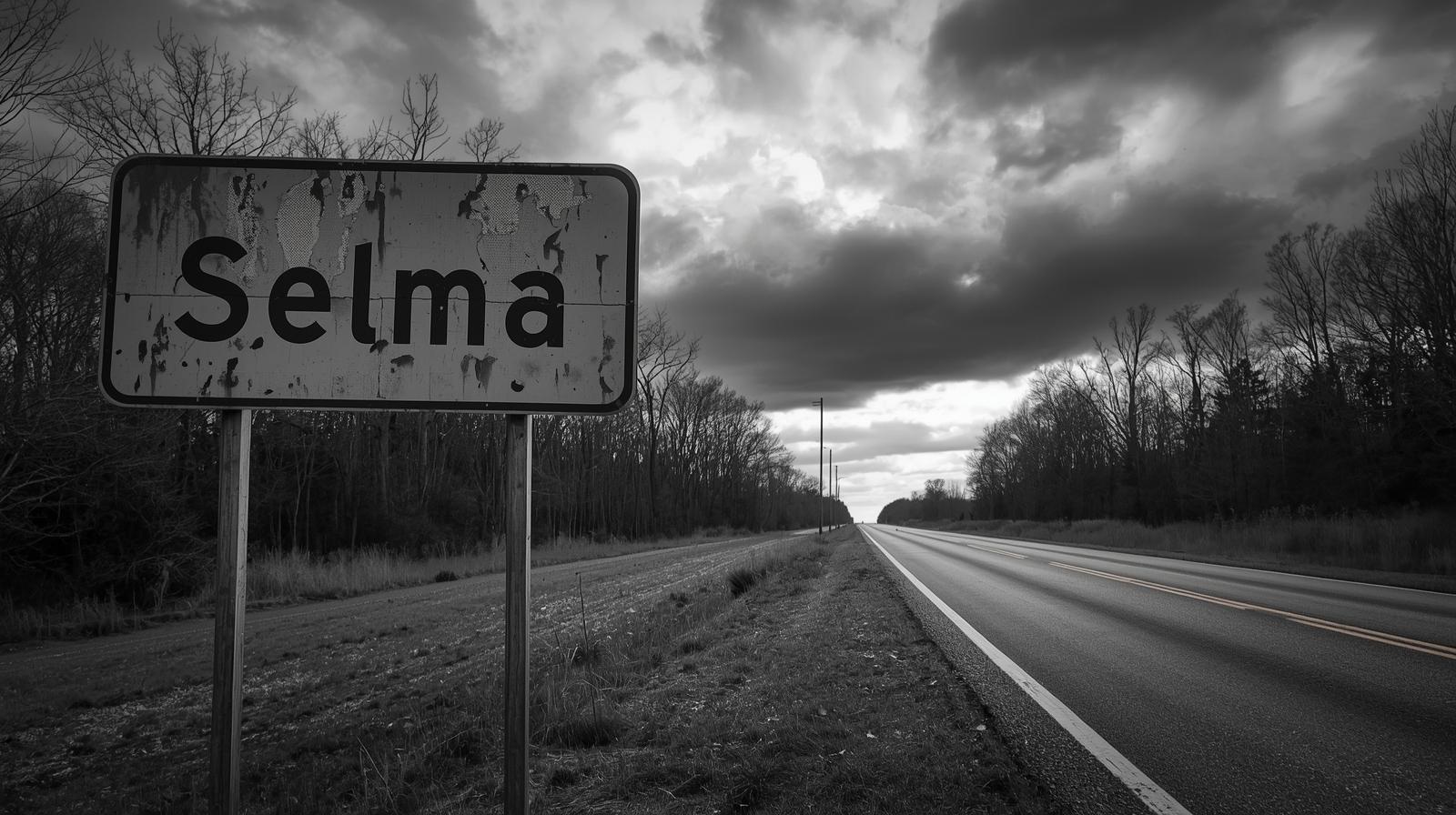
black and white Selma road sign

Martin Luther King Jr. is often remembered through a handful of famous quotes and a single historic speech, but reducing his legacy to soundbites misses the depth of who he was and what he endured. MLK Day is not just about remembrance — it’s about understanding the full scope of his work, his sacrifices, and the physical and emotional miles he walked in pursuit of justice.

The Side of MLK We Rarely Talk About

Dr. King was only 39 years old when he was assassinated, yet by that age he had already been arrested nearly 30 times. He was not universally loved during his lifetime — in fact, public opinion polls near the end of his life showed him viewed unfavorably by much of the country.

He struggled deeply with stress, exhaustion, and depression, often sleeping only a few hours a night while constantly moving from city to city. Despite this, he continued pushing forward, even when his life was repeatedly threatened and his family was placed in danger.

One lesser-known fact: the FBI monitored King relentlessly, wiretapping his phone, following his movements, and attempting to discredit him publicly. This constant surveillance didn’t stop him — it strengthened his resolve.

Walking the Road of Protest: The March Routes That Changed History

When we think of the civil rights movement, we picture massive crowds — but those crowds had to walk somewhere.

One of the most powerful examples is the Selma to Montgomery march in 1965. Protesters walked roughly 54 miles over five days, facing violence, intimidation, and exhaustion. The route crossed the Edmund Pettus Bridge, where peaceful demonstrators were brutally attacked in what became known as “Bloody Sunday.”

Walking that route today offers a sobering reminder: change didn’t come from speeches alone. It came from blistered feet, fear, and determination.

Across the country, communities now organize remembrance walks, retracing civil rights paths or symbolically marching through neighborhoods that still face inequality. These walks turn history into something physical — something felt, not just read.

Related: Black History Month: Highlighting Unsung Heroes

MLK’s Message Was Bigger Than One Day

Dr. King didn’t fight only for racial equality. He spoke openly about poverty, workers’ rights, housing injustice, and the dangers of silence. Near the end of his life, his focus expanded to economic inequality, including the Poor People’s Campaign — a movement that made many of his allies uncomfortable.

He believed justice required action, not comfort.

“True peace is not merely the absence of tension; it is the presence of justice.”

That message remains just as relevant today.

How to Honor MLK Day Beyond Quotes and Social Posts

Remembering Martin Luther King Jr. doesn’t require grand gestures. It requires intention.

  • Visit a local civil rights landmark or historic route
  • Attend a community walk or service event
  • Read one of King’s lesser-known speeches or letters
  • Support local organizations working toward equality
  • Have honest conversations about injustice, even when uncomfortable

MLK Day was designed as a day of service, not a day off.

Carrying the Legacy Forward

Martin Luther King Jr. didn’t believe the work would end in his lifetime — and it didn’t. His legacy lives not in monuments or holiday posts, but in the choices made every day to stand up, speak out, and walk forward even when it’s hard.

Remembering him means continuing the journey.

Lisa Crow contributed to this article. She is a true crime junkie and lifestyle blogger based in Waco, Texas. Lisa is the Head of Content at Gigi’s Ramblings and Southern Bred True Crime Junkie. She spends her free time traveling when she can and making memories with her large family which consists of six children and fifteen grandchildren.
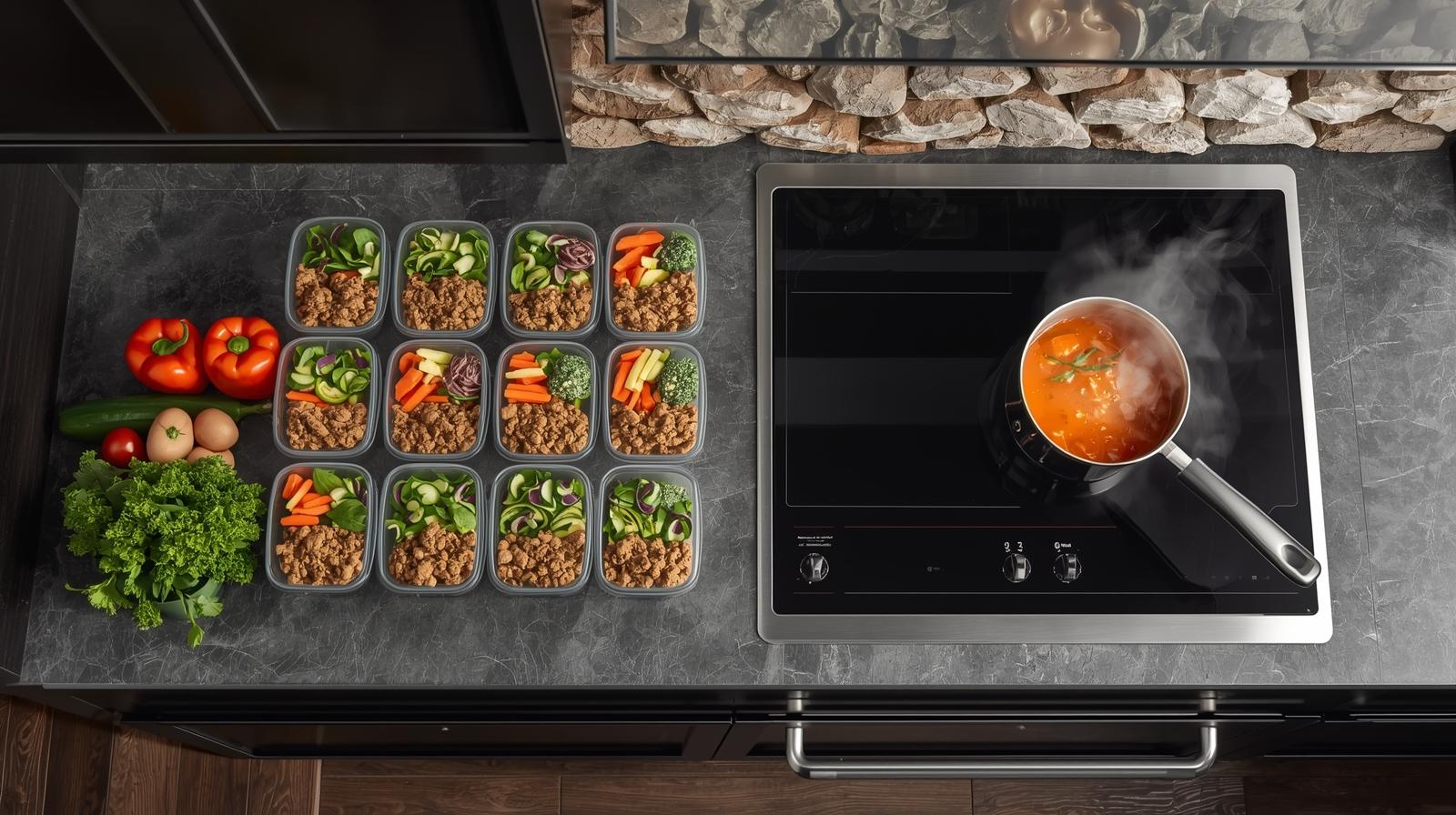
meal prep in plastic containers on counter

Let me be real with you right from the start: I used to be on top of meal prep. Like, really on top of it. Sundays were my prep days. The freezer was stocked. Dinner on busy weeknights? Handled.

And then… I slacked off. Life happened. The routine fell apart. And suddenly I was back to the “what’s for dinner?” panic at 5 PM on a Tuesday.

So this post? It’s as much a pep talk for me as it is for you.

Because here’s the thing about meal prep—when you do it, it’s a game-changer. When you don’t, you’re eating cereal for dinner and pretending that counts as a meal. (No judgment. We’ve all been there.)

The Meal Prep Reality Check

First, let’s get honest about what meal prep actually looks like for normal humans who don’t have their entire lives color-coded and Instagram-ready.

You are NOT going to:

  • Spend 6 hours every Sunday preparing 47 perfectly portioned meals
  • Have matching glass containers that look like a Pinterest dream
  • Stick to a rigid meal plan that requires you to eat the same thing every day
  • Become one of those people who says things like “meal prep is my self-care”

You ARE going to:

  • Make a few things that’ll save your sanity on busy days
  • Probably eat some of it, forget about some of it, and wonder what that mystery container is in three months
  • Feel like a superhero when you pull dinner out of the freezer instead of ordering takeout
  • Slack off sometimes and have to start over (hi, it’s me)

And that’s okay. We’re going for “better than nothing” here, not perfection.

Related: Meal Prep for People Who Hate Cooking: My Lazy Strategies

What Actually Works: My Go-To Freezer Meals

Let me tell you what actually gets made, frozen, and—most importantly—eaten in this house.

1. Vegetable Soup (My Personal Favorite)

This is my jam. I make a huge pot of vegetable soup and freeze it in portions. It’s easy, it’s healthy-ish, and it’s one of those things that actually tastes better after it’s been frozen and reheated.

Why it works:

  • You can throw in whatever vegetables you have
  • It freezes beautifully
  • One pot makes multiple meals
  • I actually want to eat it when I pull it out

The reality: I eat this. Santiago (my husband) tolerates it. But at least one of us is winning.

2. Beef Chili

Since I only eat beef (no chicken, turkey, fish, or any of that—just beef for this girl), a good hearty chili is a lifesaver. Make a big batch, portion it out, freeze it, and you’ve got multiple dinners ready to go.

Why it works:

  • Beef, water, tomatoes, spices—done
  • Actually improves in flavor after freezing
  • Feeds us multiple times
  • Can be eaten as-is, with cornbread or crackers, or however you want

The reality: This is one that both of us will actually eat without complaint. That’s a win in my book.

3. Beef Taco Meat

I know, I know—taco meat seems too simple to count as “meal prep.” But hear me out. Brown a bunch of ground beef with taco seasoning, portion it into freezer bags, and you’ve got the base for tacos, burritos, taco salads, nachos, or whatever sounds good that night.

Why it works:

  • Takes 20 minutes to make
  • Versatile for multiple meals
  • Easy to rehab into something that feels fresh
  • Santiago can add chicken or whatever to his portion if he wants variety

The reality: This is probably the one I actually use most because it feels like less commitment than a full “meal.”

4. Meatballs (For Santiago, Mostly)

I’ll make a big batch of meatballs—beef for me, sometimes a mix of beef and turkey or pork for Santiago since he’s not as picky. Freeze them on a baking sheet, then toss them in a freezer bag.

Why it works:

  • Can be used in pasta, subs, with marinara, in soup
  • Easy to grab just a few or a whole bag
  • Satisfies Santiago’s need for something besides beef

The reality: I make these with good intentions. Sometimes we eat them. Sometimes they become freezer fossils. It’s a gamble.

5. Beef Stew

Another beef-heavy winner. Brown the beef, throw in potatoes, carrots, onions, beef broth, and seasonings. Let it simmer. Portion and freeze.

Why it works:

  • Comfort food that actually freezes well
  • Feels like a complete meal
  • Winter evenings = instant cozy vibes

The reality: This one gets eaten more in colder months. In Texas summer? It sits there while we pretend we’re going to want stew when it’s 95 degrees outside.

What Sits in the Freezer Forever (Let’s Be Honest)

Now let’s talk about the stuff that sounds great in theory but ends up becoming a science experiment in the back of your freezer.

Casseroles with pasta: I don’t know what it is, but freezing and reheating pasta-based casseroles never works out. The texture gets weird. It’s mushy. It’s sad. I keep trying. It keeps disappointing me.

Anything labeled “mystery meat from 2024”: If you can’t remember what it is or when you made it, it’s not getting eaten. Just accept the loss and toss it.

Elaborate recipes with 47 ingredients: That fancy French-inspired dish you spent three hours making? Yeah, it’s been in there for four months because reheating it feels like too much effort.

Single-serving “healthy” meals: I had grand plans to make individual portioned healthy meals. They’re still there. Mocking me. I’ll eat the chili instead.

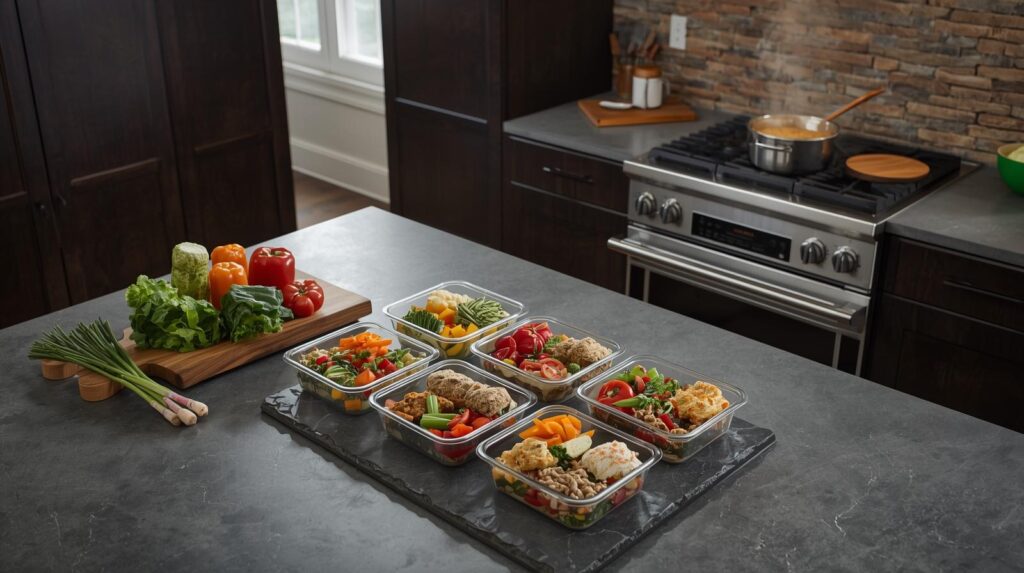
healty meal prep

The Real Talk About Meal Prep

Here’s what I’ve learned (and keep having to relearn because apparently I’m slow):

Meal prep doesn’t have to be all or nothing. You don’t have to prep every meal for the week. Even having 2-3 backup dinners in the freezer is a massive win.

Simple beats fancy every time. The elaborate recipe might sound impressive, but the basic chili is what you’ll actually pull out and eat on a Tuesday night.

Future you will thank current you. Every single time I pull something out of the freezer instead of staring blankly into the fridge at 6 PM, I feel like a genius. Past me really came through.

You will slack off and that’s fine. I literally wrote this post to motivate myself to get back into meal prep after months of slacking. We’re all works in progress here.

It’s okay to meal prep just for the week. Not everything needs to be frozen. Sometimes I just make bigger batches of dinner and eat leftovers for a few days. That counts too.

Related: A Frugal Kitchen Experiment: Acorn Squash

My Meal Prep Reality for Two

Santiago and I are empty nesters at this point (well, mostly—grandkids and family come through occasionally, but day-to-day it’s just us). Meal prep looks different when you’re not feeding a crowd.

What this means:

  • Smaller portions work fine
  • We can actually eat the same thing a few times without revolt
  • I can make my beef-only meals and he can supplement with whatever he wants
  • The freezer doesn’t have to be packed with 30 meals

What we actually do:

  • I make 1-2 big batch meals on the weekend
  • We eat some fresh, freeze the rest
  • Santiago handles his own breakfast/lunch most days
  • Dinner is where meal prep saves us

It’s not fancy. It’s not Instagram-worthy. But it works for us when we actually do it.

Getting Back Into the Swing

So here I am, writing this post and giving myself a pep talk in the process. I need to get back into meal prep mode because I know it makes life easier. I know future me will be grateful. I know it’s better than the “what should we eat?” debate every single night.

My plan moving forward:

  • Start small—just one or two freezer meals this week
  • Focus on what we actually eat (chili and taco meat, I’m looking at you)
  • Stop trying to be fancy
  • Give myself grace when I slack off again (because I probably will)

If you’re in the same boat…you used to meal prep, you know it helps, but you’ve fallen off the wagon – let’s do this together. We don’t have to be perfect. We just have to be better than “cereal for dinner” on a Wednesday night.

And honestly? Sometimes, cereal for dinner is perfectly fine too.


What are your go-to freezer meals? What actually gets eaten vs. what becomes a freezer fossil? Drop your favorites (or failures) in the comments. Let’s share the realistic meal prep wisdom. 🍲

Quick Freezer Meal Tips for Mortals

  • Label everything with the date. You think you’ll remember. You won’t.
  • Flatten freezer bags to save space and help things freeze/thaw faster
  • Cool food completely before freezing (I know you know this, but we all get impatient)
  • Use freezer-safe containers that actually seal (not that random Tupperware from 1987)
  • Don’t overfill containers—liquids expand when frozen and you’ll have a mess
  • Keep a list on your freezer of what’s in there (again, you think you’ll remember…)
  • Rotate stock—use the old stuff first before adding new (yeah, I don’t always do this either)
  • Portion for how you’ll actually use it—no point freezing a giant batch if you only need two servings

Now, if you’ll excuse me, I’m going to go make a pot of vegetable soup and pretend I have my life together. At least for today. 😂

Lisa Crow contributed to this article. She is a true crime junkie and lifestyle blogger based in Waco, Texas. Lisa is the Head of Content at Gigi’s Ramblings and Southern Bred True Crime Junkie. She spends her free time traveling when she can and making memories with her large family which consists of six children and fifteen grandchildren.
woman relaxing on a couch

January is not about hustling harder or reinventing yourself overnight. It is about recovering. The holidays drain more than our wallets. They drain our energy, routines, and patience. January gives us permission to slow down and rebuild from the inside out.

This month is about big goals, but it’s more about restoring what was worn thin.

Why January Feels So Heavy

The excitement of the holidays fades fast. Decorations come down, schedules snap back into place, and the world expects productivity immediately. That pressure hits harder when you are already tired.

Winter plays a role too. Shorter days, colder weather, and less sunlight naturally impact motivation and mood. Feeling sluggish in January does not mean something is wrong. It means your body and mind are asking for recovery.

Related: Why Is January So Gray?

Rebuilding Energy Instead of Forcing Motivation

Motivation is unreliable when energy is low. January works better when you focus on restoring energy first. Once energy improves, motivation follows naturally.

Start by loosening expectations. This is not the month to overhaul your entire life. It is the month to stabilize it.

Sleep more when you can. Eat foods that feel grounding and nourishing. Spend time at home without guilt. Energy rebuilds through consistency, not pressure.

Gentle Routines That Actually Help

January routines should feel supportive, not strict. Simple habits done daily matter more than ambitious plans that burn out fast.

Morning light helps reset your internal clock, even if it is just standing by a window. Small movement keeps stiffness and stress from settling in. Quiet evenings help your nervous system calm down after weeks of overstimulation.

None of this needs to be perfect. It just needs to be repeatable.

Related: How I Start the Year Calm

Mental Reset Without the Hustle Culture Noise

January is flooded with messages about productivity and self-improvement. Most of it is exhausting. Of course, you need to set your intentions, but also reboot yourself for the upcoming year. Rebuilding energy means tuning out the noise and checking in with yourself instead.

Ask what drained you last year. Ask what actually helped. Keep the answers simple. Boundaries are often more powerful than goals.

This is also a good time to declutter commitments, not just spaces. Fewer obligations leave room for energy to return.

Let January Be a Recovery Month

There is nothing lazy about rebuilding energy. Rest is productive when it prepares you for what comes next. January does not need to be loud or impressive. It needs to be steady.

When you allow yourself to recover now, the rest of the year has a stronger foundation. Energy rebuilt slowly lasts longer.

January is not for pushing. January is for restoring.

Lisa Crow contributed to this article. She is a true crime junkie and lifestyle blogger based in Waco, Texas. Lisa is the Head of Content at Gigi’s Ramblings and Southern Bred True Crime Junkie. She spends her free time traveling when she can and making memories with her large family which consists of six children and fifteen grandchildren.
woman blogging in a cozy living room

I’ve been blogging since 2016. That’s a full decade of hitting “publish” on posts, building an audience, and watching the digital landscape shift dramatically around me. Ten years of riding the waves of algorithm changes, platform trends, and the constant evolution of what “content creation” even means.

So when people ask me if blogging is still worth it in 2026, I get it. Because even after all this time, I still ask myself that question sometimes.

And here’s my answer: Yes. Absolutely. But not for the reasons you might think.

The Reality Check Nobody Talks About

Let’s just get the hard stuff out of the way first, because if we’re going to talk about blogging in 2026, we need to be honest about what it actually looks like.

Growing is slow. Not non-existent—I have readers, I have followers, I have people who engage with my content. But compared to the “overnight success” stories you see on TikTok or Instagram? Blog growth moves at a completely different pace. While social media can explode quickly, blogging is more like compound interest—it builds steadily over time.

The algorithms are unpredictable. Google changes its algorithm and posts that were ranking well shift around. Pinterest updates its priorities and traffic fluctuates. Social platforms prioritize video over links, so getting people to actually click through to your blog takes more strategy than it used to.

It’s time-consuming. Writing a quality blog post isn’t quick. Research, writing, editing, finding images, SEO optimization, formatting, promoting across platforms—it’s hours of work. And unlike a TikTok that takes 10 minutes to film, blog posts require sustained effort.

Competition is everywhere. You’re not just competing with other blogs in your niche anymore. You’re competing with social media, podcasts, YouTube, AI-generated content, and endless digital noise. Standing out requires consistency and quality.

So yeah. If you’re looking for instant viral success or rapid results, blogging in 2026 probably isn’t your fastest path.

So Why Am I Still Here?

Good question. After ten years, with all these challenges, why do I keep doing it?

Because this is my job, in a sense.

My blog isn’t just a side hobby anymore. It’s tied to my business, Mama Crow’s. It’s part of how I connect with customers, share what I’m creating, and build credibility in my space. Walking away would mean abandoning a decade of work and the foundation I’ve built.

Because it’s a release.

There’s something about writing that social media can’t replace. Instagram captions are too short. Facebook posts feel scattered. TikTok scripts are performative. But my blog? That’s where I can actually say what I want to say, the way I want to say it, without worrying about character limits or whether it’ll fit in a 60-second video.

When I need to process something, share a story, or dive deep into a topic I care about, blogging gives me that space. It’s therapeutic in a way that social media just isn’t.

Because I’m building something that’s MINE.

Social media platforms can change the rules tomorrow. Your account can get hacked. An algorithm update can tank your reach. The platform could literally disappear or become something unrecognizable (we’ve all watched that happen).

But my blog? That’s mine. My content lives on my own domain. I own it. I control it. After ten years, I’ve built an asset that can’t be taken away by some tech company’s whims or policy changes.

Because I still believe it can be fully monetized.

I’m working toward that. The traffic is growing, my audience is engaged, and I know it’s possible because I’ve seen others do it successfully. Ads, affiliate links, sponsored content, selling my own products—all of that requires consistent traffic and a loyal audience, and I’m building both. It’s a long game, but I’m in it.

What Social Media Can’t Do

Here’s what I’ve realized after being on every platform—Instagram, Facebook, TikTok, Pinterest, all of it: social media is incredible for reach, but limited for depth.

You can build a following on social media. You can create viral moments. You can get engagement and visibility. But you can’t really build the same kind of relationship with your audience in 30-second clips and scrolling feeds.

My blog is where people actually get to know me. Where they understand what I’m about, what I care about, why I do what I do. It’s where I can explore topics thoroughly instead of skimming the surface for quick engagement.

Social media brings people in. My blog is where they connect more deeply.

And honestly? The readers who take time to visit my blog and engage with longer content are my people. They’re more invested, more loyal, more likely to become customers or genuine supporters. Quality matters as much as quantity.

The Truth About Growth in 2026

I’m not going to tell you that consistent posting automatically equals massive traffic. Growth is still one of my biggest challenges, even after a decade.

But here’s what I’ve learned:

Consistency builds momentum. Posting regularly (even if it’s not daily) compounds over time. Google rewards fresh content. Readers appreciate knowing you’re active and reliable.

SEO is non-negotiable. I know it’s technical and constantly changing, but if you’re not optimizing for search engines, you’re making it harder for the right people to find you. It’s worth the learning curve.

Email lists are invaluable. Social followers are great, but email subscribers are gold. They’re the people who actively want to hear from you. Every blogger I know who’s found success prioritizes their email list.

Patience is required. This is the truth nobody wants to hear, but blogging rewards the long game. Most successful bloggers have been at it for years—not months. The ones crushing it now? They put in the time.

Integration matters. Your blog doesn’t exist in isolation. It works best when it’s part of your overall content strategy—feeding your social media, supporting your business, building your email list, establishing your expertise.

So Is It Worth It?

For me? Absolutely. Even with the challenges and the slow growth curve and the ever-changing digital landscape.

It’s worth it because:

  • I’m building something that belongs to me, not a platform
  • It serves my business and deepens customer relationships
  • It’s a creative outlet that I genuinely need
  • It has real monetization potential that I’m working toward
  • I’ve invested ten years and built something valuable
  • The process itself brings me satisfaction
  • My audience, even if not massive, is engaged and growing
  • It establishes credibility in ways social media alone can’t

But here’s the thing—it might not be worth it for everyone in 2026.

If you’re looking for quick results, instant validation, or viral fame, blogging probably isn’t your best bet. If you hate writing, if it feels like torture every time you create a post, if you’re only doing it because someone said you “should”—then no, it’s probably not worth it.

But if you’re willing to play the long game? If you see value in owning your content and building something sustainable? If you actually enjoy the process of writing and creating (even when it’s challenging)? If you’re okay with steady, incremental growth instead of overnight success?

Then yes. Blogging in 2026 is absolutely worth it.

My Blogging Reality in 2026

After ten years, I’m not an overnight success story, and that’s okay. I have an audience that I’m grateful for. I have content that serves my business. I have a platform that’s entirely mine.

Some months I feel motivated and inspired. Other months I question whether I should focus all my energy on social media instead. Most months fall somewhere in between.

And that’s the real answer to “is blogging worth it in 2026?”—it depends on what you’re building toward.

If you’re measuring success purely by comparing yourself to viral TikTokers or Instagram influencers, blogging will probably feel discouraging. But if you’re measuring it by ownership, sustainability, depth of connection, long-term potential, and building something meaningful that serves your goals?

Then yeah. It’s absolutely worth it.

That’s why I’m still here after a decade. Still showing up. Still writing. Still believing that what I’m building matters—even when the path is slower than I’d like.

Because some things are worth the long game. And for me, blogging is one of them.


Are you still blogging in 2026? What keeps you going? I’d love to hear your perspective in the comments. Let’s talk about the real experience of blogging in today’s digital landscape. ✍️

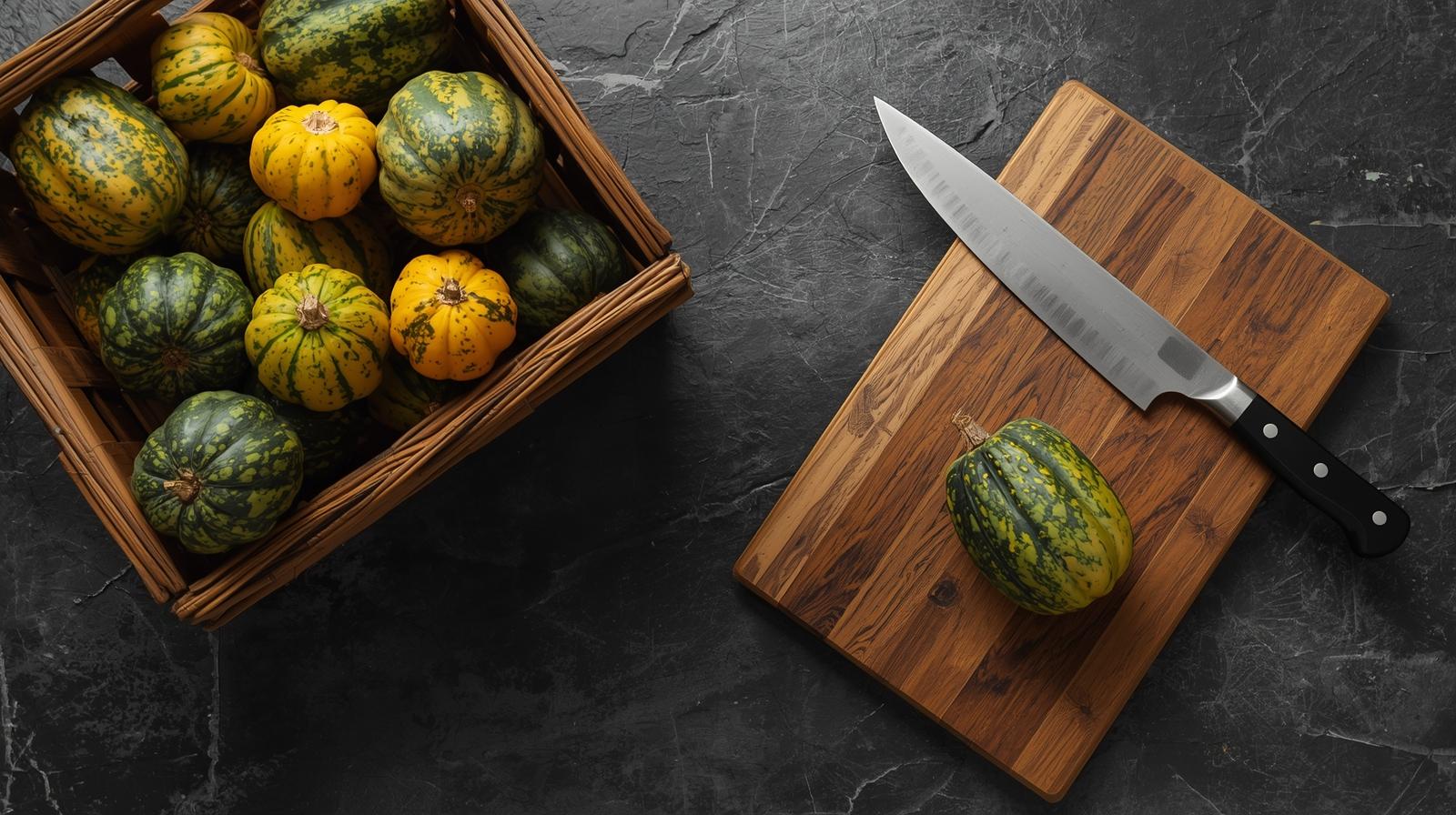
basket of acorn squash sitting on the counter

As I learn more about gardening, preserving food, and living more frugally in general, I’ve been pushing myself to try things I’ve honestly overlooked for years. When I spotted acorn squash on sale at H-E-B and heard how easy they are to grow, it felt like the perfect excuse to finally give them a shot. Cheap, versatile, and garden-friendly? That’s my kind of experiment.

What Is Acorn Squash?

Acorn squash is a winter squash with dark green skin, deep ridges, and sweet yellow-orange flesh. Despite the name, it doesn’t taste nutty. Instead, it has a mild, slightly sweet flavor that works well in both savory and sweet dishes.

It’s affordable, filling, and easy to store, which makes it a great option if you’re trying to stretch your grocery budget or rely less on processed foods.

Why Acorn Squash Makes Sense for Frugal Living

This is one of those foods that quietly checks all the boxes.

Acorn squash is usually inexpensive, especially in fall and winter. One squash can feed two to four people depending on how it’s prepared. It stores well for weeks, sometimes months, without any special equipment. Even better, it’s packed with fiber, potassium, and vitamins A and C, so it pulls its weight nutritionally.

When you’re learning to be more intentional with food choices, this kind of versatility really matters.

Growing Acorn Squash at Home

If you’re considering growing your own food, acorn squash is often recommended for beginners.

It grows on vines, so it does need space. A single plant can spread several feet, but it produces generously. It prefers full sun and well-drained soil and does best when planted after the danger of frost has passed.

From planting to harvest, you’re looking at about 80 to 100 days. You’ll know it’s ready when the skin turns dark green, feels hard, and resists puncture from a fingernail.

Even if you’re new to gardening, this is a low-maintenance crop that rewards you for your effort.

How to Store and Preserve Acorn Squash

Whole acorn squash can be stored in a cool, dry place for several weeks. A pantry or storage closet works just fine.

Once cut, keep it in the refrigerator and use it within a few days. Cooked acorn squash freezes well too. You can mash it, cube it, or roast it first, then freeze portions for future meals. That’s a big win if you’re trying to cut down on waste and avoid last-minute grocery runs.

Related: Planning a More Self-Sufficient Life Through Gardening and Canning

Easy Ways to Cook Acorn Squash

One reason I’m enjoying experimenting with acorn squash is how simple it is to prepare.

Roasting is the most common method. Just slice it in half, scoop out the seeds, brush with oil, season, and roast until tender. The natural sweetness really comes through.

You can also microwave it for a quicker option, steam it, or even slice it into wedges for roasting like potatoes.

Simple Acorn Squash Recipe Ideas

Here are a few beginner-friendly ideas that don’t require fancy ingredients:

Classic Roasted Acorn Squash
Halve the squash, drizzle with oil, season with salt and pepper, and roast until fork-tender.

Savory Stuffed Squash
Fill roasted halves with ground meat, rice, beans, or leftover veggies. It’s a great clean-out-the-fridge meal.

Sweet Cinnamon Squash
Roast with a little butter, cinnamon, and brown sugar for a simple side dish.

Mashed Acorn Squash
Mash cooked squash with butter and seasoning as a budget-friendly alternative to mashed potatoes.

Health Benefits of Acorn Squash

Acorn squash also brings solid health benefits to the table, which makes it even more appealing when you’re trying to eat better without spending more. It’s high in fiber, which supports digestion and helps you feel full longer, making meals more satisfying. Acorn squash is also a good source of potassium for heart health, along with vitamins A and C that support immune function and overall wellness. For a budget-friendly food, it delivers real nutritional value without requiring specialty ingredients or complicated preparation.

Is Acorn Squash Worth It?

For someone learning more about frugal living, gardening, and food preservation, acorn squash feels like a smart place to start. It’s affordable, easy to grow, easy to store, and forgiving in the kitchen.

Trying new foods like this has been a reminder that frugal living isn’t about deprivation. It’s about learning how to use what’s available, stretching what you buy, and building skills that actually make life easier in the long run.

If you’ve been eyeing those acorn squash at your grocery store or Farmers Market and wondering if they’re worth it, I’d say yes. Sometimes the simplest foods turn out to be the most useful ones.

Related: Meal Prep for Mortals: Easy Freezer Meals for Busy Weeks

Lisa Crow contributed to this article. She is a true crime junkie and lifestyle blogger based in Waco, Texas. Lisa is the Head of Content at Gigi’s Ramblings and Southern Bred True Crime Junkie. She spends her free time traveling when she can and making memories with her large family which consists of six children and fifteen grandchildren.

woman basking in stability

Life has a funny way of teaching lessons you didn’t ask for. For years, I chased excitement, change, and the thrill of the unknown. I thought unpredictability was the spice of life. But somewhere along the way, I realized something: the chaos I once loved came with a price. That’s why stability has become more than a comfort—it’s a necessity.

The Shift From Chaos to Calm

There’s a stark difference between excitement and stress. When your life is in constant flux, decisions feel heavier, and your energy gets spread thin. I’ve learned that having a steady foundation doesn’t mean you’re stagnant—it means you can breathe. Stability creates space for reflection, growth, and meaningful connections.

Stability and Relationships

One of the biggest lessons I’ve learned is that stability strengthens relationships. When your life isn’t a constant rollercoaster, you show up more consistently for the people who matter most. Whether it’s family, a partner, or friends, being grounded allows you to nurture bonds without distractions or unnecessary drama.

The Role of Financial Security

Stability isn’t just emotional—it’s practical. Managing finances, building savings, and planning ahead have become priorities. I’ve realized peace of mind doesn’t come from taking wild risks but from knowing your basics are covered. That security allows me to take smarter, more intentional risks when they truly matter.

Finding Joy in the Predictable

There’s a quiet joy in routines and predictability that I used to overlook. Morning rituals, weekly date nights with Santiago, or just knowing what to expect from my day—they may seem small, but they create a sense of control and peace. And that peace has become priceless.

Stability as Freedom

Ironically, choosing stability has opened doors I didn’t know existed. Instead of being trapped by constant upheaval, I can focus on things that truly matter: my family, my business, and my passions. Stability isn’t a cage—it’s a springboard. It allows me to move forward without constantly looking over my shoulder.

Embracing a Grounded Future

Life will always have surprises, but embracing stability has taught me resilience, patience, and clarity. I’ve stopped glorifying chaos and started appreciating consistency. And in that consistency, I’ve found freedom, confidence, and a version of happiness I couldn’t reach before.

Lisa Crow contributed to this article. She is a true crime junkie and lifestyle blogger based in Waco, Texas. Lisa is the Head of Content at Gigi’s Ramblings and Southern Bred True Crime Junkie. She spends her free time traveling when she can and making memories with her large family which consists of six children and fifteen grandchildren.

lady ignoring red flag

We’ve all seen it. Felt it. That little warning bell that goes off when something doesn’t sit right. The problem isn’t that we miss red flags. It’s that we talk ourselves out of them.

Red flags don’t usually show up screaming. They whisper. They nudge. And if you ignore them long enough, they turn into full-blown disasters.

This applies to relationships, friendships, jobs, family dynamics, and even your own habits. If something feels off, there’s usually a reason.

Red Flags Are Your Gut Speaking Plain English

Your intuition doesn’t need evidence. It notices patterns before your brain catches up. That tight feeling in your chest, the sudden hesitation, the urge to pause — that’s not anxiety. That’s awareness.

People ignore red flags because they want to be polite, hopeful, or forgiving. But your gut isn’t rude. It’s protective.

When you dismiss those instincts, you’re choosing comfort over clarity.

Small Red Flags Grow Teeth

Most red flags don’t start as deal-breakers. They start small.

A comment that feels disrespectful. A promise that keeps getting delayed. A story that changes just enough to make you wonder. On their own, they seem harmless. Together, they paint a picture.

Ignored long enough, those small signs turn into patterns. And patterns don’t lie.

Love Doesn’t Require You to Ignore Yourself

One of the biggest lies people believe is that love means patience at all costs. It doesn’t.

Real love doesn’t ask you to silence your instincts or shrink your boundaries. It doesn’t make you feel confused, uneasy, or constantly second-guessing your reality.

If you feel like you’re always explaining away someone’s behavior, that’s not love. That’s self-abandonment.

Red Flags Aren’t Always About Other People

Sometimes the red flag is you.

Staying when you know better. Making excuses you wouldn’t accept for anyone else. Ignoring your own limits because walking away feels uncomfortable.

Growth starts when you stop gaslighting yourself.

Ignoring Red Flags Costs You Time

Time is the one thing you don’t get back. Every red flag ignored is time spent in a situation that isn’t aligned with who you are or where you’re headed.

Listening early saves years of regret, resentment, and recovery.

Walking away at the first warning isn’t dramatic. It’s disciplined.

Trusting Yourself Is a Skill You Can Relearn

If you’ve ignored red flags before, you’re not broken. You were likely taught to be agreeable, understanding, or self-sacrificing.

The good news is intuition gets stronger the more you honor it. Each time you listen, it speaks louder. Each time you act, you trust yourself more.

That’s power.

The Bottom Line

Red flags aren’t there to scare you. They’re there to guide you.

Ignoring them doesn’t make them disappear. It just delays the lesson.

Pay attention. Trust your gut. And remember — peace is louder than chaos once you learn how to listen.

oversharing on social media

Image created with Canva AI

Oversharing Used to Be the Norm

For years, social media rewarded people for sharing everything. Emotional breakdowns, relationship drama, financial stress, and deeply personal struggles were posted publicly and often in real time. Oversharing became normalized and even encouraged, creating an environment where privacy felt outdated or unnecessary.

Emotional Burnout Changed Everything

Constant exposure to other people’s problems has taken a toll. Timelines filled with trauma dumping, outrage, and forced vulnerability leave many people mentally drained. Instead of connection, oversharing now often creates exhaustion, avoidance, and disengagement.

Privacy Now Feels Intentional

Keeping parts of life offline is no longer seen as secretive—it’s seen as healthy. People are realizing that not every experience needs validation or commentary. Privacy has become a form of self-respect and emotional boundary setting.

The Internet Never Forgets

What’s shared publicly can be saved, reshaped, or resurfaced years later. Posts can be misunderstood, weaponized, or used by algorithms to define someone permanently. This reality has made public vulnerability feel risky instead of freeing.

Smaller Circles Feel Safer

Many people are shifting away from public timelines and toward private group chats, close friends lists, or no sharing at all. Connection still exists, but it’s happening in spaces where trust and control are present.

Less Sharing, More Living

Stepping back from oversharing allows people to experience life without turning every moment into content. The move isn’t about isolation—it’s about choosing peace over performance.

Lisa Crow contributed to this article. She is a true crime junkie and lifestyle blogger based in Waco, Texas. Lisa is the Head of Content at Gigi’s Ramblings and Southern Bred True Crime Junkie. She spends her free time traveling when she can and making memories with her large family which consists of six children and fifteen grandchildren.