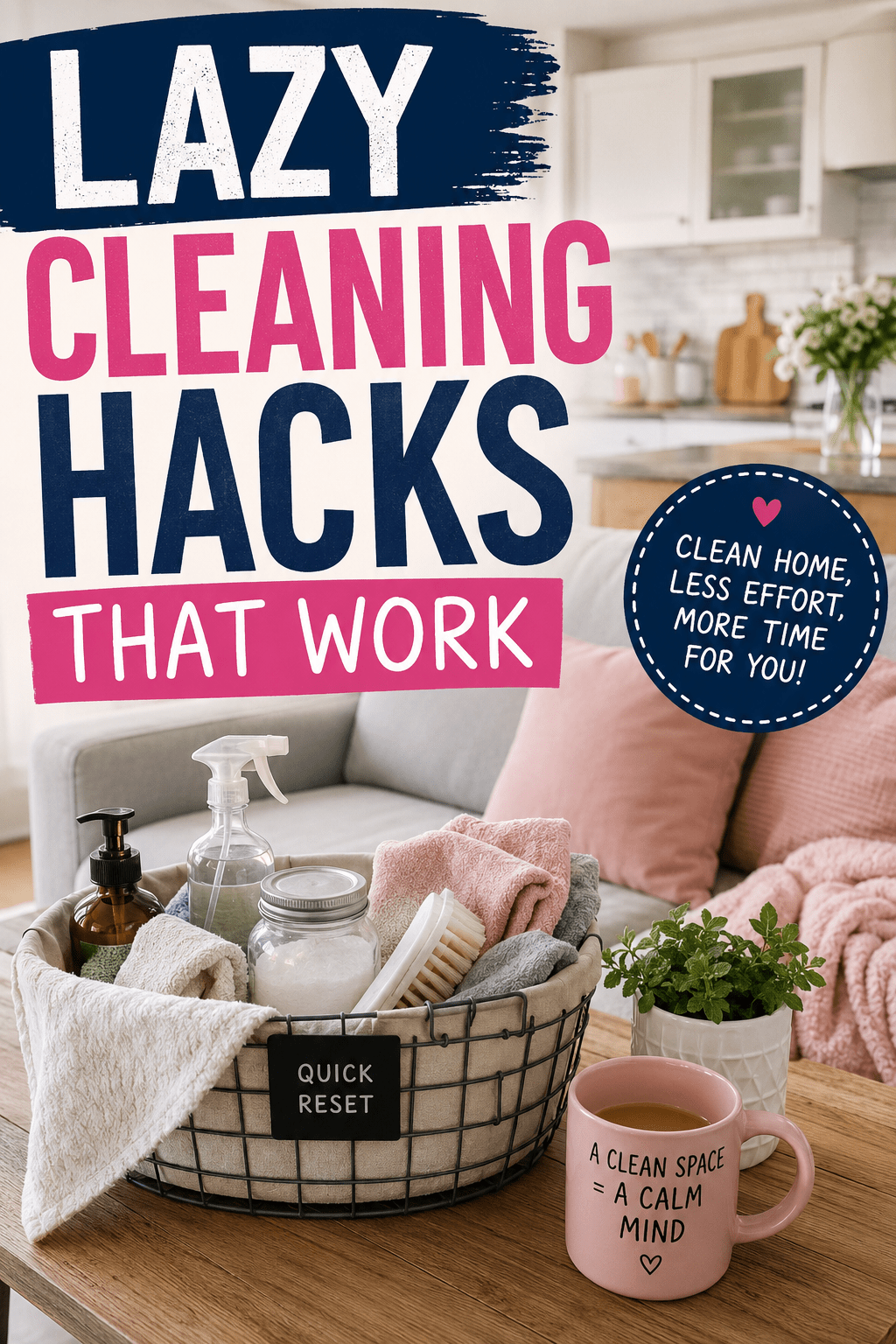
Cozy home cleaning scene with bold text reading “Lazy Cleaning Hacks That Work” alongside a basket of cleaning supplies in a bright modern living room.

Nobody wants to spend their whole weekend scrubbing baseboards and deep cleaning corners nobody even looks at. The good news is that keeping your house reasonably clean does not always require hours of work or a color-coded cleaning schedule. Sometimes the smartest cleaning tricks are the laziest ones.

If you are busy, tired, overwhelmed, or just not in the mood to clean, these lazy cleaning hacks can help you stay ahead of the mess without feeling like cleaning has become your full-time job. Most of these tricks take only a few minutes, and many can easily become part of your regular routine without much effort at all.

Clean While You Wait

One of the easiest ways to make cleaning feel less annoying is by doing small tasks during moments you would normally spend waiting around anyway.

For example, while your food is heating in the microwave, you can wipe down the counters. During commercials or while waiting for a video to load, you can straighten the living room or toss laundry into the dryer. Even brushing your teeth can become a chance to quickly wipe down the bathroom sink.

Before long, those tiny moments start adding up. As a result, your house stays cleaner without needing a massive cleaning day.

Keep Cleaning Supplies Where You Use Them

Dragging cleaning products from room to room feels like way too much effort sometimes. Because of that, many people put off cleaning longer than they should.

Instead, try keeping basic supplies in the rooms where they are most often used. Store disinfecting wipes under the bathroom sink, keep a small handheld broom near the kitchen, and stash microfiber cloths in a nearby drawer.

When supplies are easy to grab, quick cleanups become much more likely to happen.

Related: Why I’d Rather Clean a Bathroom Than Answer a Phone Call

The Laundry Basket Trick

If clutter seems to multiply overnight, this trick works surprisingly well.

Grab a laundry basket and walk through the house tossing random misplaced items inside. Shoes, chargers, toys, mail, blankets, cups, and all the little things that somehow end up everywhere can quickly be gathered in one trip.

Afterward, you can either put the items away immediately or leave the basket somewhere out of sight until you have more energy to deal with it later. Either way, the room instantly looks better with minimal effort.

Use Dishwasher Tablets for More Than Dishes

Dishwasher tablets are secretly one of the laziest cleaning shortcuts around.

They work well for cleaning garbage cans, outdoor furniture, oven racks, and even stained coffee mugs. Simply drop one into hot water and let it do most of the work for you.

Many people also use them inside toilets or shower pans to help loosen grime with very little scrubbing involved.

Make Your Bed the Easy Way

Perfectly styled beds belong in magazines. Real life is a little different.

Instead of worrying about hospital corners and decorative pillows, just straighten the blanket and fluff the pillows a bit. Even a half-made bed makes the whole bedroom look cleaner.

Since the bed is usually the biggest thing in the room, this small habit creates a noticeable difference almost instantly.

Let Cleaning Products Sit Before Scrubbing

One of the biggest mistakes people make is spraying something and immediately trying to scrub it clean.

Most cleaning products work better when they are allowed to sit for a few minutes first. During that time, the cleaner starts breaking down grease, soap scum, or grime on its own. That means less effort for you afterward.

Spray the shower before you take out the trash or wipe down another area. By the time you come back, most of the hard work has already been done.

Use Baking Soda on Carpets and Furniture

If your house needs a quick refresh, baking soda can help absorb odors without much effort.

Sprinkle it lightly onto carpets, rugs, mattresses, or upholstered furniture and let it sit for a while before vacuuming. It is especially helpful in homes with pets, kids, or strong cooking smells.

This trick works well before guests come over because it helps everything smell fresher fast.

Stop Folding Everything

Not every piece of laundry needs to be folded perfectly.

Socks, pajamas, workout clothes, towels, and even some T-shirts can simply be tossed neatly into drawers or bins. While folding every single thing may look nice, it also takes a lot of time most people do not really want to spend.

Meanwhile, hanging clothes straight from the dryer can help reduce wrinkles and eliminate extra work later.

Keep a “Closing Shift” Routine

Restaurants do this for a reason. A short nighttime reset makes mornings feel much less chaotic.

Before heading to bed, spend about ten minutes doing a quick cleanup. Load the dishwasher, wipe the counters, throw away trash, and straighten the couch blankets.

Because the mess never gets completely out of control, the house stays easier to manage overall.

Related: How to Make Spring Cleaning Fun and Enjoy It

Use Washable Everything

The fewer things you have to deep clean by hand, the better.

Washable slipcovers, machine-washable rugs, mop pads, shower curtains, and reusable cleaning cloths make life much easier. Instead of spending hours scrubbing stains, many messes can simply be tossed into the washing machine.

That small change can save a surprising amount of time over the course of a year.

The “Good Enough” Cleaning Method

Sometimes people avoid cleaning because they feel like everything has to be done perfectly. In reality, a quick imperfect cleanup is usually better than doing nothing at all.

Vacuuming only the visible crumbs still helps. Wiping down the bathroom counter without deep cleaning the whole bathroom still counts. Tossing clutter into a basket still makes the room feel calmer.

A house does not have to look perfect to feel comfortable and welcoming.

Final Thoughts

Cleaning will probably never become anyone’s favorite hobby, but it also does not have to take over your entire day. A few lazy cleaning hacks here and there can make your home feel more manageable without exhausting you in the process.

At the end of the day, the goal is not perfection. It is simply creating a space that feels comfortable, lived-in, and a little less stressful to deal with.

Lisa Crow contributed to this article. She is a true crime junkie and lifestyle blogger based in Waco, Texas. Lisa is the Head of Content at Gigi’s Ramblings and Southern Bred True Crime Junkie. She spends her free time traveling when she can and making memories with her large family which consists of six children and sixteen grandchildren.


Woman in summer sun with hair color fading from vibrant to dull and brassy.

Summer always feels like the season where everything looks better. Longer days, pool trips, beach weekends, road trips, and every excuse to be outside. Unfortunately, summer can also be brutal on hair color. You spend good money getting your hair exactly how you want it, only to realize a few weeks later that your rich brunette suddenly looks flat, your blonde turned yellow, or your red faded faster than expected.

The frustrating part is that most people blame their stylist or assume the color simply did not last. In reality, a lot of everyday summer habits quietly destroy hair color without people even realizing it.

If your color seems to disappear every year once temperatures climb, a few sneaky summer mistakes may be the reason.

Spending Too Much Time In Direct Sun

Everyone thinks about sunscreen for skin. Hardly anyone thinks about sunscreen for hair.

UV rays do not just damage skin. They can break down hair pigments and oxidize color molecules. Blondes often turn brassy. Reds fade incredibly fast. Dark shades can lose depth and become flat looking.

This gets worse if you spend hours outside at ball games, festivals, lake days, or vacations.

A cute hat is not just an accessory during summer. It can actually protect your investment. Hair products with UV protection can also make a noticeable difference.

Living In Chlorine All Summer

Pool season is fun until your hair starts paying the price.

Chlorine strips natural oils from hair and opens the cuticle layer. Once that protective layer opens, color molecules escape more easily. Hair can quickly become dry, faded, and rough.

Blondes often get hit the hardest. Some people even notice a green tint after repeated swimming.

One simple trick can help. Wet your hair with regular water before getting into the pool. Hair acts like a sponge. If it absorbs clean water first, it may soak up less chlorine.

Wearing your hair up can help too if you practically live in the water during summer.

Washing Hair Too Often

Sweating during summer makes people want to wash their hair constantly.

That daily shampoo habit can become a major problem for color longevity. I can’t even lie, I shampoo my hair twice every shower, every single day. Despite being a hairstylist for many years, I will NOT bend on this one. I cannot stand dirty hair! I will encourage you not to, while I continue to do it until I’m on the other side of the dirt.

Every wash removes small amounts of color. During summer, many people wash more because of sweat, humidity, and outdoor activities. Suddenly, hair that normally lasts eight weeks between appointments starts fading after only a few.

Dry shampoo can become your best friend during hot months. Even stretching washes by one extra day can help preserve color.

Using Clarifying Shampoo Too Much

Clarifying shampoos absolutely have a purpose. They remove buildup and can leave hair feeling extra clean.

The problem happens when people start using them constantly during summer because of sweat, sunscreen, pool chemicals, and styling products.

Most clarifying shampoos are stronger than color-safe formulas. Frequent use can strip color much faster than expected.

Instead, save clarifying products for occasional use and stick with shampoos designed specifically for color-treated hair.

Related: What Summer Looked Like in the ‘80s vs Now

Ignoring Hard Water Damage

People often blame summer weather when hard water may be quietly causing the real issue.

Mineral-heavy water can build up on hair and make color appear dull, faded, or oddly brassy. During summer, this sometimes becomes more noticeable because hair already deals with sun exposure and swimming.

If your hair suddenly feels rough or your color starts acting strange, buildup may be part of the problem.

A shower filter can help reduce some of the damage over time.

Heat Styling On Top Of Heat Exposure

Summer already puts hair under stress.

Now add curling irons, blow-dryers, straighteners, and other hot tools every day.

Hair color survives best when the hair cuticle stays healthy. Excessive heat weakens the outer layer, causing fading to occur faster.

During summer, air drying can be your friend. Braids, messy buns, heatless curls, and simple styles can save both time and color.

If you do use heat tools, use heat protectant every single time.

Waiting Too Long For Hair Care Maintenance

People often schedule color appointments and assume the work ends there.

Summer hair usually needs a little extra attention. Hydrating masks, gloss treatments, trims, and moisture treatments can help keep colored hair healthier between appointments.

Think of it like maintaining a vehicle. Ignoring small issues eventually creates bigger ones.

Hair color lasts longer when the hair itself stays healthy.

Tiny Habits Add Up Fast

Most summer color disasters do not happen overnight.

It is usually a combination of little habits that slowly chip away at your color week after week. Extra sun, extra washing, pool time, heat tools, and stronger shampoos can all pile up before you notice what happened.

The good news is that preserving color usually does not require huge changes. A few small adjustments can keep your hair looking fresher far longer.

Because nobody wants to pay salon prices just to watch their color disappear before summer even ends.

Lisa Crow contributed to this article. She is a true crime junkie and lifestyle blogger based in Waco, Texas. Lisa is the Head of Content at Gigi’s Ramblings and Southern Bred True Crime Junkie. She spends her free time traveling when she can and making memories with her large family which consists of six children and sixteen grandchildren.

The image shows fresh sliced jicama with chili seasoning and lime in a vibrant, food-focused style.

I have to admit, a lot of people here in the United States have absolutely no idea what jicama even is. If you say the word out loud, you’ll probably get a confused look and a, “A what now?” I discovered jicama years ago while spending a lot of time in Mexico, and honestly, I could not believe I had gone so long without trying it.

Once I had my first bite, I was hooked.

It is crunchy, refreshing, slightly sweet, and incredibly versatile. Plus, after learning all of the health benefits packed into this strange-looking root vegetable, I started wondering why it is not sitting in every grocery cart in America.

If you have never tried jicama before, you may be missing out on one of nature’s most underrated foods.

What Exactly Is Jicama?

Jicama (pronounced HEE-kah-ma) is a root vegetable native to Mexico and parts of Central America. It grows underground as part of a climbing vine plant and belongs to the bean family.

The outside looks a little rough at first glance. It has a thick tan skin that almost resembles a potato crossed with a turnip. Inside, however, is where the magic happens. Once peeled, the flesh is bright white, crisp, juicy, and refreshing.

The texture reminds many people of a water chestnut or a very crunchy pear.

Taste-wise, jicama has a mild sweetness with a fresh, slightly nutty flavor. It is one of those foods that somehow feels both like a fruit and a vegetable at the same time.

Fun fact: while the root itself is edible, the seeds and other parts of the plant are toxic and should never be eaten.

Related: A Frugal Kitchen Experiment: Acorn Squash

Why Jicama Is So Popular In Mexico

If you spend time in Mexico, you’ll notice jicama sold in markets, roadside stands, and snack carts. Vendors often slice it into sticks and pile it into cups with lime juice and chili seasoning.

That was exactly how I first discovered it.

And to this day, my favorite way to eat jicama is still simple:

Fresh jicama sticks covered with Tajín and a squeeze of fresh lime.

That sweet, juicy crunch mixed with tangy lime and chili seasoning is ridiculously good. Once you try it, you understand immediately why people love it.

Ways To Eat Jicama

One of the best things about jicama is how easy it is to use.

You can eat it raw or cooked, and it works in all kinds of dishes.

Some delicious ways to enjoy it include:

  • Jicama sticks with Tajín and lime (my fave)
  • Sliced into fresh fruit cups
  • Added to salads for crunch
  • Mixed into coleslaw
  • Added to tacos
  • Diced into salsa
  • Served with chili powder and chamoy
  • Stir-fried with vegetables
  • Used as a low-carb fry substitute
  • Added to spring rolls
  • Eaten plain with a little sea salt

Most people enjoy it raw because it keeps that refreshing crunch.

Related: Vegetables To Plant In May For Summer Harvest

Jicama Is Loaded With Nutritional Benefits

Now let’s talk about why this crunchy little root deserves more attention.

Jicama may taste like a treat, but it quietly packs a pretty impressive nutritional punch.

Rich In Fiber

Jicama contains a large amount of dietary fiber, especially a prebiotic fiber called inulin.

Prebiotics feed the beneficial bacteria in your gut, helping support:

  • Better digestion
  • Healthier gut bacteria
  • Improved regularity
  • Reduced constipation
  • Better overall digestive health

Fiber also helps you stay full longer, which can help reduce unnecessary snacking.

Great Source Of Vitamin C

People often think oranges get all the vitamin C attention, but jicama contains a surprisingly healthy amount too.

Vitamin C helps support:

  • Immune system health
  • Collagen production
  • Skin health
  • Wound healing
  • Antioxidant protection

Many people are not getting enough vitamin C daily, so every little boost helps.

Supports Healthy Blood Sugar Levels

Despite its naturally sweet flavor, jicama actually has a relatively low glycemic impact.

Because it contains fiber and inulin, it may help slow blood sugar spikes compared to highly processed snacks.

That makes it a smart choice when cravings hit.

Hydrating And Low In Calories

Jicama is made up of a lot of water.

That means you get:

  • Crunch
  • Hydration
  • Fiber
  • Nutrients

Without a huge calorie load.

One cup of raw jicama contains relatively few calories while still feeling filling.

Contains Important Nutrients

Jicama also provides smaller amounts of several helpful nutrients including:

  • Potassium
  • Magnesium
  • Folate
  • Iron
  • Manganese

Your body relies on these nutrients for everything from nerve function to muscle health.

Full Of Antioxidants

Jicama contains antioxidants that help fight oxidative stress in the body.

Antioxidants may help protect cells from damage caused by free radicals and support overall long-term health.

Can You Grow Jicama At Home?

Surprisingly, yes.

Jicama can be grown at home if you have plenty of warmth and patience.

The plant grows as a vigorous vine and loves long, hot growing seasons. Since we are talking about a tropical plant, it does best in warmer climates with plenty of sunlight.

A few growing basics:

  • Plant after danger of frost has passed
  • Use well-draining soil
  • Give vines plenty of room
  • Provide full sun
  • Expect a long growing season

Jicama takes several months to mature, sometimes up to five to nine months depending on conditions.

The root develops underground while vines spread above ground.

Gardeners in warmer southern states often have better success because of the longer growing season.

Final Thoughts

Jicama is one of those foods many Americans simply have never been introduced to, which is a shame because it checks almost every box.

It tastes good.

It is refreshing.

It is loaded with fiber and nutrients.

It works in both healthy recipes and snack cravings.

And honestly, if you have never tried fresh jicama with Tajín and lime, put it on your grocery list immediately.

You may end up wondering the same thing I did after discovering it in Mexico:

How did I go this long without eating this stuff?

Lisa Crow contributed to this article. She is a true crime junkie and lifestyle blogger based in Waco, Texas. Lisa is the Head of Content at Gigi’s Ramblings and Southern Bred True Crime Junkie. She spends her free time traveling when she can and making memories with her large family which consists of six children and sixteen grandchildren.

Family watching a powerful Texas lightning storm safely from inside a garage.

I Learned To Respect Lightning The Hard Way

I have always been amazed by lightning and scared to death of it at the same time. There is just something about a storm rolling in that gets me. Watching the sky light up from a distance is beautiful, but after what I witnessed years ago, I can tell you there is a whole lot of respect mixed in with that fascination too.

Years ago, I watched my children’s father get struck by lightning while holding my son, and to this day, I still cannot believe I saw it happen right in front of me.

We were at my grandparents’ house, waiting in the garage for the rain to slow down so we could load up the kids and leave. He and I had been arguing over who even knows what because back then we argued about everything. I honestly cannot remember what started it now, but I do remember one part clear as day. He said, “I swear to God,” and I immediately got irritated because I hated when he used that saying while lying. I told him, “Don’t you dare swear to God if you’re lying.”

Well, that disgusting waste of skin got mad and yelled something I will never forget… “F-%k God!”

Y’all, I am not exaggerating when I say what happened next felt instant. Lightning struck the garage door and hit him. One second we were arguing, and the next second everything turned into complete chaos. I completely froze because my brain could not even process what had happened.

What scared me most was not him. It was my son. He had my son tucked inside his shirt, trying to keep him dry while we waited for the rain to stop. My heart dropped straight into my stomach because all I could think was, my baby was in his arms. Somehow, my son was physically okay. Shocked and terrified, absolutely, but okay. To this day, I still call that a miracle.

His dad ended up with a nasty burn across his chest, and the lightning had literally blown a hole through his shirt. His heart rate was through the roof and completely out of rhythm. The ambulance came and somehow he survived the whole thing. If I ever had doubts in my faith before that day, they disappeared right there in my grandma’s garage.

Now my poor grandma is the part that still makes me laugh. Bless her heart, she already had the fear of God in her soul and did not want that man in her house – possibly dying or not. While we sat there waiting on the ambulance, she wanted absolutely no part of what she probably considered Satan’s spawn hanging around in her living room. I think she was worried God might want to get his point across with another bolt. Looking back now, I can still picture her face and laugh.

That experience changed me. I still think lightning is one of the most incredible things nature creates, but I also learned firsthand that storms are not something to play around with. As it turns out, a lot of what people believe about lightning is completely wrong.

Related: Tornado Alley Explained: What It Is and Why It Matters

Myth: Lightning Never Strikes The Same Place Twice

This one has been around forever, and it simply is not true. Lightning absolutely can strike the same place repeatedly. Tall objects actually become repeated targets because they are easier for lightning to reach.

Buildings, radio towers, trees, and even the same patch of ground can be hit multiple times during a storm. Lightning is not avoiding places it already visited. If conditions are right, it can strike there again and again.

Myth: If It Is Not Raining Yet, You Are Safe

This myth gets people in trouble because storms do not always stay directly overhead. Lightning can travel miles away from the center of a storm, which means you can still see sunshine and suddenly hear thunder.

That is why weather experts often say if you can hear thunder, you are close enough to be struck. It sounds simple, but that advice can save lives.

Myth: Trees Are Safe During Storms

People run toward trees all the time thinking they have found shelter, especially if they are caught outside unexpectedly. Unfortunately, trees are actually one of the worst places you can stand.

Because trees are usually among the tallest objects around, they attract lightning. Even worse, electricity can spread outward through the ground after impact and injure people standing nearby.

Myth: Rubber Tires Protect You

A lot of us grew up hearing that car tires protect us from lightning because rubber blocks electricity. The truth is, the tires are not doing the work.

The metal frame of an enclosed vehicle helps redirect electricity around the passengers. That means motorcycles, tractors, and convertibles do not provide the same protection.

Myth: People Struck By Lightning Stay Electrically Charged

Television really confused people with this one. Someone who has been struck by lightning does not hold electricity afterward.

If someone is injured by lightning, you can safely touch them and help immediately. I can personally attest to this. Calling emergency services and giving aid quickly can make a huge difference.

Lightning Is Beautiful, But It Deserves Respect

Even now, I still love watching storms roll across the Texas sky. I still think lightning is beautiful and fascinating. At the same time, I learned firsthand that nature can humble you in a split second. I also learned God can use nature to humble you.

After watching somebody get struck standing just feet away from me, I can tell you one thing for sure. I will never casually stand around waiting out a storm again.

And somewhere up above, I still think my grandma is shaking her head saying, “I told you I don’t want that man in my house.”

Lisa Crow contributed to this article. She is a true crime junkie and lifestyle blogger based in Waco, Texas. Lisa is the Head of Content at Gigi’s Ramblings and Southern Bred True Crime Junkie. She spends her free time traveling when she can and making memories with her large family which consists of six children and sixteen grandchildren.
Shopper with a full grocery cart and coupon binder looking shocked at huge savings from extreme couponing.

Most of us have used a coupon at some point. Maybe you clipped one from a newspaper years ago, scanned a store app before checkout, or got excited over a buy-one-get-one deal. However, there is a whole other side of couponing that most people never see. Hidden beneath those little discounts is a surprisingly intense world filled with strategy, planning, organization, and people who somehow walk out of stores with hundreds of dollars in products after spending less than a family dinner at a fast-food restaurant.

If you have ever watched someone on social media show a grocery haul worth $400 that cost only $38, you probably wondered if it was fake. Believe it or not, many of those savings are absolutely real. Extreme couponing is not just clipping paper coupons anymore. It has evolved into a serious hobby and, for some people, practically a second job.

Extreme Couponing Is More Like A Strategy Game

People often assume extreme couponers simply collect stacks of coupons and hand them over at checkout. In reality, the process is much more complicated than that. Successful couponers spend time studying sales cycles, checking weekly ads, comparing store policies, and planning shopping trips in advance.

The real magic happens when multiple discounts work together. A product may already be on sale, then a manufacturer coupon gets applied, followed by a store coupon, a loyalty reward, and finally a cash-back app rebate. Separately, those discounts may not look impressive. Combined, they can create jaw-dropping totals that seem impossible.

That is why experienced couponers often describe it like solving a puzzle. They are constantly looking for ways to make deals stack together in the perfect order.

Related: Frugal Living: Smart Habits to Save Money and Thrive

The Organization Behind It Can Be Surprisingly Intense

One thing television shows did get right was the organization. Extreme couponers are not throwing random coupons into kitchen drawers and hoping for the best. Many use giant binders packed with plastic sleeves sorted by category, expiration date, and product type.

Some people organize by dairy, frozen foods, household items, beauty products, and cleaning supplies. Others color-code sections or maintain spreadsheets that track upcoming sales and expiration dates. While that may sound excessive, there is a reason behind it. When you are standing in a busy checkout lane trying to pull together several discounts, you need to know exactly where everything is.

These systems may look over-the-top to outsiders, but for couponers, organization can mean the difference between huge savings and missed opportunities.

Extreme Couponers Rarely Shop Just One Store

Another thing that surprises people is how much planning goes into shopping trips. Most of us make a list, head to one store, and try to get everything done in a single stop. Extreme couponers often do the opposite.

Instead, they build routes around deals. One store may have the best household products sale while another has digital coupons that pair perfectly with grocery discounts. Someone serious about couponing might stop at three or four stores in one afternoon if the savings make it worthwhile.

To many people, that sounds exhausting. Yet for couponers, finding an amazing deal creates the same kind of excitement bargain hunters feel during holiday shopping events. There is a rush that comes from seeing a receipt with huge savings printed across the bottom.

Home Stockpiles Can Get A Little Wild

One of the most recognizable parts of extreme couponing is the stockpile. You have probably seen photos of spare bedrooms or garage shelves packed with toothpaste, paper towels, laundry detergent, soap, canned foods, and cleaning products stacked almost floor to ceiling.

At first glance, it can seem ridiculous. Why would anyone need that much toothpaste?

The answer actually makes sense. Extreme couponers buy extra products when prices hit their absolute lowest points. Rather than paying full price six months later, they shop from their own supply at home. For larger families, stockpiling can save serious money over time.

Of course, there is definitely a point where practical savings turn into buying things just because they are cheap. No family needs fifty bottles of mustard sitting in a closet.

Probably.

Digital Couponing Completely Changed The Game

Couponing today looks very different from what people remember years ago. Newspapers and scissors used to be essential tools, but now many shoppers build deals entirely through apps and rewards programs.

Store loyalty programs, digital coupons, rebate apps, and rewards systems opened couponing up to people who never wanted piles of paper scattered around the house. Many younger couponers now manage everything from their phones and never clip a physical coupon at all.

As a result, couponing feels more accessible than it once did. You no longer need giant binders to save money.

Although some people still love the binders.

Related: A Frugal Kitchen Experiment: Acorn Squash

The Biggest Secret Is Knowing When Not To Buy

Perhaps the smartest lesson experienced couponers learn has nothing to do with coupons themselves. Saving money is not about buying everything simply because there is a discount attached to it.

That excitement can be dangerous. Grabbing random products because they are cheap can quickly turn into spending money you never intended to spend in the first place. Experienced couponers eventually learn to focus on products they genuinely use instead of chasing every deal that appears.

After all, saving three dollars on something you never needed is not really saving money.

Final Thoughts

The world of extreme couponing looks a little mysterious from the outside. Between the binders, deal spreadsheets, shopping routes, and giant stockpiles, it can seem almost unbelievable. Yet beneath all the strategy is a simple goal most of us can understand: making money stretch a little further.

With grocery prices feeling expensive these days, it is easy to understand why people become fascinated by couponing. Even if you never become someone carrying a binder thicker than a phone book through the store, learning a few coupon tricks might make checkout feel a whole lot better.

And who knows? Today it starts with clipping one coupon. Next thing you know, you are explaining sales cycles to strangers in the cereal aisle.

Lisa Crow contributed to this article. She is a true crime junkie and lifestyle blogger based in Waco, Texas. Lisa is the Head of Content at Gigi’s Ramblings and Southern Bred True Crime Junkie. She spends her free time traveling when she can and making memories with her large family which consists of six children and sixteen grandchildren.

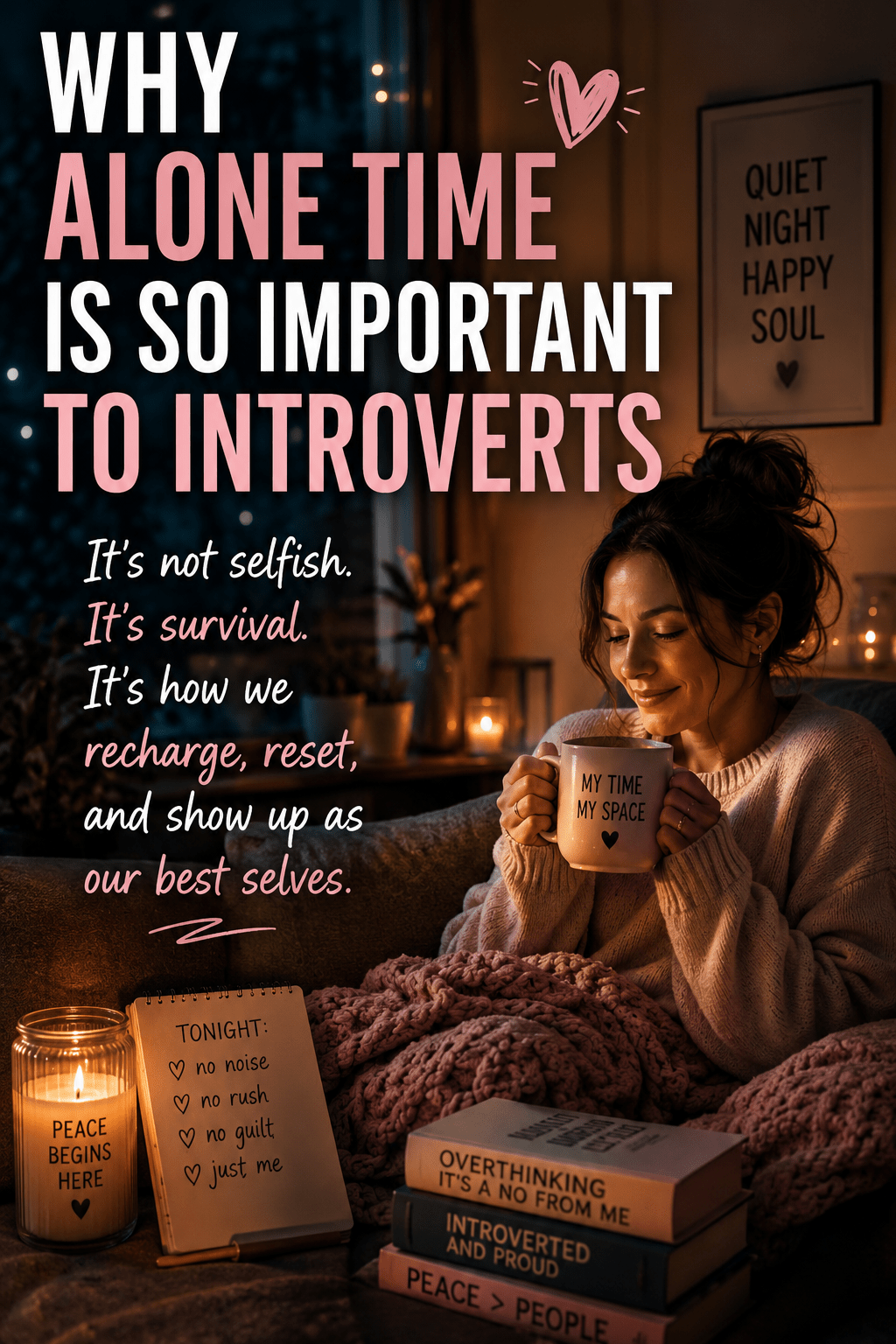
A cozy nighttime scene showing a relaxed woman wrapped in a blanket on a couch, holding a mug that says “My Time My Space.” Warm candlelight and soft lights glow around the room while large text explains why alone time is important to introverts. The peaceful setting captures the quiet comfort of late-night solitude and recharging after a long day.

Some people recharge by going out, being around friends, and staying busy all the time. Introverts are usually the exact opposite. We recharge by finally getting a little peace and quiet. Not because we hate people or don’t love our families, but because constant interaction can feel mentally exhausting after a while.

And honestly? Sometimes the best part of the day does not even start until everybody else goes to sleep.

Introverts Need Quiet To Recharge

For introverts, alone time is not some dramatic “escape from the world” thing. It is more like plugging your phone into a charger after the battery hits 5%.

When you spend all day talking, helping people, answering questions, working, parenting, cleaning, texting, and dealing with noise nonstop, your brain gets overloaded. Eventually, you just need a little silence to reset.

That reset looks different for everybody. Some people read. Some scroll TikTok in silence. Some craft, journal, watch crime documentaries, or just sit there enjoying the fact that nobody is asking them for anything for five whole minutes.

The point is simple. Alone time gives introverts breathing room.

Nighttime Feels Different

There is something magical about late-night quiet. The house feels calmer. The world slows down. No notifications going off every second. No errands. No expectations.

For a lot of introverts, nighttime becomes the only time that truly belongs to them.

I love my husband dearly, but I thank goodness he goes to bed early because I absolutely cherish that quiet nighttime window. It has always been that way for me.

Back when my kids were little, late night was literally the only alone time I could get. During the day, somebody always needed something. Snacks, homework help, rides, laundry, attention, more snacks somehow five minutes later. Moms barely get time to hear themselves think sometimes.

So I stayed up late.

Honestly, I almost never went to bed before 2 AM when my kids were younger. That was my decompression time. My brain finally got to unclench a little. I could watch what I wanted, work on my own hobbies, think my own thoughts, or just enjoy the silence without hearing “Mommmm” every twelve seconds.

Those quiet nighttime hours saved my sanity more than once.

Alone Time Does Not Mean You Love People Less

This is something introverts constantly have to explain.

Wanting alone time does not mean you are mad at your spouse. It does not mean you dislike your kids. It definitely does not mean you are antisocial.

Actually, a lot of introverts are deeply loving people. We just get emotionally drained faster from nonstop interaction.

That quiet hour at night is what helps many introverts show back up as better partners, better parents, and better humans in general.

Without that reset time, everything starts feeling overstimulating. Even little noises can become irritating when your mental battery is empty.

Meanwhile, after a little alone time? Suddenly, you feel human again.

Related: Simple Habits That Improve Mental Health

Moms Especially Understand This

Mothers, especially moms with multiple kids, know how rare true alone time can be.

Even when you technically have “free time,” somebody usually still needs something. You are still mentally on call all day long. That constant responsibility is exhausting, especially for introverts.

That is why so many moms end up becoming nighttime people.

The house finally gets quiet, and your brain immediately relaxes because nobody is touching you, asking questions, fighting over snacks, or yelling from another room.

You finally get to exist as a person instead of being needed every second.

Honestly, those little nighttime rituals become sacred after years of motherhood.

Getting Older Changes It A Little

These days, I do not stay up until 2 AM anymore. I am older now, and sleep matters a whole lot more than it used to.

But I still need that quiet nighttime decompression time.

Now I am perfectly happy squeezing in an hour or two before bed. Sometimes that is all it takes. A little silence, a little scrolling, maybe watching something nobody else in the house wants to watch, and suddenly the whole day feels balanced again.

That peaceful alone time still matters just as much as it always did.

Maybe even more.

Introverts Should Stop Feeling Guilty About Needing Space

Somewhere along the way, people started acting like wanting alone time is selfish. It is not.

Everybody has different ways of recharging emotionally. Extroverts often feel energized around people. Introverts usually recover in quiet spaces.

Neither one is wrong.

If your favorite part of the day is when the house finally gets quiet at night, you are definitely not alone. A lot of introverts understand that feeling completely.

Sometimes, the most peaceful moment of the entire day is sitting in silence while everybody else is asleep, finally getting a little time that belongs only to you.

Lisa Crow contributed to this article. She is a true crime junkie and lifestyle blogger based in Waco, Texas. Lisa is the Head of Content at Gigi’s Ramblings and Southern Bred True Crime Junkie. She spends her free time traveling when she can and making memories with her large family which consists of six children and sixteen grandchildren.

A warm, nostalgic small-town main street at golden sunset, with a quiet empty road lined by old storefronts and a distant water tower. In the foreground, a wooden rocking chair sits on a porch next to a small table with a coffee cup and flowers, creating a peaceful rural life mood. Bold text over the image reads “EVERY SMALL TOWN HAS A STORY” and “YOU WON’T FIND ONLINE… Let’s Discover This One,” emphasizing hidden small-town stories and offline history.

Every small town has a story you won’t find online, and that’s just the truth of it. You can search all day long, scroll through articles, and dig through history pages, but the real small-town stories usually live in people’s voices, not search engines. They come out slow, usually sitting on a porch, maybe over coffee or sweet tea, when somebody finally decides to talk.

That’s where you hear about old family feuds, strange happenings down dirt roads, and the kind of rural life memories that never make it into neat little summaries. Small-town America doesn’t hand you its history in bullet points. It drips it out in conversation.

Related: The Charm of Porch Sittin’

Small-Town America Moves Slower for a Reason

Out in rural life, things don’t move at internet speed. That slower pace is exactly why the stories last so long. When life isn’t rushing, people notice more. They remember more. And they pass it down instead of posting it.

Small-town America has always worked like that. You don’t just “read” the history, you live near it. It’s in the names of roads, the empty buildings on Main Street, and the way older folks talk like they’ve already seen every version of the world come and go.

And because of that, a lot of small-town stories stay off the internet completely. They don’t get archived. They get remembered.

Everybody Knows Everybody, and That Changes Everything

One thing about small towns is how connected everybody is. In rural life, you don’t really get to be anonymous. Folks know your family, your business, and sometimes your business before you even do.

That kind of closeness creates a different kind of storytelling. It’s not just “what happened,” it’s “who it happened to” and “who their people are.” That’s why small-town stories carry weight. They’re tied to real names, real reputations, and real consequences.

And honestly, that’s also why a lot of those stories never make it online. Some things just stay local on purpose.

The Local History Nobody Bothered to Write Down

Every small town has pieces of hidden history that never made it into books or websites. Maybe it was a storm nobody talks about anymore, or a business that once held the whole place together. Sometimes it’s just a house on the edge of town that everybody avoids, but nobody explains.

That’s the thing about rural life. Not everything gets documented, but that doesn’t mean it didn’t matter.

So when people say “there’s nothing to do in small town America,” they’re usually missing the point. The stories are still there. They’re just not packaged for the internet. You’ve got to ask the right person, at the right time, and be willing to listen longer than you planned.

Related: Why Some Small Towns Have the Craziest Mysteries

Why Small-Town Stories Stick With You

Small-town stories hit different because they feel close. Even if you didn’t grow up there, you can picture it. A gravel road, a faded sign, a place where time feels like it’s moving sideways instead of forward.

That’s why people keep coming back to rural life themes in books, blogs, and conversations. There’s something real in it. Something unpolished. Something you can’t fake.

And once you’ve heard enough of those stories, you start to realize something simple. Small-town America isn’t empty of history. It’s just full of stories that chose to stay spoken instead of posted.

Lisa Crow contributed to this article. She is a true crime junkie and lifestyle blogger based in Waco, Texas. Lisa is the Head of Content at Gigi’s Ramblings and Southern Bred True Crime Junkie. She spends her free time traveling when she can and making memories with her large family which consists of six children and sixteen grandchildren.

Homesteader feeding chickens at sunrise while holding a basket of fresh eggs, with a cow grazing nearby, a pot cooking over an open fire, and a rustic farm scene in the background.

Early Mornings Are Non-Negotiable

Living off the land starts early, whether you like it or not. Instead of alarms, it’s usually animals, sunlight, or the simple fact that there’s too much to get done. Right away, you’re feeding livestock, checking water sources, and walking the property to make sure nothing went wrong overnight.

Because mornings set the tone, skipping tasks isn’t really an option. If you fall behind early, the rest of the day becomes harder to manage. So, even when you’re tired, you get up and handle it.

Food Takes Real Work

At first, growing your own food sounds simple. However, the reality is constant effort. You’re planting, watering, weeding, and dealing with pests on a regular basis. Then, once crops are ready, you still have to harvest and preserve them.

In addition, raising animals for food comes with its own responsibilities. Feeding, cleaning, and monitoring their health becomes part of your routine. As a result, every meal carries a deeper appreciation because you know exactly what went into it.

Maintenance Never Really Stops

Things break all the time, and that’s just part of the deal. Fences get damaged, tools wear out, and equipment doesn’t always cooperate. Because of this, a good portion of your day is spent fixing or improving something.

Over time, you naturally pick up skills. You learn how to repair what you can instead of replacing it. Otherwise, costs add up fast, and that kind of lifestyle isn’t sustainable.

Related: Forgotten Skills Grandparents Used Daily

Weather Controls Everything

No matter how well you plan, the weather has the final say. A sudden storm can wipe out a garden, while a dry stretch can slow everything down. Because of that, flexibility becomes a daily mindset.

You start paying close attention to patterns. Instead of ignoring the forecast, you plan your tasks around it. For example, you might rush to harvest before rain or hold off planting until conditions improve.

It’s Physically Demanding

There’s no way around it—living off the land is hard on your body. You’re lifting, digging, carrying, and walking constantly. Even routine tasks can take more effort than expected.

That said, your body adapts over time. While the work doesn’t get easier, you get stronger and more efficient. Still, it’s not a lifestyle for anyone expecting comfort or convenience.

Simple Living Doesn’t Mean Easy Living

A lot of people assume simple equals easy, but that’s not how it works. Instead of trading time for money, you’re trading time for survival and independence. While that can be fulfilling, it also means there’s always something that needs attention.

Even downtime feels different. You might be resting, but you’re also thinking about the next task, the next repair, or the next season.

Why People Still Choose It

Despite the challenges, many people stick with it. There’s a sense of control and connection that’s hard to find elsewhere. You know where your food comes from, you rely on your own effort, and you build something real over time.

More importantly, it creates a different kind of satisfaction. It’s not about convenience—it’s about purpose. And for some, that trade-off is absolutely worth it.

Lisa Crow contributed to this article. She is a true crime junkie and lifestyle blogger based in Waco, Texas. Lisa is the Head of Content at Gigi’s Ramblings and Southern Bred True Crime Junkie. She spends her free time traveling when she can and making memories with her large family which consists of six children and sixteen grandchildren.

“A cozy, real-life comfort scene inside a warm home. A soft throw blanket draped over a couch, a lit wax melt burner on a side table, a warm glowing lamp, and a relaxed, lived-in feel. A phone resting nearby, a simple snack like grilled cheese or a bowl of soup on a tray, and soft neutral tones throughout the room. The atmosphere feels calm, comforting, and real, not staged or perfect. Natural lighting, slightly moody but warm, inviting and peaceful.”

Some days just hit different. You’re tired, overstimulated, or just not in the mood for anything complicated. That’s where simple, real-life comfort comes in. Not expensive, not time-consuming, just things that genuinely make you feel a little better.

Create a Cozy Corner You Actually Use

You don’t need a whole Pinterest-worthy setup. Just claim a spot in your house that feels good to you.

It could be your favorite chair, a corner of the couch, or even your bed piled up with soft blankets. Add a throw, a dim lamp, and maybe your favorite wax melts going. Suddenly, you’ve got a place your brain associates with slowing down.

The key is making it easy. If it’s too much effort, you won’t use it.

Put Something Familiar On in the Background

Comfort doesn’t always mean silence. Sometimes it’s the opposite.

Turn on a show you’ve seen a hundred times, a movie you love, or even a podcast that feels like company. There’s something about familiar voices that takes the edge off a long day.

You don’t have to sit and watch. Let it play while you fold laundry, scroll your phone, or just sit there doing nothing.

Related: How Clutter Affects Thinking (And Why It’s Draining You More Than You Realize)

Take a Shower That Feels Like a Reset

Not a rushed, get-in-get-out kind of shower. A real one.

Let the water run hot, stay in longer than usual, and actually relax your shoulders for once. Use your favorite scents and just let the day rinse off.

It sounds simple, but it works every single time.

Cook Something Easy and Comforting

You don’t need a full spread. In fact, simple is better.

Make something warm and familiar. Think grilled cheese, a bowl of soup, or even just heating up leftovers that hit the spot. The goal isn’t to impress anyone, it’s to feel taken care of.

Bonus points if you sit down and actually enjoy it instead of eating on the go.

Step Outside for a Few Minutes

Even if you don’t feel like it.

Fresh air has a way of breaking up whatever funk you’re in. Sit on the porch, walk to the mailbox, or just stand outside for a minute and breathe.

You don’t need a full workout or a long walk. A small reset is still a reset.

Wrap Up in Something Soft

There’s a reason people reach for blankets when they’re stressed.

A soft hoodie, fuzzy socks, or your favorite blanket can instantly make you feel more grounded. It’s a small thing, but your body notices.

Comfort is physical too, not just mental.

Do One Tiny Thing That Feels Productive

When everything feels off, doing one small task can help more than you think.

Make the bed. Clear off a table. Start a load of laundry.

You’re not trying to fix your whole life in one afternoon. You’re just giving yourself a small win.

Let Yourself Be Quiet

Not every moment needs to be filled.

Sometimes comfort looks like sitting in a quiet room, no noise, no expectations, just being still for a bit. It might feel weird at first, but it gives your mind a chance to catch up.

Reach Out to Someone You Trust

You don’t have to carry everything by yourself.

Send a quick text, make a short call, or even just check in with someone who gets you. You don’t need a deep conversation. Sometimes a simple “hey” is enough to feel a little less alone.

Give Yourself Permission to Do Less

This one matters more than anything else.

Not every day is meant to be productive or perfect. Some days are just about getting through and taking care of yourself the best you can.

And honestly, that’s more than enough.

Real comfort isn’t complicated. It’s those small, familiar things that help you breathe a little easier and feel a little more like yourself again.

Lisa Crow contributed to this article. She is a true crime junkie and lifestyle blogger based in Waco, Texas. Lisa is the Head of Content at Gigi’s Ramblings and Southern Bred True Crime Junkie. She spends her free time traveling when she can and making memories with her large family which consists of six children and sixteen grandchildren.

Infographic titled “Why People Seek Validation” featuring a thoughtful woman with a social media notification icon. The design explains key reasons people seek approval, including human nature, childhood conditioning, social media influence, fear of rejection, and habit formation. A second section outlines how to break the cycle with steps like noticing approval-seeking behavior, making independent decisions, limiting comparison, accepting disagreement, and building self-worth. The layout uses soft colors, icons, and clear sections to present the information in a friendly, easy-to-read style.

At some point, everyone looks for approval. It might show up as checking likes on a post, asking for opinions before making a decision, or needing reassurance that you’re doing things “right.” On the surface, it seems harmless. However, when validation becomes a constant need, it can quietly shape how you think, act, and even see yourself.

So why does it happen in the first place?

It Starts With Human Nature

Humans are wired for connection. Back in the day, being accepted by a group meant survival. Because of that, your brain still treats approval as something valuable. When someone agrees with you or praises you, it triggers a small reward response. As a result, you feel good and want more of it.

Because of this natural wiring, seeking validation isn’t a flaw. It’s just part of being human.

Childhood Conditioning Plays a Role

For many people, the need for validation starts early. If you were praised only when you achieved something or behaved a certain way, you may have learned that approval equals worth.

Over time, this creates a pattern. Instead of feeling confident on your own, you begin to rely on others to confirm your value. Even in adulthood, that old conditioning can stick around.

Social Media Makes It Worse

Today, validation is everywhere. Every like, comment, and share becomes a quick measure of approval. Because of that, it’s easy to tie your self-worth to numbers on a screen.

Even worse, social platforms often highlight the best parts of other people’s lives. This can lead to constant comparison. As a result, you may feel like you’re falling short and look for validation to fill that gap.

Fear of Rejection Drives It

Another big factor is fear. Nobody likes being rejected or judged. Seeking validation can feel like a way to avoid that discomfort.

For example, you might hold back your opinion until you know others agree. Or you may second-guess decisions just to make sure they’re “acceptable.” While this might feel safe in the moment, it slowly chips away at your confidence.

Related: How to Spot the Signs of a Narcissist

It Becomes a Habit

The more you rely on validation, the more automatic it becomes. Instead of trusting yourself, you start outsourcing your decisions.

Over time, this can lead to:

  • Constant self-doubt
  • Difficulty making choices
  • Feeling anxious without reassurance

Because of this cycle, validation stops being helpful and starts becoming limiting.

The Hidden Cost of Seeking Validation

At first, validation feels good. However, it often comes with a price.

You may begin to:

  • Change who you are to fit expectations
  • Avoid risks to stay “approved”
  • Depend on others for your sense of worth

As a result, you lose touch with your own voice. Instead of living authentically, you start living for approval.

How to Break the Cycle

The good news is you can shift away from needing constant validation. It just takes awareness and small changes.

First, start noticing when you seek approval. Are you asking for opinions out of curiosity or insecurity? That awareness alone can help you pause.

Next, practice making small decisions on your own. Over time, this builds trust in yourself.

Also, limit comparison. What you see online isn’t the full picture, so it’s not a fair standard to measure yourself against.

Finally, remind yourself that not everyone will agree with you. And that’s okay. Disagreement doesn’t mean you’re wrong or unworthy.

Final Thoughts

Seeking validation is normal, but relying on it too much can hold you back. When you begin to trust your own judgment, things start to shift.

Instead of chasing approval, you start building confidence from within. And that kind of confidence doesn’t depend on anyone else.

Lisa Crow contributed to this article. She is a true crime junkie and lifestyle blogger based in Waco, Texas. Lisa is the Head of Content at Gigi’s Ramblings and Southern Bred True Crime Junkie. She spends her free time traveling when she can and making memories with her large family which consists of six children and sixteen grandchildren.