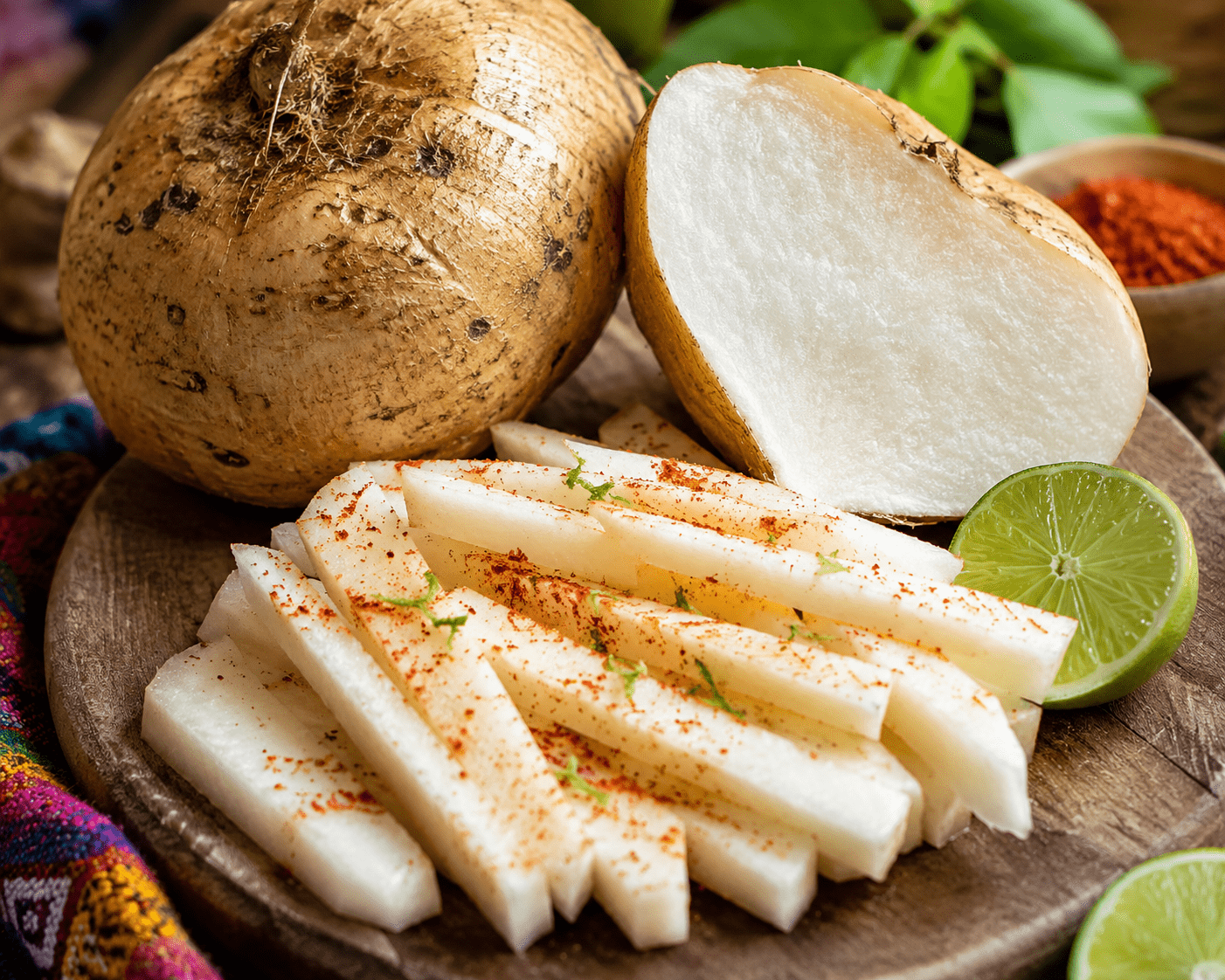
I have to admit, a lot of people here in the United States have absolutely no idea what jicama even is. If you say the word out loud, you’ll probably get a confused look and a, “A what now?” I discovered jicama years ago while spending a lot of time in Mexico, and honestly, I could not believe I had gone so long without trying it.
Once I had my first bite, I was hooked.
It is crunchy, refreshing, slightly sweet, and incredibly versatile. Plus, after learning all of the health benefits packed into this strange-looking root vegetable, I started wondering why it is not sitting in every grocery cart in America.
If you have never tried jicama before, you may be missing out on one of nature’s most underrated foods.
What Exactly Is Jicama?
Jicama (pronounced HEE-kah-ma) is a root vegetable native to Mexico and parts of Central America. It grows underground as part of a climbing vine plant and belongs to the bean family.
The outside looks a little rough at first glance. It has a thick tan skin that almost resembles a potato crossed with a turnip. Inside, however, is where the magic happens. Once peeled, the flesh is bright white, crisp, juicy, and refreshing.
The texture reminds many people of a water chestnut or a very crunchy pear.
Taste-wise, jicama has a mild sweetness with a fresh, slightly nutty flavor. It is one of those foods that somehow feels both like a fruit and a vegetable at the same time.
Fun fact: while the root itself is edible, the seeds and other parts of the plant are toxic and should never be eaten.
Related: A Frugal Kitchen Experiment: Acorn Squash
Why Jicama Is So Popular In Mexico
If you spend time in Mexico, you’ll notice jicama sold in markets, roadside stands, and snack carts. Vendors often slice it into sticks and pile it into cups with lime juice and chili seasoning.
That was exactly how I first discovered it.
And to this day, my favorite way to eat jicama is still simple:
Fresh jicama sticks covered with Tajín and a squeeze of fresh lime.
That sweet, juicy crunch mixed with tangy lime and chili seasoning is ridiculously good. Once you try it, you understand immediately why people love it.
Ways To Eat Jicama
One of the best things about jicama is how easy it is to use.
You can eat it raw or cooked, and it works in all kinds of dishes.
Some delicious ways to enjoy it include:
- Jicama sticks with Tajín and lime (my fave)
- Sliced into fresh fruit cups
- Added to salads for crunch
- Mixed into coleslaw
- Added to tacos
- Diced into salsa
- Served with chili powder and chamoy
- Stir-fried with vegetables
- Used as a low-carb fry substitute
- Added to spring rolls
- Eaten plain with a little sea salt
Most people enjoy it raw because it keeps that refreshing crunch.
Related: Vegetables To Plant In May For Summer Harvest
Jicama Is Loaded With Nutritional Benefits
Now let’s talk about why this crunchy little root deserves more attention.
Jicama may taste like a treat, but it quietly packs a pretty impressive nutritional punch.
Rich In Fiber
Jicama contains a large amount of dietary fiber, especially a prebiotic fiber called inulin.
Prebiotics feed the beneficial bacteria in your gut, helping support:
- Better digestion
- Healthier gut bacteria
- Improved regularity
- Reduced constipation
- Better overall digestive health
Fiber also helps you stay full longer, which can help reduce unnecessary snacking.
Great Source Of Vitamin C
People often think oranges get all the vitamin C attention, but jicama contains a surprisingly healthy amount too.
Vitamin C helps support:
- Immune system health
- Collagen production
- Skin health
- Wound healing
- Antioxidant protection
Many people are not getting enough vitamin C daily, so every little boost helps.
Supports Healthy Blood Sugar Levels
Despite its naturally sweet flavor, jicama actually has a relatively low glycemic impact.
Because it contains fiber and inulin, it may help slow blood sugar spikes compared to highly processed snacks.
That makes it a smart choice when cravings hit.
Hydrating And Low In Calories
Jicama is made up of a lot of water.
That means you get:
- Crunch
- Hydration
- Fiber
- Nutrients
Without a huge calorie load.
One cup of raw jicama contains relatively few calories while still feeling filling.
Contains Important Nutrients
Jicama also provides smaller amounts of several helpful nutrients including:
- Potassium
- Magnesium
- Folate
- Iron
- Manganese
Your body relies on these nutrients for everything from nerve function to muscle health.
Full Of Antioxidants
Jicama contains antioxidants that help fight oxidative stress in the body.
Antioxidants may help protect cells from damage caused by free radicals and support overall long-term health.
Can You Grow Jicama At Home?
Surprisingly, yes.
Jicama can be grown at home if you have plenty of warmth and patience.
The plant grows as a vigorous vine and loves long, hot growing seasons. Since we are talking about a tropical plant, it does best in warmer climates with plenty of sunlight.
A few growing basics:
- Plant after danger of frost has passed
- Use well-draining soil
- Give vines plenty of room
- Provide full sun
- Expect a long growing season
Jicama takes several months to mature, sometimes up to five to nine months depending on conditions.
The root develops underground while vines spread above ground.
Gardeners in warmer southern states often have better success because of the longer growing season.
Final Thoughts
Jicama is one of those foods many Americans simply have never been introduced to, which is a shame because it checks almost every box.
It tastes good.
It is refreshing.
It is loaded with fiber and nutrients.
It works in both healthy recipes and snack cravings.
And honestly, if you have never tried fresh jicama with Tajín and lime, put it on your grocery list immediately.
You may end up wondering the same thing I did after discovering it in Mexico:
How did I go this long without eating this stuff?
Lisa Crow contributed to this article. She is a true crime junkie and lifestyle blogger based in Waco, Texas. Lisa is the Head of Content at Gigi’s Ramblings and Southern Bred True Crime Junkie. She spends her free time traveling when she can and making memories with her large family which consists of six children and sixteen grandchildren.