A frustrated man sits on the floor in the middle of a messy DIY furniture assembly project, holding printed instructions in one hand and facepalming with the other. Around him are scattered screws, tools, and partially assembled furniture pieces. A yellow power drill rests nearby, and a coffee mug sits on the floor. Large bold text on the left side reads: “DIY ALWAYS LOOKS EASIER THAN IT TURNS OUT,” emphasizing the contrast between expectation and reality.

That “How Hard Can It Be” Moment

You know how it goes. You’re scrolling and somebody online knocks out a “simple” DIY project in no time, everything looking clean and effortless. No stress, no mess, just smooth progress from start to finish.

So naturally, you think you can do it too.

Then reality shows up and reminds you it’s been waiting on you the whole time.

What they don’t show is the mess in between. The wrong measurements, the extra trips to the store, and that quiet moment where you’re just standing there holding a tool wondering how it all went sideways.

The Hidden Steps Nobody Mentions

Most DIY projects aren’t hard because they’re complex. They’re hard because nobody talks about all the little steps in between.

Painting a room sounds easy until you realize you’ve got to move furniture, patch holes, sand spots, tape everything off, prime, and then paint—probably twice. And somehow there’s still a drip right in the worst possible place.

Same thing with furniture builds or home fixes. Anything labeled “quick” usually isn’t.

Tools Make More Difference Than People Admit

A lot of “easy DIY” confidence comes from people already having the right tools. The rest of us are out here improvising like it’s a survival show.

A decent drill, the right bit, and actual instructions that make sense can change everything. Without those, even simple jobs turn into a slow spiral of frustration.

And instructions? Half the time they read like they were translated through three languages and written by someone who’s never seen your actual problem.

Time Is Always the Real Trick

Nobody really tells you how long things take. A “30-minute project” has a way of swallowing your entire afternoon without warning.

Not because you’re doing it wrong, but because real life keeps interrupting. You drop a screw, you can’t find a stud, something doesn’t fit, or you just take a short break that somehow eats an hour.

DIY doesn’t respect your schedule at all.

The Mess Comes With It

Online, everything looks clean and organized. In real life, DIY looks like controlled chaos spread across your entire space.

There’s packaging everywhere, tools you swore you just had in your hand, and that growing pile of “I’ll clean it up later” that keeps getting ignored.

That’s just part of it, even if nobody posts that version.

When It Actually Comes Together

Funny thing is, when it finally does work out, it feels good. Not perfect-good. More like “I wrestled this thing into place and won” good.

It might be a little crooked or take way longer than planned, but it’s yours. You figured it out as you went, and that counts for something.

Bottom Line

DIY looks easy because you’re only seeing the finished version. The real process has mistakes, delays, confusion, and a whole lot of figuring it out on the fly.

But that’s how it actually works. Not easy, just doable—if you stick with it.

Lisa Crow contributed to this article. She is a true crime junkie and lifestyle blogger based in Waco, Texas. Lisa is the Head of Content at Gigi’s Ramblings and Southern Bred True Crime Junkie. She spends her free time traveling when she can and making memories with her large family which consists of six children and sixteen grandchildren.
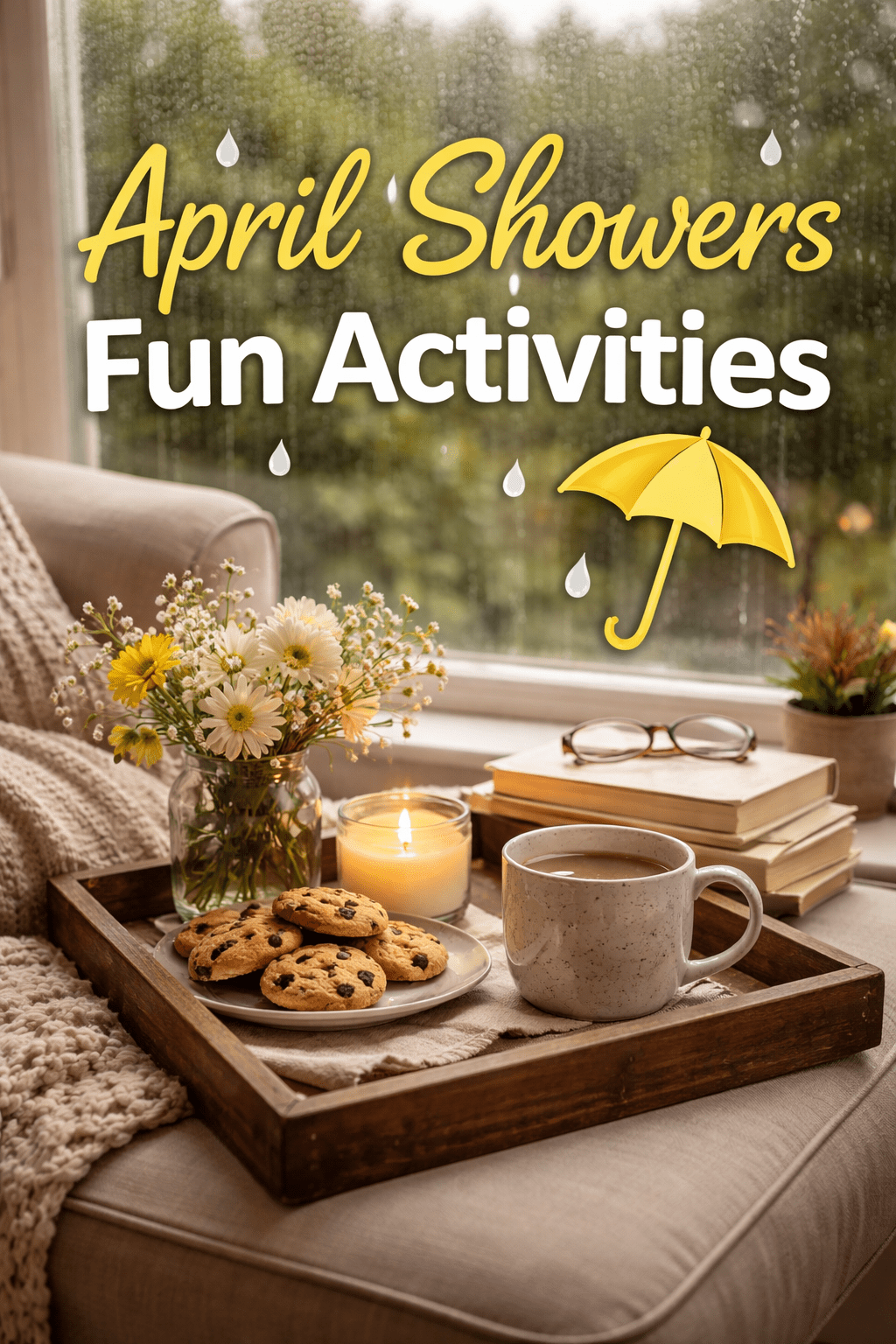
April Showers fun activities graphic showing cozy rainy day scene with cookies, candle, flowers, and books by a rain covered window with yellow umbrella illustration and spring theme

Rainy spring days have a vibe all their own. Things slow down, the house feels cozier, and suddenly you’ve got an excuse to switch gears. Instead of treating rainy days like a washout, lean into it. These April showers fun activities are easy, realistic, and actually enjoyable.

Embrace a Cozy Rainy Day at Home

First things first, set the tone. Rainy day activities feel better when you intentionally slow things down. Open the blinds, let the gray skies do their thing, and make the house feel comfortable.

A few simple ideas:

  • Light a candle or wax melt
  • Put on a mellow playlist or soft TV in the background
  • Throw on comfy clothes and fuzzy socks
  • Crack a window if it’s not too windy

Sometimes the best rainy day activity is just leaning into the calm. No rushing, no pressure.

Kitchen Fun That Feels Like a Rainy Day Tradition

Rainy weather and comfort food just go together. April showers are the perfect excuse to bake something easy or cook a meal that takes a little extra time.

Try things like:

  • Homemade banana pudding
  • Fresh biscuits or cornbread
  • Slow-simmer chili or soup
  • Chocolate chip cookies
  • A simple casserole

You do not need anything fancy. The smell alone makes the whole house feel like a rainy day memory.

Tackle a Low Effort Spring Refresh

Rainy April days are perfect for small home projects that do not require leaving the house. Nothing overwhelming, just easy wins.

Some rainy day productivity ideas:

  • Swap out winter decor for spring touches
  • Clean out one junk drawer
  • Wash throw blankets
  • Refresh your front entry table
  • Rotate seasonal scents

You will feel productive without spending the entire day cleaning.

Rainy Day Entertainment That Is Actually Relaxing

This is where April showers really shine. Rain outside, cozy inside. It does not get much better.

A few go to rainy day activities:

  • Watch a comfort show you have seen before
  • Start a new book
  • Work on a puzzle
  • Scroll Pinterest for spring ideas
  • Catch up on favorite blogs

No guilt. Just relaxing.

Get Creative Without Making a Huge Mess

Rainy days are great for low-key creative time. Nothing complicated, just something fun to do with your hands.

Ideas that are actually doable:

  • Plan future blog topics
  • Create a seasonal playlist
  • Organize photos on your phone
  • Make a simple spring centerpiece
  • Write in a journal

This kind of rainy day creativity feels calming instead of stressful.

Related: Cure the Rainy Day Blues

Step Outside and Enjoy the Rain

If it is not storming too hard, stepping outside during April showers can be surprisingly refreshing.

Simple ways to enjoy it:

  • Sit on the porch and listen to the rain
  • Take a short walk after it slows down
  • Check how your plants are doing
  • Open the door and let in fresh air
  • Watch puddles form and birds come out

It is quiet, peaceful, and honestly kind of underrated.

Turn Rainy Days Into Something to Look Forward To

Instead of dreading rainy weather, make it your excuse to slow down. April showers activities do not have to be elaborate. Cozy food, relaxed entertainment, and small home projects are more than enough.

Sometimes the best days are the ones where you do not have big plans at all. Just you, the sound of rain, and a slower pace that feels really good.

Lisa Crow contributed to this article. She is a true crime junkie and lifestyle blogger based in Waco, Texas. Lisa is the Head of Content at Gigi’s Ramblings and Southern Bred True Crime Junkie. She spends her free time traveling when she can and making memories with her large family which consists of six children and sixteen grandchildren.
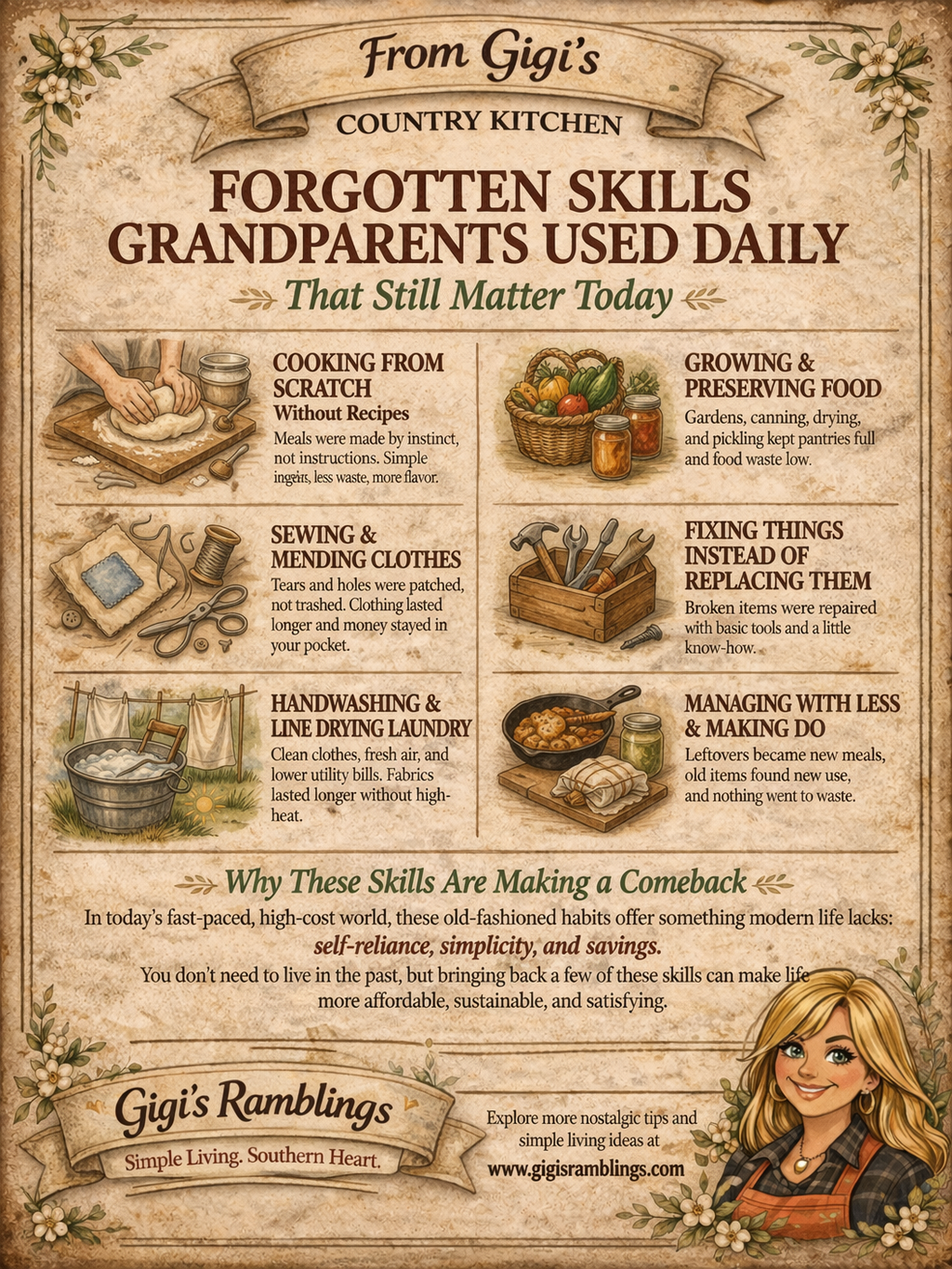
Vintage-style infographic titled “Forgotten Skills Grandparents Used Daily That Still Matter Today” featuring illustrations of cooking from scratch, gardening and preserving food, sewing and mending clothes, fixing tools, line-drying laundry, and simple living tips on an aged parchment background with rustic farmhouse design.

There was a time when everyday life required a lot more hands-on know-how. Long before convenience ruled the day, many skills were used so often they barely felt like skills at all. They were simply part of getting by.

Today, those same abilities are quietly fading away. However, many of them are making a comeback for good reason. They save money, build independence, and bring a deeper sense of satisfaction to everyday life.

Let’s take a look at some of those forgotten skills grandparents used daily and why they are still worth learning.

Related: Skills Homesteaders Rely on Daily

Cooking From Scratch Without Recipes

Meals used to be created from memory, instinct, and whatever happened to be on hand. Instead of relying on pre-packaged foods or step-by-step instructions, ingredients were measured by feel and experience.

Because of this, food waste was kept low and creativity stayed high. A handful of vegetables, a bit of meat, and some pantry staples could easily turn into a full meal.

Today, this skill can still be incredibly useful. Grocery prices continue to rise, and cooking from scratch allows meals to stretch further while tasting better. It also helps reduce reliance on processed foods.

Growing and Preserving Food

Backyards were often turned into productive gardens, and what could not be eaten fresh was preserved for later. Canning, drying, and pickling were common practices that ensured nothing went to waste.

Seasonal eating was simply a way of life. When tomatoes were ready, they were used in everything. When harvest time ended, jars lined pantry shelves for months ahead.

Even now, growing a small garden or learning simple preservation methods can cut costs and provide healthier food options. It also brings a strong sense of accomplishment that store-bought goods just cannot match.

Related: Planning a More Self-Sufficient Life Through Gardening and Canning

Sewing and Mending Clothes

Clothing was not disposable. When something tore or wore out, it was fixed. Basic sewing skills were used to patch holes, replace buttons, and extend the life of garments.

Because of this, wardrobes lasted longer and money was saved. Fast fashion did not exist, and people took pride in maintaining what they owned.

Bringing this skill back does not require much. A simple needle and thread can go a long way. Small repairs can keep clothes out of the trash and money in your pocket.

Fixing Things Instead of Replacing Them

If something broke, the first thought was to fix it, not throw it away. Whether it was a squeaky door, a faulty appliance, or a loose chair leg, basic repair skills were used daily.

This mindset created resourcefulness and reduced unnecessary spending. It also built confidence in handling everyday problems.

While modern products are often designed to be replaced, many items can still be repaired with a little patience and effort. Learning even a few basic fixes can make a big difference.

Related: When to Start Seedlings Indoors and How to Prep Your Garden for Planting Season

Handwashing and Line Drying Laundry

Before dryers became standard, clothes were often washed by hand or in simple machines and then hung outside to dry. Fresh air and sunlight did the rest.

This method saved energy and helped clothes last longer since high heat was avoided. It also gave fabrics a clean, natural scent that cannot be replicated.

Even today, line drying can reduce utility bills and extend the life of clothing. It may take a little more time, but the benefits add up quickly.

Managing With Less and Making Do

Perhaps one of the most valuable skills was the ability to make do with what was available. Instead of constantly upgrading or replacing items, people learned to adapt and reuse.

Leftovers became new meals. Old materials found new purposes. Creativity filled the gaps where money or resources were limited.

This mindset is especially valuable now. It encourages smarter spending, reduces waste, and builds resilience in uncertain times.

Why These Skills Are Making a Comeback

As life becomes more expensive and fast-paced, many people are beginning to rediscover these old ways. They offer something modern convenience often lacks: control, self-reliance, and a sense of connection to everyday life.

While it may not be necessary to fully return to the past, even adopting a few of these skills can have a noticeable impact. Small changes can lead to big savings and a more grounded way of living.

Lisa Crow contributed to this article. She is a true crime junkie and lifestyle blogger based in Waco, Texas. Lisa is the Head of Content at Gigi’s Ramblings and Southern Bred True Crime Junkie. She spends her free time traveling when she can and making memories with her large family which consists of six children and sixteen grandchildren.

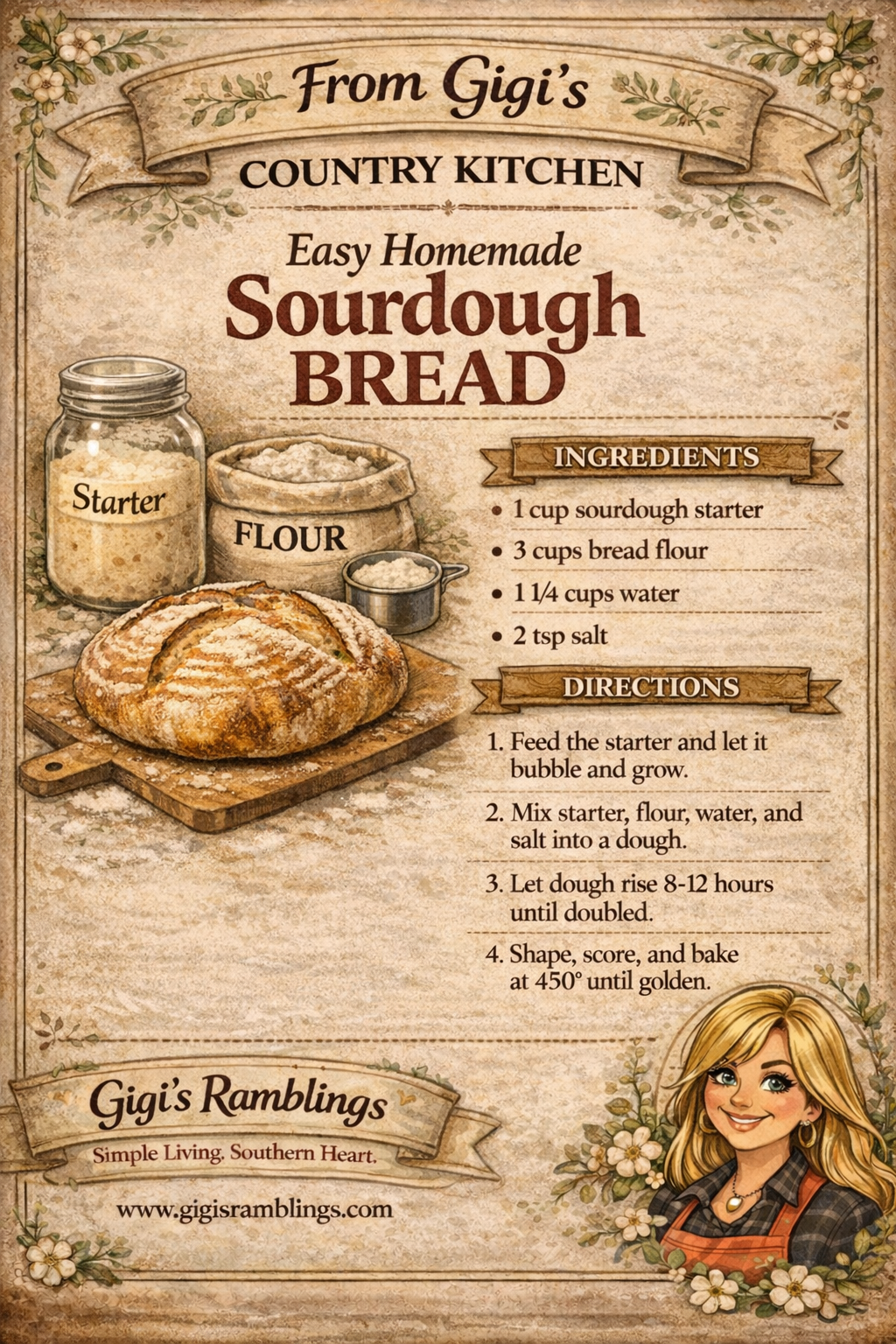
Vintage sourdough bread recipe card from Gigi’s Country Kitchen showing ingredients, directions, flour, sourdough starter jar, and rustic artisan loaf.

As an Amazon Associate, I earn from qualifying purchases.

For a while there, homemade bread felt like something only grandmas and hardcore homesteaders were doing. However, things have started to change. Across the country, more people are dusting off mixing bowls and turning their kitchens into mini bakeries again. From social media inspiration to rising grocery prices, several factors have helped bring this old-school skill back into the spotlight.

As a result, the homemade bread trend is growing fast. Not only are people rediscovering traditional recipes, but many are also experimenting with new techniques and healthier ingredients. Whether it is rustic sourdough or simple sandwich loaves, baking bread at home has become both practical and surprisingly fun.

Related: Skills Homesteaders Rely on Daily

Sourdough Bread Leads the Revival

One of the biggest homemade bread trends making a comeback is sourdough. While this centuries-old method never completely disappeared, it exploded in popularity in recent years and continues to grow.

Unlike commercial breads that rely on packaged yeast, sourdough uses a natural starter made from flour and water. Because of that, the bread develops a deeper flavor and a slightly tangy taste that many people love. Additionally, the long fermentation process helps break down gluten and can make the bread easier to digest for some people.

Many home bakers also enjoy the process itself. Feeding a starter, watching it grow, and baking a loaf that took days to develop creates a sense of accomplishment that store-bought bread simply cannot match.

Rustic Artisan Loaves Are Everywhere

Another homemade bread trend gaining momentum is rustic artisan bread. These loaves are known for their crisp crust, airy interior, and simple ingredients.

Instead of complicated recipes, artisan bread often requires just flour, water, yeast, and salt. The magic happens during the slow rising process, which allows the dough to develop flavor and structure naturally.

Because the method is fairly forgiving, even beginners can produce beautiful bakery-style loaves at home. With a Dutch oven and a little patience, many home bakers are discovering they can create bread that rivals what they would normally buy from a specialty bakery.

No-Knead Bread Is Winning Over Beginners

For people who once believed bread baking was too difficult, no-knead recipes have been a game-changer. This style of bread uses time instead of physical effort to develop gluten in the dough.

After mixing a few simple ingredients, the dough rests for several hours or overnight. During that time, natural fermentation strengthens the dough without any kneading at all.

Because the process is so simple, no-knead bread has introduced thousands of beginners to homemade baking. Once people realize how easy it can be, they often start exploring more advanced recipes and techniques.

Related: 5 Pantry Staples You Can Make at Home

Heirloom and Heritage Grains Are Returning

Along with traditional baking methods, many people are also rediscovering older varieties of wheat. Heritage grains such as einkorn, spelt, and emmer are gaining popularity among home bakers.

These grains were commonly used long before modern industrial wheat farming took over. As a result, they often contain different nutritional profiles and flavors compared to conventional flour.

Home bakers who experiment with these grains often notice richer, nuttier flavors in their bread. Additionally, using heirloom grains helps preserve agricultural diversity and keeps traditional farming practices alive.

Bread Baking as a Relaxing Hobby

Beyond the food itself, many people have started baking bread simply because it feels good. In a fast-paced world, the slow rhythm of mixing dough, waiting for it to rise, and pulling a warm loaf from the oven can be incredibly satisfying.

The process allows people to step away from screens and focus on something simple and hands-on. For families, bread baking has even become a shared activity where kids can learn basic kitchen skills while spending time together.

Because of that, homemade bread has become more than just a trend. It has turned into a comforting ritual that many households are happy to bring back.

The Homemade Bread Comeback Is Here to Stay

While trends often come and go, the return of homemade bread seems to have real staying power. Rising food costs, growing interest in traditional skills, and the satisfaction of baking from scratch have all helped fuel this movement.

More importantly, people are realizing that homemade bread does not require fancy equipment or professional training. With a few basic ingredients and a little patience, anyone can enjoy the smell and taste of fresh bread right from their own oven.

Once someone bakes their first successful loaf, it is easy to see why this timeless kitchen tradition is making such a strong comeback.

Lisa Crow contributed to this article. She is a true crime junkie and lifestyle blogger based in Waco, Texas. Lisa is the Head of Content at Gigi’s Ramblings and Southern Bred True Crime Junkie. She spends her free time traveling when she can and making memories with her large family which consists of six children and sixteen grandchildren.
Baby-themed flat lay with knitted booties, teddy bear, pacifier, and blanket celebrating the arrival of a 16th grandchild.

There are moments in life that make you stop and realize just how blessed you are. For me, that moment came again with the birth of my 16th grandchild, a beautiful baby boy named Angelo Montana. Even after so many grandchildren, the feeling never gets old. Every new life brings a new kind of joy into the family.

Angelo Montana also holds a special place in the lineup. He is my seventh grandson, and if I had to guess, he will probably be my last grandbaby. That realization makes his arrival feel even more meaningful.

A Growing Family Full of Love

When you start a family, you never really know what the future will look like. You just hope your kids grow up happy, healthy, and surrounded by love. Watching those kids grow up and start families of their own is one of the greatest rewards in life.

Sixteen grandchildren later, our family has grown into something pretty incredible. Holidays are louder, birthdays are busier, and family gatherings are always full of laughter, stories, and chaos in the best possible way.

Right now, the girls still outnumber the boys in the grandkid lineup. We have nine granddaughters and seven grandsons, so the boys are still trying to catch up.

The age range is pretty amazing too. My oldest grandchild just turned fourteen years old, while the newest addition, Angelo Montana, has just arrived as a newborn. That means there are fourteen years of childhood spread across the family, with cousins growing up together at every stage along the way.

Meet Angelo Montana

Angelo Montana entered the world surrounded by a whole lot of love waiting for him. From the moment he arrived, he already had a big family ready to welcome him.

Being the 16th grandchild means he has cousins everywhere, older ones who will look out for him and younger ones who will grow up right beside him. Family traditions, backyard gatherings, and holiday memories are already waiting for him to be part of.

And being the seventh grandson means the boys’ side of the family just got one more teammate, even though the girls still hold the lead for now.

There is something pretty amazing about looking at a brand new grandbaby and thinking about the whole life ahead of them. One day Angelo will be running around at family cookouts, learning family stories, and making memories of his own.

Right now though, he is just beginning his journey.

The Feeling of Becoming a Grandparent Never Gets Old

People sometimes ask if the excitement fades after you have a lot of grandchildren. The truth is it really does not.

Every single birth brings that same feeling of pride and happiness. You see a new life enter the world and realize your family just grew again. It is a reminder that the story keeps going.

Holding a grandbaby for the first time is something hard to explain. It is a mix of love, gratitude, and a little bit of amazement that the family you started years ago has grown into something so big.

Sixteen grandchildren later, that feeling is still just as powerful.

Possibly the Last Grandbaby

There is also a little bit of bittersweet feeling with Angelo Montana’s arrival. Being the 16th grandchild, he might very well be the last one to join the family.

Families eventually reach a point where the next generation is complete. Kids grow up, cousins spread out, and life keeps moving forward.

If Angelo does end up being the final grandbaby, that makes him just a little extra special.

He will always be remembered as the one who rounded out the grandkid crew.

And if another surprise grandbaby ever shows up down the road, well, there is always room for one more.

A New Chapter Begins

Right now Angelo Montana is just beginning his story. One day he will grow up hearing about where he fits into the family and how excited everyone was when he arrived.

He will have cousins to grow up with, stories to learn, and traditions to carry forward.

And for me, welcoming grandchild number sixteen is a reminder of how much life can grow and change over the years.

Families start small, but if you are lucky, they grow bigger than you ever imagined.

Welcome to the family, Angelo Montana. You have a whole crew waiting to watch you grow.

Lisa Crow contributed to this article. She is a true crime junkie and lifestyle blogger based in Waco, Texas. Lisa is the Head of Content at Gigi’s Ramblings and Southern Bred True Crime Junkie. She spends her free time traveling when she can and making memories with her large family which consists of six children and sixteen grandchildren.
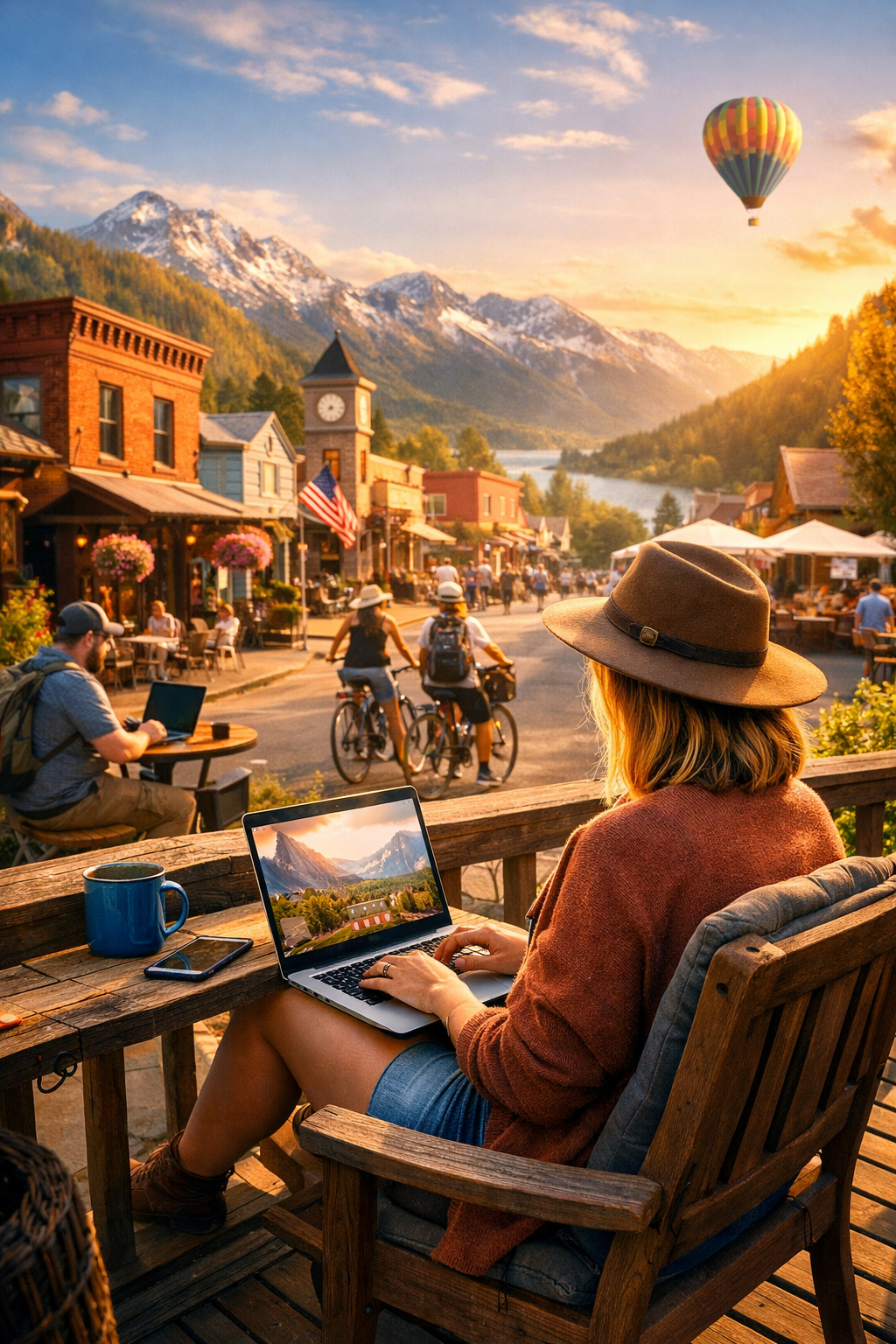
Digital nomad working on a laptop from a scenic small town café patio overlooking a colorful main street, mountains, and sunset in the background.

Over the past few years, the traditional idea of where people live and work has been quietly reshaped. Thanks to remote work, many professionals are no longer tied to big city offices or crowded urban apartments. Instead, a growing number of workers are choosing a different path. Small towns across the country are becoming home to a new wave of residents known as digital nomads.

The rise of digital nomads in small towns is being driven by flexibility, lifestyle changes, and the simple desire for a slower pace of life. While major cities once held all the opportunities, that dynamic has started to shift. As long as there is a reliable internet connection and a laptop, work can now happen almost anywhere.

Because of this shift, small towns that were once overlooked are now seeing renewed energy and growth.

Why Digital Nomads Are Leaving Big Cities

For decades, cities were viewed as the center of opportunity. However, remote work has changed the equation. Many professionals discovered during the pandemic that their jobs could be done just as easily from home.

As a result, expensive rent, traffic congestion, and crowded neighborhoods started to feel less appealing. When work can be done online, the need to stay in a large city disappears.

Small towns offer something many people feel has been missing. There is more space, quieter surroundings, and often a stronger sense of community. Additionally, the cost of living is usually much lower. For digital nomads, this means money stretches further while quality of life improves.

Because of these advantages, the migration away from cities has slowly gained momentum.

How Small Towns Are Attracting Remote Workers

Many small towns have started recognizing the opportunity that digital nomads bring. In response, local governments and community leaders have begun promoting their towns as remote work destinations.

Programs offering relocation incentives have even been introduced in some areas. These programs sometimes include cash bonuses, coworking memberships, or housing assistance for remote workers who move there.

At the same time, small towns are investing in infrastructure. Faster internet, improved community spaces, and local coworking hubs are being developed to support the needs of digital professionals.

As these improvements continue, the appeal of small-town living becomes even stronger.

Related: The Rise of Backyard Businesses

The Lifestyle Appeal of Small Town Living

Lifestyle plays a major role in the rise of digital nomads in small towns. While city living often comes with noise, high costs, and constant pressure, small towns offer a slower and more balanced rhythm.

Morning commutes can be replaced with walks through quiet neighborhoods. Lunch breaks might include time spent outdoors rather than standing in line at a crowded café. In the evenings, local events, farmers markets, and community gatherings provide a different type of social connection.

For many remote workers, this balance helps reduce stress and improve overall well-being. Work can still be accomplished efficiently, yet life outside of work begins to feel more meaningful.

Because of this, the small town lifestyle is becoming increasingly attractive.

The Economic Impact on Small Communities

The arrival of digital nomads can bring noticeable economic benefits to smaller communities. When remote workers move into a town, they begin spending money locally.

Restaurants, coffee shops, boutiques, and service providers often see an increase in customers. In some cases, new businesses are even launched by the digital nomads themselves.

Additionally, property values in certain small towns have started to rise due to increased demand for housing. While this can create challenges if not managed carefully, it also signals economic growth and renewed interest in communities that may have been struggling before.

Because of this economic activity, many towns are welcoming the digital nomad movement.

Related: Digital Marketing and Digital Products: A Beginner’s Guide

Challenges That Come With the Trend

Although the rise of digital nomads in small towns offers many benefits, it also comes with challenges. One concern involves housing affordability for long-time residents. When demand increases quickly, home prices and rent can climb.

Another challenge involves infrastructure. Some towns must upgrade internet services, utilities, and transportation systems to handle a growing population.

There can also be cultural adjustments. Digital nomads often bring new ideas, work styles, and lifestyles that may feel unfamiliar at first. However, when communities embrace open dialogue, these differences can lead to positive growth and fresh perspectives.

With thoughtful planning, many of these challenges can be managed successfully.

What the Future Looks Like for Digital Nomads

Looking ahead, the rise of digital nomads in small towns is likely to continue. Remote work has proven that productivity does not depend on a traditional office environment.

Companies are also beginning to accept distributed teams as a long-term solution. As a result, more professionals will have the freedom to choose where they live.

Small towns that invest in internet access, welcoming communities, and local amenities will likely attract even more remote workers. At the same time, digital nomads will continue searching for places that offer both affordability and a high quality of life.

This shift is not just a temporary trend. Instead, it represents a new chapter in how people think about work, lifestyle, and community.

For many people, the future of work may not be found in a crowded downtown office building. It may be found in a quiet small town, with a laptop open on a porch and a strong internet connection keeping the world within reach.

Lisa Crow contributed to this article. She is a true crime junkie and lifestyle blogger based in Waco, Texas. Lisa is the Head of Content at Gigi’s Ramblings and Southern Bred True Crime Junkie. She spends her free time traveling when she can and making memories with her large family which consists of six children and fifteen grandchildren.

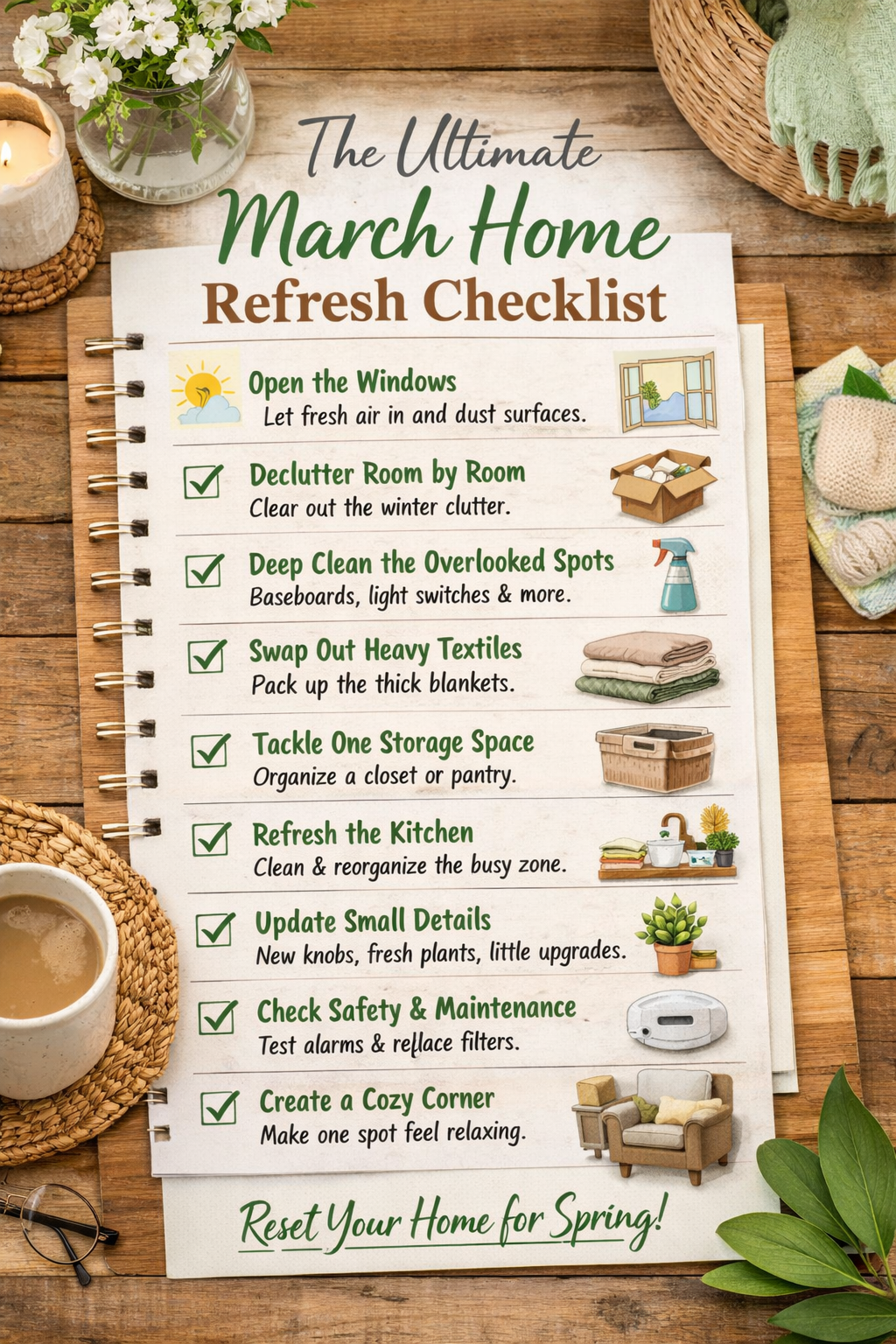
March home refresh checklist on a farmhouse table with flowers, candle, and spring decor showing simple cleaning and decluttering tasks for the season.

March is the reset button. Not a full renovation. Not a 72-hour cleaning marathon. Just a steady, intentional home refresh that makes everything feel lighter, calmer, and more put together.

If your house feels a little stale, cluttered, or tired, this March home refresh checklist will walk you through it without overwhelming you.

Open the Windows and Let the House Breathe

Before you scrub one thing, let fresh air in.

Crack windows for at least 20 to 30 minutes on a dry day. Even if it’s still a little chilly, the air swap alone changes everything. Stale winter air holds onto dust, cooking smells, and that closed-up feeling.

While the windows are open:

• Turn off ceiling fans and wipe the blades
• Dust the tops of door frames
• Lighten the room by pulling back heavy curtains

Fresh air is the simplest part of any spring home refresh, but it sets the tone for everything else.

Declutter What Winter Collected

Winter has a sneaky way of piling things up. Extra blankets. Mail stacks. Random “I’ll deal with it later” stuff.

Instead of attacking the whole house, go room by room with one goal: remove what doesn’t belong.

Start with high-traffic areas:

• Entryway
• Kitchen counters
• Living room surfaces
• Nightstands

If you didn’t use it in the last 60 days, question it. March cleaning is not about being ruthless. It’s about creating breathing room.

Less clutter makes deep cleaning easier and keeps your home organization manageable long-term.

Deep Clean the Forgotten Spots

Now we get into the real spring cleaning energy, but we’re keeping it realistic.

Focus on areas that rarely get attention:

• Baseboards
• Light switches and door handles
• Behind bathroom faucets
• Under couch cushions
• Refrigerator shelves

While you’re at it, wash throw blankets and pillow covers. They hold more dust than you think.

A true March home refresh means cleaning the stuff you normally skip. That’s what makes the house feel different afterward.

Swap Out Heavy Winter Textiles

Nothing changes a room faster than fabric.

Pack up thick blankets, dark pillow covers, and heavy throws. Replace them with lighter colors and breathable textures. Think cotton, linen, or softer neutrals.

Even switching out:

• Shower curtains
• Table runners
• Couch pillows

can shift the mood of the entire space.

Seasonal home decor doesn’t have to mean bunnies and pastel overload. It just means lighter and brighter.

Tackle One Storage Space

Closets. Pantry. Laundry room shelves. Pick one.

Trying to overhaul every storage area in March is how projects die halfway through. Choose a single zone and finish it completely.

Sort into three piles:

Keep
Donate
Trash

Then wipe down shelves before putting anything back.

Organizing small spaces during your spring refresh builds momentum without burning you out.

Refresh the Kitchen the Smart Way

The kitchen works harder than any room in the house. March is the perfect time to reset it.

Wipe cabinet fronts. Degrease the stove hood. Toss expired pantry items. Clean out the junk drawer without getting sentimental.

Next, reorganize what you use daily so it’s easier to reach. Move rarely used items up high or to the back.

This part of your March cleaning checklist will make everyday life smoother, not just prettier.

Update Small Details That Make a Big Difference

Sometimes your home doesn’t need cleaning. It needs a small update.

Consider:

• New cabinet knobs
• Updated light bulbs for brighter light
• A new welcome mat
• A simple houseplant

Adding greenery instantly makes a space feel alive. Even one healthy plant in the corner can change the mood of a room.

Small upgrades keep your home refresh budget friendly while still making things feel intentional.

Check Safety and Maintenance Items

March is also a great time to handle the boring but important stuff.

Replace HVAC filters. Test smoke detectors. Check fire extinguishers. Schedule AC maintenance before summer hits.

Preventative home maintenance may not be exciting, but it keeps bigger headaches away later.

Think of this as protecting the peace you’re creating.

Create One Calm Corner

Finally, choose one space to feel especially good.

Maybe it’s a reading chair by the window. Maybe it’s your nightstand cleaned off except for a lamp and a book. Maybe it’s the porch set up for quiet evenings.

The point of a March home reset is not perfection. It’s creating a house that supports you instead of stressing you out.

Even one calm corner can shift how the whole place feels.

March is about momentum. A little decluttering. A little deep cleaning. A few thoughtful updates. By the time April rolls around, your home will feel lighter, cleaner, and ready for whatever the rest of spring brings.

Now tell me… which room in your house needs this checklist the most?

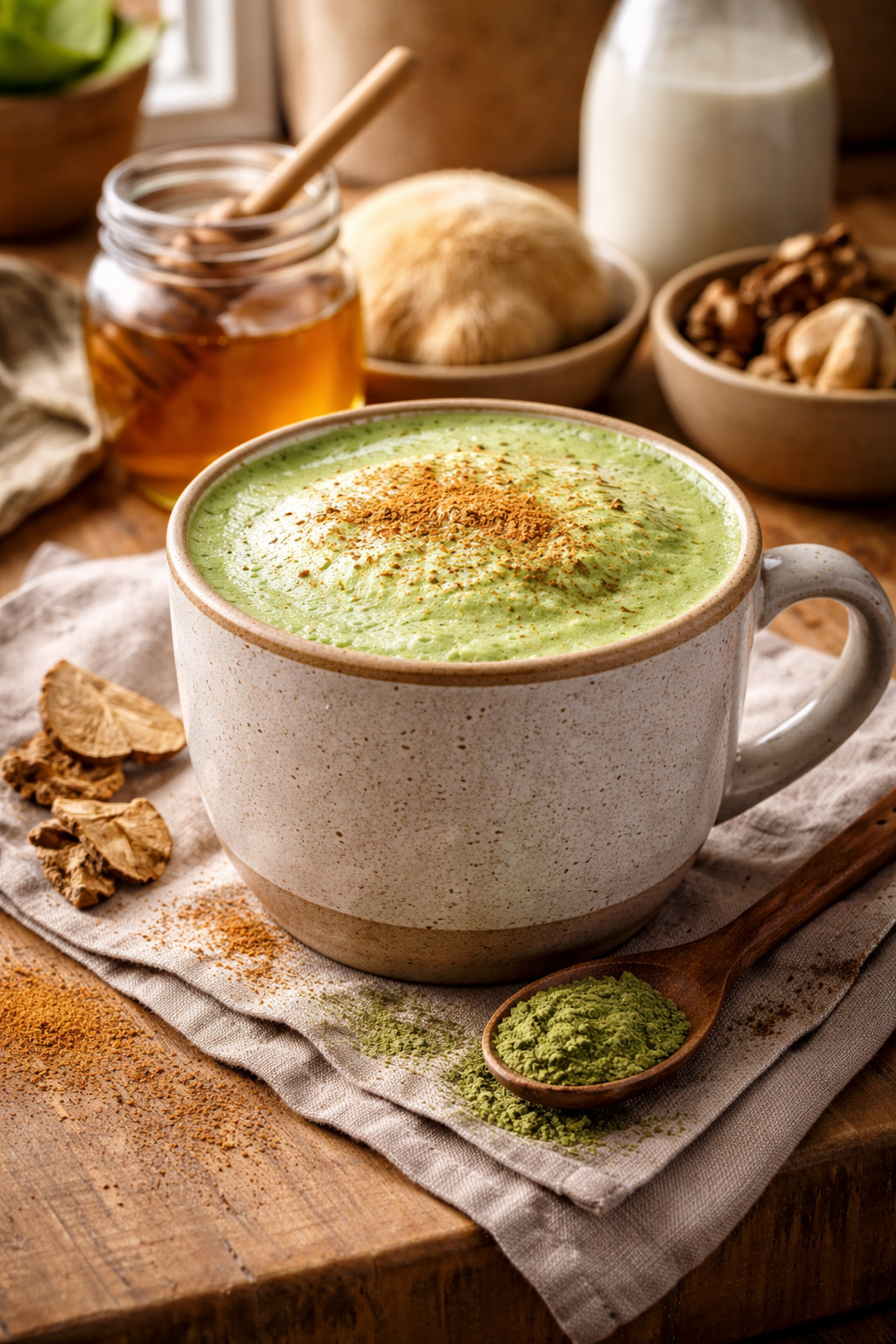
Frothy mushroom matcha latte in a ceramic mug on a rustic country countertop with honey, almond milk, cinnamon, and matcha powder nearby.

Mushroom matcha is exactly what it sounds like: high-quality matcha green tea blended with functional mushroom extracts. However, it is much more than a trendy wellness drink. This superfood combo brings together the calm focus of matcha with the adaptogenic power of medicinal mushrooms.

Unlike traditional coffee, mushroom matcha delivers steady energy without the jittery spike and crash. Because of that, it has become my personal substitute for coffee. I do not drink coffee at all, so this is what starts my mornings.

Two of my go-to blends are Ryze Superfoods Mushroom Matcha and JUYIHEAL Mushroom Matcha. Both offer a balanced mix of matcha and functional mushrooms, and they mix well into my daily routine.

Related: Winter Tea Blends: Cozy Sips to Get You Through the Cold Months

The Types of Mushrooms in Mushroom Matcha

Most mushroom matcha blends include a combination of functional mushrooms known for cognitive support, immune health, and stress reduction. While formulas vary slightly by brand, these are the most common ones you will find:

Lion’s Mane

Lion’s Mane is known for supporting brain health and focus. Many people report clearer thinking and improved concentration. That calm mental clarity is one of the biggest reasons I reach for mushroom matcha daily.

Reishi

Reishi is often called the “mushroom of immortality.” It supports immune health and helps the body adapt to stress. Over time, this adaptogenic effect can promote a more balanced mood.

Chaga

Chaga is rich in antioxidants. Because of that, it supports overall immune function and helps fight oxidative stress.

Cordyceps

Cordyceps are often included for natural energy and stamina. Instead of an aggressive caffeine jolt, cordyceps support smoother, more sustained vitality.

Together, these mushrooms create a functional blend that supports focus, mood, and long-term wellness.

Related: Stay Balanced: Why Homeostasis is Key, Especially in Winter!

The Vitamins and Nutrients Inside Mushroom Matcha

Mushroom matcha is packed with nutrients, especially when high-quality matcha powder is used. Matcha itself contains:

  • Vitamin C
  • Vitamin A
  • Vitamin E
  • Vitamin K
  • B-complex vitamins
  • L-theanine
  • Natural caffeine
  • Antioxidants (especially EGCG)

Functional mushrooms also contain:

  • B vitamins
  • Vitamin D (in some varieties)
  • Beta-glucans for immune support
  • Antioxidants
  • Adaptogenic compounds

Because of this nutrient density, mushroom matcha feels more like a daily wellness ritual than just a beverage.

How Mushroom Matcha Makes You Feel

One of the biggest differences between mushroom matcha and coffee is how it feels in your body.

Instead of a racing heart or mid-morning crash, the energy feels steady. The L-theanine in matcha works synergistically with caffeine to promote calm alertness. As a result, you stay focused without feeling wired.

Personally, I notice a clear head and stable energy. There is no anxious buzz. No heavy crash. Just smooth productivity.

Since I have been drinking superfoods, wheatgrass, and other greens for a very long time, my palate is used to earthy flavors. In fact, I actually crave that taste. Mushroom matcha has a slightly earthy, grounding flavor that I genuinely enjoy. That said, if someone is new to superfoods, they may not immediately love the taste. It can take time.

My Daily Mushroom Matcha Routine

Every morning, I prepare my mushroom matcha the same way. First, I whisk the powder with hot water until smooth. Then I add:

  • A splash of almond milk
  • A drizzle of honey
  • A dash of cinnamon
  • A pinch of cayenne

The almond milk softens the earthy notes. Meanwhile, honey adds natural sweetness without overpowering it. Cinnamon gives warmth, and cayenne adds just a subtle kick that wakes everything up.

Because I do not drink coffee, this ritual has replaced that traditional morning cup. Instead of feeling dependent on caffeine spikes, I feel nourished and steady.

Benefits of Drinking Mushroom Matcha Daily

Consistency matters with functional mushrooms. Drinking mushroom matcha daily may support:

Improved Focus and Mental Clarity

Lion’s Mane and matcha together promote sharper thinking and sustained attention.

Stress Support

Adaptogenic mushrooms like Reishi help your body respond better to daily stress.

Immune System Support

Beta-glucans and antioxidants help strengthen natural defenses.

Steady Energy

Cordyceps and matcha provide balanced vitality without harsh crashes.

Antioxidant Protection

Matcha is rich in catechins, especially EGCG, which help combat oxidative stress.

Over time, these benefits compound. Rather than feeling like a quick fix, mushroom matcha supports overall wellness.

Is Mushroom Matcha for Everyone?

While I love the earthy taste, not everyone will. Some people may prefer to start with extra honey or more almond milk to ease into it. Others may need a few weeks to adjust.

However, if you are looking for a coffee alternative that supports focus, energy, and immune health, mushroom matcha is worth trying.

For me, it is not just a trendy drink. It is a daily superfood ritual. Because I have been consuming greens and functional powders for years, this fits seamlessly into my lifestyle. The earthy flavor feels grounding, and the calm energy keeps me productive.

In the end, mushroom matcha is about more than caffeine replacement. It is about intentional energy, nutrient density, and long-term wellness. And honestly, once you get used to it, you might even start craving it too.

Lisa Crow contributed to this article. She is a true crime junkie and lifestyle blogger based in Waco, Texas. Lisa is the Head of Content at Gigi’s Ramblings and Southern Bred True Crime Junkie. She spends her free time traveling when she can and making memories with her large family which consists of six children and fifteen grandchildren.

How My Voice as a Writer Has Changed in 10 Years with black, gray, and light pink balloons, roses, and modern horizontal birthday theme.

Ten years ago, I thought having a “writing voice” meant sounding polished, professional, and a little bit distant. I believed good writing was about structure, rules, and making sure nothing felt too personal or too messy.

What I didn’t realize back then was that voice isn’t something you build by following formulas. It’s something that forms slowly through experience, confidence, and a whole lot of trial and error.

Learning to Stop Writing Like Everyone Else

In the beginning, I wrote the way I thought I was supposed to write. I mimicked other bloggers, borrowed tones from articles I admired, and tried to fit into whatever style seemed popular at the time. I was more focused on blending in than standing out.

Over time, that approach started to feel forced. The words were fine, but they didn’t sound like me. They sounded like someone trying very hard to be taken seriously.

Becoming Comfortable with Simplicity

As the years passed, my writing got simpler. Not less thoughtful, just less cluttered. I stopped over explaining, stopped padding sentences, and stopped trying to impress people I didn’t even know.

Shorter sentences felt more natural. Clear thoughts felt better than complicated ones. Writing became less about performance and more about communication.

Letting Personality Show Up on the Page

At some point, I stopped editing out my personality. I let humor stay. I let opinions stay. I let honesty stay, even when it felt a little uncomfortable.

That shift changed everything. The blog felt more alive. The writing felt more like a conversation instead of a presentation.

Trusting My Own Perspective

Early on, I constantly questioned whether my thoughts were interesting enough to share. I looked for validation in trends and topics instead of trusting my own experiences.

Now, I trust that my perspective has value simply because it is mine. I no longer feel the need to justify why I’m writing about something. If it matters to me, it’s worth exploring.

Related: Gigi’s Ramblings Then vs Now: A Decade of Change

Writing with Less Fear

Fear used to control a lot of my choices. Fear of being judged. Fear of saying the wrong thing. Fear of not sounding smart enough.

That fear has faded. Not completely, but enough that it no longer runs the show. I write with more confidence, more ease, and far less overthinking.

What I Know Now

My voice didn’t change because I learned better rules. It changed because I stopped trying to follow them so closely.

Ten years of writing taught me that the strongest voice isn’t the loudest or the most polished. It’s the one that feels honest, consistent, and comfortable in its own skin.

And that’s something no style guide can teach.

Lisa Crow contributed to this article. She is a true crime junkie and lifestyle blogger based in Waco, Texas. Lisa is the Head of Content at Gigi’s Ramblings and Southern Bred True Crime Junkie. She spends her free time traveling when she can and making memories with her large family which consists of six children and fifteen grandchildren.

A Super Bowl Sunday party setup with a wooden coffee table displaying sizzling cast‑iron beef and chicken fajitas, guacamole, authentic Mexican molcajete salsa, shredded cheese, sliced jalapeños, tortillas, and two margaritas. In front is a football squares betting grid with English labels. A flat-screen TV in the background shows a tense moment from the Super Bowl LX game between the New England Patriots and Seattle Seahawks.

Super Bowl Sunday at home looks a little different for everyone, and honestly, this year feels different for us too. While I usually enjoy the excitement that comes with the big game, I am not exactly fired up like I have been in years past. Between politics creeping into sports and not being a fan of either team, it has definitely taken some of the shine off the day.

That said, we are still showing up for the parts we enjoy. We have football boards with an extremely high payout, a house full of good food, and just enough curiosity to keep the TV on. Sometimes that is enough.

What We Are Cooking for Game Day

One thing that never disappoints on Super Bowl Sunday is the food. We decided to keep it simple this year with a fajita bar. We are grilling both beef and chicken. Think warm tortillas, grilled peppers and onions, shredded cheese, sour cream, and plenty of toppings to build your plate exactly how you want it.

I am also making homemade salsa and guacamole to snack on throughout the game. For me, game day food ideas do not have to be complicated. They just need to be fresh, filling, and easy to graze on while the game is playing in the background. This setup checks all those boxes.

Related: Quick & Tasty Super Bowl Snacks You Can Make in 10 Minutes

Who We Are Rooting For This Year

If I am being honest, we are rooting for our numbers. That is it. Our Super Bowl football boards are the only real reason we have skin in the game this year, and they are looking pretty decent so far. Winning some extra money would definitely make the night more exciting.

As far as teams go, I have never been a Patriots fan, and I have seen more of them than I cared to on Super Bowl Sunday. If I absolutely had to choose, I would lean toward the Seahawks, but it is not coming from any deep loyalty. This year, it is more about the investment than the outcome.

Thoughts on the Halftime Show

Yes, the halftime show will be on. Will we actually watch it? Probably not. We usually take that time to step outside, grab food, or do anything else while it plays in the background.

I am a football fan. I watch the game. I have never been impressed by commercials and I truly do not understand the hype around them. I hate commercials of any kind and the Super Bowl ones do nothing for me.

As for halftime shows, Prince will forever be my favorite. Bruno Mars was good. Of course, I watched the legends – Snoop, Mary J, Eminem, 50 Cent, Ice Cube, and Dr. Dre. Kendrick Lamar was decent. Beyond that, I rarely sit through them.

Female entertainers have never been my thing, especially when they are half-dressed. It is just not something I enjoy or seek out. Unfortunately, I was tuned in during the Justin Timberlake and Janet Jackson fiasco, and not by choice. Nelly made an appearance, and I stayed watching for that, only to be unwillingly exposed to the exact thing that deters me from halftime shows in the first place. That moment pretty much sealed it for me.

The whole outrage surrounding halftime shows always feels unnecessary to me. If you do not like it, change the channel or leave the room. That’s what I do. Creating controversy every year feels ridiculous. Creating an alternative halftime show that has nothing to do with the Super Bowl is assinine.

That said, I do like some of Bad Bunny’s music and I want to support the Hispanic/Latino community, so the TV will stay on. Will I be glued to it? Doubtful.

Keeping Super Bowl Sunday Simple

At the end of the day, Super Bowl Sunday at home for us is about good food, casual fun, and the hope that our numbers hit. I am not overly invested in the teams or the spectacle this year, and that is okay.

Sometimes, enjoying the day on your own terms is the real win. If we walk away full, relaxed, and maybe a little richer, I will call this a successful Super Bowl Sunday.

Lisa Crow contributed to this article. She is a true crime junkie and lifestyle blogger based in Waco, Texas. Lisa is the Head of Content at Gigi’s Ramblings and Southern Bred True Crime Junkie. She spends her free time traveling when she can and making memories with her large family which consists of six children and fifteen grandchildren.