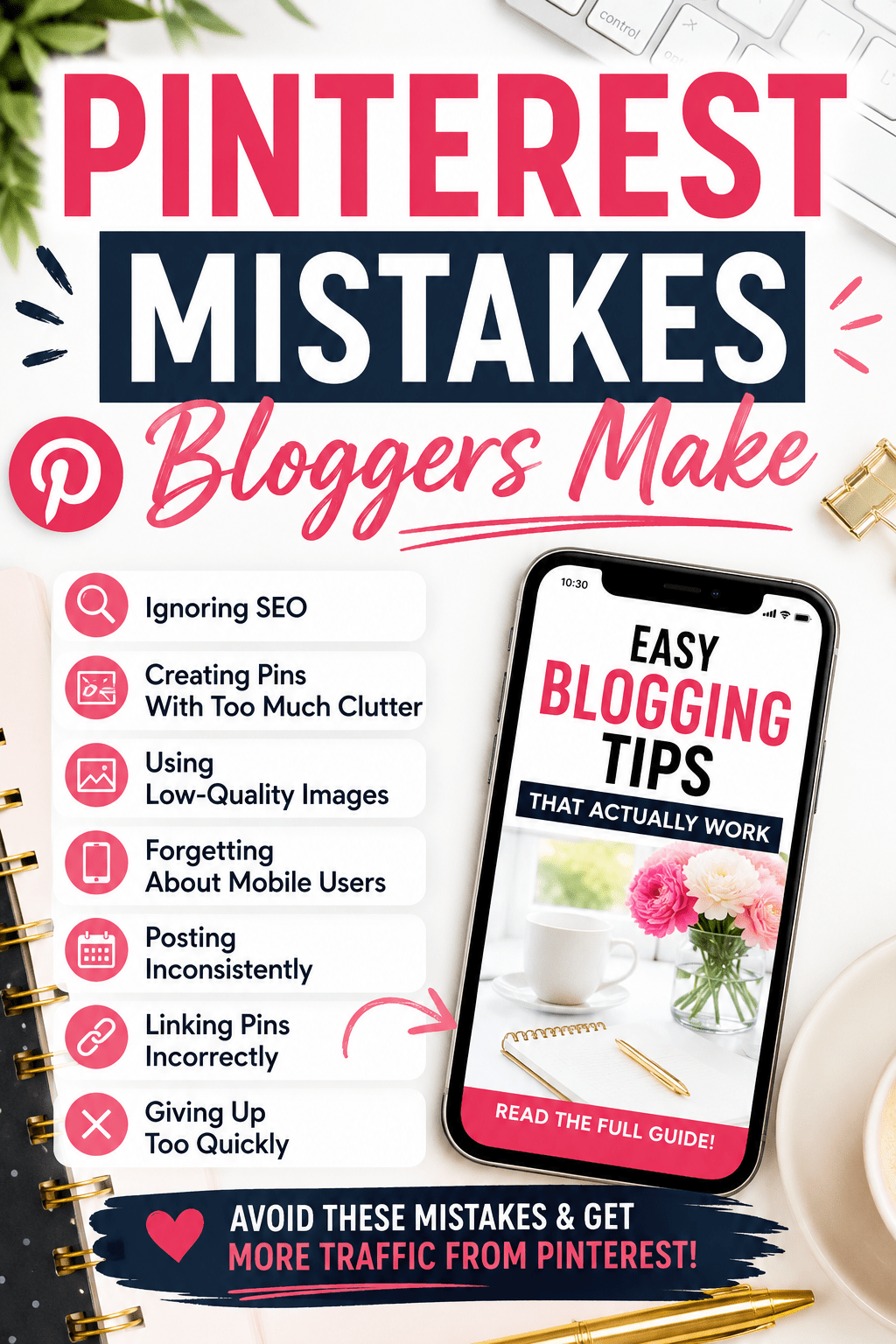
Pinterest can still bring steady traffic to a blog, but a lot of bloggers unknowingly sabotage their own growth. The platform has changed quite a bit over the years, and some habits that once worked now hurt more than help. At the same time, many newer bloggers jump in without understanding how Pinterest actually functions.
The good news is that most Pinterest mistakes are fixable. A few simple changes can make your content easier to discover, save, and click.
Treating Pinterest Like Social Media
One of the biggest mistakes bloggers make is treating Pinterest like Facebook or Instagram. Pinterest is not really a social platform. It is a visual search engine.
People are not scrolling Pinterest to keep up with friends. They are searching for ideas, recipes, home projects, travel inspiration, seasonal content, and solutions to problems.
Because of that, your strategy should focus on searchable content instead of random posting. Strong keywords matter. Clear titles matter. Helpful graphics matter.
If your pins are vague, overly cute, or hard to understand quickly, they usually get ignored.
Creating Pins With Too Much Clutter
A pin only has a second or two to grab attention. Busy designs make people scroll right past.
Many bloggers overload their graphics with:
- Tiny fonts
- Too many colors
- Excessive stickers or decorations
- Hard-to-read scripts
- Crowded layouts
Simple almost always performs better.
Use large, readable text, clean images, and enough space so the design feels balanced. Your pin should be easy to understand immediately, especially on mobile devices.
Related: Blogging in 2026: Is It Still Worth It?
Ignoring SEO on Pinterest
A surprising number of bloggers still ignore Pinterest SEO completely. They upload a pin, add a random caption, and hope for the best.
Pinterest relies heavily on keywords to understand your content. That means your:
- Pin title
- Pin description
- Board titles
- Board descriptions
- Blog post title
all help Pinterest categorize your content.
For example, a title like “My Favorite Fall Things” is not nearly as searchable as “Easy Fall Decorating Ideas for Small Spaces.”
The second one clearly tells Pinterest what the content is about.
Only Creating One Pin Per Blog Post
This is a huge missed opportunity.
Many successful bloggers create multiple pin designs for every single article. Different colors, headlines, layouts, and images can attract different audiences.
Sometimes the pin you almost did not use becomes the one that takes off.
Pinterest also likes fresh content. Even if the blog post itself is older, a new pin design can help revive traffic again.
Using Low-Quality Images
Dark, blurry, stretched, or poorly cropped images can kill a pin fast.
Pinterest is highly visual, so your images need to feel polished and appealing. You do not need expensive photography equipment, but you do need bright, clean visuals that fit your brand.
Vertical images usually perform best because they take up more screen space in the feed. Tall pins naturally catch the eye better than horizontal graphics.
Forgetting About Mobile Users
Most Pinterest users browse on their phones. Unfortunately, many bloggers design pins on large computer screens without checking how they actually look on mobile.
Tiny text is one of the biggest problems.
If someone has to zoom in to read your title, they probably will not bother. Keep fonts bold, large, and easy to scan quickly.
Before posting, always preview your design at a smaller size.
Posting Inconsistently
Pinterest rewards consistency more than random bursts of activity.
Some bloggers pin heavily for two days, disappear for three weeks, then wonder why traffic drops. Regular activity sends stronger signals to the platform.
That does not mean you have to spend all day pinning. Even a manageable routine helps more than inconsistent posting.
Scheduling tools can make this much easier, especially if you already juggle blogging, work, and family life.
Writing Weak Headlines
Your pin headline matters just as much as the image itself.
A weak headline gets ignored, even with a beautiful design. Strong Pinterest headlines usually:
- Solve a problem
- Spark curiosity
- Offer tips or shortcuts
- Promise inspiration
- Use searchable phrases
People want to know exactly what they will get after clicking.
Instead of:
“Cute Kitchen Ideas”
Try:
“Small Kitchen Organization Ideas That Actually Work”
Specific headlines almost always outperform vague ones.
Linking Pins Incorrectly
Broken links are more common than people realize. Sometimes bloggers accidentally link to the wrong article, homepage, or even outdated URLs.
That creates frustration for readers and hurts trust.
Before publishing a pin, double-check every link. Make sure it goes directly to the correct blog post and loads properly on mobile devices.
Giving Up Too Quickly
This might be the most common mistake of all.
Pinterest traffic often moves more slowly than other platforms. A pin may sit quietly for weeks before suddenly gaining traction. Some bloggers quit long before their content has a chance to circulate.
Consistency and patience matter a lot on Pinterest.
Many successful bloggers have older pins that still bring traffic months or even years later. Pinterest content tends to have a much longer lifespan than typical social media posts.
Related: How to Make Pinterest Work for Your Business
Final Thoughts
Pinterest can be incredibly valuable for bloggers, especially those in lifestyle, food, DIY, travel, seasonal, or home niches. However, small mistakes can quietly limit your reach without you even realizing it.
The good news is that you do not need perfect graphics or viral luck to improve. Cleaner designs, better keywords, stronger headlines, and consistent posting can make a noticeable difference over time.
Once you start treating Pinterest like a search engine instead of a social feed, your strategy usually becomes much more effective.
Lisa Crow contributed to this article. She is a true crime junkie and lifestyle blogger based in Waco, Texas. Lisa is the Head of Content at Gigi’s Ramblings and Southern Bred True Crime Junkie. She spends her free time traveling when she can and making memories with her large family which consists of six children and sixteen grandchildren.