Rockford, Illinois, is a vibrant city filled with history, culture, and outdoor beauty. Known as the “Forest City,” Rockford offers stunning gardens, fascinating museums, and a thriving arts scene. Whether you’re exploring nature or diving into local history, this Midwest gem has something for everyone. Pack your bags and get ready to discover Rockford!
Best Time to Visit: Spring (April to June) and fall (September to October) offer mild weather, perfect for exploring the city’s parks and outdoor attractions.
What to Wear: Dress in layers, as Midwest weather can change quickly. Comfortable walking shoes are recommended for sightseeing.
Getting Around: A car is the best way to explore, but Rockford has public transportation and walkable areas downtown.
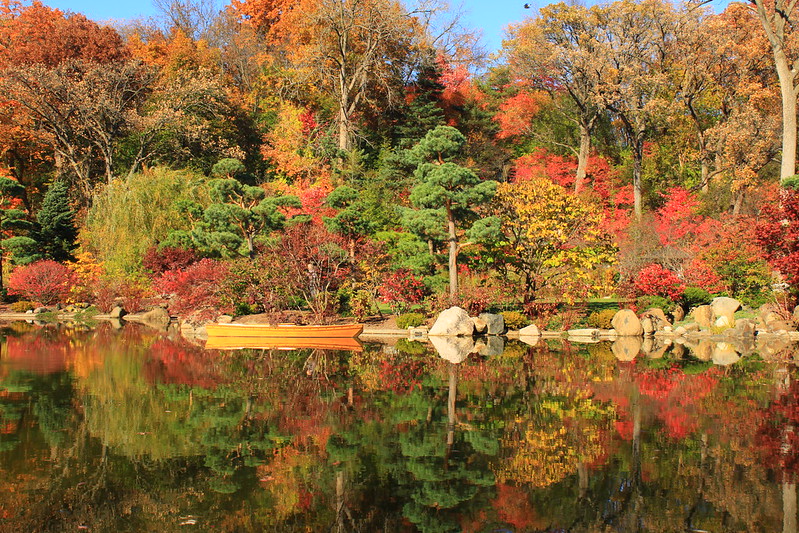
Visit Anderson Japanese Gardens: Relax in this beautifully designed Japanese garden, featuring waterfalls, koi ponds, and serene landscapes.
Explore the Burpee Museum of Natural History: See Jane, one of the most complete juvenile T. rex skeletons ever discovered, and other fascinating exhibits.
Wander Through the Nicholas Conservatory & Gardens: Enjoy lush tropical plants and seasonal floral displays in this beautiful riverside conservatory.
Tour Midway Village Museum: Step back in time at this living history museum showcasing Rockford’s rich past with interactive exhibits and historic buildings.
Walk Along the Rock River Recreation Path: This scenic trail offers stunning river views and is perfect for walking, biking, or jogging.
Catch a Game at Rivets Stadium: Watch the Rockford Rivets, the city’s summer collegiate baseball team, for an exciting night of sports entertainment.
Lisa Crow contributed to this article. She is a true crime junkie and lifestyle blogger based in Waco, Texas. Lisa is the Head of Content at Gigi’s Ramblings and Southern Bred True Crime Junkie. She spends her free time traveling when she can and making memories with her large family which consists of six children and fifteen grandchildren. This is the next installment in the Let’s Travel to…series, a collection of short informational articles covering some of the world’s top travel destinations.
I’ll admit it—I have a comfort TV habit, and I’m not even a little ashamed. My toxic trait? Well, one of my toxic traits… I rewatch the same shows over and over instead of trying new ones. I know there’s a world full of fresh, exciting series just waiting to be discovered. But why start something new when I already know what I love? A huge part of my OCD is I hate change, always have.
Let me paint the picture: I still watch the shows I grew up on. Little House on the Prairie, The Golden Girls, Murder, She Wrote, and Unsolved Mysteries are basically part of my DNA at this point. If you turn on my TV right now, chances are one of those is playing—or at least queued up. I watch every single one several times per week.
True Crime Is My Background Music
During the day while I work, I’ve usually got some true crime drama playing in the background. 48 Hours, Dateline, and Snapped are my go-to companions. Some people work to playlists or nature sounds—I work best with murder mysteries unfolding in front of me. There’s something weirdly soothing about it, even if I’ve seen the episode three times already.
Comfort Shows for Every Mood
When I’m not solving fictional crimes, I turn to my feel-good favorites. Hart of Dixie is basically my personal therapy. I’ve rewatched it so many times, I could probably jump in as an extra. The Good Witch is another cozy favorite that just makes everything feel a little more magical.
And yes… Jersey Shore has a spot in the rotation too. I know it’s wild and messy, but honestly? It’s hilarious. Plus, watching other people make chaotic decisions makes me feel better about mine.
Bedtime Is for Cartoons… Don’t Judge Me
Now here’s where things get funny. I sleep with Dora the Explorer or Sofia the First playing. Don’t ask me why—but it works. I used to struggle with nighttime panic attacks, and somehow, these soft, cheerful little shows ease my anxiety. The repetition, the gentle voices, the predictability—it’s like a bedtime security blanket for my brain.
Movies? Only the Ones I Already Know
I’m not big on movies unless they’re on Hallmark or Lifetime. Especially the Christmas ones—those are my jam. I have watched The Highwaymen more times than I care to admit. No regrets though. It’s familiar, and familiar is comfortable.
Why Try Something New When You Have Favorites?
You’d think with all the new shows constantly popping up, I’d try something fresh every now and then. But honestly? There’s something comforting about sticking with what you already love. No surprises, no emotional rollercoasters—just the same cozy characters and predictable plots.
Comfort Viewing Is a Form of Self-Care
Sure, maybe it’s a little quirky. But who cares? Life is stressful enough without feeling guilty for rewatching the same shows. If something brings you peace, laughter, or helps you fall asleep without panic attacks, I say go for it.
So if you’re like me and your “Watch Again” list looks more like a permanent playlist, you’re not alone. This is a safe space for all of us comfort show junkies.
Lisa Crow contributed to this article. She is a true crime junkie and lifestyle blogger based in Waco, Texas. Lisa is the Head of Content at Gigi’s Ramblings and Southern Bred True Crime Junkie. She spends her free time traveling when she can and making memories with her large family which consists of six children and fifteen grandchildren.
Let’s be honest. The words “passive income” can sound a little… scammy.
We’ve all seen the shady ads. “Make $10K a week in your sleep!” or “Just post this and watch the cash roll in!” Yeah, no thanks.
But here’s the good news—passive income doesn’t have to be sleazy. There are plenty of legit ways to make money while you sleep (or binge Netflix, no judgment).
So if you’re curious about extra income without weird vibes, you’re in the right place.
1. Sell a Digital Product
Create something once. Sell it forever.
Digital products can be ebooks, templates, printables, or even guides. The best part? Once it’s made, it keeps working for you.
Let’s say you’re good at budgeting. You could design a simple monthly planner and sell it on Etsy. People love helpful stuff like that!
No hard selling. No awkward cold messages. Just value people can use.
2. Rent Out Something You Own
You don’t have to be a landlord to make this one work.
Got a camera? A truck? A bounce house? You can rent it out for extra cash.
Websites like Fat Llama and Neighbor help people rent everything from tools to storage space.
It’s low effort, and the money just comes in. Not sketchy at all.
3. Start a Niche Blog or YouTube Channel
Before you scroll past—this isn’t about becoming famous.
You can start a blog or YouTube channel on something super specific. Think “plant care for beginners” or “easy recipes for picky kids.”
Once you build up a few readers or viewers, you can make money through ads, affiliate links, or even digital products.
Bonus: You get to talk about stuff you actually like. Win-win.
4. Invest in Dividend Stocks
This one sounds fancy, but it’s actually pretty simple.
When you buy dividend-paying stocks, some companies pay you a small amount just for holding them.
It’s not instant riches. But over time, those dividends add up.
Use apps like Robinhood or Fidelity to get started, and stick to companies you believe in. No Wolf of Wall Street energy required.
5. License Your Photos
Love taking pictures? Sell them online!
Websites like Shutterstock, Adobe Stock, and Unsplash allow you to upload your photos and earn money whenever someone downloads them.
If you’re already snapping pics on your phone, why not turn them into cash?
No sales pitches. No weird tactics. Just you doing your thing.
6. Create an Online Course
What do you know how to do that others want to learn?
Whether it’s painting, parenting hacks, or learning Excel—someone out there is searching for it.
You can record a course once and sell it on platforms like Teachable or Udemy.
It’s a little work upfront, but then it becomes truly passive.
7. Affiliate Marketing—The Non-Sleazy Way
Yes, affiliate marketing has a bad rep. But it doesn’t have to be spammy.
Let’s say you love a specific planner, and you share a link to it on your blog or Instagram. If someone clicks and buys, you earn a small commission.
The key? Only share stuff you actually use and love.
That way, it feels like a recommendation—not a sales pitch.
Final Thoughts
Passive income shouldn’t make you feel gross.
With the right approach, you can earn extra money without annoying your friends or sliding into strangers’ DMs.
Start with one idea that feels doable. Test it out. Learn as you go.
Lisa Crow contributed to this article. She is a true crime junkie and lifestyle blogger based in Waco, Texas. Lisa is the Head of Content at Gigi’s Ramblings and Southern Bred True Crime Junkie. She spends her free time traveling when she can and making memories with her large family which consists of six children and fifteen grandchildren.
Let’s be honest. We all download apps hoping they’ll make life easier. Sometimes they do—and sometimes, well, they just eat up storage and sanity. I’ve tested a lot of them, especially as someone who works online, creates content, and has about 47 tabs open in my brain at all times.
Here’s a list of the apps I swear by (and a few that might look helpful but are really just time-wasters in disguise).
The MVPs: Apps That Save My Sanity
Canva
Canva is basically my design fairy godmother. Whether I’m creating graphics for blog posts, Instagram stories, or Pinterest pins, Canva is my go-to. It’s so easy to use that it almost feels unfair. There’s no learning curve, just drag, drop, and boom—graphics that look like I spent hours on them. I didn’t.
ChatGPT
Seriously, this app is like a supercharged assistant. Need blog ideas? Quick grammar check? A better way to phrase something? It’s right there. It helps me work faster and stay focused—two things that don’t always happen on their own.
CapCut
CapCut has made video editing actually fun. Whether I’m chopping up a reel, adding captions, or trying out a trending sound, it’s all super intuitive. Bonus: you don’t need a fancy editing background to make it work. If you’re doing any kind of short-form video, this one’s a must.
Later
Later helps me plan out my social media like a grown-up. I can drag and drop posts, schedule them ahead of time, and actually see what my feed will look like. No more last-minute panic posting or forgetting hashtags. It keeps me on track—especially when my brain is anything but organized.
Pinterest
This one’s tricky. Pinterest is both a productivity tool and a black hole. When I’m using it to plan blog content, schedule pins, or brainstorm visuals? Super helpful. When I accidentally fall into a rabbit hole of DIY pantry labels or “what to pack for Paris in the spring”? There goes my day.
The Time-Wasters (Sorry, Not Sorry)
Now, let’s talk about the apps that promise the world and deliver… meh.
Those Fake Productivity Apps
You know the ones. They have pretty dashboards, calming colors, and quotes about crushing goals. But instead of helping, they turn into a full-time job to manage. I spent more time customizing the planner than actually getting things done. If your “productivity” app takes longer to set up than your actual task, it’s not the vibe.
Overly Complicated Editing Apps
Some video and photo editing apps are just doing too much. I’m all for options, but if I need a YouTube tutorial to figure out how to crop a clip, I’m out. Give me simple and effective every time.
Every “Habit Tracker” I’ve Ever Tried
Don’t come for me—but most habit trackers just end up making me feel bad. I miss one day, and suddenly I’m spiraling. I get the appeal, but personally? A sticky note and a highlighter work better.
Final Thoughts
Apps should make your life easier, not harder. The good ones save time, spark creativity, and keep you moving forward. The not-so-good ones? They look cute on your home screen but rarely pull their weight.
So here’s to finding tools that actually help—and deleting the ones that don’t.
What apps can’t you live without (or regret downloading)? Let me know—I’m always up for trying something new… unless it’s another habit tracker.
Lisa Crow contributed to this article. She is a true crime junkie and lifestyle blogger based in Waco, Texas. Lisa is the Head of Content at Gigi’s Ramblings and Southern Bred True Crime Junkie. She spends her free time traveling when she can and making memories with her large family which consists of six children and fifteen grandchildren.
We made a little weekend run up to the Dallas/Fort Worth area—nothing too wild, just a one-night stay—but we managed to squeeze in some good food, a couple of wax supply stops, and even a true crime pitstop or two. If you know me, then you know this trip was very on-brand.
Why We Went (And Why We Always End Up Staying)
The main reason for this trip was simple: wax melt supplies. With the way shipping costs are these days, it’s honestly cheaper for me to drive up to the DFW area and pick up what I need. I figured, why not make a night of it?
We’ve been to the metroplex more times than I can count—for Cowboys, Mavs, and Rangers games, rodeos, concerts, weekend getaways—you name it. But this time we decided to switch things up a bit and do a few things we hadn’t done before.
First Stop? Babe’s Chicken Dinner House (Obviously)
If we’re anywhere near Arlington, Babe’s Chicken Dinner House is a must. It’s always our first stop. Now, I don’t even eat chicken (ironic, right?), but their chicken fried steak is chef’s kiss. Add in endless sides like the best green beans and corn you’ll ever eat, mashed potatoes, creamy gravy, a simple salad, and warm, soft biscuits that taste like heaven… yeah, it’s easy to see why we never skip it.
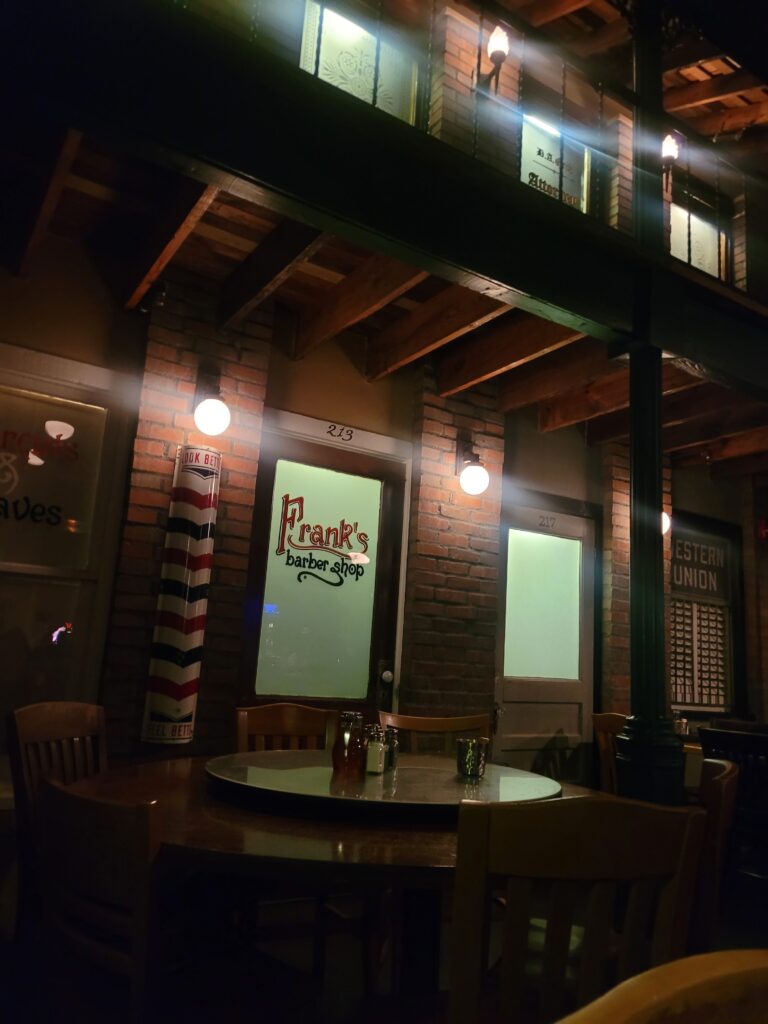
The vibe is just as good as the food—Babe’s is set up like a little 1940s small town, complete with a post office, water tower, hen house, church, barber shop, and more. It’s adorable, quirky, and definitely part of what keeps us coming back.
Wax Supply Haul: Candle Nerd Heaven
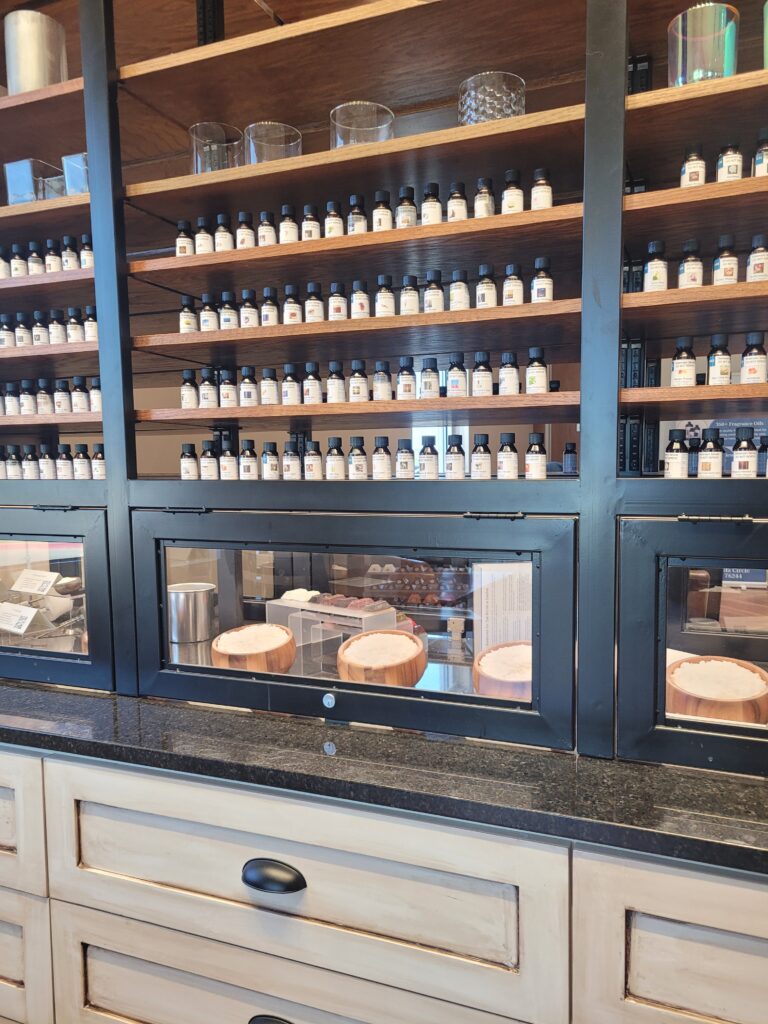
After stuffing ourselves at Babe’s, we headed to Lone Star Candle Supply in Keller. I’ve been ordering from them for years, but this was my first time visiting in person. If you’re in the wax world—whether it’s melts, candles, soaps, or freshies—you have to check out their showroom. It’s impressive, organized, and honestly, I could’ve stayed in there forever sniffing oils and testing waxes.
Next, we stopped by Waxy Flower Candle Supply in Dallas. I’d seen them pop up on Facebook and figured why not check them out while we were in the area? They’re a smaller business but have a solid selection of fragrance oils—and they were having a sale! I grabbed a few to test and poured a run last night. I can’t wait to see how they cure!
Hotel Life: The Renaissance Dallas (with Some Bumps)
We stayed at the Renaissance Dallas, which we’ve stayed at a few times before and usually love. The hotel is beautiful, and the views are just so good. That said… this stay wasn’t totally smooth.
I really wanted the full hotel experience—room service, cozy night in, all of it. So we ordered cheeseburgers. They were listed as $38 for two, but by the time all the random fees were added, it jumped to $57… and gratuity wasn’t included. After tip, we paid nearly $70 for two very average cheeseburgers. And I mean frozen patty energy. I should’ve just waited for breakfast.
Then we went down to the bar—just a couple of drinks to wind down—and that little visit cost us another $70 (two drinks, two beers). Again, expected, but still a bit of a sting. To top it off, our AC went out in the middle of the night. Not unbearable, but definitely uncomfortable.
Even with those hiccups, I still love the Renaissance. The property is gorgeous, and we’ll definitely be back.
Bucket List Stop: The Graves of Bonnie and Clyde
Sunday morning, we checked out and decided to knock something off our true crime bucket list—the graves of Bonnie and Clyde.
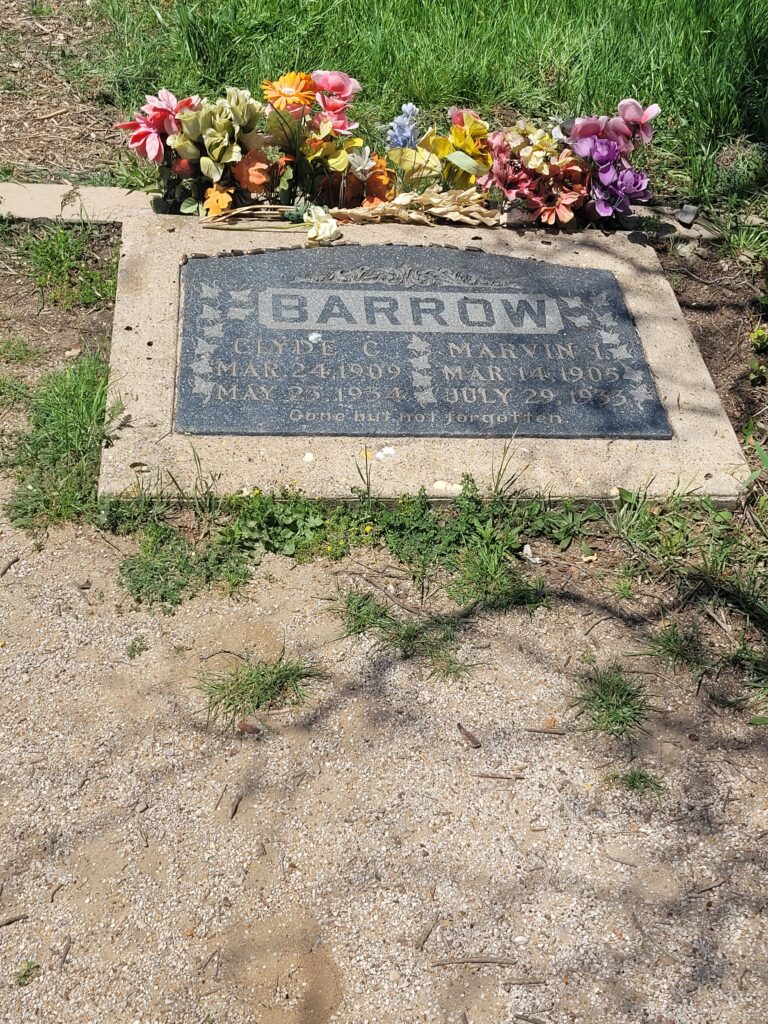
We started with Clyde’s grave, which is in West Dallas in the Oak Cliff area. Not the best neighborhood, and the cemetery itself is kind of wild—overgrown, old, and pretty rundown. Still, we found his grave and that of his brother Buck with no problem.
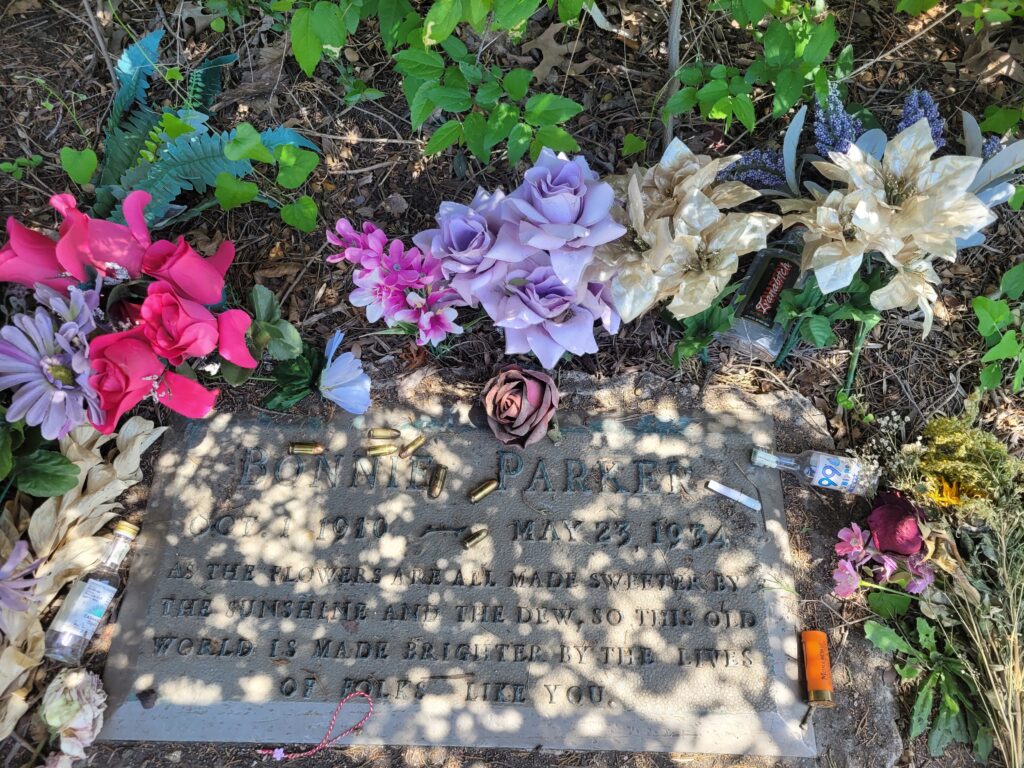
Bonnie’s grave was in a much nicer part of town near the Dallas/Love Field Airport. It’s well-maintained, easy to find, and much more peaceful. Both graves had little “offerings” left behind—bullet casings, empty liquor bottles, flowers. It’s kind of amazing how fascinated people still are by these two. There were visitors coming and going the entire time we were there.
The BBQ Mission Continues: Lockhart’s in Oak Cliff
Before heading home, we were on a mission: find great Texas BBQ. We’ve been trying to hit up as many small-town, mom-and-pop BBQ joints as possible. This time, we chose Lockhart Smokehouse in the historic Oak Cliff district—and I’m so glad we did.
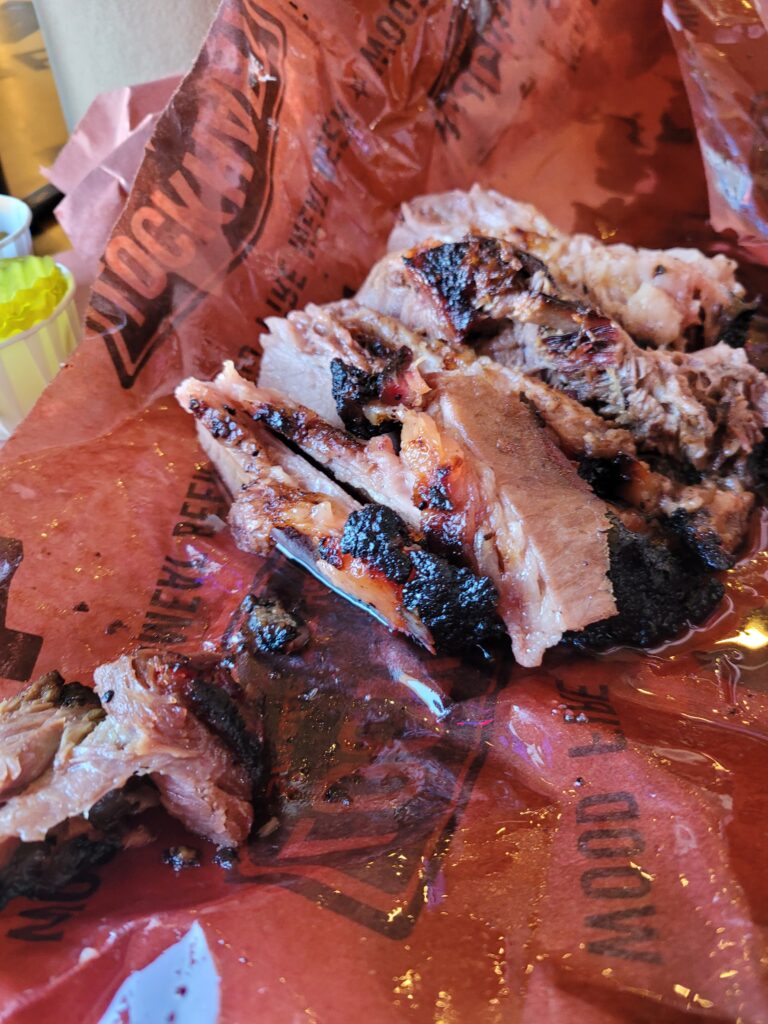
The area itself was a cool surprise—tons of foot traffic, taco stands, walk-up bars, funky shops, and an authentic neighborhood vibe. Lockhart’s has that classic BBQ shack feel, right down to your food being served on wax paper instead of plates (which, let’s be honest, is how you know it’s gonna be good).
I had brisket with blue cheese coleslaw (yes, I know that’s not for everyone, but it was so good). Santiago had brisket, sausage, and mac & cheese and was equally impressed. This place is officially added to our return list.
I Love Dallas… But Only for a Day or Two
I enjoy visiting DFW—but after about 24 hours, I’m ready to hightail it home. Between the honking horns, bumper-to-bumper traffic, packed sidewalks, and sensory overload, I start craving my quiet house and my dogs.
One Last Stop: Buc-ee’s in Hillsboro
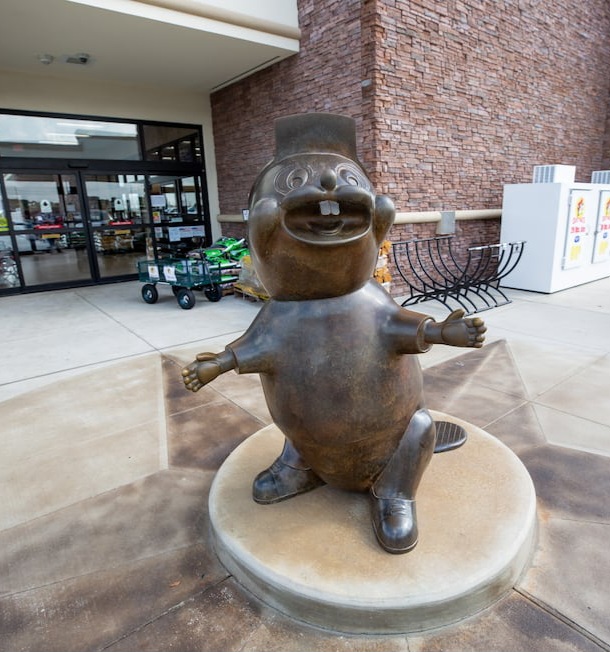
Before we made it home, we stopped at the Buc-ee’s in Hillsboro, which we hadn’t been to before—and y’all, it’s Buc-ee’s on steroids. Absolute pandemonium inside. We grabbed our usual beef jerky (because it’s a crime to leave without it) and hit the road.
Was it expensive? Absolutely. Would I do it again? Yep.
Sometimes, you just need a quick reset—a little change of scenery, good food, and a few spontaneous stops. This trip might’ve put a dent in the wallet, but it did wonders for the soul. 💛
Lisa Crow contributed to this article. She is a true crime junkie and lifestyle blogger based in Waco, Texas. Lisa is the Head of Content at Gigi’s Ramblings and Southern Bred True Crime Junkie. She spends her free time traveling when she can and making memories with her large family which consists of six children and fifteen grandchildren.
Augusta is a charming Southern city known for its historic sites, scenic riverfront, and world-famous golf tournament. Whether you’re exploring its rich history, enjoying outdoor activities, or indulging in classic Southern cuisine, Augusta offers something for every traveler. Pack your bags and get ready to experience this gem along the Savannah River!
Interesting Facts:
Home of The Masters: Augusta National Golf Club hosts The Masters, one of the most prestigious golf tournaments in the world.
Birthplace of James Brown: The “Godfather of Soul,” James Brown, was born and raised in Augusta, and the city celebrates his legacy with a downtown statue and museum exhibit.
Augusta’s Riverwalk: This scenic area along the Savannah River features parks, amphitheaters, and walking paths, making it a favorite local hangout.
A City of History: Augusta was founded in 1736, making it one of Georgia’s oldest cities, with beautifully preserved antebellum homes and historic landmarks.
Best Time to Visit: Spring (March to May) is the best time to visit, especially during The Masters. Fall (September to November) also offers pleasant weather.
What to Wear: Light, breathable clothing is ideal for Augusta’s warm climate, along with comfortable walking shoes for exploring historic sites.
Getting Around: A car is the best way to explore Augusta, but the downtown area is very walkable, and trolleys provide guided tours of historic sites.
Lisa Crow contributed to this article. She is a true crime junkie and lifestyle blogger based in Waco, Texas. Lisa is the Head of Content at Gigi’s Ramblings and Southern Bred True Crime Junkie. She spends her free time traveling when she can and making memories with her large family which consists of six children and fifteen grandchildren. This is the next installment in the Let’s Travel to…series, a collection of short informational articles covering some of the world’s top travel destinations.
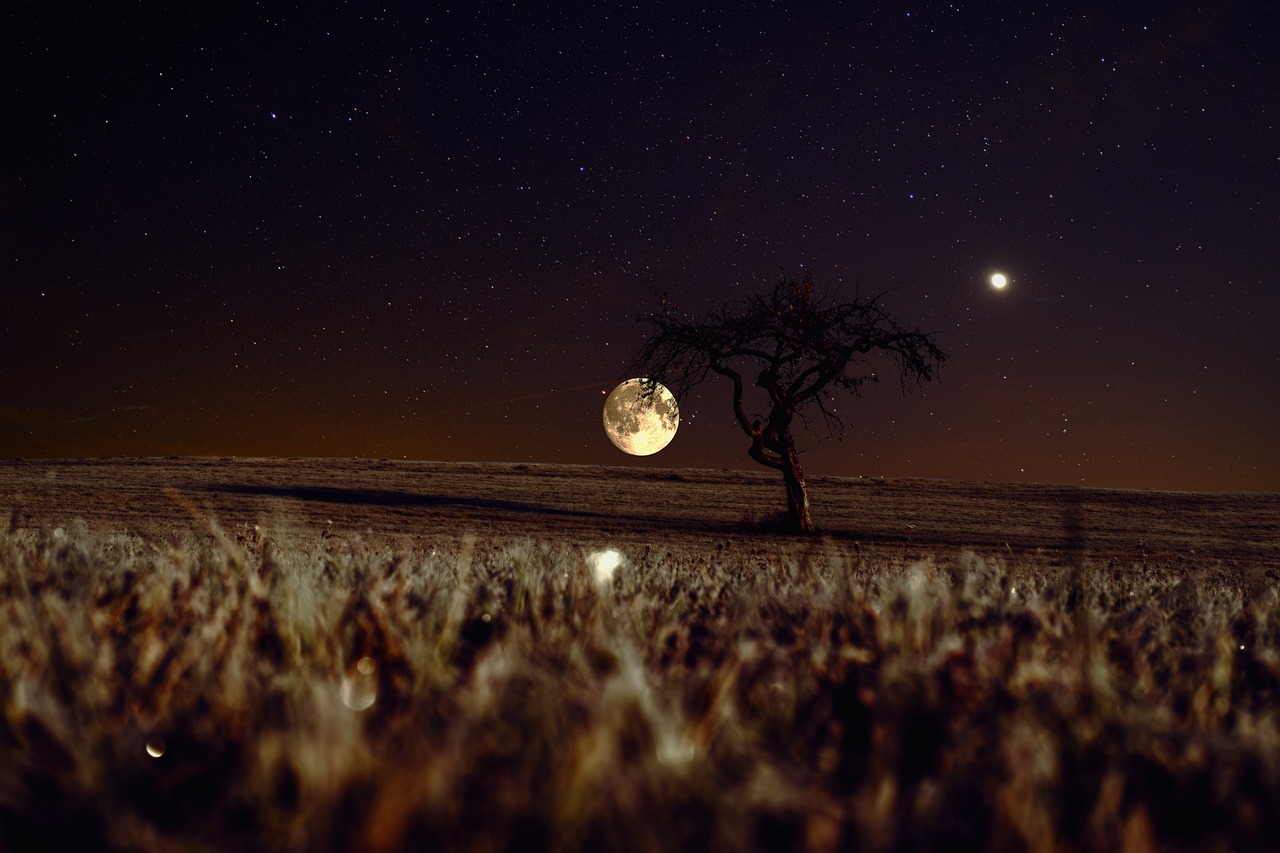
The Pink Full Moon rises in April and signals the heart of spring. Despite its name, it doesn’t appear pink. Its name comes from the blooming of wild pink phlox, one of the first spring flowers.
The moon represents growth, renewal, and the beauty of transformation. It invites us to reflect, release, and begin again.
Symbolism and Spiritual Meaning
This full moon is tied to fresh starts and gentle awakenings. Like flowers pushing through the soil, it calls us to rise. The energy is soft but powerful—perfect for letting go of what no longer fits in our lives.
Spiritually, it’s a time to reconnect with purpose and open yourself to change.
Emotional Release and Intuition
Full moons are always emotional. The Pink Moon shines a light on your inner world. It heightens feelings, intuition, and even dreams.
If you’re feeling overwhelmed or sensitive, know that it’s part of the process. The moon helps us see clearly. It brings what’s hidden to the surface so we can heal it.
Simple Ways to Embrace the Energy
You don’t need a complicated ritual to connect with the moon. Start with stillness.
Go outside and let the moonlight touch your skin.
Take deep breaths and picture your stress melting away.
Journal your thoughts, feelings, and intentions.
Write down what you’re ready to release. Then, write what you want to welcome into your life.
Cleanse, Charge, and Create Space
This is a powerful time to clear your space, both physically and emotionally. You can:
Clean your home.
Burn sage or incense.
Charge crystals or special objects in the moonlight.
Let fresh air in through open windows.
The goal is to make room for peace and alignment.
Lean Into Self-Care and Connection
Honor your emotions with extra self-care. A warm bath, soft music, or a calming tea can work wonders. Be gentle with yourself.
This moon also supports healing relationships. Check in with someone you love. Express gratitude. Offer forgiveness. Share from the heart.
Step Into the Season of Growth
Spring is nature’s reminder that growth takes time. You’re not behind. You’re not stuck. You’re simply shifting.
Spend time outdoors if you can. Notice the blooming trees, the longer days, and the feeling of possibility in the air. Let it remind you—you’re blooming too.
Trust the Process of Becoming
The Pink Full Moon is soft yet wise. It doesn’t push; it invites. This is your moment to trust your journey.
Let go of what weighs you down. Breathe in what lifts you up. You’re ready for this next chapter, even if you can’t see the whole path yet.
Lisa Crow contributed to this article. She is a true crime junkie and lifestyle blogger based in Waco, Texas. Lisa is the Head of Content at Gigi’s Ramblings and Southern Bred True Crime Junkie. She spends her free time traveling when she can and making memories with her large family which consists of six children and fifteen grandchildren.
For centuries, people have connected full moons to strange behavior. Stories of werewolves, madness, and mysterious crimes have deep roots in folklore. But is there any truth to it? Can a full moon actually impact crime rates?
Let’s dive into what we know—and what we still wonder about.
A Long History of Suspicion
The belief that full moons affect human behavior isn’t new. In ancient times, people thought the moon’s glow stirred chaos. The term lunacy even comes from “luna,” the Latin word for moon. Police departments, emergency rooms, and even teachers have long claimed full moons bring more trouble than usual.
Many say they’ve seen more fights, arrests, or strange events during full moons. Some hospitals report more ER visits. Some officers swear they get more calls. But what does the data say?
What the Research Shows
The idea is fascinating, but the science is mixed. Some studies suggest a slight increase in crime during full moons. Others show no connection at all. One study from 1984 found more violent crime during full moons in Florida. But a different study, using data from across the U.S., showed no consistent pattern.
In short: science hasn’t fully confirmed a strong link—but it hasn’t ruled it out either.
Why It Feels Like Crime Increases
Even when statistics don’t support a spike, many still believe in the full moon effect. That could be due to something called confirmation bias. If you’re expecting wild behavior, you’re more likely to notice it. And if something unusual does happen, you may blame the moon—because you were already watching for it.
The full moon is also big, bright, and hard to ignore. It sticks in our minds more than an average night. So if something goes wrong, it’s easy to connect it to the moon.
The Role of Light and Sleep
There could be subtle reasons behind the belief. Full moons are brighter, especially in rural areas. That could lead to more people staying out late. More people outside can sometimes mean more opportunities for crime.
Full moons may also affect sleep. Some studies suggest people sleep less during a full moon. Poor sleep can lead to irritability or risky behavior. It’s not a direct link to crime—but it could influence decision-making.
A Psychological Pull
Even if the moon doesn’t cause crime, the belief alone can be powerful. Expectation shapes perception. Some people feel more emotional or on edge during a full moon. That heightened emotion might lead to poor choices or conflict.
In law enforcement and emergency work, the myth is so widespread that it becomes part of the culture. People might prepare for more chaos—not because it’s proven, but because it’s tradition.
Final Thoughts
The full moon has always captured our imagination. Whether it truly raises crime rates or not, it clearly affects how we see the world. Our minds look for patterns and connections—even in the night sky.
For now, the jury is still out. But the mystery lives on. So the next time a full moon rises and things get weird, you won’t be alone in wondering if there’s more to it.
Explore the connection between full moons and crime. Myth, science, and mystery collide in this look at lunar influence on behavior.
Lisa Crow contributed to this article. She is a true crime junkie and lifestyle blogger based in Waco, Texas. Lisa is the Head of Content at Gigi’s Ramblings and Southern Bred True Crime Junkie. She spends her free time traveling when she can and making memories with her large family which consists of six children and fifteen grandchildren.
Boise, Idaho, is a hidden gem that combines outdoor adventure, a thriving arts scene, and a welcoming small-town feel. Surrounded by breathtaking mountains and the Boise River, this city offers visitors a perfect mix of nature and culture. Pack your bags and get ready to explore the City of Trees!
The City of Trees: Boise got its nickname due to the abundance of trees along the Boise River, which early French explorers named “Les Bois” (The Woods).
Largest Basque Population in the U.S.: Boise is home to one of the largest Basque communities outside of Spain, with a dedicated Basque Block downtown.
A High-Altitude Capital: At 2,730 feet above sea level, Boise is one of the highest-elevation state capitals in the U.S.
Potato Country: Idaho is famous for its potatoes, and Boise celebrates this legacy with the Idaho Potato Museum just a short drive away.
Explore the Boise River Greenbelt: Walk or bike along this scenic 25-mile trail that winds through the city, offering river views and wildlife sightings.
Visit the Idaho State Capitol: Take a tour of this historic government building, featuring beautiful architecture and rich state history.
Stroll the Basque Block: Experience Boise’s unique Basque heritage through authentic restaurants, cultural museums, and live performances.
Hike in the Boise Foothills: Enjoy stunning views of the city and beyond with hikes like Camel’s Back Park or Table Rock.
Discover the Old Idaho Penitentiary: Tour this former prison-turned-museum, which offers a fascinating glimpse into Idaho’s past.
Visit the Boise Art Museum: Browse a diverse collection of contemporary and classic art in this highly regarded cultural institution.
Lisa Crow contributed to this article. She is a true crime junkie and lifestyle blogger based in Waco, Texas. Lisa is the Head of Content at Gigi’s Ramblings and Southern Bred True Crime Junkie. She spends her free time traveling when she can and making memories with her large family which consists of six children and fifteen grandchildren. This is the next installment in the Let’s Travel to…series, a collection of short informational articles covering some of the world’s top travel destinations.
I’m all about the little things. The small habits that take just a few minutes but make a big difference. You don’t need a full-on morning makeover—just a few easy tweaks can help your day flow better, feel calmer, and even be a little more productive.
Here are five tiny habits that genuinely make my day better.
1. Starting My Day at 5 AM
I know that sounds early, but it works for me. I get up at 5 AM so I’m not rushing through the morning. It gives me time to breathe, reset, and move with purpose.
One of my favorite parts of this early start is the ride to drop my husband off at work. That quiet commute is my chance to read morning affirmations or dive into something uplifting—whether it’s a personal development podcast or even a historical speech that feeds my mind and soul.
2. A Morning Shower with a Podcast
By 6 AM, I’m hopping into the shower, and that’s when I really wake up. The hot water, the quiet… it’s like a reset button. I almost always pop on a true crime podcast or listen to a motivational speaker while I’m getting ready. It’s just part of my rhythm now, and it helps me start the day on a high note—either learning something new or just being entertained.
3. Making the Bed—Always
This one is quick but powerful. I can’t leave the room without making the bed. It just doesn’t sit right with me. It takes maybe two minutes, but it gives the whole room a sense of calm and order.
Plus, coming home to a made bed? That’s the adult version of a hug.
4. Taking Five Minutes to Tidy Up at Night
I’m not talking about scrubbing floors here—just a quick reset before bed. I do a quick vacuum, toss any dirty clothes in the wash, pack the hubby’s lunch then wipe down the counters, and make sure the house feels settled.
It helps me sleep better knowing I won’t wake up to chaos. And morning me? She’s always thankful for that little effort.
5. Midday Movement
If I’m working from home and the day starts to drag, I get up and move. Even if it’s just stretching, walking to the mailbox, or doing a couple of trips up and down the stairs—it counts.
That small burst of movement helps me clear my head and get my energy back. Sometimes I take Pandora with me, sometimes I walk in silence. Either way, I always return feeling more focused.
Final Thought
These habits aren’t life-changing on their own, but when you stack them together? They add up. They help me stay grounded, productive, and just a little more sane. They’re tiny on the surface, but the impact is real.
Try one or two and see how your day feels. Sometimes, the smallest things are the most powerful.
Lisa Crow contributed to this article. She is a true crime junkie and lifestyle blogger based in Waco, Texas. Lisa is the Head of Content at Gigi’s Ramblings and Southern Bred True Crime Junkie. She spends her free time traveling when she can and making memories with her large family which consists of six children and fifteen grandchildren.