
Folksy St. Patrick’s Day scene with rustic wooden table, shamrocks, green beer, leprechaun hat, pot of gold coins, and a vintage sign reading Happy St. Patrick’s Day.

Every year on March 17th, people around the world celebrate St. Patrick’s Day. What began as a religious feast day in Ireland has grown into a lively celebration filled with green clothing, shamrocks, parades, and plenty of Irish pride.

While today’s celebrations often include festivals and parties, the holiday actually has deep historical roots tied to Irish culture, religion, and folklore. Along with traditions that have been passed down for centuries, St. Patrick’s Day also carries a few fun superstitions that many people still follow today.

The Meaning Behind St. Patrick’s Day

St. Patrick’s Day honors Saint Patrick, the patron saint of Ireland. According to historical accounts, Patrick was born in Britain in the late 4th century. As a teenager, he was kidnapped by Irish raiders and taken to Ireland, where he was enslaved for several years.

After eventually escaping and returning home, Patrick later went back to Ireland as a Christian missionary. His work played a major role in spreading Christianity across the country.

One of the most famous legends surrounding Saint Patrick involves the shamrock, a small three-leaf clover. According to tradition, Patrick used the shamrock to explain the concept of the Holy Trinity — the Father, the Son, and the Holy Spirit. Because of this story, the shamrock became one of the most recognizable symbols of Ireland and the holiday itself.

Today, St. Patrick’s Day is celebrated not only as a religious holiday but also as a celebration of Irish heritage and culture.

Related: Ash Wednesday and the Start of Lent

Popular St. Patrick’s Day Traditions

Over the years, many traditions have become closely associated with St. Patrick’s Day celebrations.

Wearing Green

One of the most recognizable traditions is wearing green clothing on March 17th. Green represents Ireland’s famously lush landscape, which is why the country is often called the Emerald Isle.

There is also a playful superstition behind it. Some people believe that wearing green makes you invisible to mischievous fairies or leprechauns, which is why those who forget to wear green sometimes get a friendly pinch.

Parades and Festivals

Parades are another major part of St. Patrick’s Day celebrations. Some of the largest parades actually take place in the United States rather than Ireland. Cities like New York City, Chicago, and Boston host massive celebrations every year.

Chicago is especially famous for dyeing its river bright green, a tradition that has become one of the most iconic images of the holiday.

Traditional Foods

Food is another big part of the celebration. Popular dishes often served on St. Patrick’s Day include:

  • Corned Beef and Cabbage
  • Irish Soda Bread
  • Shepherd’s Pie

Interestingly, corned beef and cabbage became popular through Irish-American communities rather than in Ireland itself.

St. Patrick’s Day Superstitions and Folklore

Like many traditional holidays, St. Patrick’s Day also includes plenty of folklore and superstition.

Leprechauns and Hidden Gold

One of the most well-known figures connected to the holiday is the mischievous Leprechaun. In Irish folklore, leprechauns are small fairy shoemakers who hide their gold at the end of a rainbow.

Legend says that if someone manages to catch one, the leprechaun must grant three wishes. However, they are known for being clever tricksters and often escape before that happens.

The Luck of the Four-Leaf Clover

A regular clover has three leaves, but finding a Four-leaf Clover is considered extremely lucky. Each leaf is traditionally believed to represent something meaningful:

  • Faith
  • Hope
  • Love
  • Luck

Because four-leaf clovers are rare, discovering one has long been thought to bring good fortune.

The Pinching Tradition

The playful tradition of pinching someone who isn’t wearing green is believed to come from folklore about leprechauns. According to the story, wearing green makes you invisible to them. If they can see you, they might give you a mischievous pinch.

While it is mostly just a fun joke today, the tradition continues to be part of many St. Patrick’s Day celebrations.

Related: What Is Fat Tuesday? Meaning, History, and Why It Still Matters

Why People Still Celebrate St. Patrick’s Day

Although the holiday started as a religious observance, St. Patrick’s Day has evolved into a celebration of Irish culture, heritage, and community around the world.

From parades and traditional foods to folklore and lucky symbols, the holiday blends history with fun traditions that bring people together every year.

Whether someone has Irish roots or simply enjoys the festive spirit, St. Patrick’s Day continues to be one of the most recognizable cultural celebrations in the world. 🍀

Lisa Crow contributed to this article. She is a true crime junkie and lifestyle blogger based in Waco, Texas. Lisa is the Head of Content at Gigi’s Ramblings and Southern Bred True Crime Junkie. She spends her free time traveling when she can and making memories with her large family which consists of six children and sixteen grandchildren.


Vintage sourdough bread recipe card from Gigi’s Country Kitchen showing ingredients, directions, flour, sourdough starter jar, and rustic artisan loaf.

As an Amazon Associate, I earn from qualifying purchases.

For a while there, homemade bread felt like something only grandmas and hardcore homesteaders were doing. However, things have started to change. Across the country, more people are dusting off mixing bowls and turning their kitchens into mini bakeries again. From social media inspiration to rising grocery prices, several factors have helped bring this old-school skill back into the spotlight.

As a result, the homemade bread trend is growing fast. Not only are people rediscovering traditional recipes, but many are also experimenting with new techniques and healthier ingredients. Whether it is rustic sourdough or simple sandwich loaves, baking bread at home has become both practical and surprisingly fun.

Related: Skills Homesteaders Rely on Daily

Sourdough Bread Leads the Revival

One of the biggest homemade bread trends making a comeback is sourdough. While this centuries-old method never completely disappeared, it exploded in popularity in recent years and continues to grow.

Unlike commercial breads that rely on packaged yeast, sourdough uses a natural starter made from flour and water. Because of that, the bread develops a deeper flavor and a slightly tangy taste that many people love. Additionally, the long fermentation process helps break down gluten and can make the bread easier to digest for some people.

Many home bakers also enjoy the process itself. Feeding a starter, watching it grow, and baking a loaf that took days to develop creates a sense of accomplishment that store-bought bread simply cannot match.

Rustic Artisan Loaves Are Everywhere

Another homemade bread trend gaining momentum is rustic artisan bread. These loaves are known for their crisp crust, airy interior, and simple ingredients.

Instead of complicated recipes, artisan bread often requires just flour, water, yeast, and salt. The magic happens during the slow rising process, which allows the dough to develop flavor and structure naturally.

Because the method is fairly forgiving, even beginners can produce beautiful bakery-style loaves at home. With a Dutch oven and a little patience, many home bakers are discovering they can create bread that rivals what they would normally buy from a specialty bakery.

No-Knead Bread Is Winning Over Beginners

For people who once believed bread baking was too difficult, no-knead recipes have been a game-changer. This style of bread uses time instead of physical effort to develop gluten in the dough.

After mixing a few simple ingredients, the dough rests for several hours or overnight. During that time, natural fermentation strengthens the dough without any kneading at all.

Because the process is so simple, no-knead bread has introduced thousands of beginners to homemade baking. Once people realize how easy it can be, they often start exploring more advanced recipes and techniques.

Related: 5 Pantry Staples You Can Make at Home

Heirloom and Heritage Grains Are Returning

Along with traditional baking methods, many people are also rediscovering older varieties of wheat. Heritage grains such as einkorn, spelt, and emmer are gaining popularity among home bakers.

These grains were commonly used long before modern industrial wheat farming took over. As a result, they often contain different nutritional profiles and flavors compared to conventional flour.

Home bakers who experiment with these grains often notice richer, nuttier flavors in their bread. Additionally, using heirloom grains helps preserve agricultural diversity and keeps traditional farming practices alive.

Bread Baking as a Relaxing Hobby

Beyond the food itself, many people have started baking bread simply because it feels good. In a fast-paced world, the slow rhythm of mixing dough, waiting for it to rise, and pulling a warm loaf from the oven can be incredibly satisfying.

The process allows people to step away from screens and focus on something simple and hands-on. For families, bread baking has even become a shared activity where kids can learn basic kitchen skills while spending time together.

Because of that, homemade bread has become more than just a trend. It has turned into a comforting ritual that many households are happy to bring back.

The Homemade Bread Comeback Is Here to Stay

While trends often come and go, the return of homemade bread seems to have real staying power. Rising food costs, growing interest in traditional skills, and the satisfaction of baking from scratch have all helped fuel this movement.

More importantly, people are realizing that homemade bread does not require fancy equipment or professional training. With a few basic ingredients and a little patience, anyone can enjoy the smell and taste of fresh bread right from their own oven.

Once someone bakes their first successful loaf, it is easy to see why this timeless kitchen tradition is making such a strong comeback.

Lisa Crow contributed to this article. She is a true crime junkie and lifestyle blogger based in Waco, Texas. Lisa is the Head of Content at Gigi’s Ramblings and Southern Bred True Crime Junkie. She spends her free time traveling when she can and making memories with her large family which consists of six children and sixteen grandchildren.
March reading list featuring historical western romance books with cowboy themed covers

As an Amazon Associate, I earn from qualifying purchases.

It took me a little longer than usual to get this month’s reading list posted. Somehow it’s already the middle of March and I’m halfway through my third book. Clearly, my reading time has been put to good use lately.

My reading habits tend to move in phases. Quite often, I follow the seasons and holidays when choosing what to read next. During the fall months, I usually lean toward spooky reads or mysteries. Around the holidays, I like cozy stories that fit the season.

At other times, I get completely wrapped up in true crime. When that happens, I can spend weeks reading nothing but case files and investigative stories. Eventually, though, I circle back to familiar territory like classic mysteries similar to Murder, She Wrote.

This month, however, my reading mood shifted in a different direction. Right now, I’m enjoying a historical romance, cowboy-style phase. Think small towns, dusty roads, ranch life, and second chances. If you look at this month’s reading list, you’ll probably notice a clear theme.

Her Second Chance in Texas

One of the first books I picked up this month was Her Second Chance in Texas.

This one pulled me in right from the beginning. The storyline moves quickly and the characters are easy to root for. Before long, the pages start turning a little faster because you want to see how everything works out.

The book also isn’t overly long, which made it an easy weekend read. In fact, it was finished in about a day and a half. If you enjoy stories that include struggles, growth, and a well-earned happy ending, this one fits the bill nicely.

His Texas Mail-Order Family

Next up was His Texas Mail-Order Family.

This one moved quickly as well. The pace kept things interesting, and it ended up being one of those books that’s hard to put down once things get going. At several points, the tension had me wanting to keep reading just one more chapter.

Because of that, it didn’t take long to finish. It turned into a bit of a nailbiter, which made the story even more enjoyable.

Crumpets and Cowpies

Right now, I’m reading Crumpets and Cowpies.

My reading momentum has slowed down slightly this week, mostly because time has been a little tighter than usual. Even so, the story has been building nicely and it feels like things are about to get really interesting.

Sometimes those slower build-ups end up leading to the best parts of a book, so I’m definitely looking forward to seeing where this one goes.

Related: Books I’m Reading This Winter and Why You’ll Love Them Too

Thimbles and Thistles

Once I finish my current book, Thimbles and Thistles will be next on my list.

Based on the theme I’ve been enjoying this month, it should fit right in with the rest of my March reading picks. Stories like these tend to be perfect when you’re in the mood for something light, engaging, and easy to settle into at the end of the day.

Cowboy for Annabelle

My final planned read for the month is Cowboy for Annabelle.

Given the cowboy theme running through my March reading list, this one seemed like a natural choice to wrap things up. A good western romance always makes for a relaxing and entertaining read.

Will There Be One More?

At the pace I’ve been going, there’s a good chance another book might sneak onto the list before March wraps up. If that happens, I certainly won’t complain.

That’s one of the best parts of reading. Sometimes a book grabs your attention so strongly that the next one is already being picked out before the last page is even finished.

For now, though, these are the books making up my March reading list. If you enjoy historical romance, cowboy stories, and small-town settings, you might just find your next great read somewhere on this list.

Lisa Crow contributed to this article. She is a true crime junkie and lifestyle blogger based in Waco, Texas. Lisa is the Head of Content at Gigi’s Ramblings and Southern Bred True Crime Junkie. She spends her free time traveling when she can and making memories with her large family which consists of six children and sixteen grandchildren.
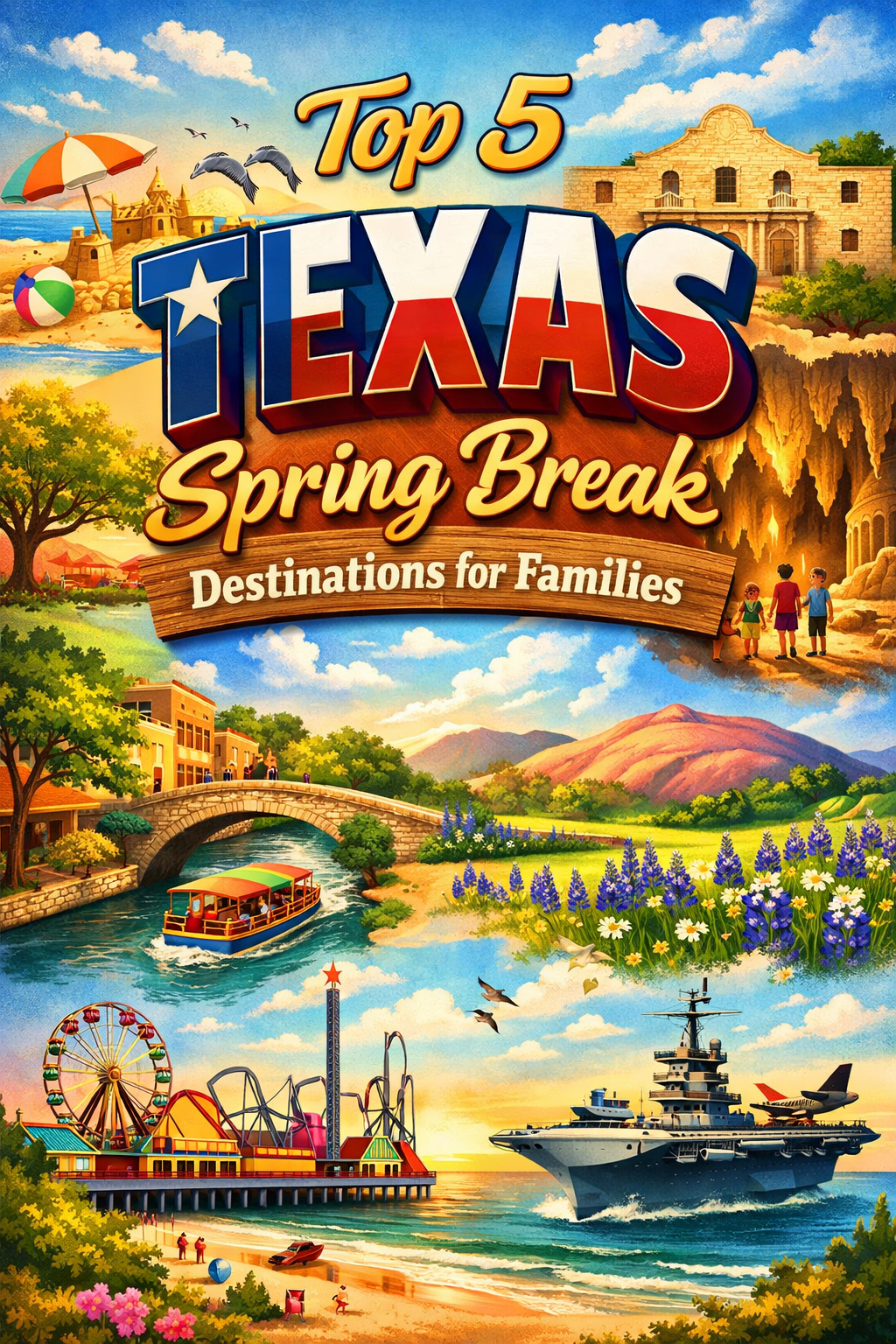
Colorful illustration showing top Texas spring break destinations for families including a beach scene, the Alamo, River Walk boat, wildflowers, amusement pier, and aircraft carrier.

Spring break in Texas does not have to mean crowded beaches and overpriced attractions. In fact, some of the best family memories are made right here in the Lone Star State. From beach towns to hill country adventures, plenty of places offer sunshine, outdoor fun, and activities the whole family will enjoy.

If a trip with kids is being planned, a destination that balances relaxation and adventure will usually be appreciated. Luckily, Texas offers plenty of options that check both boxes.

Here are five Texas spring break destinations for families that are fun, memorable, and perfect for making the most of a week off.

South Padre Island

Y’all knew this would be first on my list. I love that little island!

South Padre Island is often associated with college spring breakers, but families can enjoy it just as much. In fact, many kid-friendly activities are offered that make it a fantastic destination during spring break.

Miles of sandy shoreline can be enjoyed, and calm waves are usually experienced along the beach. Kids can spend hours building sandcastles, collecting shells, and splashing in the warm Gulf water.

Meanwhile, dolphin watching tours are frequently offered and tend to be a huge hit with younger travelers. Sea turtle rescue centers can also be visited, which gives kids a chance to learn about wildlife conservation while still having fun.

Because many family resorts and vacation rentals are available, accommodations can easily be found that fit almost any budget.

San Antonio

San Antonio offers a perfect mix of history, culture, and entertainment, which makes it one of the best spring break destinations for families in Texas.

The famous River Walk can be explored at a relaxed pace, and boat rides are often taken along the water. Restaurants and shops line the walkway, so plenty of options for meals and treats will be available along the way.

History lovers in the family will enjoy visiting the Alamo, where one of the most famous moments in Texas history took place. Although the site is educational, it is presented in a way that keeps kids interested.

For families wanting a little adventure, Natural Bridge Caverns can also be explored just outside the city. Massive underground chambers are toured, and kids usually find the experience unforgettable.

Galveston

Galveston has long been one of the most popular beach destinations in Texas, and spring break is a perfect time to visit.

The Galveston Seawall stretches for miles, and beach access is easy to find along the coast. Families can spend the day playing in the sand, flying kites, or simply enjoying the ocean breeze.

In addition, the historic Pleasure Pier offers rides, games, and carnival-style snacks that kids absolutely love. Moody Gardens is another must-visit attraction where aquariums, rainforest exhibits, and interactive experiences are offered for all ages.

Because Galveston blends beach relaxation with fun attractions, a well-balanced spring break trip can easily be enjoyed.

Fredericksburg

For families wanting something a little different, Fredericksburg in the Texas Hill Country is a fantastic choice.

The town is known for its German heritage, charming downtown, and scenic countryside. During spring break, beautiful wildflowers often begin blooming across the region, which creates perfect photo opportunities.

Several family-friendly farms and orchards can be visited nearby, and outdoor spaces provide plenty of room for kids to explore. Meanwhile, parents can enjoy the relaxed pace and small-town charm.

Enchanted Rock State Natural Area is also located nearby. Hiking trails lead to stunning hill country views, and the giant pink granite dome is always a big hit with adventurous families.

Corpus Christi

Corpus Christi offers a great mix of beach fun, wildlife experiences, and educational attractions.

Padre Island National Seashore provides miles of untouched coastline where nature can be experienced in a quieter setting. Seashell hunting, bird watching, and beach picnics are popular activities.

The Texas State Aquarium is another highlight that families love. Marine animals, interactive exhibits, and dolphin presentations are often enjoyed by visitors of all ages.

Additionally, the USS Lexington Museum allows families to explore a historic aircraft carrier. Kids can walk through the ship, learn about naval history, and even try flight simulators.

Final Thoughts

Spring break does not require leaving Texas to have an unforgettable family adventure. From sunny beaches to historic cities and scenic hill country towns, plenty of destinations provide fun experiences for travelers of all ages.

Whether sandcastles are being built on the Gulf Coast or hiking trails are being explored in the Hill Country, memories will be made that families will talk about for years.

Sometimes the best spring break trips are the ones that stay right here in Texas.

Lisa Crow contributed to this article. She is a true crime junkie and lifestyle blogger based in Waco, Texas. Lisa is the Head of Content at Gigi’s Ramblings and Southern Bred True Crime Junkie. She spends her free time traveling when she can and making memories with her large family which consists of six children and sixteen grandchildren.

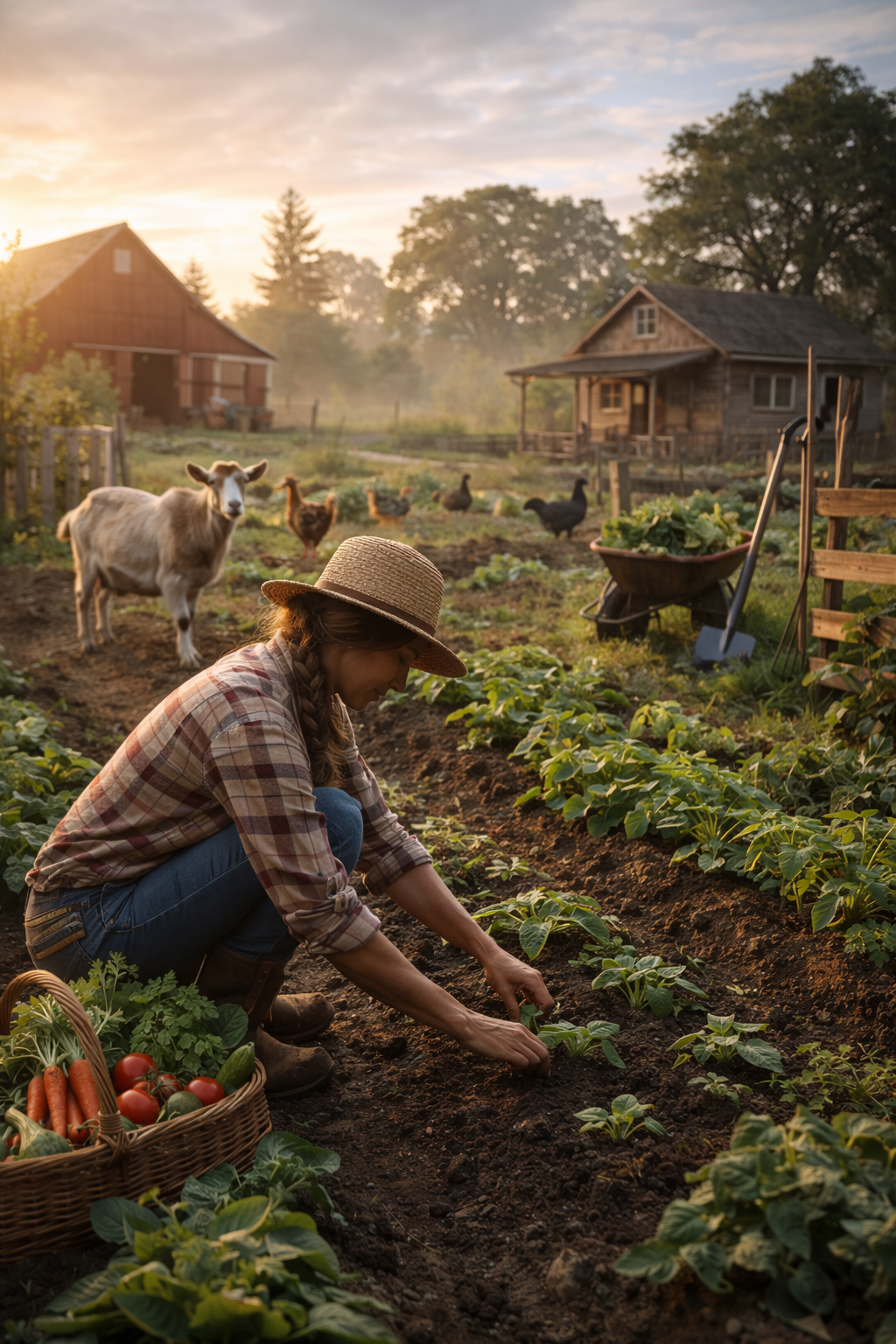
Woman homesteader planting seedlings in a garden at sunrise with chickens and a goat nearby, rustic barn and farmhouse in the background.

Homesteading has grown in popularity over the past few years, and it is easy to see why. A slower pace, a closer connection to food, and a stronger sense of independence are often sought after in a world that rarely slows down. However, behind the charming images of gardens and fresh bread, real work is being done every single day.

Because of that, a wide range of practical homesteading skills are relied on daily. From growing food to fixing broken equipment, homesteaders tend to wear a lot of different hats. Still, the lifestyle becomes incredibly rewarding once those everyday skills are learned and practiced.

Gardening and Growing Food

At the heart of most homesteads, a garden is usually found working quietly in the background. Vegetables, herbs, and fruit are often grown seasonally, which means attention must be given almost daily.

Seeds are planted, weeds are pulled, and soil is constantly being improved. In addition, weather conditions are watched closely so plants can be protected when necessary. Over time, a strong understanding of growing food is developed simply through observation and experience.

Because of this daily rhythm, gardening becomes one of the most important homesteading skills. Fresh food is produced right outside the door, and grocery store trips slowly become less frequent.

Food Preservation

Once a garden starts producing, another important skill quickly becomes necessary. Food preservation allows all that hard work to last well beyond harvest season.

Canning, dehydrating, freezing, and fermenting are commonly used methods. Vegetables can be stored for months, fruits can be turned into jams, and herbs can be dried for later use.

As a result, nothing goes to waste. Shelves often begin to fill with jars of home-preserved food, and the satisfaction of opening something months later is hard to beat.

Basic Animal Care

Many homesteads include animals, which means daily care becomes part of the routine. Chickens, goats, ducks, and even a few cows are often found on small homesteads.

Animals must be fed, watered, and checked on regularly. Additionally, their living spaces are cleaned and maintained to keep them healthy.

Over time, animal behavior becomes easier to understand. Small changes in appetite or movement are often noticed quickly, which allows problems to be handled before they become serious.

Related: Planning a More Self-Sufficient Life Through Gardening and Canning

Simple Repairs and Problem Solving

On a homestead, things break. Fences loosen, tools wear out, and equipment occasionally refuses to cooperate. Because help is not always immediately available, problem-solving becomes an important skill.

Small repairs are often handled without calling anyone in. A fence might be tightened, a leaky hose might be patched, or a tool handle might be replaced.

As a result, confidence grows with each fix. Eventually, many homesteaders become surprisingly handy simply because daily life requires it.

Cooking From Scratch

A well-used kitchen is often the center of a homestead. Fresh ingredients are brought in from the garden, eggs are collected from the coop, and meals are created from what is available.

Cooking from scratch becomes second nature. Bread might be baked weekly, soups might simmer on the stove, and vegetables are often prepared in creative ways to avoid waste.

Because ingredients are produced at home, meals tend to feel a little more meaningful. The connection between the land and the table becomes very clear.

Time Management and Daily Routine

Perhaps the most overlooked homesteading skill is time management. So many moving parts are involved that a routine naturally develops.

Animals must be cared for in the morning and evening. Gardens must be watered. Food must be prepared and preserved when harvests are ready.

While it might sound busy, a comfortable rhythm is usually found. Tasks are spread throughout the day, and slowly the routine begins to feel less like work and more like a lifestyle.

The Quiet Skills That Make It All Work

When people picture homesteading, they often imagine big gardens, barns, and long country drives. Yet the real magic is found in the everyday skills quietly practiced behind the scenes.

Gardening, food preservation, animal care, repairs, cooking, and time management all work together to keep a homestead running smoothly. None of these skills are learned overnight, but they are gradually built through patience and experience.

And honestly, once those homesteading skills become part of daily life, it starts to feel pretty natural. A little dirt on the hands, a pantry full of jars, and the satisfaction of knowing things were done the old-fashioned way can make the effort completely worthwhile.

Lisa Crow contributed to this article. She is a true crime junkie and lifestyle blogger based in Waco, Texas. Lisa is the Head of Content at Gigi’s Ramblings and Southern Bred True Crime Junkie. She spends her free time traveling when she can and making memories with her large family which consists of six children and sixteen grandchildren.

Woman stargazing in a cozy backyard at night with a telescope, glowing lanterns, string lights, and a bright full moon surrounded by stars.

There is something oddly peaceful about standing outside at night and staring up at the sky. The noise of the day fades out, the air feels a little cooler, and suddenly the universe seems a whole lot bigger than the to-do list waiting inside the house. Truthfully, I have never been the kind of person who can name every constellation or quote scientific facts about distant galaxies. I’m such a look at the moon and stars kinda girl, and that is exactly what makes backyard astronomy so perfect for beginners.

The good news is that backyard astronomy does not require expensive equipment or a science degree. With a little curiosity and a few simple tools, the night sky can be enjoyed from your own yard.

Why Backyard Astronomy Is Perfect for Beginners

One of the best parts about backyard astronomy is how approachable it is. Unlike many hobbies, a complicated setup is not required to get started. In fact, the sky does most of the work.

First of all, the night sky is constantly changing. Because the Earth rotates, different stars and constellations appear throughout the evening. Additionally, the moon moves through phases each month, which means there is always something new to look at.

As a result, even beginners can step outside and experience something interesting without needing to know much beforehand. Curiosity is really the only requirement.

Start With Your Eyes First

Before a telescope is even considered, the most useful tool is already available: your eyes.

When the lights inside the house are turned off and a few minutes are spent letting the eyes adjust to the dark, far more stars begin to appear. At first, only the brightest stars might be noticed, but gradually entire patterns become visible.

For beginners, it is often recommended that the moon be observed first. Its craters, shadows, and surface textures can easily be seen with the naked eye. On clear nights, the moon almost feels close enough to touch.

Because of this, many people fall in love with backyard astronomy simply by watching the moon change shape throughout the month.

Related: Let’s Travel to Marfa, Texas

Helpful Apps and Simple Tools

Although backyard astronomy can start with nothing more than curiosity, a few tools can make the experience even better.

For example, stargazing apps can identify stars, constellations, and planets just by pointing a phone toward the sky. Apps like SkyView and Star Walk 2 have made it incredibly easy for beginners to figure out what they are looking at.

In addition, a basic pair of binoculars can reveal far more detail than the naked eye alone. Star clusters and bright planets suddenly become clearer, which makes the sky feel even more alive.

Later on, if the hobby really sticks, a beginner telescope can always be added. However, many backyard astronomers happily spend years exploring the sky with nothing more than binoculars.

Easy Things to Look for in the Night Sky

When someone first starts backyard astronomy, it can feel overwhelming because there is so much up there. Fortunately, a few easy targets can make the first few nights more exciting.

The moon is always the most obvious place to start. After that, bright planets often become visible throughout the year. For example, Jupiter and Saturn are frequently spotted and can even be seen with binoculars under the right conditions.

Constellations are another great starting point. The famous Orion constellation is one of the easiest to recognize thanks to its distinctive belt of three stars.

Once these simple objects are found, the sky suddenly feels far less intimidating.

Making Backyard Stargazing a Relaxing Routine

Backyard astronomy does not have to be treated like a serious scientific activity. In fact, it can easily become a peaceful nightly routine.

A chair can be pulled into the yard, a blanket can be wrapped around the shoulders, and a warm drink can be brought outside. After that, the sky can simply be enjoyed without any pressure to identify every single star.

Over time, familiar constellations begin to feel like old friends. Planets appear in new spots, and the moon quietly cycles through its phases again and again.

That is really the magic of backyard astronomy. The universe is always putting on a show, and the best seat in the house might just be the backyard.

And honestly, for those of us who are just look at the moon and stars kinda girls, that is more than enough. ✨

Lisa Crow contributed to this article. She is a true crime junkie and lifestyle blogger based in Waco, Texas. Lisa is the Head of Content at Gigi’s Ramblings and Southern Bred True Crime Junkie. She spends her free time traveling when she can and making memories with her large family which consists of six children and sixteen grandchildren.

Girl Scouts selling cookies at a neighborhood cookie booth with colorful boxes of Thin Mints, Samoas, and other varieties displayed on a table.

How the Girl Scouts Began

The story of the Girl Scouts of the USA begins in 1912 when Juliette Gordon Low gathered a small group of girls in Savannah. Her vision was simple but powerful. She wanted girls to gain confidence, leadership skills, and practical knowledge that would prepare them for the world.

At the time, opportunities for girls were limited. Because of that, Low believed girls should experience adventure, outdoor activities, and teamwork just like boys did. As a result, the organization quickly grew. Troops began forming across the United States, and the Girl Scouts became known for encouraging independence, service, and community involvement.

Throughout the early years, members learned skills such as camping, cooking, sewing, first aid, and leadership. Over time, these experiences helped build a strong foundation for the organization. Today, the Girl Scouts remain one of the most recognizable youth programs in America.

The Unexpected Beginning of Girl Scout Cookies

Believe it or not, the famous cookies did not begin as a national business plan. Instead, the tradition started in 1917 when a troop in Muskogee decided to raise money for activities.

At first, the cookies were baked at home by the girls themselves. Simple sugar cookies were prepared in family kitchens and then sold door-to-door in the neighborhood. Because the idea worked so well, other troops began doing the same thing.

Before long, cookie sales became one of the most popular fundraising traditions in the organization. By the 1920s, cookie recipes were even published in Girl Scout magazines so troops everywhere could participate.

Eventually, demand grew too large for homemade baking. Therefore, commercial bakeries were brought in to help supply cookies while still allowing troops to manage local sales.

Related: Easy Summer Activities for Grandparents and Kids

How Girl Scout Cookies Became a National Tradition

By the 1930s, cookie sales had grown so popular that official bakers were chosen to supply the treats. This allowed troops across the country to sell consistent products while still raising funds for local programs.

Over the decades, cookie varieties expanded. While the original recipes were fairly simple, new flavors were introduced to keep things exciting. Some cookies quickly became fan favorites and returned year after year.

For many Americans, buying cookies became a yearly tradition. Neighborhoods would watch for tables outside grocery stores, and families looked forward to supporting local troops. Because the program teaches entrepreneurship, girls learn valuable skills in communication, budgeting, and goal setting.

Today, the cookie program is considered one of the largest youth-led business efforts in the world.

The Most Popular Girl Scout Cookies

Several cookies have reached legendary status over the years. While flavors sometimes rotate, a few varieties remain consistently popular.

One of the most recognizable cookies is the Thin Mints. These chocolate-covered mint cookies are famous for their crisp texture and cool flavor.

Another longtime favorite is the Samoas, which feature caramel, toasted coconut, and chocolate stripes. The sweet and chewy combination keeps fans coming back every season.

Peanut butter lovers often reach for the Tagalongs. These cookies include a crunchy base topped with peanut butter and coated in chocolate.

Although cookie names sometimes change depending on the bakery producing them, the flavors themselves have remained beloved for decades.

Related: The Rise of Backyard Businesses

Why Cookie Season Is Such a Big Deal

For many families, cookie season feels almost like a small holiday. Tables appear outside stores, order forms get passed around offices, and social media fills with cookie announcements.

However, the tradition is about more than just sweets. The program is designed to teach business skills in a real-world environment. Girls practice goal setting, customer service, teamwork, and financial literacy while managing their sales.

Because of that, cookie season has become a meaningful experience for millions of young people across the country. Troops use the funds raised to support community service projects, camping trips, leadership programs, and educational opportunities.

The Lasting Impact of Girl Scout Cookie Culture

More than a century after the first troop sold homemade cookies, the tradition continues to thrive. The cookie program remains a major part of the identity of the Girl Scouts of the USA and has helped generations of girls learn valuable life skills.

At the same time, cookie season has become a cherished American tradition. Families look forward to their favorite flavors each year, and communities continue to support local troops.

What started as a small neighborhood fundraiser has grown into a cultural phenomenon. Yet the heart of the program remains the same. Girls are given the chance to learn, lead, and build confidence one cookie box at a time. 🍪

Lisa Crow contributed to this article. She is a true crime junkie and lifestyle blogger based in Waco, Texas. Lisa is the Head of Content at Gigi’s Ramblings and Southern Bred True Crime Junkie. She spends her free time traveling when she can and making memories with her large family which consists of six children and sixteen grandchildren.
Baby-themed flat lay with knitted booties, teddy bear, pacifier, and blanket celebrating the arrival of a 16th grandchild.

There are moments in life that make you stop and realize just how blessed you are. For me, that moment came again with the birth of my 16th grandchild, a beautiful baby boy named Angelo Montana. Even after so many grandchildren, the feeling never gets old. Every new life brings a new kind of joy into the family.

Angelo Montana also holds a special place in the lineup. He is my seventh grandson, and if I had to guess, he will probably be my last grandbaby. That realization makes his arrival feel even more meaningful.

A Growing Family Full of Love

When you start a family, you never really know what the future will look like. You just hope your kids grow up happy, healthy, and surrounded by love. Watching those kids grow up and start families of their own is one of the greatest rewards in life.

Sixteen grandchildren later, our family has grown into something pretty incredible. Holidays are louder, birthdays are busier, and family gatherings are always full of laughter, stories, and chaos in the best possible way.

Right now, the girls still outnumber the boys in the grandkid lineup. We have nine granddaughters and seven grandsons, so the boys are still trying to catch up.

The age range is pretty amazing too. My oldest grandchild just turned fourteen years old, while the newest addition, Angelo Montana, has just arrived as a newborn. That means there are fourteen years of childhood spread across the family, with cousins growing up together at every stage along the way.

Meet Angelo Montana

Angelo Montana entered the world surrounded by a whole lot of love waiting for him. From the moment he arrived, he already had a big family ready to welcome him.

Being the 16th grandchild means he has cousins everywhere, older ones who will look out for him and younger ones who will grow up right beside him. Family traditions, backyard gatherings, and holiday memories are already waiting for him to be part of.

And being the seventh grandson means the boys’ side of the family just got one more teammate, even though the girls still hold the lead for now.

There is something pretty amazing about looking at a brand new grandbaby and thinking about the whole life ahead of them. One day Angelo will be running around at family cookouts, learning family stories, and making memories of his own.

Right now though, he is just beginning his journey.

The Feeling of Becoming a Grandparent Never Gets Old

People sometimes ask if the excitement fades after you have a lot of grandchildren. The truth is it really does not.

Every single birth brings that same feeling of pride and happiness. You see a new life enter the world and realize your family just grew again. It is a reminder that the story keeps going.

Holding a grandbaby for the first time is something hard to explain. It is a mix of love, gratitude, and a little bit of amazement that the family you started years ago has grown into something so big.

Sixteen grandchildren later, that feeling is still just as powerful.

Possibly the Last Grandbaby

There is also a little bit of bittersweet feeling with Angelo Montana’s arrival. Being the 16th grandchild, he might very well be the last one to join the family.

Families eventually reach a point where the next generation is complete. Kids grow up, cousins spread out, and life keeps moving forward.

If Angelo does end up being the final grandbaby, that makes him just a little extra special.

He will always be remembered as the one who rounded out the grandkid crew.

And if another surprise grandbaby ever shows up down the road, well, there is always room for one more.

A New Chapter Begins

Right now Angelo Montana is just beginning his story. One day he will grow up hearing about where he fits into the family and how excited everyone was when he arrived.

He will have cousins to grow up with, stories to learn, and traditions to carry forward.

And for me, welcoming grandchild number sixteen is a reminder of how much life can grow and change over the years.

Families start small, but if you are lucky, they grow bigger than you ever imagined.

Welcome to the family, Angelo Montana. You have a whole crew waiting to watch you grow.

Lisa Crow contributed to this article. She is a true crime junkie and lifestyle blogger based in Waco, Texas. Lisa is the Head of Content at Gigi’s Ramblings and Southern Bred True Crime Junkie. She spends her free time traveling when she can and making memories with her large family which consists of six children and sixteen grandchildren.
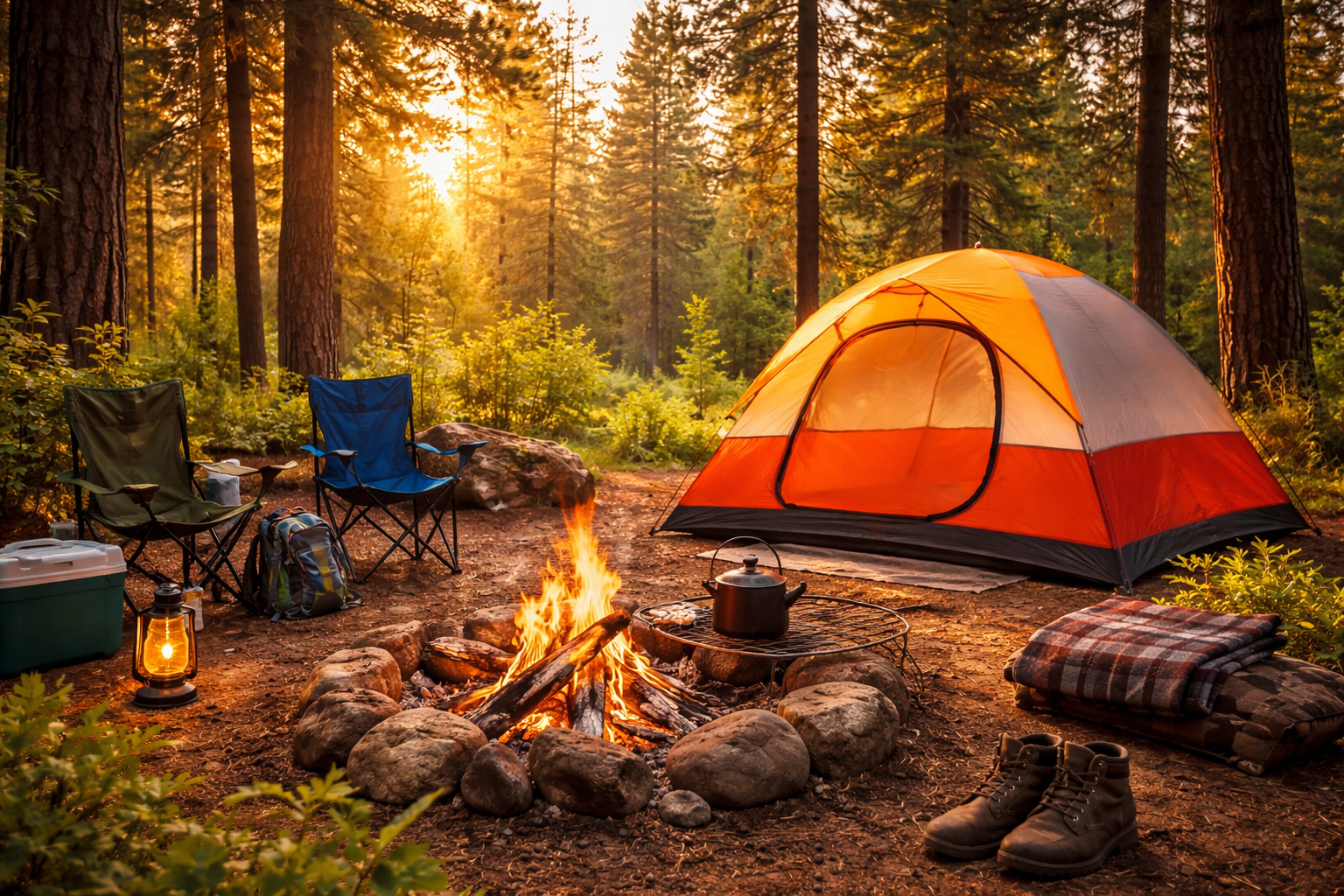
Orange camping tent set up in a peaceful forest campsite with a glowing campfire, camping chairs, lantern, and gear surrounded by tall pine trees at sunset.

Camping sounds simple enough. You grab a tent, head out to the woods, and enjoy nature, right? Well… not exactly. First-time campers often discover pretty quickly that a little preparation goes a long way.

The good news is that most first-time camping mistakes are easy to avoid once you know what to look out for. If you plan ahead and keep things simple, your trip can be relaxing, fun, and something you will want to do again.

We absolutely love camping and try to go a few times a year, usually starting around March when the weather begins to warm up. Every trip teaches you something new. Over time you learn what works, what you forgot, and what you definitely do not want to deal with again.

If you are planning your first trip, here are some of the most common mistakes first-time campers usually make and how to avoid them.

Bringing Way Too Much Stuff

One of the biggest beginner camping mistakes is overpacking. When people picture camping, they often imagine needing every tool, gadget, and extra supply imaginable. I’ve been camping my whole life and still guilty of this. I pack so much that never makes it out of the bag.

In reality, camping is much more enjoyable when you keep things simple.

Instead of packing your entire house, focus on the basics:

Overpacking creates clutter and makes setting up camp stressful. Plus, if you are hiking to your campsite, carrying too much gear quickly becomes miserable.

A simple setup is usually the best setup.

Not Practicing Setting Up the Tent

Nothing humbles a new camper faster than trying to set up a tent for the first time in the dark.

It happens more often than you would think. People arrive at their campsite late in the evening, open the tent bag, and suddenly realize the instructions might as well be written in another language.

Before your trip, set up the tent in your backyard or living room. It only takes a few minutes and helps you understand how everything fits together.

Practicing once makes campsite setup much smoother and prevents unnecessary frustration.

Related: How to Camp Without Losing Your Everlovin’ Mind

Ignoring the Weather Forecast

Another common first-time camping mistake is not checking the weather before leaving.

Weather can change quickly, especially in spring. Since we usually start camping trips around March, we always check the forecast a few days ahead of time and again right before leaving.

You do not need to cancel a trip because of light rain, but you should pack accordingly. Bring things like:

  • Rain jackets
  • Extra socks
  • A tarp or ground cover

Staying dry makes a huge difference when you are camping.

Choosing the Wrong Campsite

Not all campsites are created equal. Beginners sometimes pick spots without thinking about things like terrain, shade, or proximity to water.

When you arrive, take a minute to look around before setting up your tent. Try to choose a location that is:

  • Flat and level
  • Slightly elevated so water drains away
  • Away from strong wind
  • Not directly under dead branches

A good campsite makes sleeping much more comfortable.

Forgetting Proper Lighting

It gets dark outside much faster than people expect when camping.

Once the sun goes down, you will quickly realize how important lighting is. First-time campers sometimes bring a single flashlight and assume that will be enough.

Instead, bring a few lighting options like:

  • Headlamps
  • Lanterns
  • Extra batteries

Headlamps are especially useful because they keep your hands free while cooking, setting up gear, or walking around camp.

Not Planning Simple Meals

Food can become complicated very quickly when camping, especially if you try to cook elaborate meals.

First-time campers sometimes pack ingredients for meals that require multiple pans, precise timing, or complicated prep work. That usually leads to frustration and a lot of cleanup.

Simple meals work best outdoors. Think things like:

  • Hot dogs
  • Foil packet meals
  • Sandwiches
  • Instant oatmeal
  • Eggs and bacon for breakfast

The easier the meal, the more time you have to relax and enjoy the outdoors.

Forgetting About Bugs

Nature is beautiful, but bugs are part of the package.

Many beginners forget to pack bug spray or assume it will not be a big deal. Unfortunately, mosquitoes and other insects tend to disagree.

A few simple items can make a big difference:

These small precautions make evenings around the campfire much more enjoyable.

Not Respecting Campfire Safety

Campfires are one of the best parts of camping, but they require a little responsibility.

First-time campers sometimes build fires that are too large or leave them unattended. Always follow campground rules and keep fires in designated fire rings.

Before leaving or going to bed, fully extinguish the fire with water and stir the ashes until everything is cool.

A safe campfire keeps everyone happy and protects the campground.

Related: Toss It, Wrap It, Eat It: Foil Pack Magic

Expecting Everything to Be Perfect

Finally, one of the biggest mistakes new campers make is expecting everything to go perfectly.

Camping has a way of throwing little surprises at you. Maybe the wind picks up, the fire takes longer to start, or dinner turns out slightly overcooked.

That is part of the experience.

Instead of stressing over small issues, laugh them off and enjoy the adventure. Some of the best camping memories come from the things that did not go exactly as planned.

Final Thoughts

Camping is one of the best ways to unplug, relax, and spend time outdoors. Once you avoid the most common first-time camping mistakes, the experience becomes much more enjoyable.

With a little preparation, the right gear, and a relaxed attitude, your first camping trip can turn into the start of a great tradition.

For us, camping trips are something we look forward to every year. Once March rolls around, we start planning a few getaways whenever we can. There is just something about fresh air, a campfire, and sleeping under the stars that never gets old.

And the best part is that every trip gets easier once you learn what works.

Lisa Crow contributed to this article. She is a true crime junkie and lifestyle blogger based in Waco, Texas. Lisa is the Head of Content at Gigi’s Ramblings and Southern Bred True Crime Junkie. She spends her free time traveling when she can and making memories with her large family which consists of six children and fifteen grandchildren.

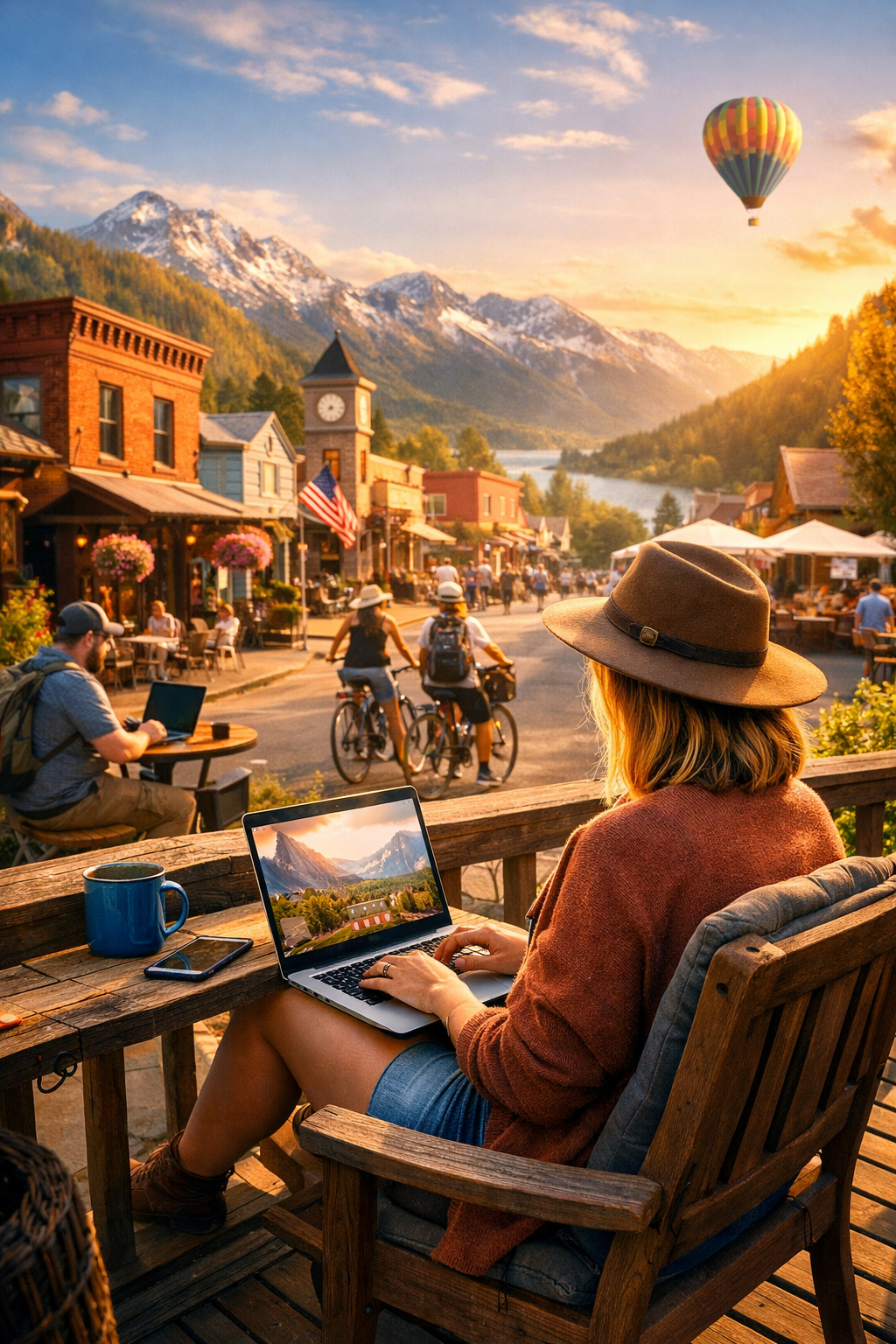
Digital nomad working on a laptop from a scenic small town café patio overlooking a colorful main street, mountains, and sunset in the background.

Over the past few years, the traditional idea of where people live and work has been quietly reshaped. Thanks to remote work, many professionals are no longer tied to big city offices or crowded urban apartments. Instead, a growing number of workers are choosing a different path. Small towns across the country are becoming home to a new wave of residents known as digital nomads.

The rise of digital nomads in small towns is being driven by flexibility, lifestyle changes, and the simple desire for a slower pace of life. While major cities once held all the opportunities, that dynamic has started to shift. As long as there is a reliable internet connection and a laptop, work can now happen almost anywhere.

Because of this shift, small towns that were once overlooked are now seeing renewed energy and growth.

Why Digital Nomads Are Leaving Big Cities

For decades, cities were viewed as the center of opportunity. However, remote work has changed the equation. Many professionals discovered during the pandemic that their jobs could be done just as easily from home.

As a result, expensive rent, traffic congestion, and crowded neighborhoods started to feel less appealing. When work can be done online, the need to stay in a large city disappears.

Small towns offer something many people feel has been missing. There is more space, quieter surroundings, and often a stronger sense of community. Additionally, the cost of living is usually much lower. For digital nomads, this means money stretches further while quality of life improves.

Because of these advantages, the migration away from cities has slowly gained momentum.

How Small Towns Are Attracting Remote Workers

Many small towns have started recognizing the opportunity that digital nomads bring. In response, local governments and community leaders have begun promoting their towns as remote work destinations.

Programs offering relocation incentives have even been introduced in some areas. These programs sometimes include cash bonuses, coworking memberships, or housing assistance for remote workers who move there.

At the same time, small towns are investing in infrastructure. Faster internet, improved community spaces, and local coworking hubs are being developed to support the needs of digital professionals.

As these improvements continue, the appeal of small-town living becomes even stronger.

Related: The Rise of Backyard Businesses

The Lifestyle Appeal of Small Town Living

Lifestyle plays a major role in the rise of digital nomads in small towns. While city living often comes with noise, high costs, and constant pressure, small towns offer a slower and more balanced rhythm.

Morning commutes can be replaced with walks through quiet neighborhoods. Lunch breaks might include time spent outdoors rather than standing in line at a crowded café. In the evenings, local events, farmers markets, and community gatherings provide a different type of social connection.

For many remote workers, this balance helps reduce stress and improve overall well-being. Work can still be accomplished efficiently, yet life outside of work begins to feel more meaningful.

Because of this, the small town lifestyle is becoming increasingly attractive.

The Economic Impact on Small Communities

The arrival of digital nomads can bring noticeable economic benefits to smaller communities. When remote workers move into a town, they begin spending money locally.

Restaurants, coffee shops, boutiques, and service providers often see an increase in customers. In some cases, new businesses are even launched by the digital nomads themselves.

Additionally, property values in certain small towns have started to rise due to increased demand for housing. While this can create challenges if not managed carefully, it also signals economic growth and renewed interest in communities that may have been struggling before.

Because of this economic activity, many towns are welcoming the digital nomad movement.

Related: Digital Marketing and Digital Products: A Beginner’s Guide

Challenges That Come With the Trend

Although the rise of digital nomads in small towns offers many benefits, it also comes with challenges. One concern involves housing affordability for long-time residents. When demand increases quickly, home prices and rent can climb.

Another challenge involves infrastructure. Some towns must upgrade internet services, utilities, and transportation systems to handle a growing population.

There can also be cultural adjustments. Digital nomads often bring new ideas, work styles, and lifestyles that may feel unfamiliar at first. However, when communities embrace open dialogue, these differences can lead to positive growth and fresh perspectives.

With thoughtful planning, many of these challenges can be managed successfully.

What the Future Looks Like for Digital Nomads

Looking ahead, the rise of digital nomads in small towns is likely to continue. Remote work has proven that productivity does not depend on a traditional office environment.

Companies are also beginning to accept distributed teams as a long-term solution. As a result, more professionals will have the freedom to choose where they live.

Small towns that invest in internet access, welcoming communities, and local amenities will likely attract even more remote workers. At the same time, digital nomads will continue searching for places that offer both affordability and a high quality of life.

This shift is not just a temporary trend. Instead, it represents a new chapter in how people think about work, lifestyle, and community.

For many people, the future of work may not be found in a crowded downtown office building. It may be found in a quiet small town, with a laptop open on a porch and a strong internet connection keeping the world within reach.

Lisa Crow contributed to this article. She is a true crime junkie and lifestyle blogger based in Waco, Texas. Lisa is the Head of Content at Gigi’s Ramblings and Southern Bred True Crime Junkie. She spends her free time traveling when she can and making memories with her large family which consists of six children and fifteen grandchildren.