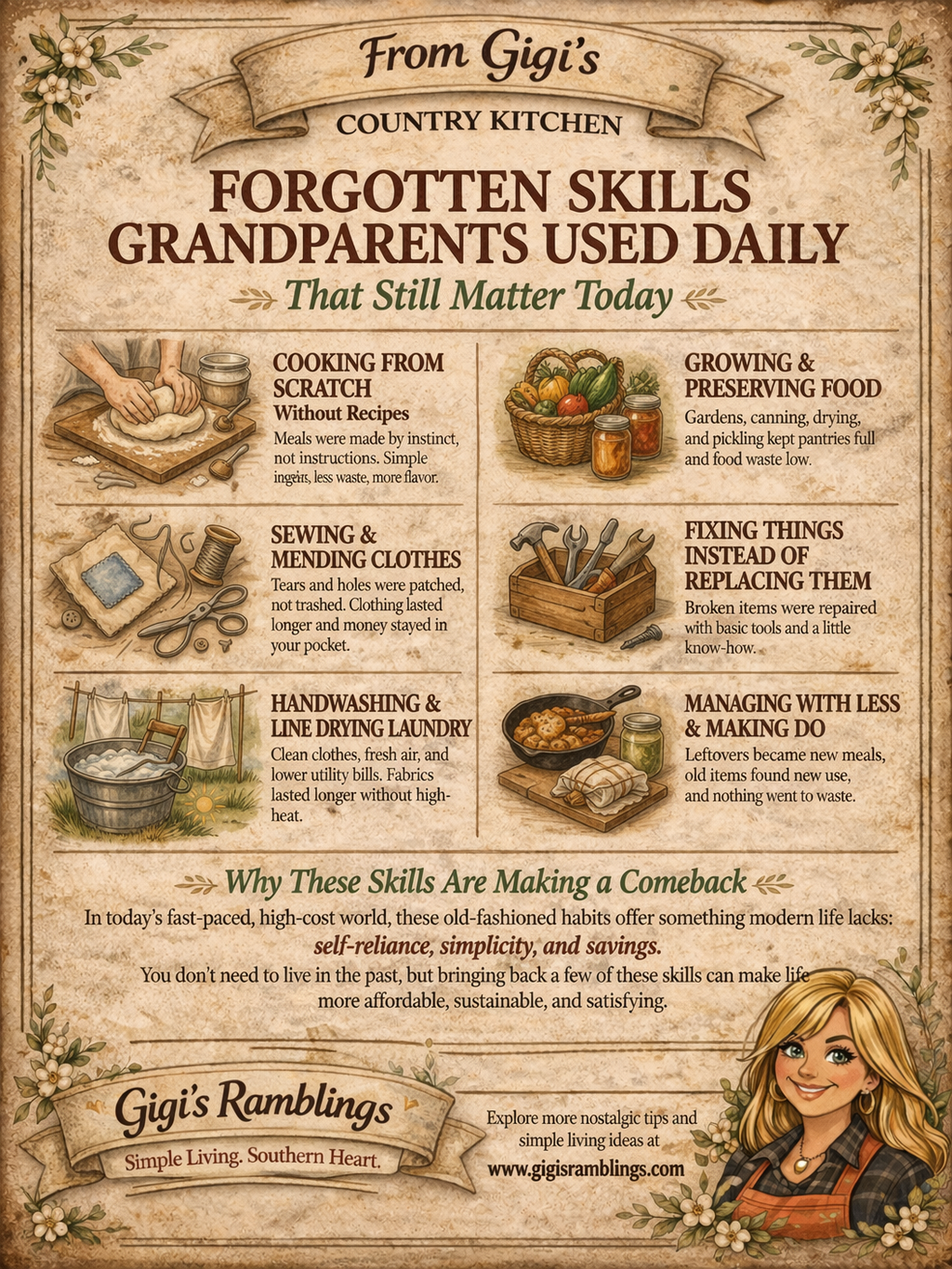
Vintage illustrated infographic showing 5 homemade pantry staples including buttermilk, self rising flour, brown sugar, simple syrup, and taco seasoning.

Running out of a pantry staple in the middle of cooking can be frustrating. However, a quick trip to the store is not always necessary. In fact, several everyday baking and cooking essentials can easily be made at home using simple ingredients that are probably already sitting in your cabinet. Not only can this save money, but it can also prevent last-minute recipe stress.

These homemade pantry staples are practical, budget-friendly, and surprisingly easy to mix together.

Why Make Pantry Staples at Home?

Store-bought versions are convenient, yet many common pantry staples are simply combinations of basic ingredients. When they are made at home, control over freshness and flavor is maintained. Additionally, small batches can be prepared as needed, which helps reduce waste and unnecessary spending.

Because many of these mixtures rely on flour, sugar, salt, or simple spices, substitutions can usually be handled without altering the overall recipe result.

1. Buttermilk Substitute

Buttermilk is often called for in biscuit, pancake, and cake recipes. When it is not available, a simple substitute can be made in minutes.

Ingredients:
1 cup milk
1 tablespoon lemon juice or white vinegar

Instructions:
The acid should be stirred into the milk and allowed to sit for about 5 to 10 minutes. Once slightly thickened, it can be used exactly like traditional buttermilk in most recipes.

2. Self-Rising Flour

Self-rising flour is commonly used in Southern baking, especially for biscuits and quick breads. Instead of buying a separate bag, it can easily be mixed at home.

Ingredients:
1 cup all-purpose flour
1 1/2 teaspoons baking powder
1/4 teaspoon salt

Instructions:
All ingredients should be whisked together thoroughly. The mixture can then be used in any recipe that calls for self-rising flour.

3. Brown Sugar Fix

Hardened brown sugar can make baking difficult. Fortunately, it can be softened or even made from scratch.

To Make Brown Sugar:
1 cup granulated sugar
1 tablespoon molasses

The molasses should be mixed into the sugar until evenly combined. Light or dark brown sugar can be created by adjusting the amount of molasses.

To Soften Hardened Brown Sugar:
A slice of bread can be placed in the container overnight. Moisture will be absorbed, and the sugar will usually soften by morning.

4. Simple Syrup

Simple syrup is frequently used in beverages, desserts, and even baked goods. Rather than purchasing pre-made syrup, it can be prepared quickly on the stove.

Ingredients:
1 cup water
1 cup granulated sugar

Instructions:
The water and sugar should be heated over medium heat and stirred until dissolved. Once cooled, the syrup can be stored in a sealed container in the refrigerator for up to two weeks.

5. Taco Seasoning Blend

Prepackaged taco seasoning often contains additives and excess sodium. A homemade version allows the flavor to be customized.

Ingredients:
1 tablespoon chili powder
1 teaspoon cumin
1 teaspoon paprika
1/2 teaspoon garlic powder
1/2 teaspoon onion powder
1/2 teaspoon salt
1/4 teaspoon black pepper

Instructions:
All spices should be mixed together and stored in an airtight container. Approximately two tablespoons can be used per pound of meat.

Related: Spring Simmer Pot with Lavender & Chamomile for a Fresh Home

Final Thoughts on Homemade Pantry Staples

When simple substitutions are known, cooking becomes more flexible and far less stressful. Pantry staples that are made at home not only provide convenience, but they also allow greater control over ingredients and flavor. Over time, small adjustments like these can lead to noticeable savings and a more confident kitchen routine.

If this post was helpful, it may be saved for later or shared with someone who enjoys practical kitchen tips.

Lisa Crow contributed to this article. She is a true crime junkie and lifestyle blogger based in Waco, Texas. Lisa is the Head of Content at Gigi’s Ramblings and Southern Bred True Crime Junkie. She spends her free time traveling when she can and making memories with her large family which consists of six children and fifteen grandchildren.

Bright, colorful illustration of a lively backyard filled with small business owners working from home, including a baker, a handmade candle maker, a digital creator on a laptop, an online instructor on a screen, a painter, and a woodworker, surrounded by shipping boxes, string lights, and a cheerful garden setting.

Image created with ChatGPT

Something interesting has been happening over the last few years. More people are building real income from their backyards, spare bedrooms, garages, and kitchen tables. Not corporate offices. Not downtown buildings. Just regular homes with Wi-Fi and a little grit.

The rise of backyard businesses is not some trendy phase. It is a shift in how people think about work. Instead of waiting for promotions, layoffs, or permission, folks are creating their own opportunities. And honestly, it makes sense.

Between rising costs, unpredictable job markets, and the desire for more freedom, people are done putting all their eggs in one employer’s basket. So they are planting something in their own backyard instead.

Why Backyard Businesses Are Booming

First, technology made it possible. You no longer need a storefront to sell products. You do not need a big office to offer services. Social media, online marketplaces, and simple website builders allow anyone to launch quickly and cheaply.

At the same time, people are craving authenticity. Customers want to buy from real humans, not faceless corporations. They want to know who made the candle, baked the sourdough, designed the T-shirt, or wrote the ebook. Backyard businesses offer that personal touch.

Additionally, flexibility is a huge factor. Parents want to work around school schedules. Creatives want control over their time. Employees burned out from rigid 9-to-5 jobs want breathing room. Running a business from home allows for that flexibility, even if it comes with its own challenges.

Then there is the financial reality. Inflation hits hard. Groceries are not cheap. Gas is not cheap. Everything costs more. So instead of cutting back on dreams, many people are increasing income streams. A backyard hustle can turn into steady side money. In some cases, it grows into a full-time operation.

Related: Behind-the-Scenes: How I Track Orders Without Fancy Software

What Counts as a Backyard Business?

It is not just lemonade stands and lawn mowing anymore. Although those still count.

Today, backyard businesses include handmade product shops, digital services, content creation, tutoring, consulting, baking, woodworking, plant propagation, print-on-demand stores, and even niche subscription boxes. Some people flip furniture in their garage. Others teach online classes from a quiet corner of their house.

The beauty is in the variety. One person might be shipping wax melts from a spare bedroom. Another might be running bookkeeping services after the kids go to bed. Meanwhile, someone else is building a blog that eventually pays through ads and affiliate income.

In other words, if you have a skill, you can likely monetize it. The barrier to entry is lower than ever.

The Mindset Shift Behind the Movement

However, this rise is not just about money. It is about control.

For decades, the traditional path was simple. Get a stable job. Stay loyal. Retire someday. That script feels shaky now. Layoffs happen overnight. Companies restructure without warning. Even solid industries feel unstable.

Because of that, people are choosing ownership over dependence. Even if the business is small at first, it represents something powerful. It represents choice.

Moreover, there is pride involved. Building something from scratch in your own space hits differently. Watching orders come in. Seeing positive reviews. Realizing strangers value what you created. That kind of validation builds confidence fast.

The Challenges No One Talks About

Of course, backyard businesses are not all aesthetic Instagram reels and cozy desk setups.

Working from home can blur boundaries. It is easy to answer emails late at night. It is tempting to keep “just finishing one more thing.” Without structure, burnout sneaks in.

Additionally, income can fluctuate. Some months feel amazing. Others feel slow. That unpredictability requires discipline and patience. Marketing also becomes your responsibility. There is no corporate team handling ads or branding. It is on you.

Still, for many people, the trade-off is worth it. The stress feels different when you are building your own thing instead of someone else’s.

Related: How I Built a Business With Zero Outside Help

How to Start a Backyard Business the Smart Way

If you are thinking about joining the rise of backyard businesses, start simple. Do not overcomplicate it.

First, look at what you already know how to do. Skills from your current job can often transfer into freelance services. Hobbies can turn into product lines. Experience matters more than fancy degrees.

Next, validate the idea before going all in. Offer your service to a small group. Post a few products. Gauge interest. Adjust based on feedback. Testing first prevents expensive mistakes.

Then, treat it seriously from day one. Even if it is a side hustle, act like a business owner. Track expenses. Separate accounts if possible. Build a simple brand presence online. Consistency builds trust.

Finally, give it time. Growth rarely explodes overnight. It builds steadily when you show up consistently and improve little by little.

The Bigger Picture

The rise of backyard businesses signals something bigger than side hustles. It signals independence.

People want autonomy. They want creative control. They want income streams that are not tied to a single employer’s decision. So they are building quietly from their own property lines outward.

Not every backyard business will scale into a million-dollar brand. And that is fine. For many, the goal is not world domination. It is stability. It is extra breathing room. It is the ability to say no when needed.

Ultimately, this movement is about ownership. It is about planting seeds in your own space and watching them grow. And the more people who realize they can do that, the more backyard businesses we are going to see popping up everywhere.

Lisa Crow contributed to this article. She is a true crime junkie and lifestyle blogger based in Waco, Texas. Lisa is the Head of Content at Gigi’s Ramblings and Southern Bred True Crime Junkie. She spends her free time traveling when she can and making memories with her large family which consists of six children and fifteen grandchildren.

Lavender and chamomile spring simmer pot recipe infographic with step by step instructions for natural home scent.

Spring is the perfect time to refresh your home with lighter scents that feel clean and welcoming. I love swapping out heavier winter fragrances for something soft and natural.

A simmer pot made with lavender and chamomile fills your space with gentle floral warmth without relying on sprays or artificial air fresheners. It is affordable, simple to make, and brings instant comfort to your home.

If you want your house to smell like spring in the easiest way possible, this recipe is for you.

What Is a Simmer Pot?

A simmer pot is a pot of water filled with natural ingredients that gently heats on the stove to release fragrance.

As the water warms, herbs, fruit, and spices slowly infuse the air with scent. It is one of the easiest ways to create a natural home fragrance without chemicals.

Related: Spring Simmer Pot Recipes to Refresh Your Home

Ingredients

Lavender, fresh or dried
Chamomile flowers or chamomile tea bags
• Lemon slices
• Apple slices
• Vanilla extract
• Cinnamon stick, optional but recommended for warmth

Adjust amounts based on the size of your pot and how strong you want the scent.

Instructions

  1. Fill a small or medium pot with water, leaving room at the top.
  2. Add all ingredients directly into the water.
  3. Bring it to a gentle boil, then reduce to a low simmer.
  4. Let it simmer for 1 to 3 hours.
  5. Add more water as needed to prevent it from drying out.

Never leave it unattended and always monitor the water level.

Variations

• Add rosemary for an herbal twist
• Use orange slices instead of lemon for a sweeter scent
• Swap chamomile for fresh mint
• Add star anise and extra cinnamon for a cozy seasonal feel
• Turn it into a holiday version with cranberries and cloves

You can adjust it depending on what ingredients you already have.

Tips & Safety

• Keep enough water in the pot so ingredients do not burn
• Check it every 30 minutes and refill water as needed
• Ingredients can often be reused for a second simmer the same day
• Keep children and pets away from the hot stove

Lisa Crow contributed to this article. She is a true crime junkie and lifestyle blogger based in Waco, Texas. Lisa is the Head of Content at Gigi’s Ramblings and Southern Bred True Crime Junkie. She spends her free time traveling when she can and making memories with her large family which consists of six children and fifteen grandchildren.

Close-up of a honeybee on a white flower with a hive in the background, overlaid with text about severe bee allergies, anaphylaxis risk, and symptoms of a serious allergic reaction.

Understanding a Severe Bee Allergy

A bee allergy is not the same thing as disliking insects or being dramatic about a sting. For some people, a single sting can trigger a life-threatening allergic reaction known as anaphylaxis. That is where things escalate quickly.

When someone with a severe allergy is stung, their immune system overreacts to the venom. Instead of localized redness and mild swelling, the body can respond with widespread inflammation, difficulty breathing, rapid heartbeat, and a dangerous drop in blood pressure. In short, it becomes a medical emergency.

Because of that reality, avoiding bees is not about fear. It is about survival.

What Happens During an Allergic Reaction to a Bee Sting

Most people experience temporary pain, minor swelling, and itching after a bee sting. However, a true bee sting allergy looks very different.

Symptoms of a serious allergic reaction can include:

  • Immediate swelling beyond the sting site
  • Hives or widespread skin reactions
  • Tightness in the throat
  • Shortness of breath
  • Dizziness or fainting
  • Rapid swelling of the lips, tongue, or face

Anaphylaxis can develop within minutes. Therefore, anyone with a history of severe reactions must take the risk seriously.

In my case, swelling starts almost immediately after a sting. That rapid response is a clear warning sign that my body does not handle venom well. Because of that, I am at risk for anaphylaxis, and that is not something I am willing to gamble with.

Why Avoidance Is Not Overreacting

There is often a casual attitude toward bees. People will say things like, “They won’t bother you if you don’t bother them,” or “It’s just a sting.” While that may be true for many individuals, it is not universally true.

For someone with a severe allergy, one sting can lead to emergency intervention. Consequently, avoiding bees, wasps, hornets, and anything else with a stinger is not dramatic. It is a responsible health decision.

Outdoor gatherings, gardening, and even simple yard work require a heightened awareness. Spring and summer months increase exposure, which means extra caution is necessary. That might include:

  • Wearing protective clothing outdoors
  • Avoiding heavily scented products that attract insects
  • Staying away from known nesting areas
  • Keeping emergency medication accessible

These precautions are not excessive. They are preventive.

Related: Beekeeping in Early Spring: What Every Beginner Should Know

The Risk of Anaphylaxis

Anaphylaxis is a rapid, severe allergic reaction that can affect multiple body systems at once. Breathing can become restricted. Blood pressure can drop suddenly. Without immediate treatment, the situation can turn critical.

According to allergy specialists, individuals with a history of systemic reactions to insect stings are considered high risk for recurrence. In other words, if it has happened before, it can absolutely happen again.

Because I begin swelling immediately after a sting, I do not test fate. I do not handle bees. I do not “wait and see.” I do not try to push through it.

Living With a Bee Sting Allergy

Living with a severe bee allergy requires awareness but not paranoia. It means planning ahead. It means educating family and friends. It means recognizing that what seems minor to someone else may not be minor for you.

I do not mess with bees or anything else with a stinger. Period. I am highly allergic to anything with a stinger. I begin swelling immediately after a sting, and I am at risk for anaphylaxis. That is not a preference. It is a medical reality.

There is a difference between caution and fear. Caution keeps you safe. Fear keeps you frozen. I choose caution.

Final Thoughts on Bee Allergies and Safety

Bee allergies are real. Severe allergic reactions are real. Anaphylaxis is real. While many people can coexist peacefully with bees, not everyone has that luxury.

If you or someone in your family has experienced more than localized swelling after a sting, take it seriously. Speak with a medical professional. Understand the risks. Make a plan.

Your health is not something to downplay, especially when the consequences can be immediate and severe.

Lisa Crow contributed to this article. She is a true crime junkie and lifestyle blogger based in Waco, Texas. Lisa is the Head of Content at Gigi’s Ramblings and Southern Bred True Crime Junkie. She spends her free time traveling when she can and making memories with her large family which consists of six children and fifteen grandchildren.

Bright early spring beekeeping scene with sunshine, colorful wildflowers, and pale yellow beehives as a beekeeper inspects a frame, highlighting hive inspection, feeding, and swarm prevention tips.

Why Early Spring Is Critical for Beekeeping

Beekeeping in early spring sets the tone for the entire honey production season. As temperatures begin to rise and flowers start blooming, honey bee colonies shift from winter survival mode into rapid expansion. This transitional period is when careful hive management matters most.

During winter, bees cluster tightly to preserve heat and consume stored honey. However, once consistent daytime temperatures reach around 55°F and above, activity increases. The queen resumes heavier egg laying, foragers begin searching for nectar and pollen, and the colony prepares for growth.

Because of this surge in activity, early spring hive inspections are essential.

First Hive Inspection of the Season

Your first early spring hive inspection should be deliberate and efficient. The goal is not to tear the hive apart but to assess overall colony health after winter.

When inspecting, look for:

  • Signs of a healthy queen, including fresh eggs or capped brood
  • Adequate food stores remaining in the hive
  • Evidence of disease or pests
  • Population strength and overall activity

If brood is present in multiple frames, that is a strong indicator the queen is laying properly. Conversely, if there are no eggs or larvae, further monitoring may be necessary.

It is also important to choose a warm, calm day for this inspection. Opening a hive during cold or windy weather can stress the colony.

Feeding Bees in Early Spring

In many regions, nectar flow has not fully begun in early spring. Therefore, supplemental feeding may be required to prevent starvation while brood production increases.

Beekeepers often use sugar syrup in a 1:1 ratio during this period to mimic nectar flow and stimulate the colony. Additionally, pollen patties may be provided if natural pollen sources are scarce.

However, feeding should be monitored closely. Overfeeding can limit space for brood expansion, while underfeeding can weaken the colony just as it needs strength for growth.

Balancing this support is part of effective spring hive management.

Preventing Swarming Before It Starts

As colonies expand rapidly in spring, swarming becomes a real possibility. Swarming is a natural reproductive process where a portion of the colony leaves with the old queen to establish a new hive. While natural, it can reduce honey production and colony strength.

To reduce swarming risk:

  • Provide adequate space by adding supers
  • Monitor for swarm cells
  • Ensure proper ventilation
  • Maintain strong but not overcrowded brood boxes

Early intervention is far easier than chasing a swarm later.

Managing Pests and Hive Health

Spring is also the time to assess pest levels, particularly Varroa mites. These parasites weaken bees and spread viruses that can devastate colonies.

A mite count early in the season allows beekeepers to determine if treatment is necessary before population levels explode. Healthy colonies going into late spring and summer are far more productive and resilient.

Additionally, look for signs of foulbrood or other bacterial infections. Catching issues early protects not only your hive but nearby colonies as well.

Equipment Preparation for Spring Beekeeping

Before peak nectar flow begins, make sure all equipment is ready. This includes:

  • Clean hive boxes and frames
  • Functional smokers and hive tools
  • Protective gear in good condition
  • Additional supers for honey storage

Preparation prevents rushed decisions during busy weeks ahead. Spring moves quickly in the beekeeping world.

A Personal Note About Bees and Safety

Beekeeping in early spring is rewarding and essential for colony success. However, it also demands respect for the insects involved.

Personally, I do not handle bees or anything else with a stinger. I am highly allergic and begin swelling immediately after a sting, which puts me at risk for anaphylaxis. For some people, a sting is temporary discomfort. For others, it can escalate fast. Because of that, I do not take chances.

If you are considering beekeeping and have a history of severe allergic reactions, consult a medical professional before starting. Protective gear helps, but understanding your health risks matters just as much as understanding hive management.

Final Thoughts on Early Spring Beekeeping

Early spring beekeeping is about preparation, observation, and proactive management. By inspecting hives, supporting nutrition, preventing swarms, and monitoring pests, you set your colony up for a strong honey season.

While honey bees are vital pollinators and fascinating to watch, they also deserve caution and respect. Whether you are an experienced beekeeper or just starting out, early spring is the season that shapes everything that follows.

Lisa Crow contributed to this article. She is a true crime junkie and lifestyle blogger based in Waco, Texas. Lisa is the Head of Content at Gigi’s Ramblings and Southern Bred True Crime Junkie. She spends her free time traveling when she can and making memories with her large family which consists of six children and fifteen grandchildren.

Bright, colorful illustration representing anti-hustle culture featuring relaxed people lounging in a hammock and pool, a man meditating, bold “Anti-Hustle Culture” text, a sunny backdrop, and symbols of rejecting toxic productivity like a discarded alarm clock and work papers.

For years, hustle culture was sold as the only path to success. Wake up at 5 a.m. Grind while everyone else sleeps. Build multiple income streams. Never stop moving. If you were tired, you were lazy. If you rested, you were weak. However, something has shifted. More people are openly rejecting hustle culture and embracing what is now being called anti-hustle culture.

At its core, anti-hustle culture challenges the idea that your worth is tied to productivity. Instead of glorifying burnout, it prioritizes balance, boundaries, and actual well-being. That shift did not happen overnight. It has been building for years, especially as conversations about mental health, burnout, and work-life balance became impossible to ignore.

What Is Anti-Hustle Culture?

Anti-hustle culture is not about being lazy or unmotivated. That is a common misunderstanding. Instead, it questions the toxic productivity mindset that says you must constantly monetize every skill, turn every hobby into a side hustle, and treat rest like a reward you have to earn.

Rather than chasing endless productivity, people embracing slow living and balanced ambition are choosing to work smarter, not longer. They are setting clear work boundaries. They are logging off at reasonable hours. They are taking their PTO without guilt. Most importantly, they are redefining success on their own terms.

This movement gained traction after the pandemic forced many people to reevaluate their priorities. Suddenly, long commutes and 60-hour workweeks did not seem worth it. Time with family mattered more. Mental health mattered more. Even simple things like cooking at home or stepping outside for fresh air started to feel important again.

Why Burnout Sparked a Backlash

Burnout is not just feeling tired after a long week. It is chronic stress that leaves you emotionally drained, cynical, and disconnected from your work. According to workplace studies, burnout has been rising for years, especially among millennials and Gen Z. Social media only amplified the pressure. Every scroll brought another entrepreneur bragging about a six-figure launch or a 4 a.m. morning routine.

Eventually, people started asking a hard question. Is this sustainable?

For many, the answer was no. The constant push for more income, more output, and more visibility created anxiety instead of fulfillment. Even self-employment, which once felt like freedom, began to mirror the same grind mentality people were trying to escape. When your phone becomes your office and your office never closes, the hustle never really ends.

As a result, anti-hustle culture became a form of rebellion. It gave people permission to slow down without feeling like failures. It reminded them that productivity is not the same thing as purpose.

Social Media’s Role in the Shift

Ironically, the same platforms that fueled hustle culture are now fueling its decline. Content creators are openly discussing burnout, quiet quitting, and the importance of rest. Instead of glamorizing 18-hour workdays, they are sharing realistic routines that include sleep, boundaries, and downtime.

Moreover, transparency has replaced the highlight reel. People are admitting that constant grinding did not automatically bring happiness. Some even found that scaling back improved both their mental health and their income because they focused on sustainable growth instead of frantic expansion.

This does not mean ambition is dead. It simply means ambition is evolving. People still want financial security and meaningful work. They just do not want to sacrifice their health to get it.

Related: Reclaiming Boring Evenings: Why Doing Less Might Be the Reset You Need

Anti-Hustle Does Not Mean Anti-Success

One of the biggest myths about anti-hustle culture is that it promotes mediocrity. In reality, it promotes intention. There is a difference between working hard toward a goal and working yourself into the ground to prove something.

Balanced ambition allows room for rest and growth at the same time. It encourages strategic work instead of constant busy work. It values deep focus over endless multitasking. As a result, many people find they are actually more productive when they stop trying to be productive every waking hour.

Furthermore, redefining success often leads to better decisions. Instead of chasing every opportunity, people choose the ones that align with their long-term goals. Instead of saying yes to everything, they protect their time. That shift alone can dramatically improve work-life balance.

Why Anti-Hustle Culture Is Here to Stay

Trends come and go, but the conversation around mental health and burnout is not fading. Employers are paying attention. Flexible work schedules, remote options, and four-day workweek trials are becoming more common. Even corporate environments are recognizing that burned-out employees are not high-performing employees.

At the same time, individuals are setting firmer boundaries. They are turning off notifications after hours. They are separating their identity from their job titles. They are choosing peace over constant pressure.

The rise of anti-hustle culture reflects a deeper cultural change. People are no longer impressed by exhaustion as a badge of honor. They want sustainability. They want fulfillment. They want a life that includes work, not one consumed by it.

In the end, rejecting hustle culture does not mean you lack drive. It means you are done equating your value with your output. Success can still be pursued. Goals can still be achieved. However, the path does not have to include burnout, anxiety, and constant comparison.

Maybe the real flex now is building a life that feels good behind the scenes, not just one that looks impressive online.

Lisa Crow contributed to this article. She is a true crime junkie and lifestyle blogger based in Waco, Texas. Lisa is the Head of Content at Gigi’s Ramblings and Southern Bred True Crime Junkie. She spends her free time traveling when she can and making memories with her large family which consists of six children and fifteen grandchildren.

Bright promotional graphic featuring two young content creators smiling while using a smartphone and podcast microphone, surrounded by social media icons, a camera, ring light, and bold text that reads “Why Small Creators Are Winning Right Now” in vibrant orange and blue tones.

If you’ve spent any time online lately, you’ve probably noticed something shifting. The biggest influencers are still there, still polished, still sponsored. However, smaller creators are quietly pulling serious numbers. More engagement. More loyalty. More trust.

And right now, that matters more than follower count.

This is why small creators are winning, and why the digital landscape is finally tilting in their favor.

The Algorithm Favors Engagement, Not Ego

For years, social media felt like a popularity contest. The bigger the following, the bigger the reach. That’s no longer the case. Platforms like TikTok, Instagram, and YouTube now prioritize watch time, shares, saves, and comments over raw follower numbers.

In other words, engagement beats ego.

Smaller creators often have tighter communities. Their followers actually care. They respond to comments. They build conversations. That interaction signals value to the algorithm, which then pushes their content further.

Meanwhile, large accounts with passive audiences often see declining reach because attention spans have changed. If the content doesn’t connect immediately, people scroll.

Audiences Crave Authenticity

Polished content used to feel aspirational. Now it feels distant.

Small creators win because they feel accessible. They reply to DMs. They show messy kitchens, unfinished projects, real-life stress. That transparency builds trust. And trust builds loyalty.

Consumers are more skeptical than ever. They know when something is an ad disguised as a recommendation. Smaller creators, on the other hand, tend to be selective about partnerships. When they recommend something, it feels earned.

Authenticity is no longer a bonus. It’s the expectation.

Niche Content Outperforms Broad Appeal

Mass appeal is loud. Niche appeal is powerful.

Small creators usually focus on a specific topic. True crime. Witchy living. Homesteading. Freelancing. Local Texas travel. Instead of trying to talk to everyone, they speak directly to a defined audience.

That clarity matters.

When someone finds a creator who understands their exact interest, they stay. They binge content. They subscribe to newsletters. They join communities. Broad influencers struggle to maintain that depth because their content must appeal to a wider, more diluted audience.

Related: My January Social Media Strategy

Brands Want Conversions, Not Just Reach

Marketing budgets are shifting. Brands care less about impressions and more about results.

Micro and small creators often convert better than mega influencers. Why? Because their audience listens. There is less noise. Recommendations feel personal.

A smaller creator with 8,000 loyal followers who trust them can drive more sales than someone with 800,000 disengaged ones. Brands are noticing that. Sponsorship strategies are changing because of it.

Community Beats Celebrity

There’s a difference between being famous and being known.

Large creators operate like celebrities. Smaller creators operate like community leaders. They remember names. They ask for feedback. They involve their audience in decisions.

That two-way connection builds something algorithms cannot manufacture: belonging.

And once someone feels part of a community, they don’t just watch content. They support it. They share it. They defend it.

Production Value Is No Longer a Barrier

Years ago, high production value separated big creators from everyone else. Now a smartphone can shoot in 4K. Editing apps are accessible. Music libraries are built into platforms.

The playing field is more level than ever.

As a result, creativity matters more than budget. A smart idea filmed in your kitchen can outperform a studio production if it resonates. Viewers care about clarity and relevance. They care far less about cinematic transitions.

Related: Build a Business Without Being Online 24/7

Small Creators Move Faster

Big creators often have teams. Teams mean approval processes. Contracts. Timelines. Brand restrictions.

Small creators can pivot overnight.

They can jump on trends quickly. They can experiment without a boardroom discussion. They can test new formats without risking a million-dollar brand deal.

Speed matters in a culture that changes daily.

Why This Shift Matters

This isn’t just a moment. It’s a correction.

Audiences are tired of being sold to. They want connection. They want substance. They want to feel seen. Smaller creators are positioned to deliver that because they never relied on scale alone.

And if you are building something right now, this is good news. You do not need millions of followers to make an impact. You need clarity, consistency, and connection.

That is why small creators are winning right now.

Lisa Crow contributed to this article. She is a true crime junkie and lifestyle blogger based in Waco, Texas. Lisa is the Head of Content at Gigi’s Ramblings and Southern Bred True Crime Junkie. She spends her free time traveling when she can and making memories with her large family which consists of six children and fifteen grandchildren.

Woman reading a book on a couch in a warmly lit living room at night, with candles and soft lamps creating a calm, cozy atmosphere and the text “Reclaiming Boring Evenings” overlaid on the image.

There was a time when evenings felt simple. Dinner. Maybe a show. Maybe a book. Then bed. Somewhere along the way, “simple” started to feel like “wasted.”

Now if an evening is not productive, profitable, entertaining, or posted online, it feels like a loss. We scroll. We snack. We chase stimulation. And somehow we still end the night tired and unsatisfied.

Reclaiming boring evenings is not about doing nothing. It is about doing less on purpose. It is about choosing quiet over noise and depth over distraction. And honestly, it might be one of the most rebellious things you can do right now.

Related: What It Means to Be Okay with Stillness

How Evenings Became Overstimulated

First, we need to admit something. Our evenings are not actually relaxing. They are overloaded.

After a long day of work, responsibilities, and mental input, we tell ourselves we deserve to unwind. So we grab our phones. We turn on the TV. We half-watch a show while half-scrolling. We snack without tasting anything. We call it rest.

However, that is not rest. That is distraction.

The constant stimulation keeps our brains in a low-grade state of alertness. Notifications. Cliffhangers. News updates. Short videos engineered to keep us hooked. Even when we are sitting down, our minds are still running.

As a result, we wake up tired. We feel behind. We crave more stimulation the next night. The cycle repeats.

Reclaiming boring evenings interrupts that cycle.

The Power of Slow Living at Night

Slow living sounds trendy. It gets overused. But at its core, it is simple. It means being present in the moment you are already in.

Evenings are the perfect place to practice that.

Instead of asking, “What should I be doing?” try asking, “What would actually feel grounding right now?”

Maybe it is washing dishes without a podcast in your ear. Maybe it is sitting outside for ten minutes. Maybe it is reading a few pages of a book without checking your phone between chapters.

These are small choices. Yet they compound.

When you intentionally create a slower evening routine, your nervous system starts to calm down. Your thoughts get clearer. Your sleep improves. Over time, you stop needing constant noise to feel okay.

That is where the mental reset begins.

Reclaiming Boring Evenings as a Digital Detox

Let’s be honest. Most of us do not need a week-long retreat in the woods. We need two solid hours without a screen.

A digital detox does not have to be dramatic. In fact, it works better when it is sustainable. Set a time. Maybe 8:00 p.m. Put your phone on charge in another room. Turn off notifications. Pick one low-stimulation activity.

At first, it will feel uncomfortable. You might reach for your phone without thinking. You might feel restless. That is normal. Your brain is used to constant input.

Stick with it.

Within a week, you will notice something shift. Your evenings will feel longer. Your mind will feel quieter. You will start to hear your own thoughts again, which can be confronting but also clarifying.

Intentional living starts with paying attention. And you cannot pay attention if you are constantly distracted.

Creating an Intentional Evening Routine

Reclaiming boring evenings works best when it is structured just enough to stick.

First, decide what you want your evenings to feel like. Calm. Focused. Creative. Restful. Be specific.

Next, build a simple routine around that feeling. Keep it realistic. For example:

Cook dinner without multitasking.
Clean up the kitchen fully before sitting down.
Take a shower or wash your face as a signal the day is ending.
Read, journal, stretch, or talk with your spouse.

The key is consistency. When you repeat the same wind-down cues, your brain starts to associate them with rest. Eventually, your body begins to power down naturally at night.

Additionally, this structure removes decision fatigue. You do not have to wonder what to do. You already decided.

Why Boredom Is Not the Enemy

We have been taught to avoid boredom at all costs. Yet boredom is often the doorway to creativity and self-awareness.

When you allow yourself to be bored, your mind starts to wander. Ideas surface. Problems untangle. Emotions that were buried under noise rise up.

That can feel uncomfortable. However, it is also how growth happens.

Reclaiming boring evenings gives your brain space to process the day. It allows you to reflect instead of react. It gives you a chance to notice what is working in your life and what is not.

Moreover, boredom builds discipline. It trains you to sit with yourself without immediately reaching for escape.

That skill is rare. And it is powerful.

Related: The Fear of Time Passing

The Long-Term Impact of Doing Less

At first, a quiet evening might feel insignificant. It is just one night. Just one small choice.

However, evenings add up. They shape your habits. They shape your relationships. They shape your mental health.

When you consistently choose slow living over constant stimulation, you create margin. Margin to think. Margin to plan. Margin to connect.

Over time, that margin changes how you show up in every other area of your life.

Reclaiming boring evenings is not about becoming unproductive. It is about becoming intentional. It is about deciding that your peace is worth protecting.

So tonight, let it be a little boring. Let it be quiet. Let it be simple.

You might be surprised how much better you feel in the morning.

Lisa Crow contributed to this article. She is a true crime junkie and lifestyle blogger based in Waco, Texas. Lisa is the Head of Content at Gigi’s Ramblings and Southern Bred True Crime Junkie. She spends her free time traveling when she can and making memories with her large family which consists of six children and fifteen grandchildren.

10th blogging birthday celebration

Ten years of blogging is not a small milestone. In internet years, it is practically a lifetime. Platforms have risen and fallen, algorithms have shifted, trends have come and gone, and attention spans have shortened. Through all of that, Gigi’s Ramblings has remained. That alone is something worth pausing to acknowledge.

When this blog first began, it was simply a creative outlet. There was no master plan, no detailed monetization strategy, and no long-term roadmap. It was a place to write, to process, and to share. Over time, it became something more substantial. It evolved into a consistent body of work that reflects seasons of life, growth, and change.

Reaching ten years is not just about longevity. It is about persistence, adaptation, and staying committed to a space even when motivation fluctuates.

How the Blog Has Grown Beyond Its Original Purpose

In the early years, blogging felt experimental. Posts were written without overthinking SEO strategy, branding cohesion, or long-term positioning. The focus was simply on publishing and learning.

As time passed, the blog matured. The voice became clearer. The structure improved. Content became more intentional. What began as casual writing gradually developed into a platform with direction and purpose.

Growth did not happen overnight. It happened through small, consistent actions repeated over time. Learning how to write better headlines. Understanding search intent. Improving formatting. Refining tone. Each adjustment contributed to what the blog has become today.

Related: What I Want Gigi’s Ramblings to Be Going Forward

The Role of Consistency in Long-Term Blogging

Many blogs begin with enthusiasm and end quietly within a year. The difference between a short-lived project and a decade-long platform often comes down to consistency.

Consistency does not mean perfection. It means continuing even when traffic dips, when creative energy feels low, or when other responsibilities compete for attention. Over ten years, there were seasons of high motivation and seasons of quiet maintenance. Both were necessary.

Sustained blogging requires flexibility. It requires the willingness to evolve rather than abandon the project when circumstances shift. That adaptability is one of the most valuable lessons this decade has provided.

What Ten Years Teaches About Voice and Authenticity

Over time, a blog begins to reflect the person behind it more honestly. Early writing can feel exploratory, sometimes cautious. With experience comes clarity. The voice becomes more confident. The message becomes more defined.

Authenticity is not something that can be manufactured. It develops through repetition and self-awareness. Writing consistently over ten years has made it impossible to hide behind trends or temporary personas. What remains is a clearer sense of identity and perspective.

Readers respond to that clarity. Not to perfection, but to honesty and steadiness.

Related: Gigi’s Ramblings Then vs Now: A Decade of Change

Why Longevity Matters in a Fast-Moving Digital World

The online world moves quickly. Content cycles shorten. Attention shifts rapidly. In that environment, longevity becomes a differentiator.

A ten-year archive represents depth. It signals commitment. It builds trust in a way that short-term visibility cannot. Readers are more likely to invest in a platform that demonstrates staying power.

Longevity also provides perspective. Trends that once felt urgent eventually fade. Strategies that once seemed essential become outdated. A decade of experience makes it easier to identify what truly matters and what is temporary noise.

Looking Ahead With Clarity and Intention

This anniversary is not only about celebrating the past. It is also about acknowledging what comes next.

With ten years of experience, decisions are made differently. Content is chosen more carefully. Time and energy are invested more intentionally. The focus shifts from proving something to building something sustainable.

The next chapter of Gigi’s Ramblings is not about rapid expansion or chasing every trend. It is about steady growth, meaningful content, and maintaining the integrity of the voice that has developed over time.

Related: Ten Years of Gigi’s Ramblings: A Decade of Real Life & Real Talk

Gratitude for a Decade of Support

No blog exists in isolation. Even when writing feels solitary, publishing creates connection. Every reader, subscriber, and returning visitor has contributed to this milestone.

Ten years of blogging represents thousands of hours of writing, editing, publishing, and refining. It also represents thousands of moments where someone chose to click, read, and stay.

That shared investment is what transforms a website into something lasting.

Reaching this milestone is not simply about marking time. It is about recognizing growth, resilience, and the quiet power of showing up consistently for a decade.

And that is worth celebrating.

Lisa Crow contributed to this article. She is a true crime junkie and lifestyle blogger based in Waco, Texas. Lisa is the Head of Content at Gigi’s Ramblings and Southern Bred True Crime Junkie. She spends her free time traveling when she can and making memories with her large family which consists of six children and fifteen grandchildren.

Dramatic scene of a couple in a heated argument with shattered glass and intense red lighting symbolizing emotional turmoil and crimes of passion.

Crimes of passion have fascinated society for centuries. From courtroom trials to late-night true crime documentaries, people cannot look away when emotions spiral out of control. However, what actually happens in the brain when someone snaps?

Let’s break down the psychology behind crimes of passion, what fuels them, and why intense emotion can override logic in seconds.

What Are Crimes of Passion?

A crime of passion is typically a violent act committed in the heat of the moment, triggered by overwhelming emotion rather than careful planning. These cases often involve romantic betrayal, jealousy, humiliation, or family conflict.

Unlike premeditated crimes, the defining feature is immediacy. Something happens. Emotions surge. A decision is made in seconds that changes lives forever.

The common thread is emotional overload.

Related: How to Spot the Signs of a Narcissist

Emotional Hijacking and the Brain

Psychologists describe something known as an amygdala hijack. The amygdala processes fear and anger. When it perceives a threat, whether real or perceived, it activates the fight or flight response.

At the same time, the prefrontal cortex, which handles reasoning and impulse control, temporarily loses influence.

In simple terms, emotion hits the gas while logic struggles to catch up.

During this state, heart rate increases, adrenaline floods the body, tunnel vision sets in, and risk assessment drops significantly. This neurological surge explains how someone can go from calm to catastrophic in moments. It does not excuse violent behavior, but it does explain the mechanism behind it.

Jealousy, Possession, and Identity Threat

Jealousy is one of the strongest emotional triggers behind crimes of passion. When someone ties their identity, security, or self-worth to a partner or family member, perceived betrayal can feel like total destruction.

It stops feeling like hurt feelings and starts feeling like survival.

Protective instincts are deeply wired into us. And I am going to keep it real in the tone you wanted included.

I ain’t even gonna lie, mess with my husband and there is a good chance you will end up hurt. Actually, you both will end up hurt. One thing I do not play about is my family.

That protective surge is biological. Acting on it violently is still a choice.

There is a major difference between feeling protective and committing harm. The emotion is automatic. The action is not.

Impulse Control and Risk Factors

Not everyone who feels rage commits violence. So what increases the risk?

Research shows several contributing factors, including poor impulse control, unresolved trauma, substance abuse, personality disorders, and learned patterns of aggression from childhood.

When intense emotional reactivity combines with weak emotional regulation, the likelihood of reactive violence rises dramatically.

In other words, passion alone is not enough. It is passion combined with poor control.

Media and the Romanticizing of Rage

Culturally, society often frames crimes of passion as tragic love stories. Movies and television sometimes portray explosive jealousy as proof of devotion.

However, healthy love does not equal possession. Healthy love does not equal retaliation. Healthy love does not equal control.

When violence is romanticized, it subtly reinforces the idea that extreme emotion justifies extreme action. It does not.

Legal Perspective on Crimes of Passion

Historically, some courts treated crimes of passion more leniently than premeditated murder, arguing that the offender temporarily lost control.

Modern legal systems are far less sympathetic. Emotional distress may explain behavior, but it rarely removes accountability.

The law recognizes what psychology confirms. Emotion influences behavior, but it does not eliminate responsibility.

Can Crimes of Passion Be Prevented?

Yes, and prevention starts long before a breaking point.

Protective factors include emotional regulation skills, conflict resolution tools, therapy, reduced substance use, and strong support systems.

Learning to pause during escalation is critical. Even stepping away for sixty seconds can allow the rational brain to re-engage and lower the intensity of the reaction.

Final Thoughts

The psychology behind crimes of passion reveals something uncomfortable about human nature. Humans are deeply emotional creatures. Love, jealousy, anger, and betrayal can feel overwhelming.

Feeling protective over your family is human. Feeling furious over betrayal is human. Letting that fury dictate irreversible violence is preventable.

Passion explains behavior. It does not excuse it.

Lisa Crow contributed to this article. She is a true crime junkie and lifestyle blogger based in Waco, Texas. Lisa is the Head of Content at Gigi’s Ramblings and Southern Bred True Crime Junkie. She spends her free time traveling when she can and making memories with her large family which consists of six children and fifteen grandchildren.