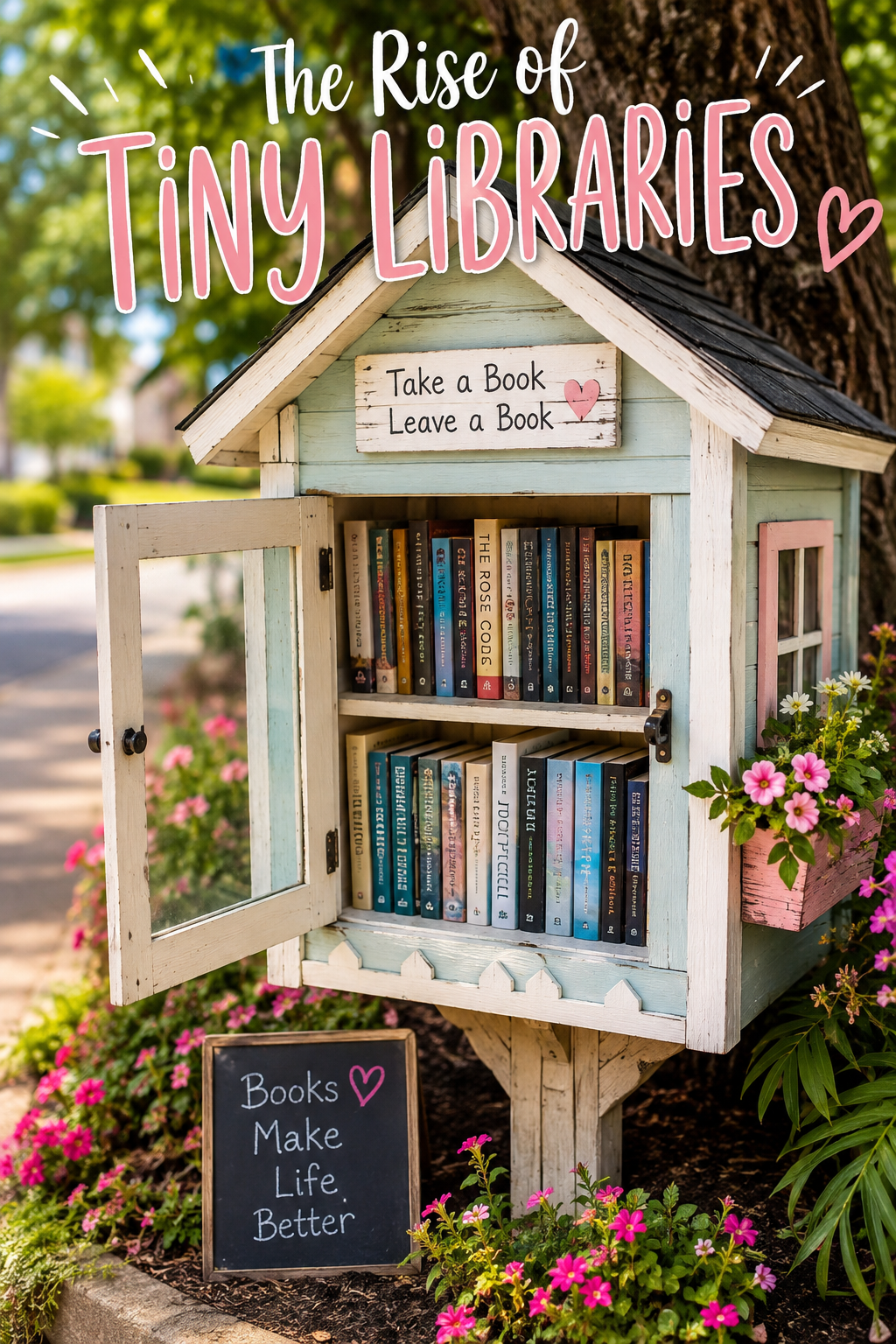
There is something awfully charming about stumbling across a little wooden box filled with books while walking through a neighborhood. Maybe it is painted like a miniature cottage, tucked beneath a tree, or sitting beside a sidewalk with a tiny door and a roof of its own. You open it expecting to find a handful of forgotten paperbacks, only to discover everything from children’s books and mysteries to cookbooks and old classics. These tiny libraries have become increasingly common, and honestly, I can see why people are falling in love with them.
Tiny libraries are more than just places to grab a free book. They represent something that feels increasingly rare these days: sharing something simply because you think another person might enjoy it. There are no membership cards, complicated checkout systems, or overdue notices. You find a book, take it home, and eventually pass along one of your own if you have something worth sharing. It is an incredibly simple idea, yet it has created little pockets of community all over the country.
What Exactly Is A Tiny Library?
A tiny library is essentially a small, publicly accessible book exchange. Most are located in front yards, near sidewalks, outside community spaces, or along popular walking routes. Some are officially registered with organizations such as Little Free Library, while others are completely independent projects created by homeowners who simply wanted to give their neighbors a place to exchange books.
The basic concept is beautifully uncomplicated. If you see a book you want, you take it. If you have books sitting around at home that you have already read and no longer need, you can leave them for someone else. There is generally no expectation that the exact book will ever return, which makes the whole system feel less like borrowing from a traditional library and more like passing a good book from one reader to another.
How Tiny Libraries Became So Popular
The idea of neighborhood book exchanges has been around for a long time, but the modern tiny library movement really began gaining attention as people looked for simple ways to strengthen their communities. Little Free Library helped turn the concept into a recognizable movement, and thousands of small book-sharing structures eventually appeared in neighborhoods and communities around the world.
Part of the appeal is that tiny libraries fit beautifully into everyday life. You do not have to make a special trip across town, find a parking space, or plan an afternoon around visiting one. You might simply notice one while walking the dog or driving through your neighborhood. That little box can turn an ordinary afternoon into an unexpected opportunity to discover something new.
They Are About More Than Books
Although books are obviously the main attraction, tiny libraries often create something else that people may not expect: connection. A person stops to browse, another neighbor walks up with a stack of donations, and suddenly two strangers are talking about the book sitting on the top shelf. It is a small interaction, but those little interactions are often how communities begin to feel more familiar and welcoming.
Tiny libraries also create opportunities for people to share pieces of themselves without having to make a big production out of it. Someone might donate the mystery novel they loved, a gardening book they no longer need, or a children’s favorite that their kids have outgrown. Every book becomes a tiny connection between the person who left it and the person who eventually discovers it.
Every Tiny Library Has Its Own Personality
One of the best things about tiny libraries is that they rarely look exactly alike. Some are simple wooden boxes that are clearly designed to get the job done, while others are miniature works of art. You might find one that resembles a farmhouse, an old schoolhouse, a Victorian cottage, or even a tiny version of the owner’s actual home.
The personality does not stop with the structure itself. Some have flower boxes underneath the windows, little benches nearby, chalkboards announcing new arrivals, or separate shelves for children’s books. Others have whimsical signs and decorations that make them impossible to miss. Because so many are built and maintained by individuals, they become little reflections of the people and neighborhoods where they live.
You Never Know What You Will Find
That element of surprise is another reason tiny libraries are so much fun. When you walk into a bookstore or shop online, you usually have some idea of what you are looking for. With a tiny library, you have absolutely no idea what might be waiting behind that little door.
You might find an old paperback mystery, a romance novel, a cookbook, a gardening guide, a children’s story, or a classic you have somehow never gotten around to reading. Sometimes you will find something you have been wanting to read for years. Other times, you will pull out a book simply because the title catches your attention, and it turns out to be one of those unexpected reads that stays with you.
There is also something special about finding an older, well-loved book. A worn paperback with a name written inside the cover or an inscription from decades ago can make you wonder where that book has been. Maybe it traveled through several homes before reaching that particular little library. Suddenly, you are not just reading a story. You are becoming part of the story of the book itself.
Tiny Libraries Make Reading Feel Like An Adventure
For children especially, tiny libraries can make reading feel less like an assignment and more like treasure hunting. Imagine being a kid and discovering a miniature house full of books right in your own neighborhood. You can open the door, look through the shelves, choose something that catches your eye, and take it home.
That freedom can be incredibly appealing. There is no required reading list and nobody telling you which book you are supposed to choose. Instead, children get to browse, make their own decisions, and discover stories based on nothing more complicated than curiosity. For parents trying to encourage reluctant readers, that kind of independence can be surprisingly powerful.
You Can Build One Yourself
Another reason tiny libraries have continued to spread is that they do not have to be elaborate or expensive. Someone with basic woodworking skills can build a simple structure from leftover lumber, while a creative homeowner might transform an old cabinet or other weather-resistant container into a book exchange. Some people go all out with detailed roofs, windows, paint, and decorations, while others keep theirs charmingly simple.
The important thing is creating a safe, accessible place where books can stay reasonably protected from the weather. Beyond that, there is a tremendous amount of room for creativity. You can make yours match your house, reflect your hobbies, celebrate your favorite books, or simply look like a tiny little house sitting in the yard waiting for readers to stop by.
The Best Part Is The Sharing
Perhaps the most meaningful thing about tiny libraries is that they operate largely on generosity and trust. You take something without paying for it, and you leave something without expecting anything in return. In a world where we are accustomed to seeing a price tag attached to nearly everything, that simple exchange feels surprisingly refreshing.
You do not even have to leave a book every time you take one. Sometimes you might find something perfect and have nothing to contribute that day. That is okay. The whole idea is based on the understanding that people will participate when they can, keeping the shelves stocked so that someone else can experience the same little thrill of discovery later.
They Can Become Neighborhood Landmarks
Over time, a tiny library can become part of the identity of a neighborhood. Children may check it while riding their bikes, walkers may stop to browse, and neighbors may start setting aside books specifically because they know the little library is there. Eventually, that tiny structure becomes something people recognize and look for.
That is what makes the idea so appealing to me. A tiny library takes up very little space, costs relatively little to maintain, and yet can become a familiar part of someone’s daily routine. Years from now, someone might remember finding a favorite childhood book in that little box or discovering an author they still read today.
Why Tiny Libraries Matter
The rise of tiny libraries is not really about a decorating trend or even a book trend. It is about people finding simple ways to share something with one another. It is about giving books another life, encouraging children to read, clearing space from our own shelves, and creating little moments of connection between people who might otherwise never meet.
Perhaps that is why these miniature libraries have such a big appeal. They do not require a committee, a huge budget, or a complicated plan. All it takes is a small structure, some books, and someone willing to share.
So the next time you spot a tiny library while walking through your neighborhood, do not rush past it. Stop and take a look inside. You might discover an old favorite, a book you have never heard of, or a story that becomes your next great read. And if you have a book at home collecting dust, consider giving it a new life by leaving it behind for the next curious reader.
Lisa Crow contributed to this article. She is a true crime junkie and lifestyle blogger based in Waco, Texas. Lisa is the Head of Content at Gigi’s Ramblings and Southern Bred True Crime Junkie. She spends her free time traveling when she can and making memories with her large family which consists of six children and sixteen grandchildren.