Historic rural Southern cemetery with weathered 19th-century gravestones, wildflowers, live oak trees, wrought-iron gate, and a small white church glowing in warm golden-hour sunlight.

Old cemeteries have a way of making history feel a whole lot less distant. You can read about a town in a history book and learn when it was founded, who settled there and what important events happened along the way, but there is something different about standing in the cemetery where some of those people are actually buried. You see the names of families who lived there generations ago, the dates when their lives began and ended, and sometimes little details that make you wonder what their lives were really like. Before long, you are not just looking at old graves anymore. You are trying to put together the story of an entire community.

That is what makes old cemeteries so much more interesting than people sometimes give them credit for. Museums preserve history in a carefully organized way, and there is certainly value in that, but everything inside a museum has already been selected for you. An old cemetery is different. Nobody has picked out the most important people or decided which stories deserve a display. The wealthy businessman, the schoolteacher, the farmer, the railroad worker, the soldier and the baby who only lived a few months may all be resting in the same cemetery. If you take the time to look, you start discovering a much broader and more personal version of the past.

The Names On The Stones Tell Us Where People Came From

One of the first things that catches my attention in an old cemetery is the names. A familiar surname might appear over and over again, sometimes across several generations, and suddenly you realize you are looking at an entire family that helped shape the community. Other names may hint at people who came from somewhere else, whether they moved from another state, crossed an ocean or arrived in town because of work, marriage or opportunity. In a small cemetery, those names can provide clues about how the community developed long before anyone thought of it as historic.

Family plots make this even more interesting. You may find parents buried beside children, husbands and wives together, and grandparents surrounded by later generations. First names are often repeated, which can make things a little confusing, but it also shows how families carried traditions forward. A name that belonged to a grandfather may appear again on a grandson’s stone decades later, giving you another little piece of the family story.

Even when you know absolutely nothing about the people buried there, those details can make you curious. Who were they? Where did they come from? Did they live in the same house their whole lives? What did the town look like when they were young? Those questions are often the beginning of a much bigger story.

The Dates Can Reveal What Life Was Really Like

The dates on old headstones are more than markers of when someone was born and died. When you look at enough of them together, they can reveal things about a community that might never be obvious from a history book. You may notice that several people died during the same year, or that a particular period has an unusually large number of children’s graves. You might find groups of military markers belonging to men from the same generation or discover that several members of one family died within a short period of time.

Those patterns make you wonder what was happening at the time. Perhaps there was an epidemic, an accident, a natural disaster or some other event that affected the community. Maybe the explanation is simply that medical care was limited and illnesses that are treatable today were much more dangerous. The cemetery will not necessarily give you the answer, but it gives you a reason to go looking for it.

That is one of the things I like about exploring old cemeteries. They do not hand you a complete history with everything neatly explained. Instead, they give you clues. You notice something, start wondering about it and then find yourself digging through old newspapers, photographs, census records or local histories to see what you can uncover.

The Graves Of Children Tell A Different Kind Of History

There are some parts of an old cemetery that are difficult to walk through without slowing down, and the graves of children are usually among them. You may see tiny markers tucked beside much larger family stones, sometimes showing that a child lived only a few months or a few years. When you see several children from the same family buried together, the dates can tell you more about the hardships of another era than any textbook ever could.

Families once faced childhood illnesses and medical complications that could turn a normal day into a tragedy. Parents did not have access to the treatments, medicines and medical technology that are available today, and many communities had poor sanitation and limited healthcare. Those realities can seem abstract when you read about them in a book, but they become much more personal when you see the names of several children from the same family carved into stones only a few feet apart.

It also changes the way you think about the people buried there. These were not simply names from another century. There were parents who loved them, siblings who remembered them and families who had to continue living after losing them. The cemetery preserves a small piece of that reality, even when there is no other record left behind.

Related: The Charm of Old Cemeteries in the South

Ordinary People Are Often The Most Interesting

History tends to give us plenty of information about people who were famous, wealthy or involved in major events, but an old cemetery reminds you that most of history was lived by people whose names never appeared in a textbook. Farmers, homemakers, teachers, laborers, shopkeepers, mechanics, ranchers and factory workers all spent their days doing the ordinary things that kept communities alive.

Those ordinary lives are worth knowing about because they tell us what everyday life actually looked like. A headstone may tell you that someone was a farmer, a veteran or a member of a particular organization. Another might show that a woman was the wife of a local businessman or that someone belonged to a church or fraternal group. Put enough of those little details together and you begin to see what the community valued and how people lived.

Most of these people probably never imagined that anyone would be curious about them a hundred years later. They were busy raising their families, making a living and dealing with the same basic problems every generation deals with. The fact that their names are still sitting there decades later is a reminder that a person’s life does not have to be famous to have mattered.

The Headstones Show How People Remembered Their Loved Ones

The stones themselves are another piece of the story. Walk through a cemetery that has been around for a long time and you can see how memorial styles changed from one generation to another. Some stones are simple and restrained, while others are elaborate monuments with detailed carvings, religious symbols, flowers, angels or military insignia. You may even find photographs or personal inscriptions that give you a glimpse of how the family wanted that person remembered.

The materials and craftsmanship can be interesting too. Some markers were obviously made to last for generations, while others have deteriorated badly from weather and neglect. You can sometimes tell which sections of a cemetery are newer simply by looking at the style and condition of the stones. Even the placement of the graves can provide clues about family relationships and the way the cemetery expanded over time.

Then there are the stones that are almost impossible to read. A name may be worn away until only a few letters remain, or the marker may have cracked and sunk into the ground. Those damaged stones are a reminder of how easily a person’s physical connection to history can disappear. If nobody knows the name anymore, there may be very little left to tell future generations that person was ever there.

An Old Cemetery Can Show How A Town Changed

A cemetery can also give you a surprisingly good picture of how a community developed. Look at the surnames, the occupations listed on older markers and the dates when different families began appearing in the cemetery. You may see evidence of people arriving because of railroads, farming, ranching, manufacturing or other industries that once supported the area.

The surrounding landscape can tell another part of the story. A cemetery that once sat outside a small settlement may now be surrounded by houses and businesses. Another might be sitting beside a road that is completely different from the one people used when the cemetery was established. In rural areas, you may find an old cemetery hidden behind fields or tucked into a corner of land that was once part of a much larger family property.

The town changes, roads change, businesses disappear and families move away, but the cemetery often remains in the same place. That makes it a physical record of a community’s past even when almost everything around it has changed.

One Headstone Can Lead To An Entire Story

The best part of exploring an old cemetery is that you never know what is going to catch your attention. Maybe it is an unusual name, an especially old marker or a family plot with an interesting collection of dates. You may recognize a surname from a street in town or realize that the person buried there was connected to a building, business or local event you have heard about.

Once you become curious, it is easy to fall down the rabbit hole. An obituary can lead to a newspaper article. A marriage record can lead to another family. A census record can tell you how many children lived in a household. An old photograph can put a face to a name that you first encountered carved into stone.

That is where an old cemetery becomes more than a place to visit. It becomes the starting point for research. You might go home knowing only one person’s name and end up discovering the history of an entire family, neighborhood or town.

Cemeteries Preserve People Museums Cannot Always Include

Museums have limited space, so somebody has to decide what deserves to be displayed. That means certain stories naturally receive more attention than others. A cemetery does not have to make those same choices. It preserves the prominent residents alongside the people who lived quiet lives and never became locally famous.

That is part of what makes cemeteries such fascinating historical records. You can find a wealthy landowner near someone who worked the land. A decorated veteran may be buried near a person whose entire life was spent in the same small community. Someone whose name appears in old newspapers may be resting only a few yards from someone whose story survived solely through family memories.

There is no exhibit designer deciding whose life deserves a place on the wall. The cemetery simply contains the people who lived there and were buried there, and that makes the history feel broader and more honest.

Sometimes The Quietest Places Have The Most To Say

An old cemetery does not need to be famous to be fascinating. In fact, some of the most interesting ones are the little cemeteries you might never find unless you happen to drive down the right road. They may have no visitor center, no gift shop and no big historical marker. There might not even be much information available online.

What they do have are names, dates and evidence of people who lived in another time.

That is enough to get curious.

You can stand there and imagine the community as it might have looked when the oldest person buried there was young. You can wonder what those roads looked like before modern highways, what people did for entertainment before television and the internet, how far they traveled to buy groceries and what their homes looked like. The cemetery cannot answer all of those questions, but it gives you a reason to start asking them.

And sometimes that is exactly what good history is supposed to do.

Old Cemeteries Make The Past Feel Close

There is a difference between knowing that people lived a hundred or two hundred years ago and standing in a place where their names are still carved into stone. The dates may be old, but the things those people experienced are not so different from the things families experience now. They fell in love, got married, raised children, lost people they cared about, worried about money, worked long hours, celebrated good news and dealt with difficult times.

The biggest difference is that their ordinary lives eventually became history.

That is why I think old cemeteries can tell stories that museums sometimes cannot. A museum can show you an old photograph, a piece of clothing or an object from another time, but a cemetery makes you wonder about the person behind the history. It gives you names instead of just dates and families instead of just events.

So the next time you pass an old cemetery, especially one that has been sitting in the same spot for generations, take a little time to look around if the grounds are open to visitors. Read a few of the stones, notice the names and pay attention to the dates. You might discover a family connection, a piece of local history or a story that has been sitting there unnoticed for decades.

You may walk in thinking you are just looking at an old cemetery. By the time you leave, you may find yourself wondering about the people who built the town, raised their families there and left behind just enough clues for someone curious to come looking.

Lisa Crow contributed to this article. She is a true crime junkie and lifestyle blogger based in Waco, Texas. Lisa is the Head of Content at Gigi’s Ramblings and Southern Bred True Crime Junkie. She spends her free time traveling when she can and making memories with her large family which consists of six children and sixteen grandchildren.
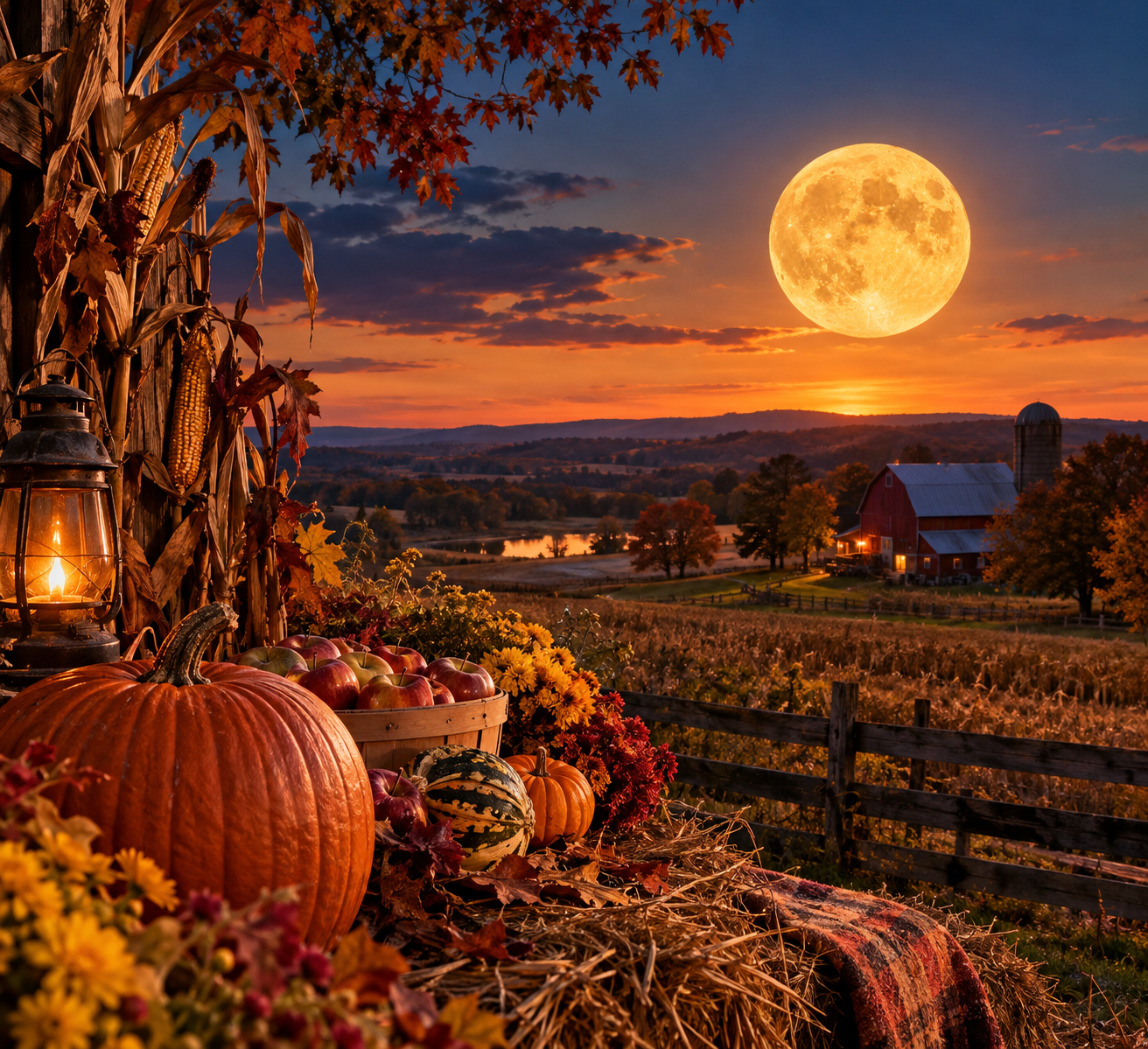
harvest moon rising over traditional fall setup

There is something about the Harvest Moon that feels different from any other full moon of the year. Maybe it is the timing. Summer is winding down, the evenings are getting cooler, gardens are beginning to empty out, and autumn is waiting just around the corner. Then comes that enormous, glowing moon, rising over fields and backyards and making an ordinary September evening seem almost enchanted. For generations, people have looked forward to it, celebrated it, worked beneath it, and attached all kinds of traditions and folklore to its arrival.

The Harvest Moon is not just an old-fashioned name for a pretty moon, either. Its history is tied closely to agriculture and the changing seasons, back to a time when the success of a harvest could determine whether a family had enough food to make it through winter. Before electric lights, weather apps, digital calendars, or grocery stores stocked with produce from around the world, people paid very close attention to the sky. The moon was part calendar, part clock, and part reminder that the seasons never stopped moving.

Related: The Harvest Moon Is Here And Fall Is Finally Feeling Real

What Exactly Is The Harvest Moon?

The Harvest Moon is traditionally the full moon that occurs closest to the autumnal equinox. Because the date of the equinox changes slightly from year to year, the Harvest Moon does not always fall on the same date. Most often it occurs in September, although it can occasionally arrive in October.

Its name comes from agriculture rather than astronomy. The timing of this particular full moon historically provided farmers with several evenings of useful moonlight during one of the busiest periods of the agricultural year. As crops ripened and needed to be gathered before the weather changed, that extra light could be a welcome advantage.

There is a practical reason the Harvest Moon can seem especially noticeable, too. Around this time of year, the moon traditionally rises relatively soon after sunset on successive evenings. That meant the transition from daylight to darkness was not quite as abrupt, giving farmers more usable light to finish their work.

For people who depended entirely on daylight and moonlight, that was no small thing.

When The Moon Helped Bring In The Crops

Picture a farm in the days before electricity. The sun has gone down, but the work is not finished. There may still be corn to gather, grain to bring in, vegetables to sort, animals to tend, and equipment to put away. Every day of good weather matters because leaving a crop in the field too long can mean losing some of it to rain, frost, insects, or other problems.

Then the full moon rises.

That bright moonlight could extend the working day and make it possible to continue harvesting after sunset. The moon was not magically making crops grow faster or creating some mysterious agricultural effect. It was simply providing something extremely valuable in a world without artificial lighting: illumination.

Over time, the association between the bright autumn moon and the harvest became so strong that the name stuck.

It is a wonderfully practical origin for something that today feels almost magical.

Harvest Traditions Were About Much More Than Food

Harvest season was one of the biggest turning points of the year for agricultural communities. Bringing in crops was not merely a matter of filling a barn or pantry. It meant preparing for the months ahead.

Families had to decide what would be eaten immediately, what could be stored, and what needed to be preserved. Fruits and vegetables might be dried, pickled, fermented, salted, smoked, or canned. Root vegetables could be stored in cellars, while grains needed to be protected from moisture and pests.

Once the harvest was safely gathered, there was also something worth celebrating.

Harvest festivals developed in many parts of the world, and although their customs differed, they frequently centered around gratitude, food, music, family, community, and the hope that the coming winter would be manageable. A successful harvest was a genuine reason for celebration because everyone understood what could happen when crops failed.

That connection between harvest and gratitude is still sitting quietly underneath many of the autumn traditions we enjoy today.

Related: First Day of Fall in Texas Means Halloween Anyway

The Harvest Moon And Old Folklore

Of course, once humans started paying close attention to the moon, folklore was bound to follow.

The moon has been connected with stories, beliefs, rituals, and superstitions for thousands of years. People living close to the land often watched the moon along with the weather, plants, animals, and changing seasons. Some communities believed particular phases of the moon were favorable for planting or harvesting certain crops. Others associated the full moon with fertility, abundance, good fortune, or changes in the natural world.

Not every old lunar belief had a scientific explanation, and some were undoubtedly superstition. Still, it is worth remembering that ancient and rural communities were constantly observing their surroundings. Before modern scientific instruments were available, people learned by watching patterns.

Sometimes those observations were remarkably useful. Other times, folklore filled in the blanks.

That is how traditions grow. A little practical knowledge gets mixed with a little superstition, somebody tells a story, somebody else adds to it, and several generations later nobody can quite remember where the original idea came from.

Different Cultures Have Their Own Autumn Moon Traditions

The Harvest Moon is not the only autumn moon tradition in the world. In fact, cultures across the globe have developed their own celebrations around the full moon, the harvest, and the changing season.

China’s Mid-Autumn Festival is one of the best-known examples. The festival has a long history and is associated with family gatherings, moon viewing, lanterns, and mooncakes. The full moon became an important symbol of reunion and togetherness, making the autumn moon part of a celebration that continues today.

Japan has another beautiful tradition called Tsukimi, or moon viewing. Traditionally celebrated in autumn, Tsukimi involves admiring the moon and displaying seasonal decorations while enjoying foods associated with the season.

European harvest traditions developed along their own paths. In Britain, harvest festivals became associated with churches, community gatherings, decorations made from crops, and the bringing of harvested food to be displayed or shared.

These customs are different, but there is a familiar idea running through all of them. Autumn gives people a reason to stop for a moment, gather together, appreciate what they have, and look toward the sky.

Why Corn, Wheat, Pumpkins And Apples Became Autumn Symbols

Walk into almost any store in September and you will find the same familiar cast of characters: pumpkins, apples, corn, wheat, gourds, sunflowers, dried leaves, and baskets overflowing with imaginary abundance.

Those decorations did not appear out of nowhere.

Many of the foods and plants we associate with fall were important harvest crops, particularly in agricultural communities. Wheat and other grains represented the staple foods that could be stored for later use. Corn was an important crop in North America. Apples could be eaten fresh, stored, dried, or turned into cider. Squash and pumpkins were useful because they could be stored for extended periods.

Even the familiar sheaf of wheat has a long association with harvest celebrations. It represents the crop being gathered and preserved, and therefore the promise of food during the colder months.

So when somebody decorates their porch with pumpkins, corn stalks, hay bales, and dried flowers, they are unknowingly participating in a very old visual language of autumn.

We just happen to put a cute welcome sign in the middle of it now.

Harvest Suppers And Community Celebrations

One of the most enduring harvest traditions is also one of the simplest: everybody gets together and eats.

Harvest suppers became important community events in many rural areas. After weeks or months of hard work, neighbors could gather around long tables and share meals made from the year’s crops. These celebrations might include music, dancing, games, storytelling, church services, fairs, or other community activities.

There was a practical side to this, too. Harvesting was often a community effort. Families depended on neighbors, relatives, and hired workers to get everything done before the weather turned.

A big harvest meal was therefore about more than celebrating food. It celebrated the people who helped bring that food in.

That is probably why autumn gatherings still have such a familiar feeling today. A fall meal around a crowded table does not need much explanation. Somebody cooks too much, everybody eats too much, and eventually somebody is standing in the kitchen arguing over who gets the last piece of pie.

Some traditions apparently require no updating whatsoever.

The Harvest Moon In Early America

As European settlers established agricultural communities in North America, they brought many of their seasonal customs with them. Those traditions changed over time as settlers adapted to different climates, crops, landscapes, and local practices.

Harvest season became an especially important part of rural American life. Families needed to preserve enough food to carry them through winter, and the work involved much more than simply picking vegetables.

Meat might be smoked or salted. Fruits could be dried or preserved. Vegetables were stored in cellars or preserved in other ways. Grain needed to be harvested and protected. Firewood had to be gathered, animals prepared for winter, and homes made ready for colder weather.

Autumn was therefore a season of both celebration and preparation.

The Harvest Moon arrived right in the middle of all that activity, lighting up the fields while people worked toward the same goal: getting everything ready before winter arrived.

Why People Still Love The Harvest Moon

Modern life has taken much of the urgency out of harvest season for most of us. We can buy strawberries in January, vegetables in the middle of winter, and practically anything else we want with a quick trip to the supermarket.

Most people do not have to calculate how many jars of green beans will get their family through February.

Yet the Harvest Moon still gets our attention.

Maybe that is because autumn has a way of slowing things down. The frantic pace of summer begins to ease. The evenings arrive earlier. Temperatures become more comfortable. Gardens start giving up their last tomatoes and peppers. Leaves begin changing, even if Texas sometimes refuses to get the memo until much later.

The Harvest Moon fits perfectly into that transition.

It feels like a natural pause between seasons, a moment when summer is packing up its bags and autumn is quietly moving into the spare bedroom.

Simple Ways To Celebrate The Harvest Moon Today

There is no official rulebook for celebrating the Harvest Moon, which is probably a good thing. You do not need to recreate an ancient ceremony or spend a fortune decorating your house.

You could simply make an autumn dinner using seasonal ingredients and eat outside if the weather cooperates. You could light a fire, sit on the porch, take a nighttime walk, photograph the moon, or gather the family together for an old-fashioned meal.

If you have a garden, the Harvest Moon is also a lovely excuse to appreciate everything that came out of it during the growing season. Even a few tomatoes from a backyard plant can feel pretty special when you remember that somebody, somewhere, has been growing food and celebrating the harvest for thousands of years.

For those who enjoy folklore and old traditions, the evening can also become a little more intentional. Write down something you are grateful for. Make a seasonal meal. Gather a few autumn leaves or dried flowers. Turn off the television for a while and sit outside beneath the moon.

Sometimes the oldest traditions are the easiest ones to bring back.

A Moon That Connects Us To The Past

The most interesting thing about the Harvest Moon may not be the moon itself. It may be the fact that people have been watching it for so long.

Farmers watched it because its light could help them finish their work. Families watched it because the changing seasons affected everything about their lives. Communities gathered beneath it to celebrate a successful harvest. Storytellers turned it into folklore, and generations carried those stories forward.

Today, most of us are fortunate enough to live in a world where the arrival of winter no longer means wondering whether there will be enough food to last until spring. Still, the seasons continue to turn, gardens continue to produce, and that same moon continues to rise.

So when the Harvest Moon appears this year, step outside and take a look.

You do not have to believe in lunar folklore or follow an ancient tradition to appreciate it. Just remember that for centuries, people stood beneath that same moon with dirt on their hands, crops in their barns, and winter waiting ahead of them.

They looked up and knew it was harvest time.

Maybe that is why the Harvest Moon still feels a little different.

It is not just another full moon. It is a reminder of the old rhythm of the year, when people worked with the seasons instead of simply scheduling around them. And for one bright autumn night, the sky gives us a chance to remember that rhythm too.

Lisa Crow contributed to this article. She is a true crime junkie and lifestyle blogger based in Waco, Texas. Lisa is the Head of Content at Gigi’s Ramblings and Southern Bred True Crime Junkie. She spends her free time traveling when she can and making memories with her large family which consists of six children and sixteen grandchildren.
Texas fall porch decorated with pumpkins, orange mums, lanterns, a Texas flag, and Halloween ghost decor, with text celebrating the first day of fall.

Happy First Day of Fall, Y’all

Well, here we are. The first day of fall.

And if you live in Texas, you already know there is a little problem with that statement.

It does not exactly feel like fall.

The calendar says autumn, but somebody forgot to tell the Texas weather department. Around here, we can celebrate the first day of fall while still sweating through our clothes walking to the mailbox.

But honestly?

I don’t care.

The pumpkins are coming out.

The Halloween decorations are coming out.

And if I want to sit in my air-conditioned house surrounded by ghosts, pumpkins, black cats, and orange lights while it’s still hot enough to fry an egg on the driveway, that’s exactly what I’m going to do.

Fall in Texas Doesn’t Follow the Rules

There is something funny about being a Texas girl during the first few weeks of fall.

In other parts of the country, people are pulling on sweaters, grabbing their favorite boots, and watching the leaves change.

Here?

We’re still cranking up the air conditioner.

We might be wearing shorts while decorating for Halloween. We might be drinking an iced tea while putting out fall candles. We might have pumpkins sitting on the porch while the thermometer is still acting completely unreasonable.

And you know what?

That’s just Texas fall.

We don’t wait for cooler weather to give ourselves permission to enjoy the season.

If the calendar says September, I’m ready.

I’m Pulling Out the Halloween Decorations Anyway

I’ve never been particularly good at waiting for the “right” time to decorate.

Once fall hits the calendar, my brain immediately jumps straight to Halloween.

Give me the pumpkins.

Give me the ghosts.

Give me the black cats.

Give me the spooky little signs and orange lights.

I’ll worry about whether it’s actually cold enough for a sweater later.

There is just something about getting those decorations out that makes the house feel different. Even if I’m still walking outside into 90-degree heat, I can come back inside to a house that feels like October.

And around here, sometimes you have to create your own fall atmosphere.

Texas Fall Is Its Own Kind of Beautiful

Of course, fall in Texas has plenty to offer once we finally get past the heat.

Eventually, the evenings start getting a little more comfortable. The sunlight changes. Football season is in full swing. The smell of barbecue seems even better somehow.

Then there are those perfect Texas fall days when you can finally sit outside without immediately wondering why you voluntarily moved outdoors.

Those are the days I wait for.

A little breeze.

A cool drink.

Maybe a fire in the evening.

A porch decorated with pumpkins.

And, if I’m lucky, a temperature that doesn’t make me question every life decision that led me outside.

My Kind of Fall Starts With Halloween

I’ve always loved the whole fall season, but Halloween has a special place in my heart.

Maybe it’s because it kicks off my favorite stretch of the year.

Once the Halloween decorations come out, I know what’s coming next. Thanksgiving will be here before we know it, followed by Christmas, and suddenly we’re wondering how the year disappeared so quickly.

But today?

Today is for fall.

Today is for pumpkins.

Today is for Halloween decorations that probably have absolutely no business being outside in this Texas heat.

And I’m perfectly okay with that.

So Happy First Day of Fall From Texas

If you’re somewhere enjoying crisp mornings and colorful leaves today, I’m a little jealous.

Meanwhile, I’ll be here in Texas with the air conditioner running, probably wearing shorts, decorating pumpkins, and pretending I don’t know what the thermometer says.

Because fall doesn’t have to feel like fall for me to enjoy it.

Sometimes you just have to turn down the AC, light a fall-scented candle, put out the Halloween decorations, and decide that autumn has officially arrived.

The calendar says it’s fall.

That’s good enough for me.

Happy First Day of Fall, y’all. 🎃🍂👻

And yes, I’m already pulling out the Halloween decorations.

Lisa Crow contributed to this article. She is a true crime junkie and lifestyle blogger based in Waco, Texas. Lisa is the Head of Content at Gigi’s Ramblings and Southern Bred True Crime Junkie. She spends her free time traveling when she can and making memories with her large family which consists of six children and sixteen grandchildren.
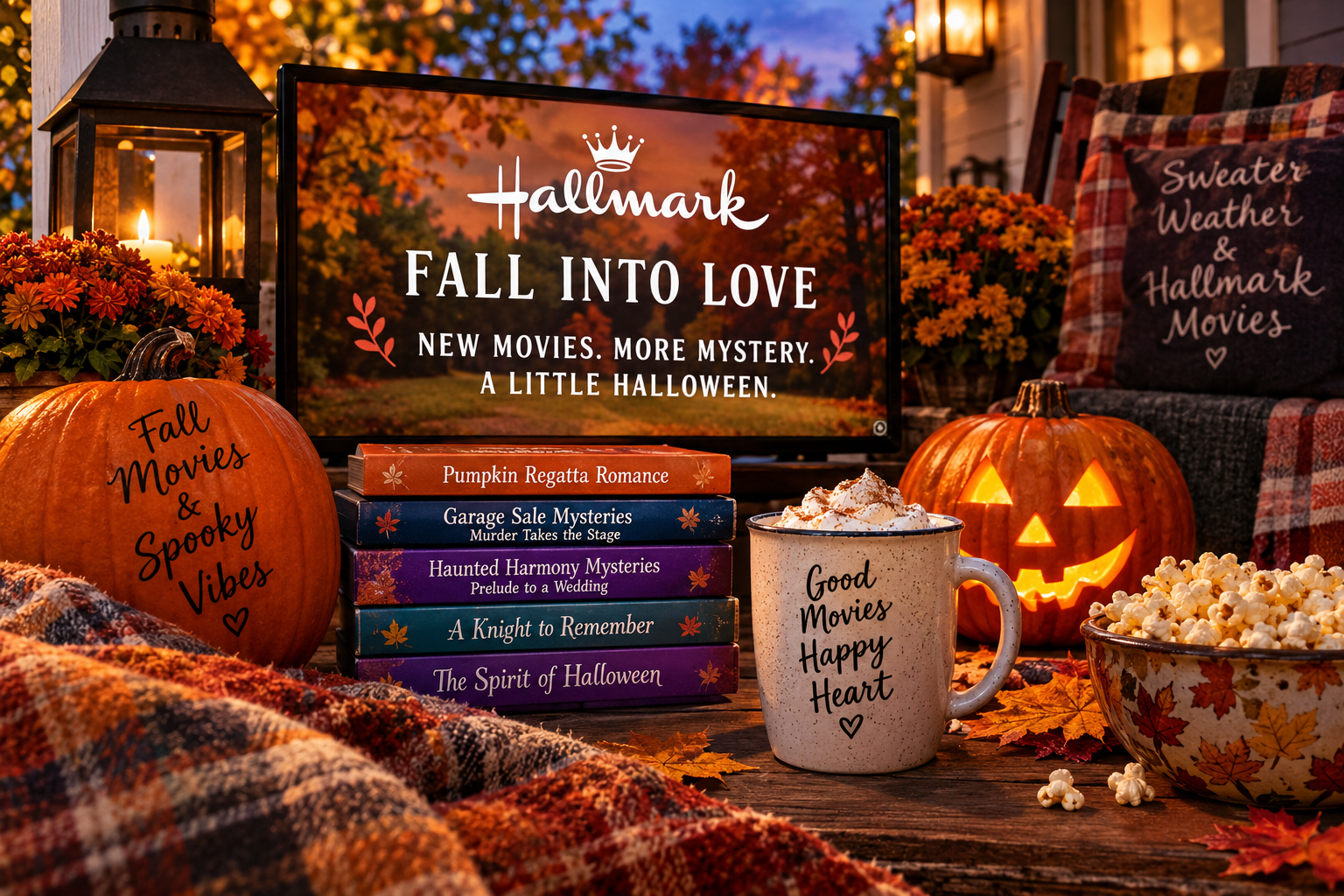
Hallmark's Fall Into Love is back with cozy romances, autumn settings and the perfect excuse to stay home on Saturday nights.

I don’t know about y’all, but I’m starting to get that feeling. You know the one. It’s still hotter than the devil’s front porch outside, but I’m already thinking about pumpkins, cozy evenings, fall candles, Halloween and everything else that comes with my favorite time of year. Fall is getting closer, and I am absolutely not mad about it.

One of the things that really makes it feel like we’re getting close is when Hallmark starts bringing out the fall movies. For me, Fall Into Love is basically the next best thing to Hallmark Christmas, and I’m perfectly happy to say that out loud. Christmas movies may get all the attention, but there is something about the fall lineup that I really enjoy. Maybe it’s the scenery, maybe it’s the cozy storylines, or maybe I just have a weakness for movies where somebody returns to their hometown and unexpectedly falls for the person they absolutely did not plan on falling for.

Whatever it is, I’m here for it.

Fall Is My Hallmark Sweet Spot

I love Hallmark Christmas movies, but fall movies have their own personality. They’re cozy without being covered in Christmas decorations, and they give us all the things I love about autumn without rushing straight into the holidays. There’s usually a charming little town, a family business, a fall festival, an old friendship or relationship that needs revisiting, and two people who somehow need an entire movie to figure out what the audience already knew within the first fifteen minutes.

And honestly, that’s part of the fun.

I’m not watching these movies because I expect some shocking plot twist that changes everything I thought I knew. I’m watching because sometimes I want something comfortable. Real life has enough stress, complicated relationships, bad news and unexpected nonsense. There is something wonderfully relaxing about sitting down with a movie where I know I’m probably going to get a beautiful setting, a little romance, a few misunderstandings and a happy ending.

That’s entertainment I can get behind.

Fall also gives Hallmark some of the prettiest settings of the year. I love seeing those little towns dressed up for autumn, with pumpkins, trees changing colors, farmers markets, festivals and all the other things that make fall feel like fall. It makes me want to grab a blanket, light a candle and stay home for the evening.

Of course, living in Texas means I may have to pretend it’s cold outside for a while longer. That’s okay. I’m very good at pretending when pumpkins are involved.

Related: Happy Augtober! The Unofficial First Day of Fall

Fall Into Love Starts August 22

Hallmark’s official Fall Into Love event begins Saturday, August 22, with Love Finds You, starring Aimeé Teegarden and Chris McNally. The movie kicks off a lineup of new romantic stories airing on Saturday nights throughout the fall.

Before that, Hallmark is giving us a little preview with Aussie at Heart on August 15. So technically, I don’t even have to wait until next weekend to start getting into the fall movie mood.

I’m certainly not going to complain about that.

The lineup continues with Much About Love on August 29, followed by more new movies throughout September. There are romance stories, mysteries and plenty of the kind of cozy fall settings that make me want to crawl under a blanket and stay there until somebody tells me it’s time for Christmas movies.

One of the September movies that immediately caught my attention is Garage Sale Mysteries: Murder Takes the Stage. A true-crime book club, a murder and a Lizzie Borden reenactment? Now we’re talking. Hallmark apparently decided to sneak a little murder into my fall movie season, and as somebody who enjoys a good mystery, I am perfectly okay with that.

Then there’s Pumpkin Regatta Romance later in September, which has exactly the sort of ridiculous-but-fun premise that makes Hallmark movies so entertaining. I mean, we’re talking about pumpkins, a regatta, a family feud and romance. I’m not saying I know how all of that is going to come together, but I’m absolutely willing to sit there and watch it happen.

Saturday Nights Just Got Better

There is something I really love about having movies like these to look forward to on Saturday nights. By the time the weekend gets here, I’ve usually had enough of everything that needs to be done. Sometimes I don’t want to go anywhere or accomplish anything particularly impressive. I just want to settle in at home and enjoy myself.

That’s where Hallmark comes in.

Give me a cozy house, something good to eat, a warm drink, one of my favorite fall scents going and a movie that doesn’t require me to think too hard, and I’m happy. I don’t need every movie I watch to be serious or complicated. Sometimes I want a little escape, and Hallmark is pretty darn good at providing one.

Fall Into Love is especially good for that because it gives us the feeling of fall without making us jump straight into Christmas. I love Christmas, but I’m not ready to skip over my pumpkins and Halloween just yet. There is a whole season in between summer and Christmas that deserves some attention.

And I’m going to give it plenty.

Related: My Favorite Hallmark Christmas Movies: A Countdown to Cheer

Then Comes the Christmas Countdown

Of course, we all know what’s waiting on the other side of fall.

Hallmark Christmas.

I’m not even going to pretend I’m not already thinking about it. Fall Into Love is basically the appetizer before the main course, and Hallmark knows exactly what it’s doing. We get our fall movies, we settle into the cozy atmosphere, and then suddenly we’re surrounded by Christmas trees, lights, snow and people who somehow own businesses that only make money during the holidays.

And yes, I will watch those too.

But I’m trying to appreciate each season as it comes. I don’t want to rush through fall just because I know Christmas is waiting around the corner. There is too much I love about this time of year to skip over it.

I want the pumpkins and the fall candles. I want Halloween decorations. I want spooky movies and autumn recipes. I want those first evenings when the temperature finally drops enough that sitting outside is enjoyable. I want the colors, the smells and all those little signs that tell us the year is starting to wind down.

Fall is its own thing, and I love it.

I’m Ready for Fall, Y’all

So yes, I’m excited that Fall Into Love is getting ready to start. I’m excited about the new movies, but I’m even more excited about what they represent. We’re getting closer to the season I’ve been waiting for all year, and Hallmark is giving me one more excuse to embrace it.

The official Fall Into Love lineup starts August 22, and I have a feeling Saturday nights are going to be looking pretty good around here.

I may still be sweating when I walk outside. The leaves may still be stubbornly green. Texas may refuse to acknowledge that it’s supposed to be fall.

I don’t care.

In my house, fall has already been invited in.

And if Hallmark wants to bring a little romance along with it, well, y’all know I’m not turning that down. 🍂❤️

Lisa Crow contributed to this article. She is a true crime junkie and lifestyle blogger based in Waco, Texas. Lisa is the Head of Content at Gigi’s Ramblings and Southern Bred True Crime Junkie. She spends her free time traveling when she can and making memories with her large family which consists of six children and sixteen grandchildren.
Colorful mountain town surrounded by vibrant autumn foliage with cozy shops, cabins, and scenic mountain views.

There is something magical about a mountain town once autumn arrives. Crisp mornings, colorful forests, cozy cabins, and small-town charm somehow make everything feel a little slower and a lot more beautiful. While beaches may dominate summer vacations, fall belongs to the mountains.

Whether you’re planning a weekend getaway or simply dreaming about your next road trip, these mountain towns truly come alive once the leaves begin to change. Some are famous for brilliant fall foliage, while others offer festivals, scenic train rides, hiking trails, and cozy downtown streets that practically beg you to explore.

Gatlinburg, Tennessee

Nestled beside the Great Smoky Mountains, Gatlinburg transforms into a postcard every October.

The surrounding mountains explode with shades of crimson, orange, yellow, and gold, creating one of the longest fall color seasons in the country. Early morning fog drifting through the valleys only adds to the atmosphere.

While you’re there, you can:

  • Ride the SkyLift for incredible mountain views.
  • Explore Great Smoky Mountains National Park.
  • Visit local candy shops and pancake houses.
  • Browse handmade crafts and local art galleries.

The combination of mountain scenery and classic Southern hospitality makes Gatlinburg one of America’s favorite fall destinations.

Related: Happy Augtober! The Unofficial First Day of Fall

Leavenworth, Washington

If you’ve ever wanted to visit a Bavarian village without leaving the United States, Leavenworth delivers.

Surrounded by the Cascade Mountains, this charming town becomes even more beautiful as autumn colors settle across the hillsides.

Visitors love:

  • German-inspired architecture
  • Cozy cafés
  • Oktoberfest celebrations
  • Mountain hiking trails
  • Scenic river walks

The crisp mountain air paired with colorful forests makes every stroll feel like stepping into a storybook.

Estes Park, Colorado

Autumn in Estes Park comes with an unexpected bonus: elk season.

Large herds wander throughout town during the annual rut, making wildlife viewing one of the biggest attractions of the season. Add golden aspens covering the Rocky Mountains, and you’ve got an unforgettable destination.

Popular activities include:

  • Scenic drives through Rocky Mountain National Park
  • Wildlife photography
  • Local breweries
  • Mountain shopping districts
  • Cozy cabin rentals

The cool temperatures make hiking especially enjoyable after the heat of summer.

Stowe, Vermont

Few places capture New England fall quite like Stowe.

Rolling mountains become blanketed in brilliant foliage while charming white churches, covered bridges, and family farms complete the classic autumn scenery.

Don’t miss:

  • Smugglers’ Notch Scenic Drive
  • Local maple syrup shops
  • Apple cider donuts
  • Farm markets
  • Gondola rides for panoramic foliage views

Every corner seems designed for postcards.

Blue Ridge, Georgia

Blue Ridge offers all the beauty of the Appalachian Mountains with a quieter pace than many larger tourist towns.

Downtown features boutique shops, restaurants, and local breweries, while nearby mountain roads provide endless opportunities for leaf-peeping.

One of the biggest attractions is the Blue Ridge Scenic Railway, which winds through colorful forests and riverside landscapes.

It’s an ideal destination for couples, families, and anyone looking to enjoy peaceful mountain views.

Highlands, North Carolina

Highlands sits more than 4,000 feet above sea level, making it one of the first places in the Southeast to experience cooler autumn weather.

The surrounding waterfalls become even more spectacular as colorful leaves frame every trail.

Visitors often spend their days:

  • Hiking waterfall trails
  • Shopping downtown
  • Visiting art galleries
  • Dining on outdoor patios
  • Taking scenic mountain drives

The relaxed atmosphere makes Highlands feel wonderfully removed from everyday life.

Telluride, Colorado

Telluride may be famous for skiing, but many travelers believe fall is actually its best season.

Golden aspens blanket the surrounding peaks while the summer crowds begin to disappear.

The historic downtown offers:

  • Boutique shopping
  • Local restaurants
  • Scenic gondola rides
  • Mountain festivals
  • Incredible photography opportunities

If you’re looking for dramatic mountain scenery, Telluride rarely disappoints.

Helen, Georgia

Helen brings Alpine charm to the North Georgia mountains.

The town’s Bavarian-inspired buildings pair perfectly with colorful mountain backdrops during autumn, and Oktoberfest festivities keep visitors entertained for weeks.

Nearby waterfalls, hiking trails, and wineries make excellent additions to any fall itinerary.

The combination of festive atmosphere and mountain scenery makes Helen especially popular during October.

Jim Thorpe, Pennsylvania

Often called the “Switzerland of America,” Jim Thorpe sits among rolling mountains that become incredibly colorful each fall.

Historic Victorian buildings line the streets while scenic rail excursions showcase the surrounding forests.

Visitors enjoy:

  • Historic architecture
  • Train rides
  • Boutique shopping
  • Hiking nearby trails
  • Seasonal festivals

It’s one of Pennsylvania’s most charming autumn destinations.

Banner Elk, North Carolina

Banner Elk combines mountain scenery with a relaxed small-town feel.

Located in the Blue Ridge Mountains, it’s surrounded by colorful forests, wineries, apple orchards, and scenic overlooks.

Fall visitors often enjoy:

  • Apple picking
  • Winery tours
  • Mountain hiking
  • Craft breweries
  • Local farmers markets

The slower pace makes it perfect for a relaxing autumn escape.

Tips for Planning a Fall Mountain Getaway

Mountain towns become incredibly popular during peak leaf season, so planning ahead can make your trip much more enjoyable.

Consider these tips:

  • Book lodging several months in advance.
  • Visit during weekdays for smaller crowds.
  • Pack layers because mountain weather changes quickly.
  • Start scenic drives early for the best lighting and fewer cars.
  • Check local fall foliage reports before traveling.

A little planning helps you enjoy more time soaking in the scenery instead of waiting in traffic.

Final Thoughts

Autumn has a way of making mountain towns feel even more inviting. Crisp air, colorful forests, cozy cafés, scenic drives, and charming downtown streets create memories that linger long after the leaves have fallen.

Whether you’re drawn to the Smoky Mountains, the Rockies, New England, or the Blue Ridge, these destinations prove that some places truly save their best season for fall. If you’re looking for a getaway filled with breathtaking views and cozy small-town charm, any of these mountain towns deserves a spot on your autumn travel list.

Lisa Crow contributed to this article. She is a true crime junkie and lifestyle blogger based in Waco, Texas. Lisa is the Head of Content at Gigi’s Ramblings and Southern Bred True Crime Junkie. She spends her free time traveling when she can and making memories with her large family which consists of six children and sixteen grandchildren.

thanksgiving turkey preparation

Alright, friend—if your turkey is still chilling in the freezer like it’s on vacation, today is the day it needs to come out. Frozen turkeys need around 24 hours of thawing time for every 4–5 pounds when thawing in the refrigerator. So if yours is around 16 pounds, you’re looking at about four full days. That means it should already be thawing, starting now, not Wednesday morning when it’s still an icy bowling ball.

Here’s a quick guide:
8–12 lbs = 2 to 3 days
12–16 lbs = 3 to 4 days
16–20 lbs = 4 to 5 days
20–24 lbs = 5 to 6 days

Set it breast-side-up in a pan or tray to catch drips so you’re not mopping up turkey juice later.

Make a Menu Before the Madness Begins

Now is the perfect time to finalize what’s actually being served. Turkey is the star, but what else? Dressing or stuffing? Mac and cheese? Mashed potatoes? Cranberry sauce (from scratch or in that fancy ridged can)? Once you know, you can make your shopping list and catch what you forgot—like butter, foil, cooking twine, poultry seasoning, or that one spice you only buy once a year. And yes, check your coffee, too. Holiday mornings run on caffeine.

Desserts Love Being Made Early

Pumpkin pie, pecan pie, sweet potato pie, and even cheesecakes can all be made a day or even two ahead. They usually taste better the second day anyway. Wrap them well and store in the fridge. You’ll thank yourself later when your oven is taken over by stuffing and casseroles.

Spread the Work—Seriously, You Don’t Have to Do It All

Ask people to help. Let someone bring drinks and ice. Assign someone the green bean casserole. Have someone else handle table settings or bring store-bought rolls because, let’s be honest, nobody complains about Sister Schubert rolls.

People WANT to contribute—give them a job before they show up with just one lonely bag of chips.

Create a Little Flavor Station

Set aside a small space for salt, pepper, garlic and onion powder, sage, rosemary, thyme, paprika, butter, olive oil, and whatever else you use a ton of on Thanksgiving. That way you’re not digging through cabinets with oily fingers during chaos hour.

Get Your Serveware Out Now

Pull out that gravy boat you only use once a year. Grab the ladles, big serving spoons, pie servers, casserole dishes, trays, and cutting boards. A fun trick—label each dish with a sticky note: Stuffing goes here, mashed potatoes here, sweet potato casserole there. Helps a lot when guests ask how to help set things out.

Clean Out the Fridge (Yes, Really)

Future You will be so happy you did. You need space for thawing turkey, desserts, trays, and leftovers. Toss the mystery container from last week and clear off a shelf or two. It’s the calm before the stuffing storm.

Last Reminder: You’ve Got This

Thanksgiving doesn’t have to be picture-perfect. It just has to feel warm, welcoming, and mostly edible. Getting ahead now gives you less stress, more time to enjoy, and fewer panic moments wondering why the turkey is still frozen on Thursday morning.

Thaw the turkey today. Make the menu. Prep a little. Laugh a lot. And remember—people care more about being together than having perfect linens or homemade cranberry sauce.

Lisa Crow contributed to this article. She is a true crime junkie and lifestyle blogger based in Waco, Texas. Lisa is the Head of Content at Gigi’s Ramblings and Southern Bred True Crime Junkie. She spends her free time traveling when she can and making memories with her large family which consists of six children and fifteen grandchildren.

friendsgiving gathering

When the holiday season rolls around, we all know what to expect — turkey, mashed potatoes, family gatherings, and maybe a little chaos mixed in. But over the last couple of decades, another tradition has taken root alongside Thanksgiving: Friendsgiving. It’s cozy, casual, and all about celebrating the people you choose to call family.

What Exactly Is Friendsgiving?

Friendsgiving is, at its heart, a Thanksgiving-style meal shared among friends rather than family. It usually takes place before or after Thanksgiving Day itself, giving everyone the chance to connect without juggling multiple family obligations.

Think of it as Thanksgiving’s laid-back cousin — no stress, no assigned seating charts, and no one judging your store-bought pie. Everyone brings a dish, shares stories, laughs too loud, and maybe watches football or holiday movies in the background.

The Origins of Friendsgiving

While there’s no single official “first” Friendsgiving, the concept started gaining steam in the early 2000s. Some say it began as a way for young adults living far from home to still celebrate the holiday season with their chosen families.

The term “Friendsgiving” first popped up online and in pop culture around 2007, but it really took off thanks to social media. Instagram posts of beautifully mismatched tables, overflowing charcuterie boards, and toasts over pumpkin punch helped turn a simple gathering into a cultural moment.

Brands soon caught on — from grocery stores running “Friendsgiving” ads to TV shows dedicating episodes to the theme — and now it’s as much a part of November as the Macy’s Parade.

Why Friendsgiving Feels So Special

There’s something refreshing about celebrating without the pressure of perfection. Friendsgiving is about gratitude, but in a softer, more personal way. It’s about:

  • Flexibility: You can host it potluck-style, cook together, or order takeout.
  • Comfort: No family drama, no travel chaos — just your favorite people and good food.
  • Creativity: Every Friendsgiving table looks different — from candlelit dinners to backyard bonfires.

And let’s be real — sometimes your friends understand you in ways even your family doesn’t. That’s what makes Friendsgiving feel so meaningful.

How to Host Your Own Friendsgiving

If you’re ready to start your own Friendsgiving tradition, here are a few easy tips:

  1. Pick a date early. Aim for the weekend before Thanksgiving so more people can attend.
  2. Plan the menu together. Use a shared note or group chat so you don’t end up with seven mac and cheeses (unless that’s the vibe).
  3. Set the mood. Cozy lighting, music, and a few seasonal touches — dark woods, warm tones, rustic table settings — make it feel festive without being fussy.
  4. Don’t forget gratitude. Go around the table and share one thing you’re thankful for this year. It always hits home.

A Tradition Worth Keeping

Whether you’re surrounded by lifelong friends or a new group you’ve just found, Friendsgiving is proof that family doesn’t have to be defined by blood — it’s about connection, laughter, and showing up for one another.

So this November, take a moment to celebrate your people — the ones who’ve seen you through your best and worst days, and who show up anyway, casserole in hand. That’s the real heart of Friendsgiving.

soup cooking on stove baked chicken on counter

Tomorrow’s supposed to be our first chilly day of the season, and I couldn’t be happier. After all this Texas heat, I’m more than ready to bring out the cozy meals. I already know what’s on our menu—I’ll be making myself a big pot of soup and fixing Santiago a baked chicken with dressing. But with the cooler weather rolling in, it’s the perfect time to talk about all those simple comfort meals that make cold days something to look forward to.

Warm, Hearty Soups

Soup season is officially back, and it’s the easiest way to chase off the chill. Whether you’re simmering a pot of creamy potato soup, chicken and dumplings, or a spicy chili, nothing hits quite like that first spoonful. The best part? Soups are low-effort but high-reward—perfect for slow days when you just want the house to smell amazing. Pair with a slice of cornbread or a grilled cheese sandwich and you’ve got a complete, cozy meal.

Classic Casseroles

Casseroles are the ultimate comfort food multitaskers—easy to prep, budget-friendly, and perfect for leftovers. A creamy chicken and rice casserole, cheesy baked ziti, or shepherd’s pie will fill your home with warmth and fill everyone’s belly with happiness. They’re the kinds of dishes that remind you of family gatherings and Sunday dinners after church.

Slow-Cooked Favorites

Pull out that slow cooker or Dutch oven—it’s time for all those rich, hearty meals that taste like they took all day (because they did). Think tender pot roast with carrots and potatoes, beef stew that melts in your mouth, or a slow-cooked gumbo that fills the kitchen with Cajun spice. The longer it cooks, the better it gets.

Down-Home Southern Sides

No comfort meal is complete without the sides. Fluffy mashed potatoes with gravy, macaroni and cheese, buttered corn, or baked beans can turn a simple dinner into a feast. And let’s not forget a pan of golden cornbread—because nothing soaks up that last bit of gravy or broth quite like it.

Sweet Finishes

After a comforting meal, a warm dessert is the perfect ending. Apple crisp, bread pudding, peach cobbler, or banana pudding—these aren’t fancy desserts, just old-fashioned favorites that never disappoint. They’re the kind of sweets that make you want to stay curled up in your pajamas a little longer.

When the weather cools down, comfort food does more than just fill you up—it wraps you up. It brings people to the table, slows down the pace, and makes home feel even cozier. So as the cold creeps in, pull out those family recipes, stir up a pot of something good, and let the warmth start from the inside out.

Lisa Crow contributed to this article. She is a true crime junkie and lifestyle blogger based in Waco, Texas. Lisa is the Head of Content at Gigi’s Ramblings and Southern Bred True Crime Junkie. She spends her free time traveling when she can and making memories with her large family which consists of six children and fifteen grandchildren.

thanksgiving festivities

Thanksgiving has always been one of my favorite times of the year. It’s more than just turkey and pie — it’s the memories, the music, the little traditions that make it special year after year. Some things might change, but there are a few Thanksgiving rituals I’ll never let go of.

Staying Up All Night Cooking

There’s something comforting about the quiet hours before Thanksgiving morning — the kitchen warm, music playing softly, and the smell of everything coming together. I stay up all night cooking the turkey, prepping the dressing, and making my sausage balls along with all the other goodies. It’s exhausting, sure, but it’s also the heart of the holiday for me. And yes, my cranberry sauce will always come straight out of the can — one big, wobbly blob with the lines still showing. That’s non-negotiable.

Music, Memories, and Late-Night Reflections

While the oven hums and the house fills with the smell of home cooking, I love to listen to music and think back on Thanksgivings gone by. It’s usually a mix of laughter and a little nostalgia — remembering my mama in her apron, the kids underfoot, and the beautiful chaos that always came with family gatherings.

Parade Morning Magic

No matter how late I’ve stayed up the night before, I’m up early on Thanksgiving morning. Watching the parades has always been part of the day — it just wouldn’t feel right without it. I used to spread the newspaper out across the table, flipping through all the Black Friday ads while the floats went by. These days, with no local paper, I scroll through my phone instead. It’s not quite the same, but it still brings back that familiar excitement.

Black Friday Memories

Back in the day, I’d be up before dawn, coffee in hand, ready to hit the stores with a plan and a mission. Elbow-to-elbow with other shoppers, hunting down those doorbusters — that was half the fun. Now, I do about 95% of my shopping online. It’s calmer, easier, and honestly, I don’t miss the crowds one bit. But I still smile thinking about those early mornings and how wild it all used to be.

Putting Up the Christmas Trees

My absolute favorite tradition comes right after Thanksgiving dinner — putting up my trees. I know a lot of folks start early these days, but I love my fall and Thanksgiving décor too much to rush through it. That was my mama’s tradition, and I hold it close to my heart. My main tree is always a live one, so putting it up before Thanksgiving isn’t really an option if I want it to last through New Year’s. There’s just something special about making the switch from pumpkins to twinkle lights when the leftovers are packed away and the house smells like pie.

Football and Charlie Brown

You can bet there’s always football on the TV, especially when the Dallas Cowboys play — that’s just part of being a Texan on Thanksgiving Day. And sometime during the week before, I always make sure to watch A Charlie Brown Thanksgiving when it airs. It’s a small, sweet reminder of the simpler holidays when I was growing up.

Thanksgiving may look a little different these days — fewer ads to flip through and more shopping done online — but the spirit of it all stays the same. Family, food, laughter, and those timeless little traditions are what make the day so special. And those? I’ll always hold on to.

Lisa Crow contributed to this article. She is a true crime junkie and lifestyle blogger based in Waco, Texas. Lisa is the Head of Content at Gigi’s Ramblings and Southern Bred True Crime Junkie. She spends her free time traveling when she can and making memories with her large family which consists of six children and fifteen grandchildren.

driving a winding a road in fall

There’s something about November that just feels like home. The crowds are gone, the air turns crisp, and small towns across the country come alive with cozy charm, fall festivals, and the first glimmer of the holidays. If you’re craving a slower pace before the chaos of December, here are some of the best small towns to visit in November.

1. Leavenworth, Washington

This Bavarian-style mountain village is pure magic in November. The town starts its transformation into a Christmas wonderland toward the end of the month, with twinkling lights, mulled cider, and alpine charm at every turn. It’s the perfect place to kick off the holiday spirit before December crowds arrive.

2. Helen, Georgia

Helen looks like it was plucked straight out of a European fairytale. Nestled in the Blue Ridge Mountains, this little German-inspired town is cozy year-round, but November is special. The autumn leaves are still hanging on, and the chill in the air pairs perfectly with a plate of schnitzel or a glass of local wine.

3. Fredericksburg, Texas

Y’all know I had to include a Texas favorite. Fredericksburg is stunning in November — the crowds thin out after Oktoberfest, the weather’s perfect for exploring Main Street, and the wineries are in full swing. Plus, the town starts decking out for Christmas, so it’s a two-for-one kind of visit.

4. Stowe, Vermont

Stowe is known for its vibrant fall foliage, but November offers a quieter kind of beauty. The last golden leaves cling to the trees, snow might start dusting the mountaintops, and the whole place feels peaceful. Grab a hot cider, explore the local shops, and enjoy the calm before ski season kicks off.

5. Eureka Springs, Arkansas

This quirky little Ozark town is a hidden gem in late fall. The Victorian architecture, winding streets, and forested hills make it a postcard-perfect getaway. November brings fewer tourists and cooler weather, ideal for exploring the shops, trails, and historic hotels that make Eureka Springs so unique.

6. Gatlinburg, Tennessee

When the Smoky Mountains start to quiet down after October’s leaf-peeping rush, Gatlinburg hits its sweet spot. November brings cooler days and fewer crowds, plus you can catch the start of the Winter Magic Lights display that turns the town into a twinkling mountain village.

7. Carmel-by-the-Sea, California

This seaside gem is a cozy dream in November. The weather’s mild, the beaches are peaceful, and the town’s cottages look straight out of a fairytale. Wander the art galleries, sip local wine, and breathe in that salty ocean air before the holiday season kicks in.

8. Beaufort, South Carolina

If you want Southern charm with a coastal twist, Beaufort’s your spot. November brings gentle weather, quiet streets, and Spanish moss-draped oaks that make every photo look like a painting. Take a carriage ride, stroll the historic district, and watch the sun dip over the water.

9. Galena, Illinois

Galena shines in November. This small Midwestern town has cobblestone streets, 19th-century buildings, and the kind of charm Hallmark movies are made of. It’s also one of the best spots for early holiday shopping thanks to its boutiques and local artisans.

10. Woodstock, Vermont

If there was ever a town that captured the soul of fall, it’s Woodstock. The covered bridges, cozy inns, and crackling fireplaces make it a perfect November destination. You’ll find peace, beauty, and the perfect backdrop for reflection before the busy holiday season begins.

The Magic of November Travel

November’s the sweet spot — the lull between the rush of summer and the whirlwind of the holidays. It’s when small towns shine their brightest, offering a cozy mix of quiet streets, warm hospitality, and a slower rhythm that reminds you what travel’s all about.

Lisa Crow contributed to this article. She is a true crime junkie and lifestyle blogger based in Waco, Texas. Lisa is the Head of Content at Gigi’s Ramblings and Southern Bred True Crime Junkie. She spends her free time traveling when she can and making memories with her large family which consists of six children and fifteen grandchildren.