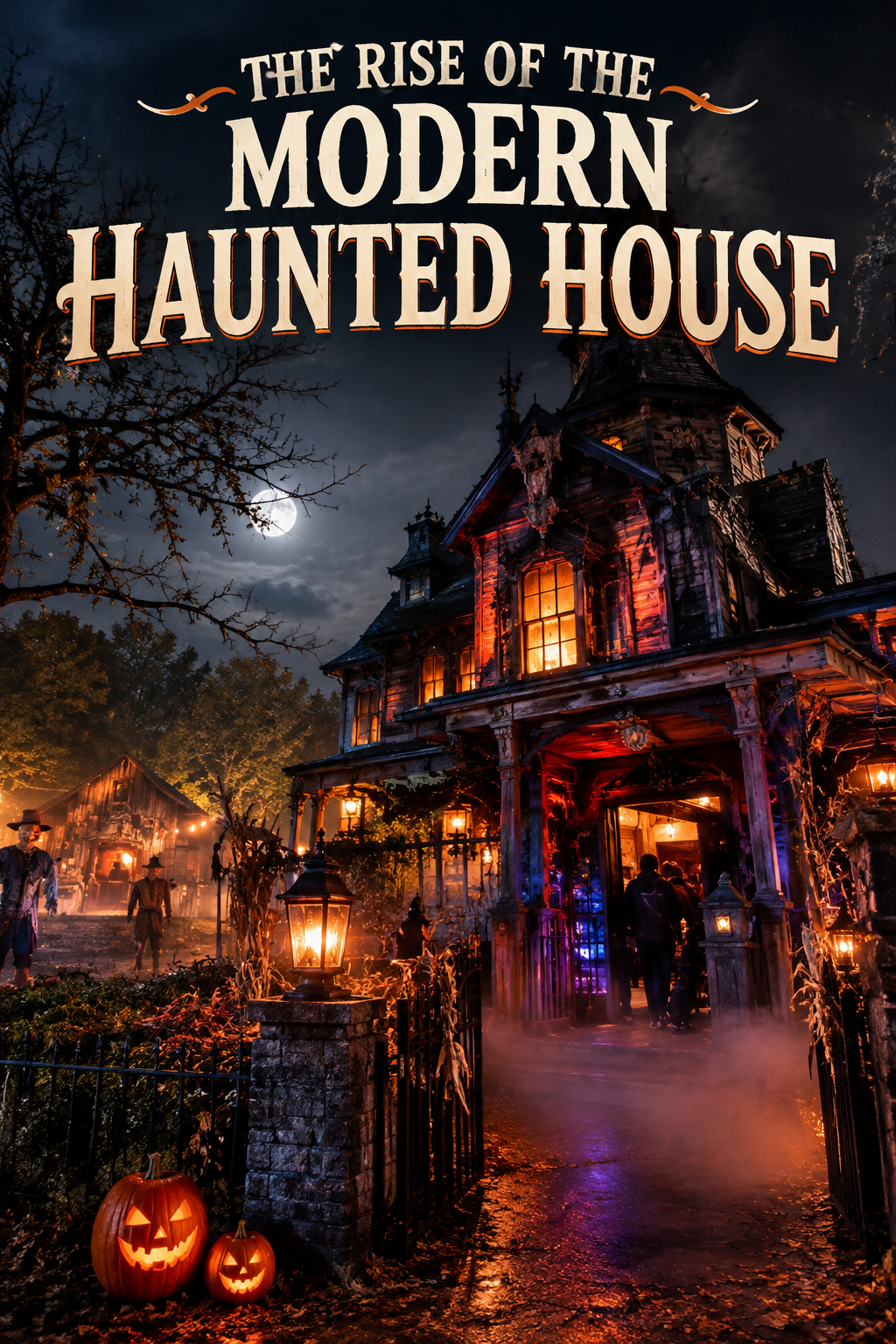
Every October, folks line up outside abandoned-looking buildings, old warehouses, cornfields, and elaborate horror attractions, willingly handing over their money to be chased by chainsaw-wielding maniacs and creatures that look like they crawled straight out of a nightmare. Some places have actors hiding behind every corner, while others feature entire haunted towns, elaborate movie-quality sets, and special effects that make it hard to remember you’re standing in a building rather than somewhere much more sinister. The modern haunted house has grown into a full-blown Halloween tradition, but the road from homemade scares to today’s massive horror productions is a fascinating little journey through American entertainment.
Before Haunted Houses Became Big Business
Long before professional haunted attractions filled October calendars, people found plenty of ways to frighten one another for fun. Ghost stories around campfires, spooky folklore passed down through generations, and homemade Halloween decorations helped establish the tradition of turning fear into entertainment. By the early twentieth century, Halloween parties often included simple haunted rooms, darkened hallways, hanging sheets, and other inexpensive tricks designed to make guests jump.
Community groups and families also began creating haunted houses as seasonal attractions, sometimes using church basements, school buildings, and neighborhood homes to raise money for local causes. These early experiences relied on imagination more than expensive equipment. A dark hallway, a strategically placed skeleton, and somebody waiting behind a curtain could accomplish plenty without a computer-generated monster in sight.
The appeal was easy to understand. People enjoyed being scared when they knew they were safe, and Halloween offered the perfect excuse to explore the darker side of entertainment. For communities looking to raise money or give neighborhood children something memorable to do, a homemade haunted house could turn an ordinary building into an October destination.
The Haunted House Goes Commercial
During the 1960s and 1970s, haunted attractions began developing into more organized public experiences. One especially important milestone came in 1969, when the Haunted Mansion opened at Disneyland in California. Although it was a theme park ride rather than a walk-through haunted house, it demonstrated how storytelling, elaborate sets, theatrical lighting, sound effects, and carefully timed surprises could create an immersive supernatural experience.
Around the same period, the haunted attraction industry began finding its footing through professional Halloween events and charitable haunted houses. The famous Haunted House at the 13th Gate in Baton Rouge would not arrive until much later, but the broader movement toward larger, more elaborate attractions was already underway. Entrepreneurs and community organizers recognized that visitors wanted more than a few cobwebs and somebody jumping out of a closet. They wanted an experience they could talk about afterward.
The haunted house was becoming an attraction in its own right, with admission fees, planned scenes, costumed performers, and increasingly sophisticated effects. Instead of simply decorating a room, operators were building an entire journey through a fictional world of terror.
Horror Movies Changed What People Expected
The rise of modern haunted houses cannot be separated from the popularity of horror films. Movies such as The Texas Chain Saw Massacre, Halloween, Friday the 13th, and A Nightmare on Elm Street introduced audiences to memorable villains, disturbing settings, and suspenseful scenes that lingered long after the credits rolled.
As slasher films and practical-effects horror gained popularity, haunted attractions borrowed ideas from the screen. Masked killers, gruesome laboratories, abandoned hospitals, creepy farmhouses, and sinister operating rooms became familiar features of the haunted-house experience. Visitors no longer had to settle for a generic ghost when they could walk into a scene that looked like something straight out of a horror movie.
Movie makeup and special effects also helped raise expectations. Latex prosthetics, realistic wounds, mechanical props, and increasingly convincing creature costumes allowed performers to become much more frightening characters. The best attractions understood that a convincing setting could be just as effective as a sudden scare. A flickering light at the end of a hospital corridor might leave visitors more nervous than a dozen rubber spiders ever could.
From Spooky Rooms To Full-Blown Horror Worlds
Today’s major haunted attractions often resemble theatrical productions more than traditional haunted houses. Some cover enormous spaces with multiple themed sections, elaborate scenery, custom soundtracks, animatronic creatures, and actors who remain in character throughout the experience. Visitors might move from a haunted plantation-style setting to a medical nightmare, then stumble into a fog-filled forest or a village occupied by the undead.
Technology has made these attractions more immersive, too. Motion sensors can trigger sudden noises, doors can open on their own, lighting systems can shift the mood in seconds, and carefully designed audio can make an empty room feel occupied. Some attractions use projection effects, synchronized animatronics, moving floors, and elaborate illusions to create scares that would have been difficult or expensive to pull off just a few decades ago.
However, bigger does not always mean better. A small haunted barn with a clever layout and a talented cast can leave a lasting impression without a Hollywood-sized budget. The secret is controlling what visitors see, what they hear, and what they imagine might be waiting around the next corner. Sometimes the scariest thing in the room is the ten seconds when absolutely nothing happens.
Why We Pay Good Money To Be Scared
There is something wonderfully strange about spending a perfectly good October evening walking into a dark building full of things designed to make you scream. Yet haunted attractions continue drawing crowds because fear can be entertaining when people choose the experience and understand its boundaries.
For many visitors, the appeal comes from the adrenaline rush, the surprise of an unexpected scare, and the satisfaction of making it through the attraction. Friends and family members get to share the experience, whether they spend the whole night laughing, screaming, grabbing one another’s sleeves, or insisting afterward that they were never frightened in the first place.
Haunted houses also offer something that ordinary entertainment cannot always provide: genuine participation. A movie allows you to watch the horror unfold from a comfortable seat, but a haunted attraction places you inside the action. You have to walk down that hallway yourself. You have to open that door. And when something moves in the darkness, you have to decide whether to keep going.
That mixture of suspense, surprise, and social fun helps explain why haunted attractions remain popular even as horror movies, video games, and digital special effects become more sophisticated.
The Growing Popularity Of Extreme Haunts
As the industry has expanded, some attractions have pushed beyond traditional haunted houses into more intense experiences. Certain events use elaborate storylines, immersive theatrical performances, and unusual settings to make visitors feel as though they have stepped into a horror film. Others emphasize realistic environments, elaborate character interactions, or extended experiences that go far beyond a quick walk through a dark building.
These attractions have helped create a broader market for people seeking something more intense than a family-friendly Halloween event. However, extreme haunts vary considerably in what they offer, and visitors should always check age restrictions, physical requirements, safety rules, and the nature of the experience before purchasing tickets.
Meanwhile, many traditional haunted houses continue welcoming families and younger visitors with less frightening scenes, daytime events, and age-appropriate activities. The industry now serves a wide range of Halloween fans, from children who want friendly ghosts to adults who deliberately seek the scariest attraction they can find.
The Haunted House Industry Keeps Reinventing Itself
One reason haunted houses have survived for so long is their ability to change with the times. Some attractions now incorporate escape-room puzzles, interactive storytelling, elaborate fantasy settings, and cinematic effects. Others use historic buildings, abandoned properties, or rural landscapes to create an atmosphere that modern technology cannot easily duplicate.
Social media has also changed the way people discover and experience haunted attractions. Dramatic videos, behind-the-scenes makeup demonstrations, actor interviews, and visitor reactions can turn a local haunt into a destination for people willing to travel. A particularly impressive attraction can build a reputation long before visitors ever step through its entrance.
At the same time, the handmade spirit of Halloween remains alive in neighborhood haunted trails, volunteer-run attractions, and backyard productions created by people who simply love frightening their friends. Not every haunted house needs a million-dollar budget or a warehouse full of animatronics. Sometimes a few dedicated Halloween enthusiasts, a pile of lumber, some clever lighting, and a genuinely creepy story are all it takes.
A Halloween Tradition Built On Fear And Imagination
The modern haunted house has come a long way from darkened rooms and homemade ghosts, but its basic appeal remains remarkably familiar. People still enjoy telling scary stories, testing their courage, and experiencing a little harmless terror with friends and family. The scenery has grown more elaborate, the effects have become more convincing, and the attractions themselves have turned into major seasonal destinations, yet the heart of the experience has not changed much.
Every October, somebody still has to convince their nervous friend to walk through the next door. Somewhere, a monster is waiting behind a curtain, an old floorboard is creaking under somebody’s feet, and an actor is preparing to deliver the scare of the evening. Whether it happens inside a sprawling professional attraction or a homemade haunted barn on the edge of town, that moment when imagination takes over is what keeps people coming back.
And if you happen to hear something scratching at the wall while you’re reading this after dark, well, partner, let’s just hope it’s part of the Halloween decorations.
Lisa Crow contributed to this article. She is a true crime junkie and lifestyle blogger based in Waco, Texas. Lisa is the Head of Content at Gigi’s Ramblings and Southern Bred True Crime Junkie. She spends her free time traveling when she can and making memories with her large family which consists of six children and sixteen grandchildren.