Infographic titled “Why People Seek Validation” featuring a thoughtful woman with a social media notification icon. The design explains key reasons people seek approval, including human nature, childhood conditioning, social media influence, fear of rejection, and habit formation. A second section outlines how to break the cycle with steps like noticing approval-seeking behavior, making independent decisions, limiting comparison, accepting disagreement, and building self-worth. The layout uses soft colors, icons, and clear sections to present the information in a friendly, easy-to-read style.

At some point, everyone looks for approval. It might show up as checking likes on a post, asking for opinions before making a decision, or needing reassurance that you’re doing things “right.” On the surface, it seems harmless. However, when validation becomes a constant need, it can quietly shape how you think, act, and even see yourself.

So why does it happen in the first place?

It Starts With Human Nature

Humans are wired for connection. Back in the day, being accepted by a group meant survival. Because of that, your brain still treats approval as something valuable. When someone agrees with you or praises you, it triggers a small reward response. As a result, you feel good and want more of it.

Because of this natural wiring, seeking validation isn’t a flaw. It’s just part of being human.

Childhood Conditioning Plays a Role

For many people, the need for validation starts early. If you were praised only when you achieved something or behaved a certain way, you may have learned that approval equals worth.

Over time, this creates a pattern. Instead of feeling confident on your own, you begin to rely on others to confirm your value. Even in adulthood, that old conditioning can stick around.

Social Media Makes It Worse

Today, validation is everywhere. Every like, comment, and share becomes a quick measure of approval. Because of that, it’s easy to tie your self-worth to numbers on a screen.

Even worse, social platforms often highlight the best parts of other people’s lives. This can lead to constant comparison. As a result, you may feel like you’re falling short and look for validation to fill that gap.

Fear of Rejection Drives It

Another big factor is fear. Nobody likes being rejected or judged. Seeking validation can feel like a way to avoid that discomfort.

For example, you might hold back your opinion until you know others agree. Or you may second-guess decisions just to make sure they’re “acceptable.” While this might feel safe in the moment, it slowly chips away at your confidence.

Related: How to Spot the Signs of a Narcissist

It Becomes a Habit

The more you rely on validation, the more automatic it becomes. Instead of trusting yourself, you start outsourcing your decisions.

Over time, this can lead to:

  • Constant self-doubt
  • Difficulty making choices
  • Feeling anxious without reassurance

Because of this cycle, validation stops being helpful and starts becoming limiting.

The Hidden Cost of Seeking Validation

At first, validation feels good. However, it often comes with a price.

You may begin to:

  • Change who you are to fit expectations
  • Avoid risks to stay “approved”
  • Depend on others for your sense of worth

As a result, you lose touch with your own voice. Instead of living authentically, you start living for approval.

How to Break the Cycle

The good news is you can shift away from needing constant validation. It just takes awareness and small changes.

First, start noticing when you seek approval. Are you asking for opinions out of curiosity or insecurity? That awareness alone can help you pause.

Next, practice making small decisions on your own. Over time, this builds trust in yourself.

Also, limit comparison. What you see online isn’t the full picture, so it’s not a fair standard to measure yourself against.

Finally, remind yourself that not everyone will agree with you. And that’s okay. Disagreement doesn’t mean you’re wrong or unworthy.

Final Thoughts

Seeking validation is normal, but relying on it too much can hold you back. When you begin to trust your own judgment, things start to shift.

Instead of chasing approval, you start building confidence from within. And that kind of confidence doesn’t depend on anyone else.

Lisa Crow contributed to this article. She is a true crime junkie and lifestyle blogger based in Waco, Texas. Lisa is the Head of Content at Gigi’s Ramblings and Southern Bred True Crime Junkie. She spends her free time traveling when she can and making memories with her large family which consists of six children and sixteen grandchildren.


A frustrated man sits on the floor in the middle of a messy DIY furniture assembly project, holding printed instructions in one hand and facepalming with the other. Around him are scattered screws, tools, and partially assembled furniture pieces. A yellow power drill rests nearby, and a coffee mug sits on the floor. Large bold text on the left side reads: “DIY ALWAYS LOOKS EASIER THAN IT TURNS OUT,” emphasizing the contrast between expectation and reality.

That “How Hard Can It Be” Moment

You know how it goes. You’re scrolling and somebody online knocks out a “simple” DIY project in no time, everything looking clean and effortless. No stress, no mess, just smooth progress from start to finish.

So naturally, you think you can do it too.

Then reality shows up and reminds you it’s been waiting on you the whole time.

What they don’t show is the mess in between. The wrong measurements, the extra trips to the store, and that quiet moment where you’re just standing there holding a tool wondering how it all went sideways.

The Hidden Steps Nobody Mentions

Most DIY projects aren’t hard because they’re complex. They’re hard because nobody talks about all the little steps in between.

Painting a room sounds easy until you realize you’ve got to move furniture, patch holes, sand spots, tape everything off, prime, and then paint—probably twice. And somehow there’s still a drip right in the worst possible place.

Same thing with furniture builds or home fixes. Anything labeled “quick” usually isn’t.

Tools Make More Difference Than People Admit

A lot of “easy DIY” confidence comes from people already having the right tools. The rest of us are out here improvising like it’s a survival show.

A decent drill, the right bit, and actual instructions that make sense can change everything. Without those, even simple jobs turn into a slow spiral of frustration.

And instructions? Half the time they read like they were translated through three languages and written by someone who’s never seen your actual problem.

Time Is Always the Real Trick

Nobody really tells you how long things take. A “30-minute project” has a way of swallowing your entire afternoon without warning.

Not because you’re doing it wrong, but because real life keeps interrupting. You drop a screw, you can’t find a stud, something doesn’t fit, or you just take a short break that somehow eats an hour.

DIY doesn’t respect your schedule at all.

The Mess Comes With It

Online, everything looks clean and organized. In real life, DIY looks like controlled chaos spread across your entire space.

There’s packaging everywhere, tools you swore you just had in your hand, and that growing pile of “I’ll clean it up later” that keeps getting ignored.

That’s just part of it, even if nobody posts that version.

When It Actually Comes Together

Funny thing is, when it finally does work out, it feels good. Not perfect-good. More like “I wrestled this thing into place and won” good.

It might be a little crooked or take way longer than planned, but it’s yours. You figured it out as you went, and that counts for something.

Bottom Line

DIY looks easy because you’re only seeing the finished version. The real process has mistakes, delays, confusion, and a whole lot of figuring it out on the fly.

But that’s how it actually works. Not easy, just doable—if you stick with it.

Lisa Crow contributed to this article. She is a true crime junkie and lifestyle blogger based in Waco, Texas. Lisa is the Head of Content at Gigi’s Ramblings and Southern Bred True Crime Junkie. She spends her free time traveling when she can and making memories with her large family which consists of six children and sixteen grandchildren.

Infographic comparing motivation and discipline showing mood-driven motivation with inconsistent results versus decision-driven discipline with consistent long-term success

Why Motivation Always Fades

Motivation feels powerful in the moment. It gives you that initial push, the excitement of a new goal, and the belief that this time will be different. However, motivation is emotional, and emotions are unreliable. Some days you wake up ready to conquer everything, while other days even simple tasks feel overwhelming.

Because of this, motivation alone cannot sustain long-term progress. It comes and goes based on your mood, energy, environment, and even stress levels. As a result, relying on motivation is like trying to build a house on shifting sand. Eventually, everything collapses when the feeling disappears.

Understanding What Discipline Really Is

Discipline is often misunderstood as punishment or restriction. In reality, discipline is structure. It is the ability to take action regardless of how you feel in the moment. Instead of waiting for the perfect mood, disciplined people follow through because they have decided to.

Moreover, discipline removes the need to negotiate with yourself. You do not ask, “Do I feel like doing this today?” You simply do it because it aligns with your goals. Over time, this consistency builds trust in yourself, which is far more valuable than temporary bursts of motivation.

The Key Difference Between Motivation and Discipline

Motivation is based on feelings, while discipline is based on decisions. This distinction matters more than most people realize. When you depend on feelings, your actions become inconsistent. On the other hand, when you depend on decisions, your actions become predictable and reliable.

For example, someone motivated to exercise might go to the gym for a week and then stop. In contrast, someone disciplined shows up whether they feel energized or exhausted. Because of this, discipline produces results while motivation only sparks beginnings.

Related: How Clutter Affects Thinking (And Why It’s Draining You More Than You Realize)

How to Make the Shift

The transition from motivation to discipline does not happen overnight. It requires a change in mindset and daily habits. First, you need to stop chasing the feeling of being motivated. Instead, focus on building routines that remove decision-making.

Next, simplify your goals. When tasks feel too big, it becomes easy to avoid them. However, breaking them into smaller, manageable steps makes consistency easier. For instance, committing to ten minutes of work is far more sustainable than waiting for the perfect hour of focus.

In addition, create non-negotiable habits. These are actions you complete no matter what. Whether it is writing, exercising, or working on your business, the goal is to make these tasks automatic rather than optional.

Building Systems That Support Discipline

Discipline thrives in the right environment. Therefore, setting up systems is essential. Start by removing distractions that make it easier to quit. Then, organize your space in a way that encourages action.

At the same time, use triggers to build habits. For example, doing a task immediately after another daily activity helps create consistency. This approach reduces the mental effort required to get started.

Furthermore, tracking progress can reinforce discipline. When you see evidence of your consistency, it becomes easier to keep going. Even small wins add up over time and create momentum.

What Happens When You Rely on Discipline

Once discipline becomes your foundation, everything changes. You no longer depend on fleeting bursts of energy to move forward. Instead, progress becomes steady and predictable.

As a result, you build confidence in your ability to follow through. This confidence leads to bigger goals and greater achievements. More importantly, you develop resilience. When challenges arise, you continue moving forward instead of stopping.

The Long-Term Payoff

Although motivation feels exciting, discipline is what creates lasting success. It allows you to show up on the days when nothing feels right. Over time, those ordinary, consistent actions lead to extraordinary results.

Ultimately, the shift from motivation to discipline is about control. You stop being controlled by your feelings and start being guided by your decisions. That is where real progress begins and where lasting change is built.

Lisa Crow contributed to this article. She is a true crime junkie and lifestyle blogger based in Waco, Texas. Lisa is the Head of Content at Gigi’s Ramblings and Southern Bred True Crime Junkie. She spends her free time traveling when she can and making memories with her large family which consists of six children and sixteen grandchildren.

A cluttered room transforming into a clean, organized space to represent improved focus and mental clarity

The Hidden Mental Cost of Clutter

Clutter might seem like nothing more than a physical issue, something you can ignore until you feel like cleaning, but it goes much deeper than that. When your environment is filled with too many objects, your brain is constantly taking in and processing everything around you, whether you realize it or not. Every pile, every misplaced item, and every crowded surface adds to the mental load your brain is already carrying. Over time, this creates a kind of background noise that makes it harder to focus, harder to relax, and harder to think clearly.

Why Your Brain Hates Mess

Your brain naturally looks for order and structure because it helps you function efficiently. When your surroundings are chaotic, your brain has to work harder to filter out what matters and what does not. This connects directly to Cognitive Load Theory, which explains that your brain has a limited capacity for processing information at any given time. When clutter fills your space, it also fills that capacity, leaving less room for important thoughts, decisions, and problem-solving. That is why even simple tasks can start to feel overwhelming when your environment is messy.

Clutter Slows Down Your Thinking

A cluttered space creates constant distractions that interrupt your ability to concentrate. Instead of moving smoothly from one task to another, your brain is forced to pause and process unnecessary information. This slows you down, increases the chances of mistakes, and makes it harder to stay on track. What should be quick and simple tasks often take longer than they should, and that added friction builds frustration throughout the day. Over time, this can make you feel mentally exhausted without any clear reason why.

Related: Clean All Year: My Routine for a Tidy Home

The Link Between Clutter and Stress

Clutter does not just affect your focus; it also affects how your body responds to your environment. When things feel out of control visually, your brain interprets that as a problem that needs attention. This can trigger a low-level stress response that stays active longer than it should. That response is tied to the Fight-or-Flight Response, which is meant to help you react to danger but can also be activated by ongoing environmental stress. Even if you are not consciously worried about the mess, your body still reacts to it, which slowly drains your energy.

Decision Fatigue Gets Worse

Clutter also increases the number of small decisions you have to make throughout the day. When your space is disorganized, you are constantly asking yourself where things are, whether you need them, and when you should deal with them. These repeated decisions may seem minor, but they add up quickly and contribute to Decision Fatigue. As your mental energy gets used up, your ability to make good decisions decreases, which is why everything starts to feel harder by the end of the day.

Why Clean Spaces Feel So Good

When your space is clean and organized, your brain no longer has to filter through unnecessary distractions. Instead, it can focus fully on what matters. A clean environment signals that there are no unfinished tasks competing for your attention, which creates a sense of control and calm. This is why cleaning often brings an immediate feeling of relief, because it reduces mental strain and frees up energy for more important things like creativity, focus, and problem-solving.

Related: How I Clean When I’m Mad

Small Changes That Make a Big Difference

Improving your space does not require a complete overhaul. Small, consistent changes can have a significant impact on how you think and feel. Taking a few minutes each day to reset your environment, clearing off surfaces, and giving everyday items a designated place can reduce the mental clutter that builds up over time. The goal is not perfection but creating a space that supports clear thinking instead of working against it.

The Bottom Line

Clutter is more than just a visual issue; it is a mental one. It quietly interferes with your ability to focus, increases your stress levels, and drains your energy in ways that are easy to overlook. By taking control of your environment, you are also taking control of your mental clarity. When your space is clear, your mind has the freedom to function the way it was meant to.

Lisa Crow contributed to this article. She is a true crime junkie and lifestyle blogger based in Waco, Texas. Lisa is the Head of Content at Gigi’s Ramblings and Southern Bred True Crime Junkie. She spends her free time traveling when she can and making memories with her large family which consists of six children and sixteen grandchildren.
Texas early spring snake activity infographic showing rattlesnake, copperhead, cottonmouth, and coral snake with safety warnings and identification notes

Early spring checks all the boxes for snakes:

  • Warmer ground temps help them regulate body heat
  • Rodents and frogs become more active, so food increases
  • Mating season begins for many species
  • Rain pushes them out of burrows and low areas

You’ll especially see them:

  • Around wood piles and debris
  • Near water sources
  • Along fence lines
  • On warm roads in the evening
  • In tall grass or brush

Most bites happen when someone accidentally steps near one or tries to move it.

Related: Beekeeping in Early Spring: What Every Beginner Should Know

Venomous Snakes Native to Texas

Texas has four major venomous groups, but several species inside those groups.

Rattlesnakes (Most Common)

Texas has more rattlesnake species than any other state. The most commonly encountered include:

  • Western Diamondback Rattlesnake
  • Timber Rattlesnake
  • Prairie Rattlesnake
  • Western Massasauga

Early spring behavior:

  • Often sunning on rocks or pavement
  • Slow-moving in the mornings
  • More defensive since they’re still sluggish
  • Common in rural areas and neighborhoods near fields

These are responsible for most venomous bites in Texas.

Copperheads

  • Southern Copperhead
  • Broad-banded Copperhead

Early spring behavior:

  • Excellent camouflage in leaves
  • Often freeze instead of fleeing
  • Common in wooded yards and brush
  • Frequently stepped on accidentally

Good news. Their venom is milder than that of rattlesnakes, but still requires medical care.

Cottonmouths (Water Moccasins)

  • Cottonmouth

Early spring behavior:

  • Found near ponds, creeks, and lakes
  • Often basking on logs or banks
  • Stand their ground more than other snakes
  • Active on warm afternoons

Despite their reputation, they usually only strike if cornered.

Coral Snakes

  • Texas Coral Snake

Early spring behavior:

  • Secretive and rarely seen
  • Usually under leaves, logs, or debris
  • Most active after rain
  • Small but highly venomous

Easy rhyme people remember:
Red on yellow, kill a fellow
Red on black, friend of Jack

Still, the best rule is never to handle any snake.

When Activity Peaks

You’ll notice the biggest increase:

  • Late March through May
  • After warm rainy days
  • At dusk and early evening
  • When temps hit 70 to 85°F

That’s prime movement weather.

How to Avoid Snake Encounters

Simple steps make a huge difference:

  • Keep the grass cut short
  • Remove wood and debris piles
  • Watch where you step outdoors
  • Use a flashlight at night
  • Wear boots in tall grass
  • Don’t reach into holes or under boards

Most snakes want nothing to do with people.

Important Note

Even though people say “poisonous,” these are technically venomous. Poison harms when touched or eaten. Venom is injected through a bite. Either way, you definitely don’t want either one. 😅

Early spring is just their wake-up season. Seeing more snakes doesn’t mean there are more than usual. They’re just out and about again.

Lisa Crow contributed to this article. She is a true crime junkie and lifestyle blogger based in Waco, Texas. Lisa is the Head of Content at Gigi’s Ramblings and Southern Bred True Crime Junkie. She spends her free time traveling when she can and making memories with her large family which consists of six children and sixteen grandchildren.

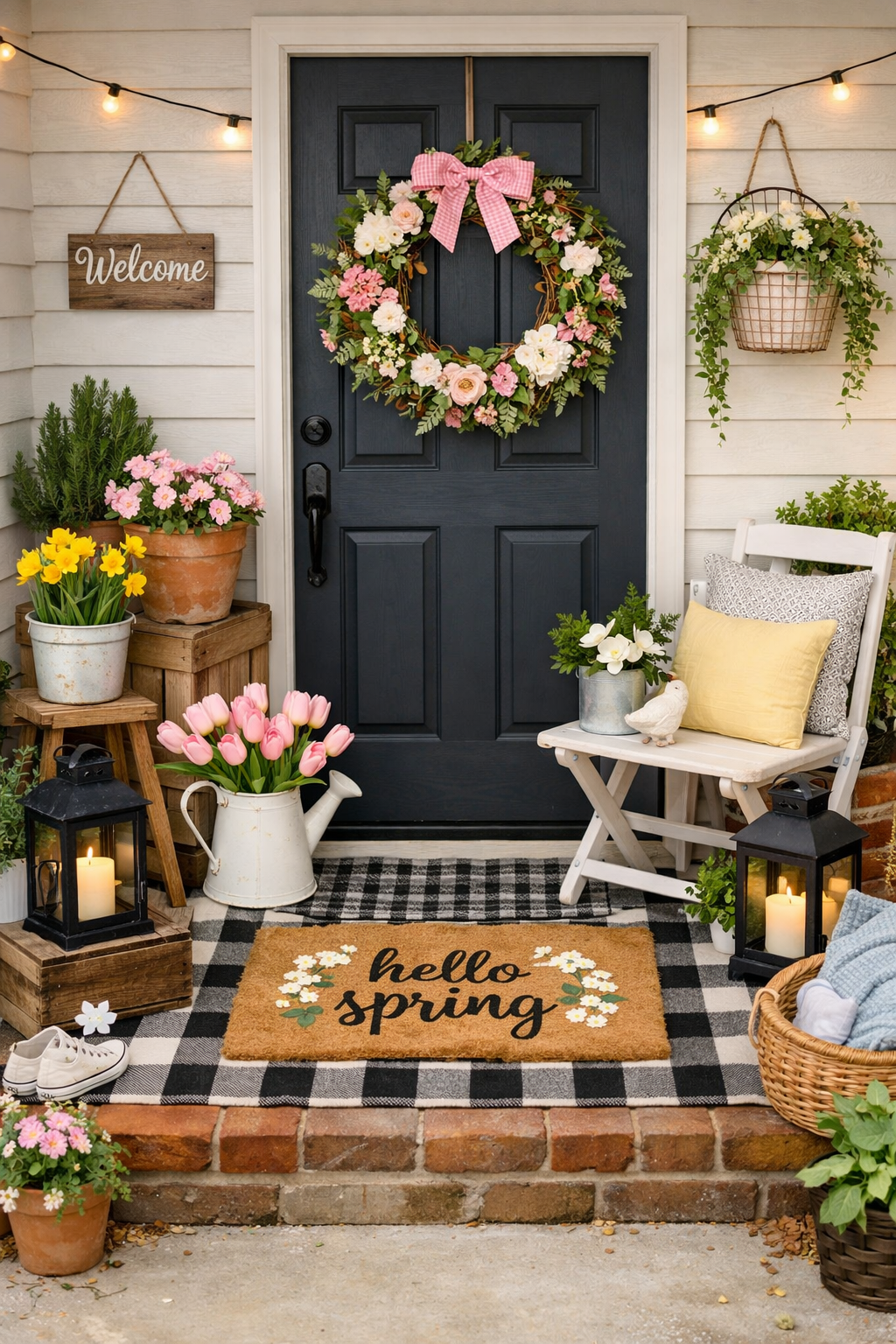
Spring porch styling on a budget with easy decor ideas, thrifted finds, plants, layered rugs, and simple touches to refresh your entry for the season.

As an Amazon Associate, I earn from qualifying purchases.

Spring brings longer days, fresh air, and the perfect excuse to refresh your porch. The good news is a beautiful seasonal setup does not require a big spend. With a few smart swaps and simple touches, your entryway can feel bright, welcoming, and ready for spring. These budget-friendly spring porch styling ideas help you create charm without draining your wallet.

Related: Spring Simmer Pot with Lavender & Chamomile for a Fresh Home

Start With a Clean and Fresh Base

Before adding anything new, give your porch a quick refresh. Dirt and winter clutter can make even the prettiest decor feel dull. Sweep the floors, wipe down railings, and shake out rugs. If needed, rinse surfaces with a hose.

Once cleaned, the space instantly feels brighter. A fresh base allows every budget-friendly piece to stand out. Even small updates look more intentional after a simple cleanup.

Add a Budget-Friendly Spring Door Wreath

A wreath is often the focal point of spring porch styling on a budget. It draws attention and sets the tone for the season. Affordable options can be found at discount stores, craft shops, or even thrift stores.

You can also create your own. Start with a grapevine base, then add faux greenery, florals, or ribbon. Soft pastels, greenery, and wildflowers look beautiful for spring. Handmade wreaths often look high-end but cost very little.

Use Potted Plants for Instant Color

Nothing says spring like fresh greenery. Potted plants are one of the easiest ways to decorate a porch on a budget. Mix inexpensive flowers with greenery for a layered look.

Try these affordable ideas:

  • Small terra cotta pots grouped together
  • Hanging baskets for vertical interest
  • Faux plants mixed with real ones
  • Herbs for both style and function

Grouping plants in odd numbers creates a fuller appearance. Even budget blooms can look styled and intentional.

Swap Out or Layer Your Doormat

A seasonal doormat adds personality without taking up space. Spring-themed mats with florals, welcome messages, or soft colors work well.

For extra style, layer a smaller doormat over a larger outdoor rug. This trend makes your porch feel cozy and designed. Look for inexpensive outdoor rugs in neutral patterns to keep costs low.

Related: How to Create a Seasonal Spring Mood Board

Add Light and Airy Textiles

Soft textures help transition from winter to spring. Lightweight pillows, cushions, or throws bring comfort and color.

Stick with:

  • Pastel tones
  • Floral prints
  • Soft stripes
  • Neutral bases with pops of color

Outdoor pillows can be pricey, so check clearance sections. Pillow covers are another budget-friendly option. Simply swap covers instead of buying new inserts.

Decorate With Thrifted or Repurposed Finds

Budget porch styling works best when creativity leads the way. Thrift stores and yard sales often have hidden gems perfect for spring.

Look for:

  • Wooden crates
  • Small benches or stools
  • Lanterns
  • Watering cans
  • Baskets

These items add charm and texture. A simple coat of paint can completely transform secondhand finds.

Use Lanterns for Cozy Spring Evenings

Lanterns add warmth and style without much effort. Fill them with faux candles, greenery, or even small florals. Place them near seating or by the door.

Mix different heights for visual interest. Budget lanterns from discount stores still create a polished look.

Keep It Simple and Balanced

Spring porch styling on a budget works best when the space is not overcrowded. Focus on a few key pieces instead of filling every corner.

Try this simple formula:

  • One focal point near the door
  • A small seating or plant area
  • A layered doormat setup

This keeps your porch feeling clean, welcoming, and seasonal.

Refresh With Small Seasonal Touches

Finally, add small details that celebrate spring. These finishing touches complete the look without extra spending.

Consider:

  • Faux tulips in a pitcher
  • A pastel watering can
  • A small welcome sign
  • Decorative bird accents

These little additions bring personality while staying budget-friendly.

Spring porch styling on a budget is all about creativity and thoughtful choices. With a few affordable pieces, your porch can feel fresh, inviting, and ready for the season. Even small updates create a space that welcomes guests and makes coming home feel extra special.

Lisa Crow contributed to this article. She is a true crime junkie and lifestyle blogger based in Waco, Texas. Lisa is the Head of Content at Gigi’s Ramblings and Southern Bred True Crime Junkie. She spends her free time traveling when she can and making memories with her large family which consists of six children and sixteen grandchildren.

Vintage-style infographic titled “Forgotten Skills Grandparents Used Daily That Still Matter Today” featuring illustrations of cooking from scratch, gardening and preserving food, sewing and mending clothes, fixing tools, line-drying laundry, and simple living tips on an aged parchment background with rustic farmhouse design.

There was a time when everyday life required a lot more hands-on know-how. Long before convenience ruled the day, many skills were used so often they barely felt like skills at all. They were simply part of getting by.

Today, those same abilities are quietly fading away. However, many of them are making a comeback for good reason. They save money, build independence, and bring a deeper sense of satisfaction to everyday life.

Let’s take a look at some of those forgotten skills grandparents used daily and why they are still worth learning.

Related: Skills Homesteaders Rely on Daily

Cooking From Scratch Without Recipes

Meals used to be created from memory, instinct, and whatever happened to be on hand. Instead of relying on pre-packaged foods or step-by-step instructions, ingredients were measured by feel and experience.

Because of this, food waste was kept low and creativity stayed high. A handful of vegetables, a bit of meat, and some pantry staples could easily turn into a full meal.

Today, this skill can still be incredibly useful. Grocery prices continue to rise, and cooking from scratch allows meals to stretch further while tasting better. It also helps reduce reliance on processed foods.

Growing and Preserving Food

Backyards were often turned into productive gardens, and what could not be eaten fresh was preserved for later. Canning, drying, and pickling were common practices that ensured nothing went to waste.

Seasonal eating was simply a way of life. When tomatoes were ready, they were used in everything. When harvest time ended, jars lined pantry shelves for months ahead.

Even now, growing a small garden or learning simple preservation methods can cut costs and provide healthier food options. It also brings a strong sense of accomplishment that store-bought goods just cannot match.

Related: Planning a More Self-Sufficient Life Through Gardening and Canning

Sewing and Mending Clothes

Clothing was not disposable. When something tore or wore out, it was fixed. Basic sewing skills were used to patch holes, replace buttons, and extend the life of garments.

Because of this, wardrobes lasted longer and money was saved. Fast fashion did not exist, and people took pride in maintaining what they owned.

Bringing this skill back does not require much. A simple needle and thread can go a long way. Small repairs can keep clothes out of the trash and money in your pocket.

Fixing Things Instead of Replacing Them

If something broke, the first thought was to fix it, not throw it away. Whether it was a squeaky door, a faulty appliance, or a loose chair leg, basic repair skills were used daily.

This mindset created resourcefulness and reduced unnecessary spending. It also built confidence in handling everyday problems.

While modern products are often designed to be replaced, many items can still be repaired with a little patience and effort. Learning even a few basic fixes can make a big difference.

Related: When to Start Seedlings Indoors and How to Prep Your Garden for Planting Season

Handwashing and Line Drying Laundry

Before dryers became standard, clothes were often washed by hand or in simple machines and then hung outside to dry. Fresh air and sunlight did the rest.

This method saved energy and helped clothes last longer since high heat was avoided. It also gave fabrics a clean, natural scent that cannot be replicated.

Even today, line drying can reduce utility bills and extend the life of clothing. It may take a little more time, but the benefits add up quickly.

Managing With Less and Making Do

Perhaps one of the most valuable skills was the ability to make do with what was available. Instead of constantly upgrading or replacing items, people learned to adapt and reuse.

Leftovers became new meals. Old materials found new purposes. Creativity filled the gaps where money or resources were limited.

This mindset is especially valuable now. It encourages smarter spending, reduces waste, and builds resilience in uncertain times.

Why These Skills Are Making a Comeback

As life becomes more expensive and fast-paced, many people are beginning to rediscover these old ways. They offer something modern convenience often lacks: control, self-reliance, and a sense of connection to everyday life.

While it may not be necessary to fully return to the past, even adopting a few of these skills can have a noticeable impact. Small changes can lead to big savings and a more grounded way of living.

Lisa Crow contributed to this article. She is a true crime junkie and lifestyle blogger based in Waco, Texas. Lisa is the Head of Content at Gigi’s Ramblings and Southern Bred True Crime Junkie. She spends her free time traveling when she can and making memories with her large family which consists of six children and sixteen grandchildren.

Colorful spring garden featuring tulips, hyacinths, daffodils, Easter lilies, and elephant ears with gardening tools and bulbs in foreground

As an Amazon Associate, I earn from qualifying purchases.

There’s just something about planting bulbs that feels like a promise you’re making to yourself. You tuck them into the dirt, forget about them for a while, and then—just when you need it most—they show up and show out. Over the years, I’ve found a handful of go-to favorites that never disappoint, along with a few planting tips that make all the difference between “meh” and “wow.”

Let’s dig into the ones I keep coming back to season after season.

Tulips: Classic for a Reason

Tulips are one of those flowers that never go out of style. They’re clean, colorful, and just downright cheerful. Whether you go for bold reds or soft pastels, they bring that instant “spring is here” feeling to any yard.

That said, tulips can be a little picky depending on where you live. In warmer areas, they don’t always come back strong year after year. Because of that, many gardeners treat them like annuals and replant each fall. It might sound like extra work, but honestly, it’s worth it for that burst of color.

When planting tulips, make sure they go in during the fall before the ground freezes. They need that cold period to bloom properly. Plant them about 6–8 inches deep, and give them well-drained soil so they don’t rot.

Related: DIY Gardening: Tips for Starting Your Spring Garden

Hyacinths: Big Fragrance, Small Package

If you want flowers that make a statement without taking up much space, hyacinths are your best friend. These little clusters pack a serious punch, especially when it comes to scent. You’ll smell them before you even see them.

They’re perfect for lining walkways or planting near a porch where you can actually enjoy that fragrance. Plus, they come in a variety of colors, so you can mix and match without things looking messy.

Hyacinths follow the same general planting rules as tulips. Fall planting is key, and they prefer well-drained soil. One thing to keep in mind, though, is that their scent can be strong—so a few well-placed bulbs go a long way.

Easter Lilies: Elegant and Meaningful

Easter lilies bring a whole different vibe to the garden. They’re tall, elegant, and have that classic trumpet-shaped bloom that instantly catches the eye. While they’re often associated with spring holidays, they can absolutely be grown outdoors with a little care.

If you’ve ever been gifted one in a pot, don’t toss it after it blooms. Instead, plant it outside once the weather warms up. Over time, it can establish itself and come back year after year.

They like a sunny spot with some afternoon shade, especially in hotter climates. Also, make sure the soil drains well because they don’t like sitting in water. With the right conditions, they’ll reward you with those stunning blooms that feel just a little bit special.

Elephant Ears: The Showstoppers

Now let’s talk about my absolute favorites—elephant ears. These aren’t technically bulbs, they’re tubers, but we’re not splitting hairs here. They belong in this conversation because they bring serious drama to any space.

Elephant ears are all about those massive, heart-shaped leaves. They instantly give your yard a tropical feel, even if you’re nowhere near the beach. If you want something that fills space fast and makes people stop and look, this is it.

Unlike the others on this list, elephant ears thrive in warm weather. You’ll want to plant them in spring after the danger of frost has passed. They love moisture, so don’t be shy with watering, and they can handle a bit of shade better than most.

In colder areas, you can dig them up before winter, store them, and replant the next year. It’s a little extra effort, but once you see how big and bold they get, you’ll understand why it’s worth it.

Related: Rooted in Spring: Gigi’s Guide to Starting Your Garden Right

Daffodils: Reliable and Low-Maintenance

If you want something you can plant and almost forget about, daffodils are the way to go. They’re tough, dependable, and tend to come back year after year without much fuss.

Their bright yellow blooms are one of the first signs of spring, and they naturalize well, meaning they’ll spread over time and fill in your space beautifully. That makes them perfect for larger areas where you want a more natural look.

Plant them in the fall just like tulips and hyacinths, about 6 inches deep. They’re not too picky about soil, but they do best in spots that don’t stay soggy.

Simple Planting Tips That Make a Big Difference

Getting the most out of your bulbs doesn’t require a green thumb—just a little know-how. First, always pay attention to timing. Fall-planted bulbs like tulips, hyacinths, and daffodils need that cold period, while warm-weather growers like elephant ears should go in after the last frost.

Next, depth matters more than people think. A good rule of thumb is to plant bulbs about two to three times as deep as their height. This helps protect them and gives them the support they need to grow properly.

Soil is another big one. Most bulbs hate sitting in water, so if your soil is heavy, consider mixing in some sand or compost to improve drainage. On the flip side, elephant ears enjoy a bit more moisture, so they’re a little more forgiving.

Finally, don’t be afraid to group your bulbs together. Planting in clusters instead of straight lines creates a fuller, more natural look. It might feel a little chaotic while you’re planting, but trust me, it pays off once everything blooms.

Bringing It All Together

When you mix these favorites together, you end up with a yard that evolves through the seasons. Tulips and hyacinths kick things off with early color and fragrance, daffodils keep the momentum going, Easter lilies add that touch of elegance, and elephant ears come in strong when the heat rolls around.

It’s not about being perfect or having some picture-perfect garden. It’s about planting things you enjoy and giving them a chance to surprise you. And honestly, there’s nothing better than stepping outside and seeing something you planted months ago finally doing its thing.

Lisa Crow contributed to this article. She is a true crime junkie and lifestyle blogger based in Waco, Texas. Lisa is the Head of Content at Gigi’s Ramblings and Southern Bred True Crime Junkie. She spends her free time traveling when she can and making memories with her large family which consists of six children and sixteen grandchildren.

March Madness 2026 promotional graphic showing a basketball about to go through the hoop, a player dunking, bold text with 'March Madness 2026,' and a glowing city skyline in the background with confetti and vibrant colors.

Every March, something wild happens across the country. Office productivity drops, group chats blow up, and suddenly everyone thinks they’re a college basketball expert.

That’s the magic of March Madness.

If you’ve ever wondered why this tournament pulls in even the most casual fans, you’re not alone. Let’s break down what makes it so addictive and why 2026 is shaping up to be another unforgettable year.

What Is March Madness?

March Madness is the NCAA Division I men’s basketball tournament, where 68 college teams compete in a single-elimination bracket.

And when we say single elimination, we mean it. One bad game and you’re out.

The tournament kicks off with Selection Sunday, when teams are officially placed into the bracket. From there, it’s nonstop action for nearly three weeks.

The 2026 Tournament Schedule

If you’re planning watch parties or just trying to keep up, here’s how it all unfolds this year:

  • Selection Sunday: March 15
  • First Four: March 17–18
  • First Round: March 19–20
  • Second Round: March 21–22
  • Sweet 16: March 26–27
  • Elite Eight: March 28–29
  • Final Four: April 4
  • Championship Game: April 6

Everything builds toward the Final Four in Indianapolis, where the last teams standing battle it out for the title.

Why People Get Obsessed

Let’s be honest. It’s not just about basketball.

Brackets Take Over Everything

Even folks who haven’t watched a single game all season suddenly feel confident filling out a bracket.

You’ll see coworkers, families, and friends competing for bragging rights. And somehow, the person who picked teams based on mascots is still winning.

Upsets Are Guaranteed

This is where things get fun.

Lower-seeded teams regularly knock out top contenders, creating those “Cinderella stories” everyone loves.

It’s unpredictable, chaotic, and honestly kind of addictive.`

Related: March Madness 2025: Understanding the Hype

One Game Changes Everything

There’s no series, no second chances. Just one game to prove yourself.

That pressure creates some of the most intense moments in sports.

What Makes 2026 Different?

While the format stays the same, every year brings its own energy.

There’s already buzz around powerhouse teams, surprise conference winners, and potential underdogs ready to shake things up. And despite ongoing discussions, the tournament is still holding steady at 68 teams for now.

That means the competition remains tight and every spot still matters.

Tips for Enjoying March Madness

If you want to actually enjoy the madness instead of feeling lost, here’s what helps:

  • Don’t overthink your bracket
  • Pick at least one underdog to go far
  • Watch the first weekend closely because that’s where the chaos happens
  • Join a bracket pool to make it more fun

And most importantly, just lean into it.

Why It Never Gets Old

There’s something about March Madness that keeps people coming back every single year.

Maybe it’s the buzzer-beaters.
Maybe it’s the underdog stories.
Or maybe it’s just the shared experience of watching something completely unpredictable unfold.

Whatever it is, once you get into it, you get it.

And in 2026, it’s already delivering exactly what fans love.

Lisa Crow contributed to this article. She is a true crime junkie and lifestyle blogger based in Waco, Texas. Lisa is the Head of Content at Gigi’s Ramblings and Southern Bred True Crime Junkie. She spends her free time traveling when she can and making memories with her large family which consists of six children and sixteen grandchildren.

Bright, eye-catching graphic with bold text reading “Why March Is Prime Networking Season,” featuring professionals shaking hands, networking events, a spring city backdrop, and blooming flowers under a sunny sky.

March tends to hit that sweet spot where energy shifts, routines reset, and people start showing up again. After the slower pace of winter, conversations feel easier, calendars open up, and opportunities begin to surface. Because of this natural transition, March is often considered one of the best times to focus on networking, whether for business, blogging, or personal growth.

A Natural Shift in Energy and Motivation

By the time March rolls around, the sluggish feeling of January and February usually starts to fade. Warmer days, longer daylight hours, and a general sense of renewal create a noticeable boost in motivation.

Because people are more active and engaged, networking becomes more effective. Messages are more likely to get responses, invitations are accepted more often, and conversations tend to flow with less effort. As a result, connections that might have stalled earlier in the year can begin to move forward.

Post-Holiday Reset Creates New Opportunities

After the holiday season and the start-of-year rush, many individuals and businesses begin to reassess their goals. March often becomes a time when plans are adjusted and new collaborations are considered.

This makes it an ideal time to step in and connect. While others are refining their strategies, your outreach can naturally align with their need for fresh ideas, partnerships, or support. Because of this timing, networking efforts tend to feel more relevant and well-received.

Related: The Rise of Backyard Businesses

Spring Events and Gatherings Increase

Another reason March stands out for networking is the increase in events. Conferences, local meetups, workshops, and community gatherings begin to pick back up during this time.

Even casual opportunities, such as school functions, markets, or local business events, can turn into meaningful connections. Since more people are getting out and engaging, it becomes easier to meet others organically rather than forcing interactions.

Digital Networking Picks Up Momentum

Online networking also sees a noticeable boost in March. Social media activity increases, email responses improve, and collaboration requests become more common.

This shift often happens because people are back in a routine and actively working toward their yearly goals. As a result, platforms like LinkedIn, blogging communities, and even niche groups become more active and responsive.

Consistency during this time can lead to stronger visibility and more meaningful engagement.

A Strategic Time to Build Long-Term Relationships

Connections made in March often carry momentum into the rest of the year. Because relationships are built during a time of renewed focus and energy, they tend to develop more naturally.

Rather than rushed or forced interactions, networking in March allows for steady growth. Conversations can evolve into partnerships, collaborations, or long-term professional relationships over time.

Related: The Rise of Digital Nomads in Small Towns

It Sets the Tone for the Rest of the Year

Efforts made during March can influence the months that follow. By establishing connections early in the spring, a solid foundation is created for future opportunities.

Whether the goal is growing a business, expanding a blog audience, or simply meeting like-minded people, March provides the right environment to get started.

Final Thoughts on March Networking

March offers a unique mix of timing, energy, and opportunity that makes networking feel less like a task and more like a natural extension of daily life. Because people are more open, active, and forward-thinking, connections made during this month often carry more weight.

Taking advantage of this season can lead to meaningful relationships, new opportunities, and steady growth throughout the year.

Related: Build a Business Without Being Online 24/7

Lisa Crow contributed to this article. She is a true crime junkie and lifestyle blogger based in Waco, Texas. Lisa is the Head of Content at Gigi’s Ramblings and Southern Bred True Crime Junkie. She spends her free time traveling when she can and making memories with her large family which consists of six children and fifteen grandchildren.