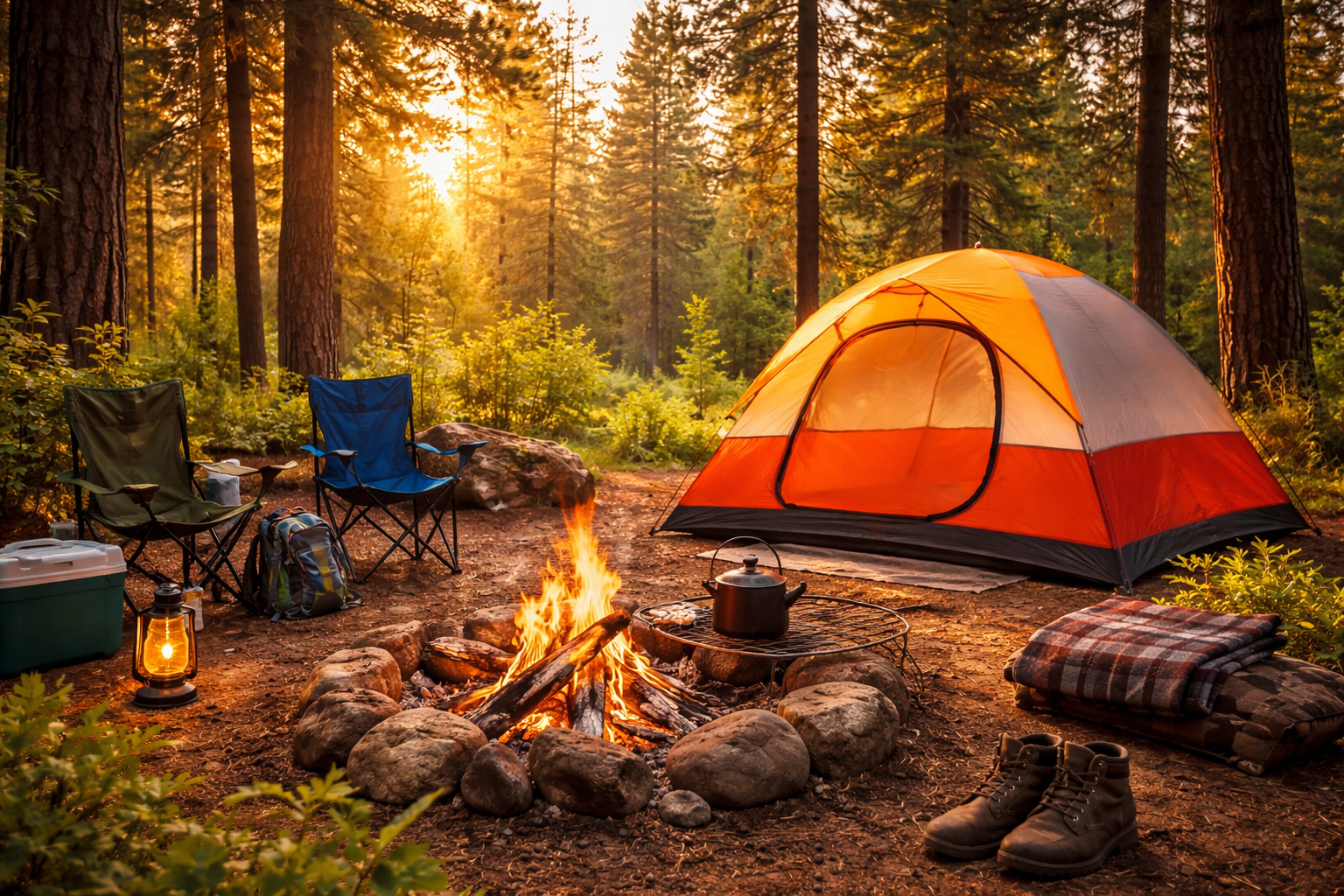
Camping sounds simple enough. You grab a tent, head out to the woods, and enjoy nature, right? Well… not exactly. First-time campers often discover pretty quickly that a little preparation goes a long way.
The good news is that most first-time camping mistakes are easy to avoid once you know what to look out for. If you plan ahead and keep things simple, your trip can be relaxing, fun, and something you will want to do again.
We absolutely love camping and try to go a few times a year, usually starting around March when the weather begins to warm up. Every trip teaches you something new. Over time you learn what works, what you forgot, and what you definitely do not want to deal with again.
If you are planning your first trip, here are some of the most common mistakes first-time campers usually make and how to avoid them.
Bringing Way Too Much Stuff
One of the biggest beginner camping mistakes is overpacking. When people picture camping, they often imagine needing every tool, gadget, and extra supply imaginable. I’ve been camping my whole life and still guilty of this. I pack so much that never makes it out of the bag.
In reality, camping is much more enjoyable when you keep things simple.
Instead of packing your entire house, focus on the basics:
Overpacking creates clutter and makes setting up camp stressful. Plus, if you are hiking to your campsite, carrying too much gear quickly becomes miserable.
A simple setup is usually the best setup.
Not Practicing Setting Up the Tent
Nothing humbles a new camper faster than trying to set up a tent for the first time in the dark.
It happens more often than you would think. People arrive at their campsite late in the evening, open the tent bag, and suddenly realize the instructions might as well be written in another language.
Before your trip, set up the tent in your backyard or living room. It only takes a few minutes and helps you understand how everything fits together.
Practicing once makes campsite setup much smoother and prevents unnecessary frustration.
Related: How to Camp Without Losing Your Everlovin’ Mind
Ignoring the Weather Forecast
Another common first-time camping mistake is not checking the weather before leaving.
Weather can change quickly, especially in spring. Since we usually start camping trips around March, we always check the forecast a few days ahead of time and again right before leaving.
You do not need to cancel a trip because of light rain, but you should pack accordingly. Bring things like:
- Rain jackets
- Extra socks
- A tarp or ground cover
Staying dry makes a huge difference when you are camping.
Choosing the Wrong Campsite
Not all campsites are created equal. Beginners sometimes pick spots without thinking about things like terrain, shade, or proximity to water.
When you arrive, take a minute to look around before setting up your tent. Try to choose a location that is:
- Flat and level
- Slightly elevated so water drains away
- Away from strong wind
- Not directly under dead branches
A good campsite makes sleeping much more comfortable.
Forgetting Proper Lighting
It gets dark outside much faster than people expect when camping.
Once the sun goes down, you will quickly realize how important lighting is. First-time campers sometimes bring a single flashlight and assume that will be enough.
Instead, bring a few lighting options like:
- Headlamps
- Lanterns
- Extra batteries
Headlamps are especially useful because they keep your hands free while cooking, setting up gear, or walking around camp.
Not Planning Simple Meals
Food can become complicated very quickly when camping, especially if you try to cook elaborate meals.
First-time campers sometimes pack ingredients for meals that require multiple pans, precise timing, or complicated prep work. That usually leads to frustration and a lot of cleanup.
Simple meals work best outdoors. Think things like:
- Hot dogs
- Foil packet meals
- Sandwiches
- Instant oatmeal
- Eggs and bacon for breakfast
The easier the meal, the more time you have to relax and enjoy the outdoors.
Forgetting About Bugs
Nature is beautiful, but bugs are part of the package.
Many beginners forget to pack bug spray or assume it will not be a big deal. Unfortunately, mosquitoes and other insects tend to disagree.
A few simple items can make a big difference:
These small precautions make evenings around the campfire much more enjoyable.
Not Respecting Campfire Safety
Campfires are one of the best parts of camping, but they require a little responsibility.
First-time campers sometimes build fires that are too large or leave them unattended. Always follow campground rules and keep fires in designated fire rings.
Before leaving or going to bed, fully extinguish the fire with water and stir the ashes until everything is cool.
A safe campfire keeps everyone happy and protects the campground.
Related: Toss It, Wrap It, Eat It: Foil Pack Magic
Expecting Everything to Be Perfect
Finally, one of the biggest mistakes new campers make is expecting everything to go perfectly.
Camping has a way of throwing little surprises at you. Maybe the wind picks up, the fire takes longer to start, or dinner turns out slightly overcooked.
That is part of the experience.
Instead of stressing over small issues, laugh them off and enjoy the adventure. Some of the best camping memories come from the things that did not go exactly as planned.
Final Thoughts
Camping is one of the best ways to unplug, relax, and spend time outdoors. Once you avoid the most common first-time camping mistakes, the experience becomes much more enjoyable.
With a little preparation, the right gear, and a relaxed attitude, your first camping trip can turn into the start of a great tradition.
For us, camping trips are something we look forward to every year. Once March rolls around, we start planning a few getaways whenever we can. There is just something about fresh air, a campfire, and sleeping under the stars that never gets old.
And the best part is that every trip gets easier once you learn what works.
Lisa Crow contributed to this article. She is a true crime junkie and lifestyle blogger based in Waco, Texas. Lisa is the Head of Content at Gigi’s Ramblings and Southern Bred True Crime Junkie. She spends her free time traveling when she can and making memories with her large family which consists of six children and fifteen grandchildren.