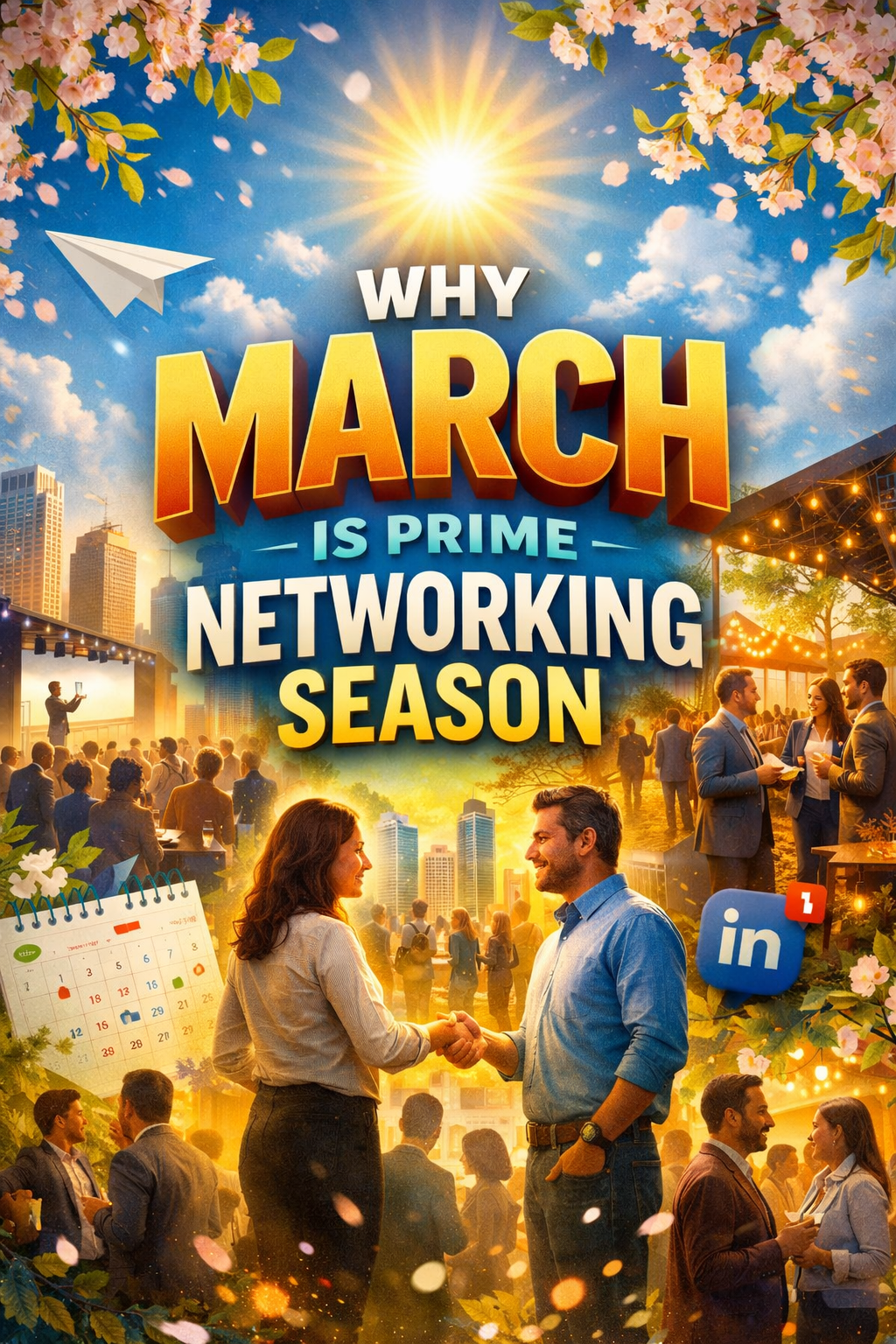
Bright, eye-catching graphic with bold text reading “Why March Is Prime Networking Season,” featuring professionals shaking hands, networking events, a spring city backdrop, and blooming flowers under a sunny sky.

March tends to hit that sweet spot where energy shifts, routines reset, and people start showing up again. After the slower pace of winter, conversations feel easier, calendars open up, and opportunities begin to surface. Because of this natural transition, March is often considered one of the best times to focus on networking, whether for business, blogging, or personal growth.

A Natural Shift in Energy and Motivation

By the time March rolls around, the sluggish feeling of January and February usually starts to fade. Warmer days, longer daylight hours, and a general sense of renewal create a noticeable boost in motivation.

Because people are more active and engaged, networking becomes more effective. Messages are more likely to get responses, invitations are accepted more often, and conversations tend to flow with less effort. As a result, connections that might have stalled earlier in the year can begin to move forward.

Post-Holiday Reset Creates New Opportunities

After the holiday season and the start-of-year rush, many individuals and businesses begin to reassess their goals. March often becomes a time when plans are adjusted and new collaborations are considered.

This makes it an ideal time to step in and connect. While others are refining their strategies, your outreach can naturally align with their need for fresh ideas, partnerships, or support. Because of this timing, networking efforts tend to feel more relevant and well-received.

Related: The Rise of Backyard Businesses

Spring Events and Gatherings Increase

Another reason March stands out for networking is the increase in events. Conferences, local meetups, workshops, and community gatherings begin to pick back up during this time.

Even casual opportunities, such as school functions, markets, or local business events, can turn into meaningful connections. Since more people are getting out and engaging, it becomes easier to meet others organically rather than forcing interactions.

Digital Networking Picks Up Momentum

Online networking also sees a noticeable boost in March. Social media activity increases, email responses improve, and collaboration requests become more common.

This shift often happens because people are back in a routine and actively working toward their yearly goals. As a result, platforms like LinkedIn, blogging communities, and even niche groups become more active and responsive.

Consistency during this time can lead to stronger visibility and more meaningful engagement.

A Strategic Time to Build Long-Term Relationships

Connections made in March often carry momentum into the rest of the year. Because relationships are built during a time of renewed focus and energy, they tend to develop more naturally.

Rather than rushed or forced interactions, networking in March allows for steady growth. Conversations can evolve into partnerships, collaborations, or long-term professional relationships over time.

Related: The Rise of Digital Nomads in Small Towns

It Sets the Tone for the Rest of the Year

Efforts made during March can influence the months that follow. By establishing connections early in the spring, a solid foundation is created for future opportunities.

Whether the goal is growing a business, expanding a blog audience, or simply meeting like-minded people, March provides the right environment to get started.

Final Thoughts on March Networking

March offers a unique mix of timing, energy, and opportunity that makes networking feel less like a task and more like a natural extension of daily life. Because people are more open, active, and forward-thinking, connections made during this month often carry more weight.

Taking advantage of this season can lead to meaningful relationships, new opportunities, and steady growth throughout the year.

Related: Build a Business Without Being Online 24/7

Lisa Crow contributed to this article. She is a true crime junkie and lifestyle blogger based in Waco, Texas. Lisa is the Head of Content at Gigi’s Ramblings and Southern Bred True Crime Junkie. She spends her free time traveling when she can and making memories with her large family which consists of six children and fifteen grandchildren.
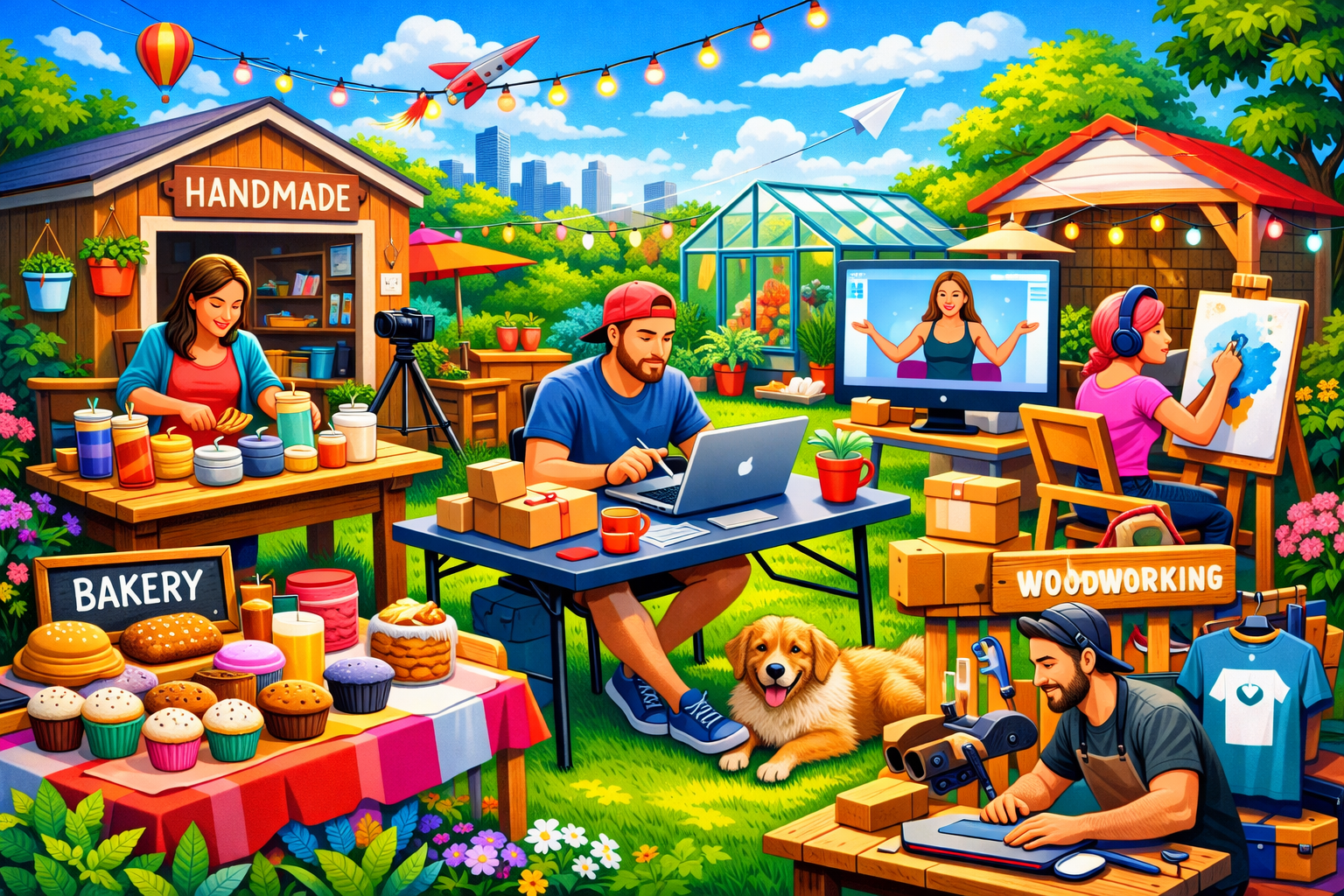
Bright, colorful illustration of a lively backyard filled with small business owners working from home, including a baker, a handmade candle maker, a digital creator on a laptop, an online instructor on a screen, a painter, and a woodworker, surrounded by shipping boxes, string lights, and a cheerful garden setting.

Image created with ChatGPT

Something interesting has been happening over the last few years. More people are building real income from their backyards, spare bedrooms, garages, and kitchen tables. Not corporate offices. Not downtown buildings. Just regular homes with Wi-Fi and a little grit.

The rise of backyard businesses is not some trendy phase. It is a shift in how people think about work. Instead of waiting for promotions, layoffs, or permission, folks are creating their own opportunities. And honestly, it makes sense.

Between rising costs, unpredictable job markets, and the desire for more freedom, people are done putting all their eggs in one employer’s basket. So they are planting something in their own backyard instead.

Why Backyard Businesses Are Booming

First, technology made it possible. You no longer need a storefront to sell products. You do not need a big office to offer services. Social media, online marketplaces, and simple website builders allow anyone to launch quickly and cheaply.

At the same time, people are craving authenticity. Customers want to buy from real humans, not faceless corporations. They want to know who made the candle, baked the sourdough, designed the T-shirt, or wrote the ebook. Backyard businesses offer that personal touch.

Additionally, flexibility is a huge factor. Parents want to work around school schedules. Creatives want control over their time. Employees burned out from rigid 9-to-5 jobs want breathing room. Running a business from home allows for that flexibility, even if it comes with its own challenges.

Then there is the financial reality. Inflation hits hard. Groceries are not cheap. Gas is not cheap. Everything costs more. So instead of cutting back on dreams, many people are increasing income streams. A backyard hustle can turn into steady side money. In some cases, it grows into a full-time operation.

Related: Behind-the-Scenes: How I Track Orders Without Fancy Software

What Counts as a Backyard Business?

It is not just lemonade stands and lawn mowing anymore. Although those still count.

Today, backyard businesses include handmade product shops, digital services, content creation, tutoring, consulting, baking, woodworking, plant propagation, print-on-demand stores, and even niche subscription boxes. Some people flip furniture in their garage. Others teach online classes from a quiet corner of their house.

The beauty is in the variety. One person might be shipping wax melts from a spare bedroom. Another might be running bookkeeping services after the kids go to bed. Meanwhile, someone else is building a blog that eventually pays through ads and affiliate income.

In other words, if you have a skill, you can likely monetize it. The barrier to entry is lower than ever.

The Mindset Shift Behind the Movement

However, this rise is not just about money. It is about control.

For decades, the traditional path was simple. Get a stable job. Stay loyal. Retire someday. That script feels shaky now. Layoffs happen overnight. Companies restructure without warning. Even solid industries feel unstable.

Because of that, people are choosing ownership over dependence. Even if the business is small at first, it represents something powerful. It represents choice.

Moreover, there is pride involved. Building something from scratch in your own space hits differently. Watching orders come in. Seeing positive reviews. Realizing strangers value what you created. That kind of validation builds confidence fast.

The Challenges No One Talks About

Of course, backyard businesses are not all aesthetic Instagram reels and cozy desk setups.

Working from home can blur boundaries. It is easy to answer emails late at night. It is tempting to keep “just finishing one more thing.” Without structure, burnout sneaks in.

Additionally, income can fluctuate. Some months feel amazing. Others feel slow. That unpredictability requires discipline and patience. Marketing also becomes your responsibility. There is no corporate team handling ads or branding. It is on you.

Still, for many people, the trade-off is worth it. The stress feels different when you are building your own thing instead of someone else’s.

Related: How I Built a Business With Zero Outside Help

How to Start a Backyard Business the Smart Way

If you are thinking about joining the rise of backyard businesses, start simple. Do not overcomplicate it.

First, look at what you already know how to do. Skills from your current job can often transfer into freelance services. Hobbies can turn into product lines. Experience matters more than fancy degrees.

Next, validate the idea before going all in. Offer your service to a small group. Post a few products. Gauge interest. Adjust based on feedback. Testing first prevents expensive mistakes.

Then, treat it seriously from day one. Even if it is a side hustle, act like a business owner. Track expenses. Separate accounts if possible. Build a simple brand presence online. Consistency builds trust.

Finally, give it time. Growth rarely explodes overnight. It builds steadily when you show up consistently and improve little by little.

The Bigger Picture

The rise of backyard businesses signals something bigger than side hustles. It signals independence.

People want autonomy. They want creative control. They want income streams that are not tied to a single employer’s decision. So they are building quietly from their own property lines outward.

Not every backyard business will scale into a million-dollar brand. And that is fine. For many, the goal is not world domination. It is stability. It is extra breathing room. It is the ability to say no when needed.

Ultimately, this movement is about ownership. It is about planting seeds in your own space and watching them grow. And the more people who realize they can do that, the more backyard businesses we are going to see popping up everywhere.

Lisa Crow contributed to this article. She is a true crime junkie and lifestyle blogger based in Waco, Texas. Lisa is the Head of Content at Gigi’s Ramblings and Southern Bred True Crime Junkie. She spends her free time traveling when she can and making memories with her large family which consists of six children and fifteen grandchildren.