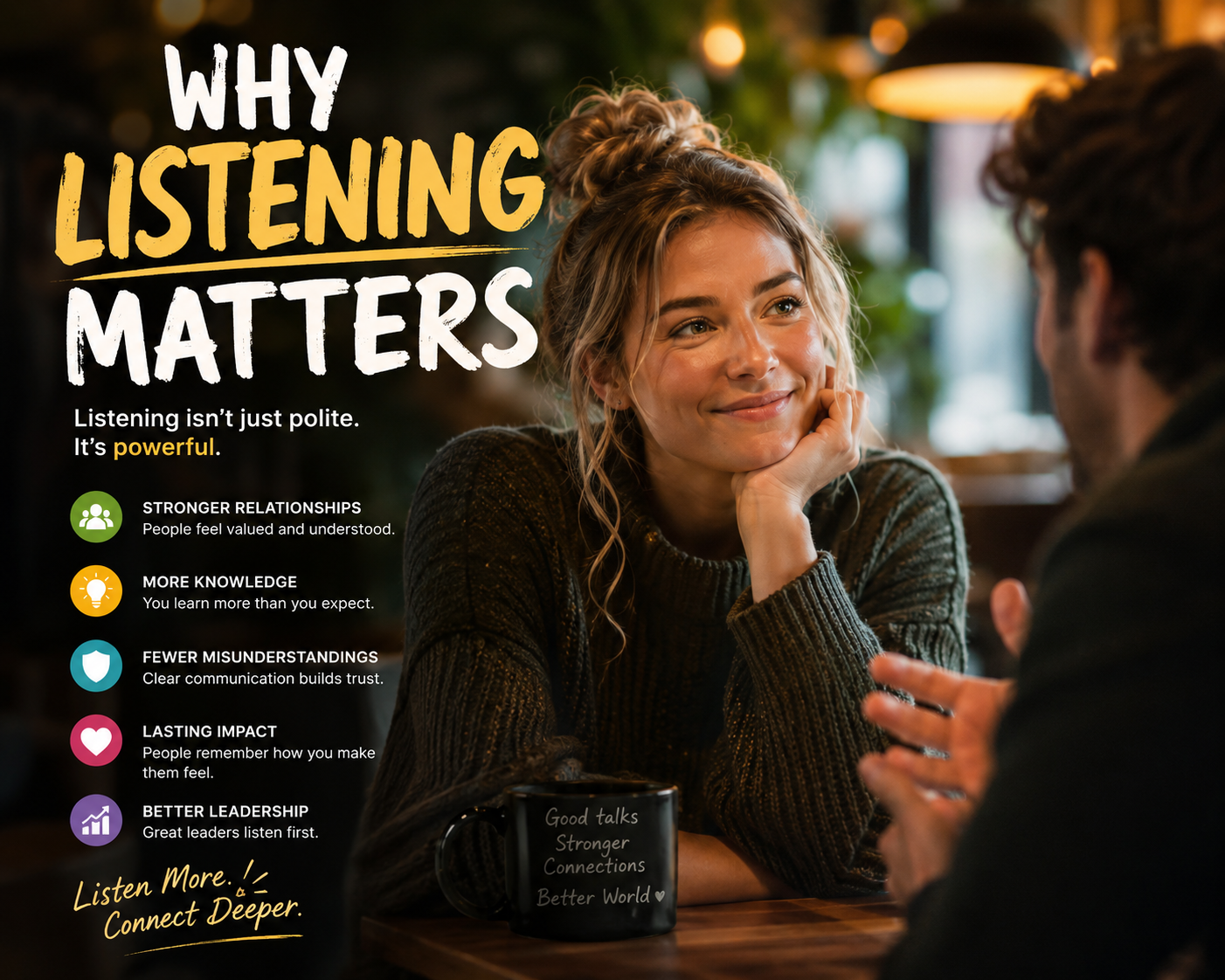
Most people think communication is all about talking. We admire people who tell great stories, speak confidently, or always seem to have the perfect thing to say. Yet one of the most overlooked skills is listening. Being a good listener can strengthen relationships, improve your career, prevent misunderstandings, and help people feel genuinely valued.
Listening isn’t simply staying quiet while someone else talks. It’s actively paying attention, understanding what’s being said, and responding thoughtfully. In a world full of distractions, giving someone your full attention has become surprisingly rare. That’s exactly why it matters so much.
Listening Builds Stronger Relationships
Whether you’re talking with your spouse, children, friends, or coworkers, listening creates trust. People naturally feel closer to those who make them feel heard. When someone knows they can speak openly without being interrupted or judged, they’re more likely to share their thoughts and feelings honestly.
Strong relationships aren’t built on having all the answers. They’re built on understanding each other. Listening allows you to catch emotions behind the words instead of focusing only on the facts.
Even small habits can make a difference. Putting your phone down, making eye contact, and asking follow-up questions tells someone they’re important enough to deserve your attention.
You Learn More When You Listen
There’s an old saying that you have two ears and one mouth for a reason. While it’s a simple phrase, there’s plenty of truth behind it.
Every conversation offers an opportunity to learn something new. Someone else’s experiences, knowledge, and perspective can teach you things you might never discover on your own. When you’re busy thinking about what you’re going to say next, it’s easy to miss valuable information.
Good listeners tend to ask thoughtful questions because they’re genuinely interested. Those questions often lead to deeper conversations that benefit everyone involved.
Listening Helps Prevent Misunderstandings
Many arguments don’t happen because people disagree. They happen because someone misunderstood what was actually being said.
Instead of jumping to conclusions, good listeners take time to clarify. They ask questions like, “Did you mean…?” or “Can you explain that a little more?” Those simple questions can prevent unnecessary hurt feelings and confusion.
Taking a few extra moments to understand someone’s point of view often saves hours of trying to repair damaged relationships later.
People Remember How You Made Them Feel
Most people won’t remember every word you said. They will remember how they felt after talking with you.
When someone feels listened to, they often leave the conversation feeling respected, appreciated, and understood. That positive experience sticks with them far longer than clever advice or funny stories.
Sometimes people don’t need solutions. They simply need someone willing to listen without trying to fix every problem immediately.
Listening Makes You a Better Leader
Whether you’re managing employees, volunteering at church, coaching a sports team, or simply leading your family, listening is one of the most valuable leadership skills you can develop.
Leaders who listen make better decisions because they gather more information before acting. They also create environments where people feel comfortable sharing ideas and concerns.
Employees are often more engaged when they know their opinions matter. Children are more likely to open up when they know their parents truly hear them. The same principle applies in nearly every setting.
Active Listening Takes Practice
Listening sounds easy, but it requires intention. Most of us have developed habits that get in the way without even realizing it.
Some common listening mistakes include:
- Interrupting before someone finishes speaking.
- Thinking about your response instead of paying attention.
- Offering advice too quickly.
- Changing the subject to your own experience.
- Assuming you already know what the other person means.
- Looking at your phone or other distractions.
Replacing those habits with better ones takes practice. Slow down, stay curious, and let people finish their thoughts before responding.
Listening Can Diffuse Conflict
During disagreements, people often focus on defending themselves rather than understanding the other person. That approach usually makes conflict worse.
When someone feels heard, they’re often less defensive. Listening doesn’t mean you agree with everything they’re saying. It simply means you’re making an effort to understand their perspective before sharing your own.
This shift alone can completely change the tone of a difficult conversation. Instead of becoming a battle over who’s right, it becomes a discussion aimed at finding common ground.
Better Listening Improves Every Area of Life
Listening benefits nearly every part of your life. It can improve marriages, friendships, parenting, customer service, teamwork, and even everyday conversations with strangers.
It also helps you become more patient and empathetic. As you spend more time understanding others, you naturally become more aware that everyone has experiences and struggles you may never see.
That awareness often leads to greater kindness, stronger connections, and more meaningful conversations.
Sometimes Silence Is the Best Response
Many people feel uncomfortable with silence, so they rush to fill every pause. However, silence often gives someone the space they need to gather their thoughts or continue sharing something meaningful.
Resisting the urge to immediately respond shows patience and respect. Some of the most heartfelt conversations happen because one person was willing to simply sit quietly and listen.
You don’t always have to say something profound. Sometimes your presence says more than your words ever could.
Final Thoughts
Listening may not seem like a remarkable skill, but it has the power to transform relationships and improve communication in ways few other habits can. Every meaningful conversation starts with someone choosing to truly pay attention.
The next time you’re talking with someone, challenge yourself to listen a little longer than you normally would. Ask one more question. Resist interrupting. Give them your full attention.
You may discover that being heard is one of the greatest gifts you can offer another person.
Lisa Crow contributed to this article. She is a true crime junkie and lifestyle blogger based in Waco, Texas. Lisa is the Head of Content at Gigi’s Ramblings and Southern Bred True Crime Junkie. She spends her free time traveling when she can and making memories with her large family which consists of six children and sixteen grandchildren.