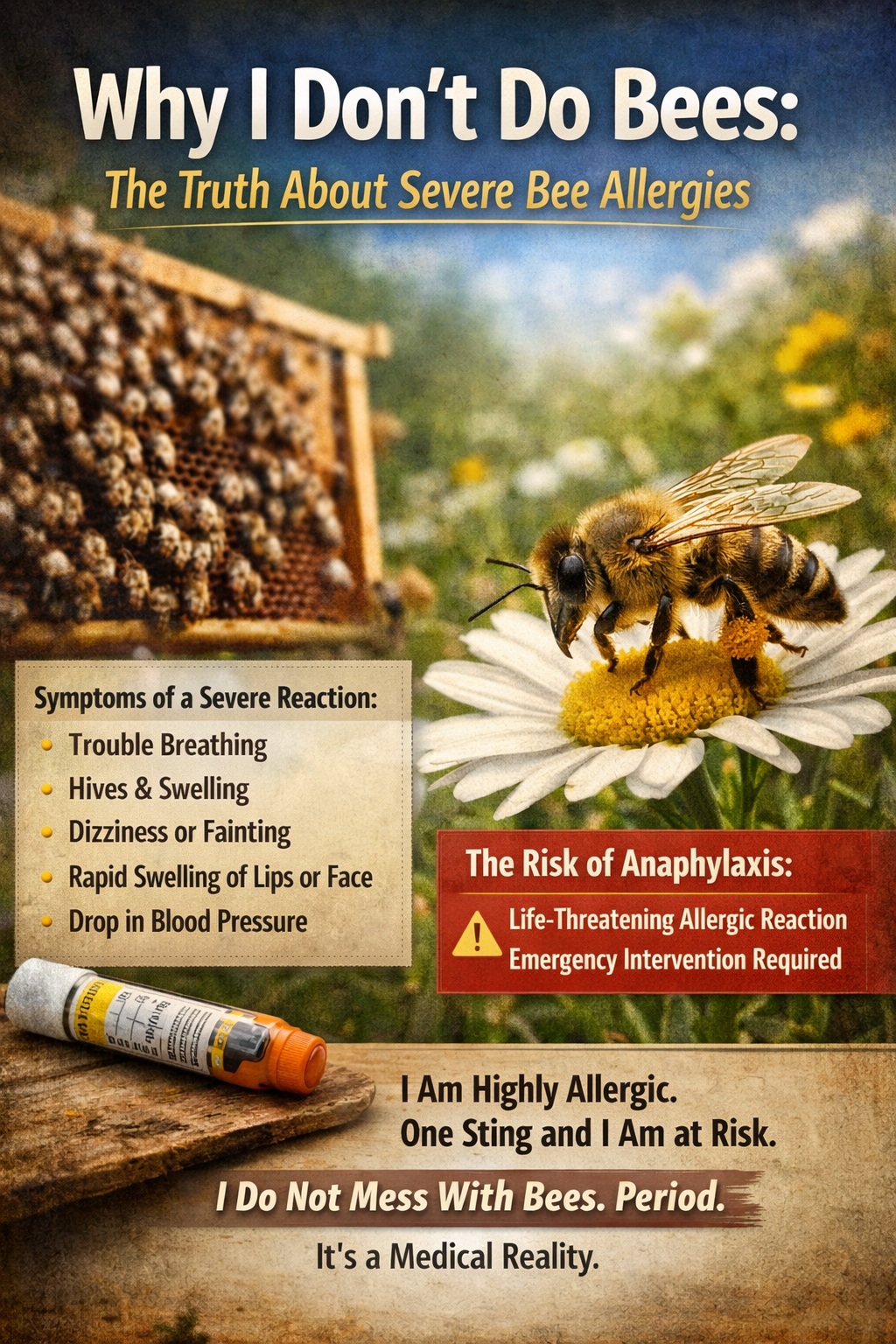
Understanding a Severe Bee Allergy
A bee allergy is not the same thing as disliking insects or being dramatic about a sting. For some people, a single sting can trigger a life-threatening allergic reaction known as anaphylaxis. That is where things escalate quickly.
When someone with a severe allergy is stung, their immune system overreacts to the venom. Instead of localized redness and mild swelling, the body can respond with widespread inflammation, difficulty breathing, rapid heartbeat, and a dangerous drop in blood pressure. In short, it becomes a medical emergency.
Because of that reality, avoiding bees is not about fear. It is about survival.
What Happens During an Allergic Reaction to a Bee Sting
Most people experience temporary pain, minor swelling, and itching after a bee sting. However, a true bee sting allergy looks very different.
Symptoms of a serious allergic reaction can include:
- Immediate swelling beyond the sting site
- Hives or widespread skin reactions
- Tightness in the throat
- Shortness of breath
- Dizziness or fainting
- Rapid swelling of the lips, tongue, or face
Anaphylaxis can develop within minutes. Therefore, anyone with a history of severe reactions must take the risk seriously.
In my case, swelling starts almost immediately after a sting. That rapid response is a clear warning sign that my body does not handle venom well. Because of that, I am at risk for anaphylaxis, and that is not something I am willing to gamble with.
Why Avoidance Is Not Overreacting
There is often a casual attitude toward bees. People will say things like, “They won’t bother you if you don’t bother them,” or “It’s just a sting.” While that may be true for many individuals, it is not universally true.
For someone with a severe allergy, one sting can lead to emergency intervention. Consequently, avoiding bees, wasps, hornets, and anything else with a stinger is not dramatic. It is a responsible health decision.
Outdoor gatherings, gardening, and even simple yard work require a heightened awareness. Spring and summer months increase exposure, which means extra caution is necessary. That might include:
- Wearing protective clothing outdoors
- Avoiding heavily scented products that attract insects
- Staying away from known nesting areas
- Keeping emergency medication accessible
These precautions are not excessive. They are preventive.
Related: Beekeeping in Early Spring: What Every Beginner Should Know
The Risk of Anaphylaxis
Anaphylaxis is a rapid, severe allergic reaction that can affect multiple body systems at once. Breathing can become restricted. Blood pressure can drop suddenly. Without immediate treatment, the situation can turn critical.
According to allergy specialists, individuals with a history of systemic reactions to insect stings are considered high risk for recurrence. In other words, if it has happened before, it can absolutely happen again.
Because I begin swelling immediately after a sting, I do not test fate. I do not handle bees. I do not “wait and see.” I do not try to push through it.
Living With a Bee Sting Allergy
Living with a severe bee allergy requires awareness but not paranoia. It means planning ahead. It means educating family and friends. It means recognizing that what seems minor to someone else may not be minor for you.
I do not mess with bees or anything else with a stinger. Period. I am highly allergic to anything with a stinger. I begin swelling immediately after a sting, and I am at risk for anaphylaxis. That is not a preference. It is a medical reality.
There is a difference between caution and fear. Caution keeps you safe. Fear keeps you frozen. I choose caution.
Final Thoughts on Bee Allergies and Safety
Bee allergies are real. Severe allergic reactions are real. Anaphylaxis is real. While many people can coexist peacefully with bees, not everyone has that luxury.
If you or someone in your family has experienced more than localized swelling after a sting, take it seriously. Speak with a medical professional. Understand the risks. Make a plan.
Your health is not something to downplay, especially when the consequences can be immediate and severe.
Lisa Crow contributed to this article. She is a true crime junkie and lifestyle blogger based in Waco, Texas. Lisa is the Head of Content at Gigi’s Ramblings and Southern Bred True Crime Junkie. She spends her free time traveling when she can and making memories with her large family which consists of six children and fifteen grandchildren.