Picking a watermelon should be simple, but somehow it turns into a guessing game every summer. People knock on them like drums, stare at them for ten minutes, and still end up slicing into one that tastes like crunchy water. The truth is, a few small details can tell you a lot about what’s hiding under that thick green rind. While no trick works every single time, knowing what to look for dramatically improves your chances of bringing home a sweet, juicy watermelon.
Instead of relying on old myths or random internet hacks, pay attention to signs that actually matter.
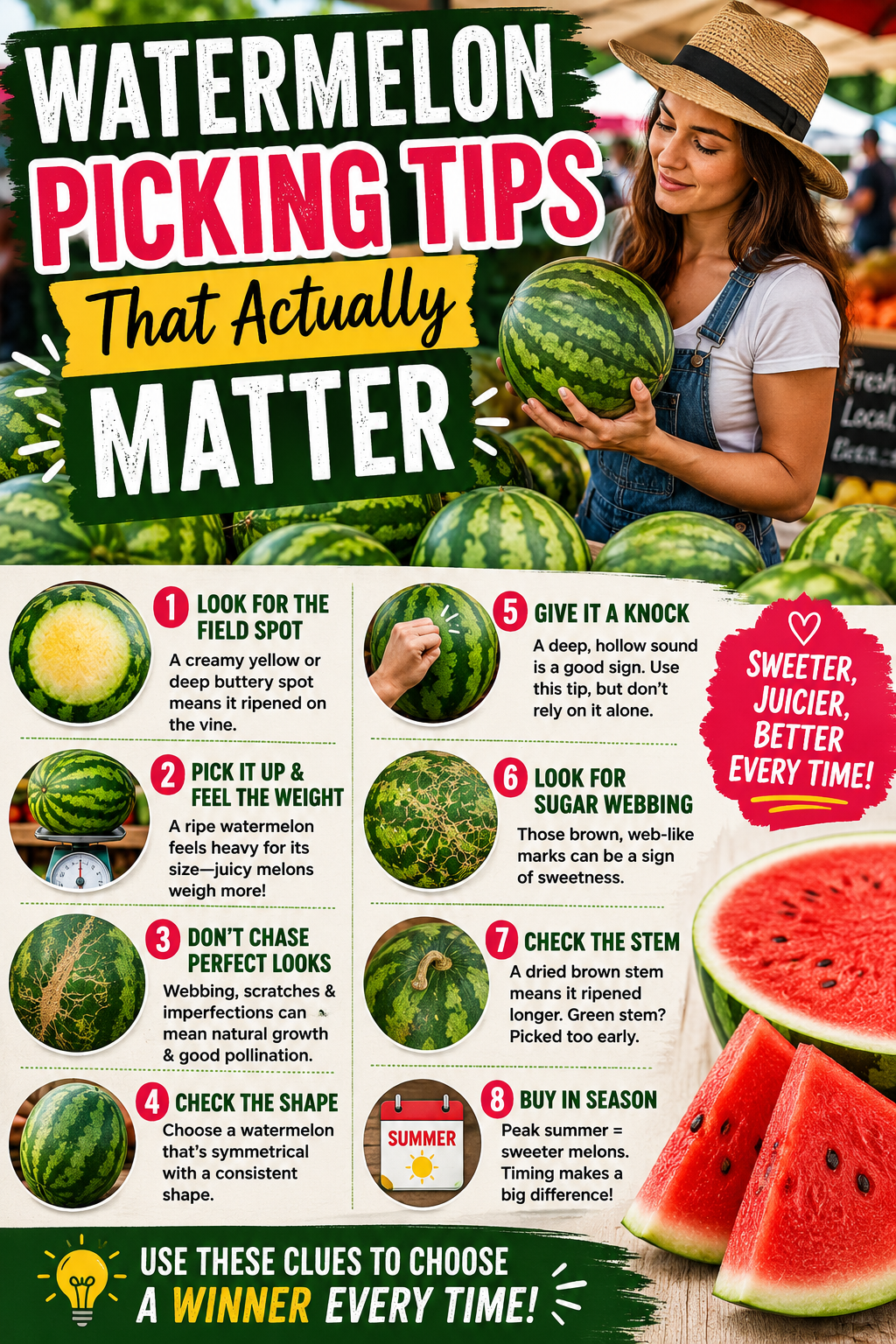
Look For The Field Spot
One of the easiest clues is the field spot, which is the area where the watermelon rested on the ground while growing. This patch should not be white or pale. A creamy yellow or deep buttery color is a much better sign because it means the melon had enough time to ripen naturally on the vine.
If the spot is almost nonexistent or bright white, the watermelon may have been picked too early. That often leads to bland flavor and a texture that feels disappointing once cut open.
Pick It Up And Feel The Weight
A ripe watermelon should feel surprisingly heavy for its size. Watermelons are mostly water, so a juicy melon tends to have more weight packed into it.
If you are choosing between two melons that appear similar in size, grab both. The heavier one is often the better choice. This quick test is one of the easiest ways to narrow down your options without overthinking it.
Ignore Perfect Looks
Many shoppers automatically grab the smoothest, prettiest watermelon in the pile. However, perfectly polished fruit is not always the winner.
Small scratches, rough webbing, and minor imperfections can actually be signs that bees pollinated the flower well and that the fruit developed naturally. Cosmetic flaws are often far less important than ripeness clues.
Of course, avoid large cuts, deep bruises, or soft spots. Those are signs of damage rather than character.
Pay Attention To Shape
A watermelon should have a consistent shape without strange bumps or uneven sections. Whether round or oval, the fruit should look symmetrical.
Odd lumps or irregular growth can sometimes happen because of inconsistent watering during development. That can occasionally affect flavor and texture.
Uniform shape is usually a safer bet.
Give It A Knock, But Do Not Obsess
The classic watermelon thump test has been around forever. People swear by it, but it causes more confusion than almost anything else.
A ripe watermelon often produces a deep, hollow sound when tapped. An underripe one may sound higher pitched or more metallic. However, this trick takes practice and can be difficult if you do not have multiple melons to compare.
Use it as a bonus clue, not your main decision maker.
Look For Sugar Webbing
Sometimes watermelons develop rough brown web-like lines across the rind. These marks are often called sugar spots or sugar webbing.
While they are not a guarantee, many experienced growers believe these areas can signal strong pollination and sweetness. If you notice a melon with a few webby patches plus a creamy field spot and heavy weight, you may have found a winner.
Check The Stem Area
If a small stem is still attached, take a look at it. A dried brown stem usually suggests the watermelon had time to ripen before harvest.
A fresh green stem can mean it was picked too early.
Not every store leaves stems attached, so this clue is helpful when available but not essential.
Buy In Season Whenever Possible
Timing matters more than people realize. Peak watermelon season usually brings sweeter fruit because melons are harvested closer to natural ripeness.
Buying during the heart of summer often gives you better odds than grabbing one early in the season when stores rush produce onto shelves.
The best watermelon in the world still has to be picked at the right time.
Final Thoughts
You do not need secret farmer knowledge or lucky guessing skills to choose a good watermelon. Focus on the field spot, check the weight, look for a consistent shape, and stop judging fruit contests by perfect appearances. Once you combine several clues together, your chances improve fast.
The next time you stand in the produce section staring at a giant pile of watermelons, you will at least have a strategy that beats random guessing.
Lisa Crow contributed to this article. She is a true crime junkie and lifestyle blogger based in Waco, Texas. Lisa is the Head of Content at Gigi’s Ramblings and Southern Bred True Crime Junkie. She spends her free time traveling when she can and making memories with her large family which consists of six children and sixteen grandchildren.