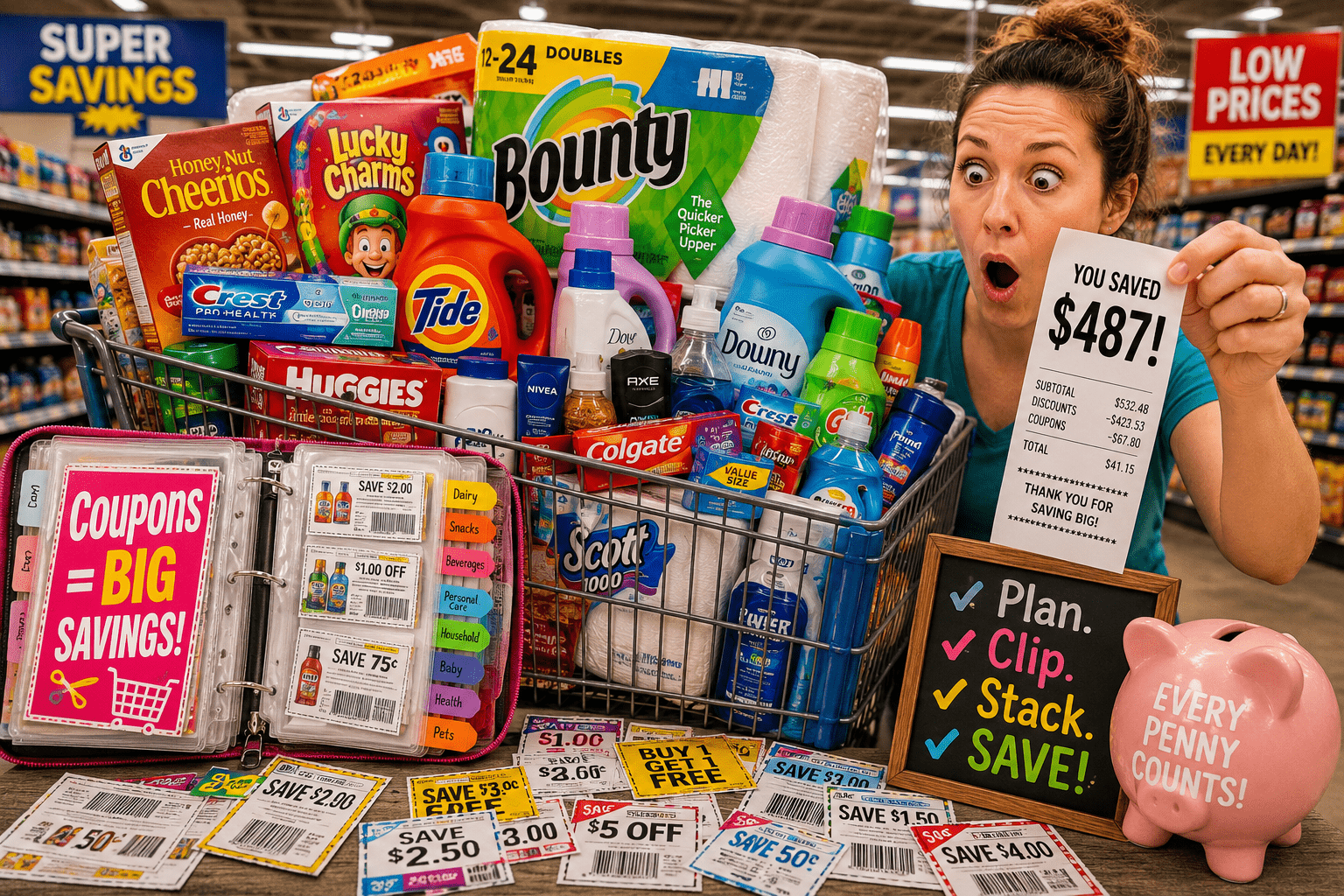
Most of us have used a coupon at some point. Maybe you clipped one from a newspaper years ago, scanned a store app before checkout, or got excited over a buy-one-get-one deal. However, there is a whole other side of couponing that most people never see. Hidden beneath those little discounts is a surprisingly intense world filled with strategy, planning, organization, and people who somehow walk out of stores with hundreds of dollars in products after spending less than a family dinner at a fast-food restaurant.
If you have ever watched someone on social media show a grocery haul worth $400 that cost only $38, you probably wondered if it was fake. Believe it or not, many of those savings are absolutely real. Extreme couponing is not just clipping paper coupons anymore. It has evolved into a serious hobby and, for some people, practically a second job.
Extreme Couponing Is More Like A Strategy Game
People often assume extreme couponers simply collect stacks of coupons and hand them over at checkout. In reality, the process is much more complicated than that. Successful couponers spend time studying sales cycles, checking weekly ads, comparing store policies, and planning shopping trips in advance.
The real magic happens when multiple discounts work together. A product may already be on sale, then a manufacturer coupon gets applied, followed by a store coupon, a loyalty reward, and finally a cash-back app rebate. Separately, those discounts may not look impressive. Combined, they can create jaw-dropping totals that seem impossible.
That is why experienced couponers often describe it like solving a puzzle. They are constantly looking for ways to make deals stack together in the perfect order.
Related: Frugal Living: Smart Habits to Save Money and Thrive
The Organization Behind It Can Be Surprisingly Intense
One thing television shows did get right was the organization. Extreme couponers are not throwing random coupons into kitchen drawers and hoping for the best. Many use giant binders packed with plastic sleeves sorted by category, expiration date, and product type.
Some people organize by dairy, frozen foods, household items, beauty products, and cleaning supplies. Others color-code sections or maintain spreadsheets that track upcoming sales and expiration dates. While that may sound excessive, there is a reason behind it. When you are standing in a busy checkout lane trying to pull together several discounts, you need to know exactly where everything is.
These systems may look over-the-top to outsiders, but for couponers, organization can mean the difference between huge savings and missed opportunities.
Extreme Couponers Rarely Shop Just One Store
Another thing that surprises people is how much planning goes into shopping trips. Most of us make a list, head to one store, and try to get everything done in a single stop. Extreme couponers often do the opposite.
Instead, they build routes around deals. One store may have the best household products sale while another has digital coupons that pair perfectly with grocery discounts. Someone serious about couponing might stop at three or four stores in one afternoon if the savings make it worthwhile.
To many people, that sounds exhausting. Yet for couponers, finding an amazing deal creates the same kind of excitement bargain hunters feel during holiday shopping events. There is a rush that comes from seeing a receipt with huge savings printed across the bottom.
Home Stockpiles Can Get A Little Wild
One of the most recognizable parts of extreme couponing is the stockpile. You have probably seen photos of spare bedrooms or garage shelves packed with toothpaste, paper towels, laundry detergent, soap, canned foods, and cleaning products stacked almost floor to ceiling.
At first glance, it can seem ridiculous. Why would anyone need that much toothpaste?
The answer actually makes sense. Extreme couponers buy extra products when prices hit their absolute lowest points. Rather than paying full price six months later, they shop from their own supply at home. For larger families, stockpiling can save serious money over time.
Of course, there is definitely a point where practical savings turn into buying things just because they are cheap. No family needs fifty bottles of mustard sitting in a closet.
Probably.
Digital Couponing Completely Changed The Game
Couponing today looks very different from what people remember years ago. Newspapers and scissors used to be essential tools, but now many shoppers build deals entirely through apps and rewards programs.
Store loyalty programs, digital coupons, rebate apps, and rewards systems opened couponing up to people who never wanted piles of paper scattered around the house. Many younger couponers now manage everything from their phones and never clip a physical coupon at all.
As a result, couponing feels more accessible than it once did. You no longer need giant binders to save money.
Although some people still love the binders.
Related: A Frugal Kitchen Experiment: Acorn Squash
The Biggest Secret Is Knowing When Not To Buy
Perhaps the smartest lesson experienced couponers learn has nothing to do with coupons themselves. Saving money is not about buying everything simply because there is a discount attached to it.
That excitement can be dangerous. Grabbing random products because they are cheap can quickly turn into spending money you never intended to spend in the first place. Experienced couponers eventually learn to focus on products they genuinely use instead of chasing every deal that appears.
After all, saving three dollars on something you never needed is not really saving money.
Final Thoughts
The world of extreme couponing looks a little mysterious from the outside. Between the binders, deal spreadsheets, shopping routes, and giant stockpiles, it can seem almost unbelievable. Yet beneath all the strategy is a simple goal most of us can understand: making money stretch a little further.
With grocery prices feeling expensive these days, it is easy to understand why people become fascinated by couponing. Even if you never become someone carrying a binder thicker than a phone book through the store, learning a few coupon tricks might make checkout feel a whole lot better.
And who knows? Today it starts with clipping one coupon. Next thing you know, you are explaining sales cycles to strangers in the cereal aisle.
Lisa Crow contributed to this article. She is a true crime junkie and lifestyle blogger based in Waco, Texas. Lisa is the Head of Content at Gigi’s Ramblings and Southern Bred True Crime Junkie. She spends her free time traveling when she can and making memories with her large family which consists of six children and sixteen grandchildren.