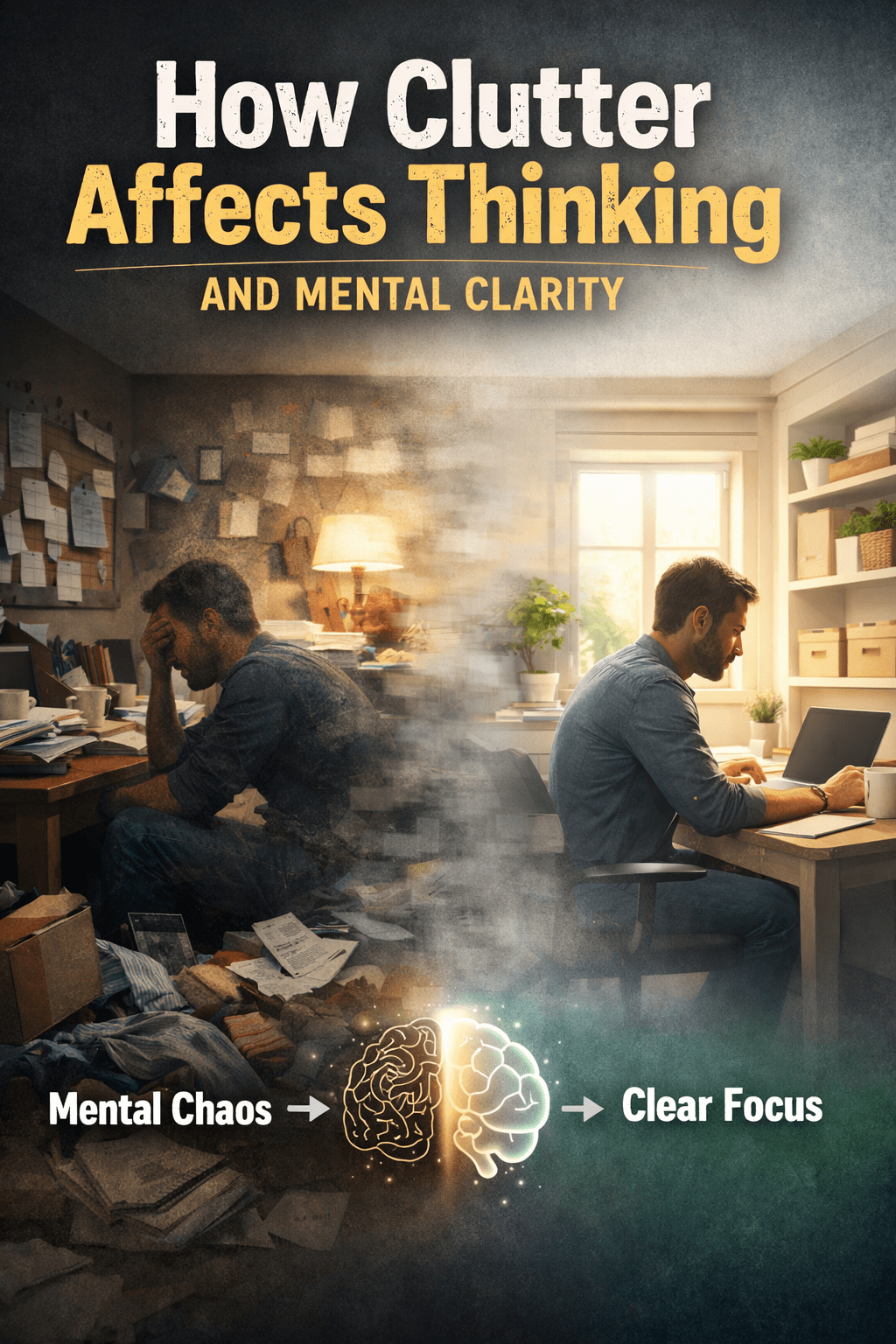
The Hidden Mental Cost of Clutter
Clutter might seem like nothing more than a physical issue, something you can ignore until you feel like cleaning, but it goes much deeper than that. When your environment is filled with too many objects, your brain is constantly taking in and processing everything around you, whether you realize it or not. Every pile, every misplaced item, and every crowded surface adds to the mental load your brain is already carrying. Over time, this creates a kind of background noise that makes it harder to focus, harder to relax, and harder to think clearly.
Why Your Brain Hates Mess
Your brain naturally looks for order and structure because it helps you function efficiently. When your surroundings are chaotic, your brain has to work harder to filter out what matters and what does not. This connects directly to Cognitive Load Theory, which explains that your brain has a limited capacity for processing information at any given time. When clutter fills your space, it also fills that capacity, leaving less room for important thoughts, decisions, and problem-solving. That is why even simple tasks can start to feel overwhelming when your environment is messy.
Clutter Slows Down Your Thinking
A cluttered space creates constant distractions that interrupt your ability to concentrate. Instead of moving smoothly from one task to another, your brain is forced to pause and process unnecessary information. This slows you down, increases the chances of mistakes, and makes it harder to stay on track. What should be quick and simple tasks often take longer than they should, and that added friction builds frustration throughout the day. Over time, this can make you feel mentally exhausted without any clear reason why.
Related: Clean All Year: My Routine for a Tidy Home
The Link Between Clutter and Stress
Clutter does not just affect your focus; it also affects how your body responds to your environment. When things feel out of control visually, your brain interprets that as a problem that needs attention. This can trigger a low-level stress response that stays active longer than it should. That response is tied to the Fight-or-Flight Response, which is meant to help you react to danger but can also be activated by ongoing environmental stress. Even if you are not consciously worried about the mess, your body still reacts to it, which slowly drains your energy.
Decision Fatigue Gets Worse
Clutter also increases the number of small decisions you have to make throughout the day. When your space is disorganized, you are constantly asking yourself where things are, whether you need them, and when you should deal with them. These repeated decisions may seem minor, but they add up quickly and contribute to Decision Fatigue. As your mental energy gets used up, your ability to make good decisions decreases, which is why everything starts to feel harder by the end of the day.
Why Clean Spaces Feel So Good
When your space is clean and organized, your brain no longer has to filter through unnecessary distractions. Instead, it can focus fully on what matters. A clean environment signals that there are no unfinished tasks competing for your attention, which creates a sense of control and calm. This is why cleaning often brings an immediate feeling of relief, because it reduces mental strain and frees up energy for more important things like creativity, focus, and problem-solving.
Related: How I Clean When I’m Mad
Small Changes That Make a Big Difference
Improving your space does not require a complete overhaul. Small, consistent changes can have a significant impact on how you think and feel. Taking a few minutes each day to reset your environment, clearing off surfaces, and giving everyday items a designated place can reduce the mental clutter that builds up over time. The goal is not perfection but creating a space that supports clear thinking instead of working against it.
The Bottom Line
Clutter is more than just a visual issue; it is a mental one. It quietly interferes with your ability to focus, increases your stress levels, and drains your energy in ways that are easy to overlook. By taking control of your environment, you are also taking control of your mental clarity. When your space is clear, your mind has the freedom to function the way it was meant to.
Lisa Crow contributed to this article. She is a true crime junkie and lifestyle blogger based in Waco, Texas. Lisa is the Head of Content at Gigi’s Ramblings and Southern Bred True Crime Junkie. She spends her free time traveling when she can and making memories with her large family which consists of six children and sixteen grandchildren.