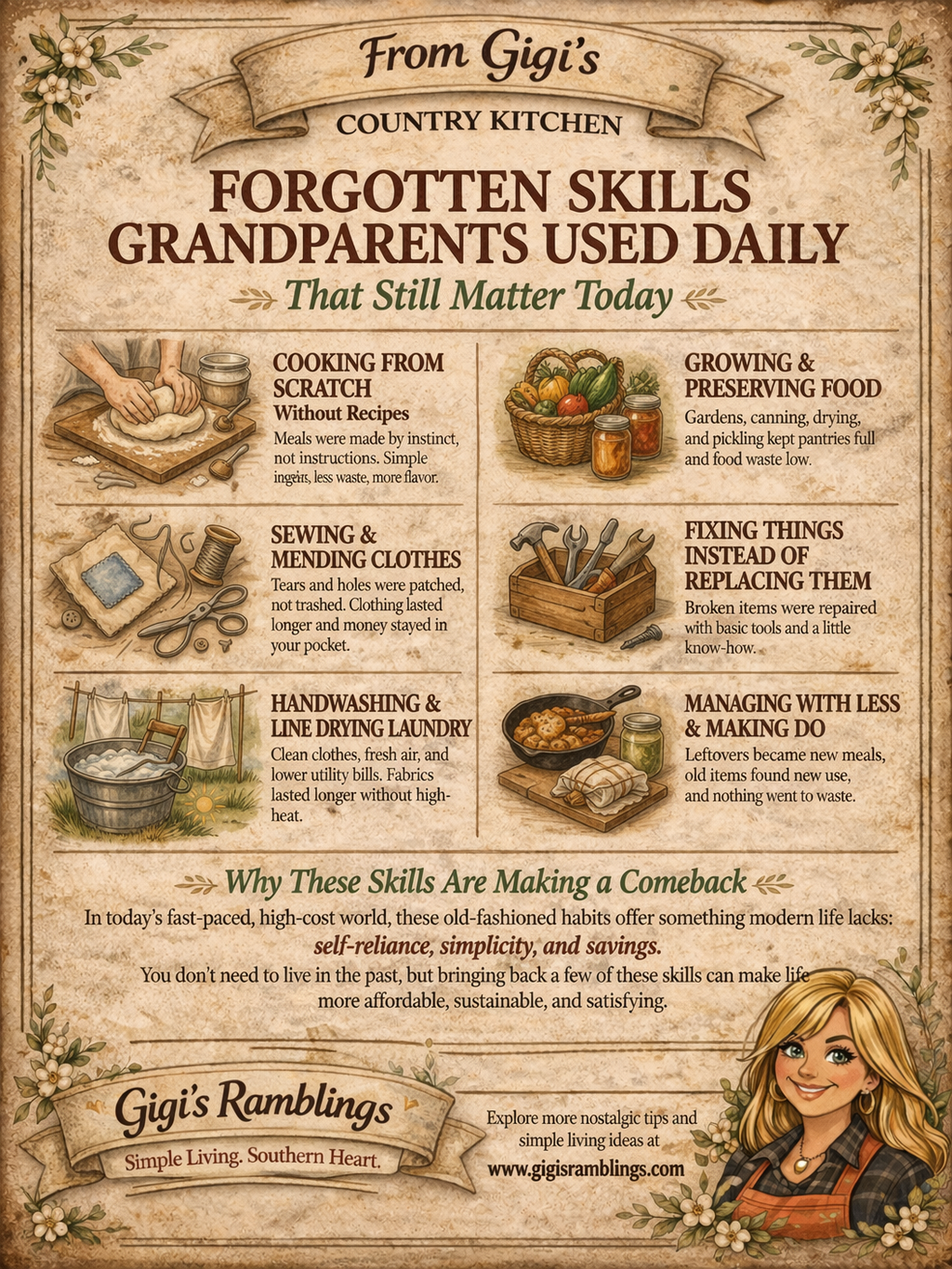
There was a time when everyday life required a lot more hands-on know-how. Long before convenience ruled the day, many skills were used so often they barely felt like skills at all. They were simply part of getting by.
Today, those same abilities are quietly fading away. However, many of them are making a comeback for good reason. They save money, build independence, and bring a deeper sense of satisfaction to everyday life.
Let’s take a look at some of those forgotten skills grandparents used daily and why they are still worth learning.
Related: Skills Homesteaders Rely on Daily
Cooking From Scratch Without Recipes
Meals used to be created from memory, instinct, and whatever happened to be on hand. Instead of relying on pre-packaged foods or step-by-step instructions, ingredients were measured by feel and experience.
Because of this, food waste was kept low and creativity stayed high. A handful of vegetables, a bit of meat, and some pantry staples could easily turn into a full meal.
Today, this skill can still be incredibly useful. Grocery prices continue to rise, and cooking from scratch allows meals to stretch further while tasting better. It also helps reduce reliance on processed foods.
Growing and Preserving Food
Backyards were often turned into productive gardens, and what could not be eaten fresh was preserved for later. Canning, drying, and pickling were common practices that ensured nothing went to waste.
Seasonal eating was simply a way of life. When tomatoes were ready, they were used in everything. When harvest time ended, jars lined pantry shelves for months ahead.
Even now, growing a small garden or learning simple preservation methods can cut costs and provide healthier food options. It also brings a strong sense of accomplishment that store-bought goods just cannot match.
Related: Planning a More Self-Sufficient Life Through Gardening and Canning
Sewing and Mending Clothes
Clothing was not disposable. When something tore or wore out, it was fixed. Basic sewing skills were used to patch holes, replace buttons, and extend the life of garments.
Because of this, wardrobes lasted longer and money was saved. Fast fashion did not exist, and people took pride in maintaining what they owned.
Bringing this skill back does not require much. A simple needle and thread can go a long way. Small repairs can keep clothes out of the trash and money in your pocket.
Fixing Things Instead of Replacing Them
If something broke, the first thought was to fix it, not throw it away. Whether it was a squeaky door, a faulty appliance, or a loose chair leg, basic repair skills were used daily.
This mindset created resourcefulness and reduced unnecessary spending. It also built confidence in handling everyday problems.
While modern products are often designed to be replaced, many items can still be repaired with a little patience and effort. Learning even a few basic fixes can make a big difference.
Related: When to Start Seedlings Indoors and How to Prep Your Garden for Planting Season
Handwashing and Line Drying Laundry
Before dryers became standard, clothes were often washed by hand or in simple machines and then hung outside to dry. Fresh air and sunlight did the rest.
This method saved energy and helped clothes last longer since high heat was avoided. It also gave fabrics a clean, natural scent that cannot be replicated.
Even today, line drying can reduce utility bills and extend the life of clothing. It may take a little more time, but the benefits add up quickly.
Managing With Less and Making Do
Perhaps one of the most valuable skills was the ability to make do with what was available. Instead of constantly upgrading or replacing items, people learned to adapt and reuse.
Leftovers became new meals. Old materials found new purposes. Creativity filled the gaps where money or resources were limited.
This mindset is especially valuable now. It encourages smarter spending, reduces waste, and builds resilience in uncertain times.
Why These Skills Are Making a Comeback
As life becomes more expensive and fast-paced, many people are beginning to rediscover these old ways. They offer something modern convenience often lacks: control, self-reliance, and a sense of connection to everyday life.
While it may not be necessary to fully return to the past, even adopting a few of these skills can have a noticeable impact. Small changes can lead to big savings and a more grounded way of living.
Lisa Crow contributed to this article. She is a true crime junkie and lifestyle blogger based in Waco, Texas. Lisa is the Head of Content at Gigi’s Ramblings and Southern Bred True Crime Junkie. She spends her free time traveling when she can and making memories with her large family which consists of six children and sixteen grandchildren.