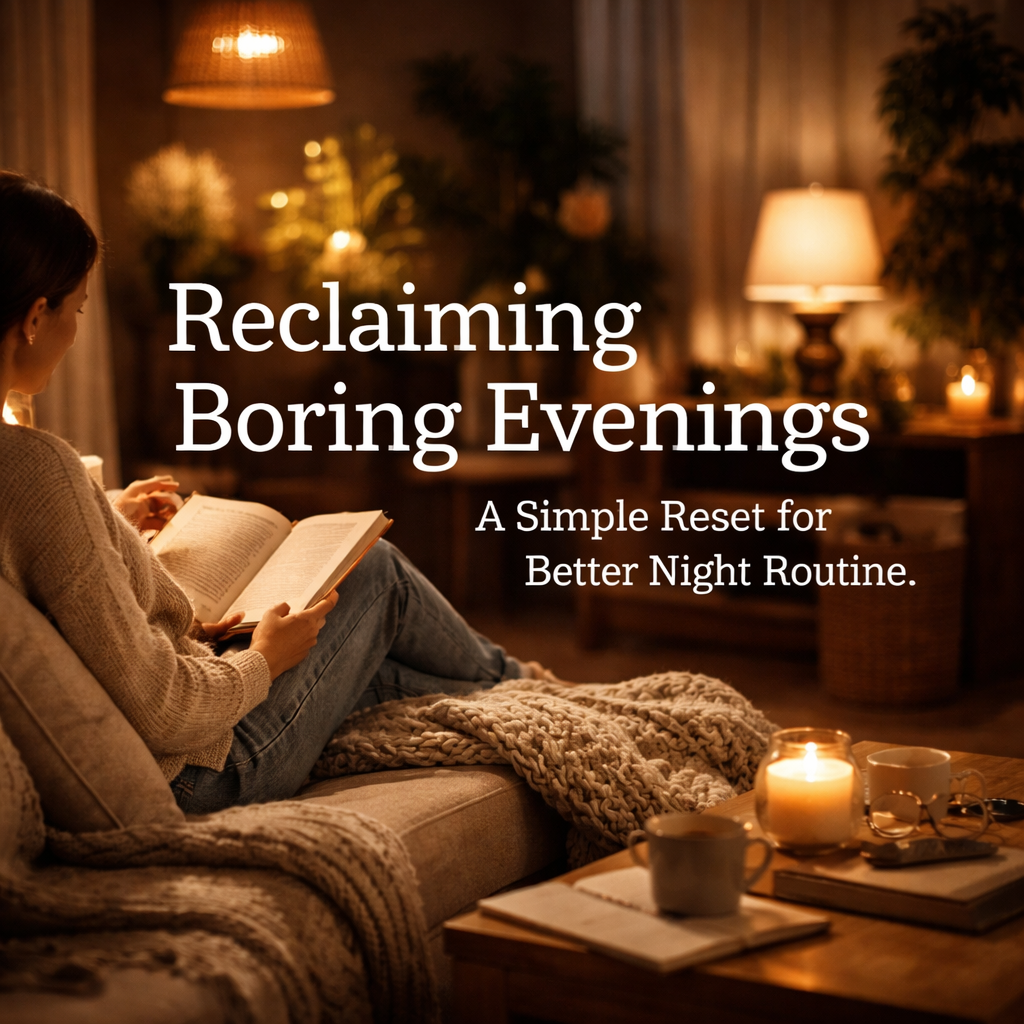
There was a time when evenings felt simple. Dinner. Maybe a show. Maybe a book. Then bed. Somewhere along the way, “simple” started to feel like “wasted.”
Now if an evening is not productive, profitable, entertaining, or posted online, it feels like a loss. We scroll. We snack. We chase stimulation. And somehow we still end the night tired and unsatisfied.
Reclaiming boring evenings is not about doing nothing. It is about doing less on purpose. It is about choosing quiet over noise and depth over distraction. And honestly, it might be one of the most rebellious things you can do right now.
Related: What It Means to Be Okay with Stillness
How Evenings Became Overstimulated
First, we need to admit something. Our evenings are not actually relaxing. They are overloaded.
After a long day of work, responsibilities, and mental input, we tell ourselves we deserve to unwind. So we grab our phones. We turn on the TV. We half-watch a show while half-scrolling. We snack without tasting anything. We call it rest.
However, that is not rest. That is distraction.
The constant stimulation keeps our brains in a low-grade state of alertness. Notifications. Cliffhangers. News updates. Short videos engineered to keep us hooked. Even when we are sitting down, our minds are still running.
As a result, we wake up tired. We feel behind. We crave more stimulation the next night. The cycle repeats.
Reclaiming boring evenings interrupts that cycle.
The Power of Slow Living at Night
Slow living sounds trendy. It gets overused. But at its core, it is simple. It means being present in the moment you are already in.
Evenings are the perfect place to practice that.
Instead of asking, “What should I be doing?” try asking, “What would actually feel grounding right now?”
Maybe it is washing dishes without a podcast in your ear. Maybe it is sitting outside for ten minutes. Maybe it is reading a few pages of a book without checking your phone between chapters.
These are small choices. Yet they compound.
When you intentionally create a slower evening routine, your nervous system starts to calm down. Your thoughts get clearer. Your sleep improves. Over time, you stop needing constant noise to feel okay.
That is where the mental reset begins.
Reclaiming Boring Evenings as a Digital Detox
Let’s be honest. Most of us do not need a week-long retreat in the woods. We need two solid hours without a screen.
A digital detox does not have to be dramatic. In fact, it works better when it is sustainable. Set a time. Maybe 8:00 p.m. Put your phone on charge in another room. Turn off notifications. Pick one low-stimulation activity.
At first, it will feel uncomfortable. You might reach for your phone without thinking. You might feel restless. That is normal. Your brain is used to constant input.
Stick with it.
Within a week, you will notice something shift. Your evenings will feel longer. Your mind will feel quieter. You will start to hear your own thoughts again, which can be confronting but also clarifying.
Intentional living starts with paying attention. And you cannot pay attention if you are constantly distracted.
Creating an Intentional Evening Routine
Reclaiming boring evenings works best when it is structured just enough to stick.
First, decide what you want your evenings to feel like. Calm. Focused. Creative. Restful. Be specific.
Next, build a simple routine around that feeling. Keep it realistic. For example:
Cook dinner without multitasking.
Clean up the kitchen fully before sitting down.
Take a shower or wash your face as a signal the day is ending.
Read, journal, stretch, or talk with your spouse.
The key is consistency. When you repeat the same wind-down cues, your brain starts to associate them with rest. Eventually, your body begins to power down naturally at night.
Additionally, this structure removes decision fatigue. You do not have to wonder what to do. You already decided.
Why Boredom Is Not the Enemy
We have been taught to avoid boredom at all costs. Yet boredom is often the doorway to creativity and self-awareness.
When you allow yourself to be bored, your mind starts to wander. Ideas surface. Problems untangle. Emotions that were buried under noise rise up.
That can feel uncomfortable. However, it is also how growth happens.
Reclaiming boring evenings gives your brain space to process the day. It allows you to reflect instead of react. It gives you a chance to notice what is working in your life and what is not.
Moreover, boredom builds discipline. It trains you to sit with yourself without immediately reaching for escape.
That skill is rare. And it is powerful.
Related: The Fear of Time Passing
The Long-Term Impact of Doing Less
At first, a quiet evening might feel insignificant. It is just one night. Just one small choice.
However, evenings add up. They shape your habits. They shape your relationships. They shape your mental health.
When you consistently choose slow living over constant stimulation, you create margin. Margin to think. Margin to plan. Margin to connect.
Over time, that margin changes how you show up in every other area of your life.
Reclaiming boring evenings is not about becoming unproductive. It is about becoming intentional. It is about deciding that your peace is worth protecting.
So tonight, let it be a little boring. Let it be quiet. Let it be simple.
You might be surprised how much better you feel in the morning.
Lisa Crow contributed to this article. She is a true crime junkie and lifestyle blogger based in Waco, Texas. Lisa is the Head of Content at Gigi’s Ramblings and Southern Bred True Crime Junkie. She spends her free time traveling when she can and making memories with her large family which consists of six children and fifteen grandchildren.