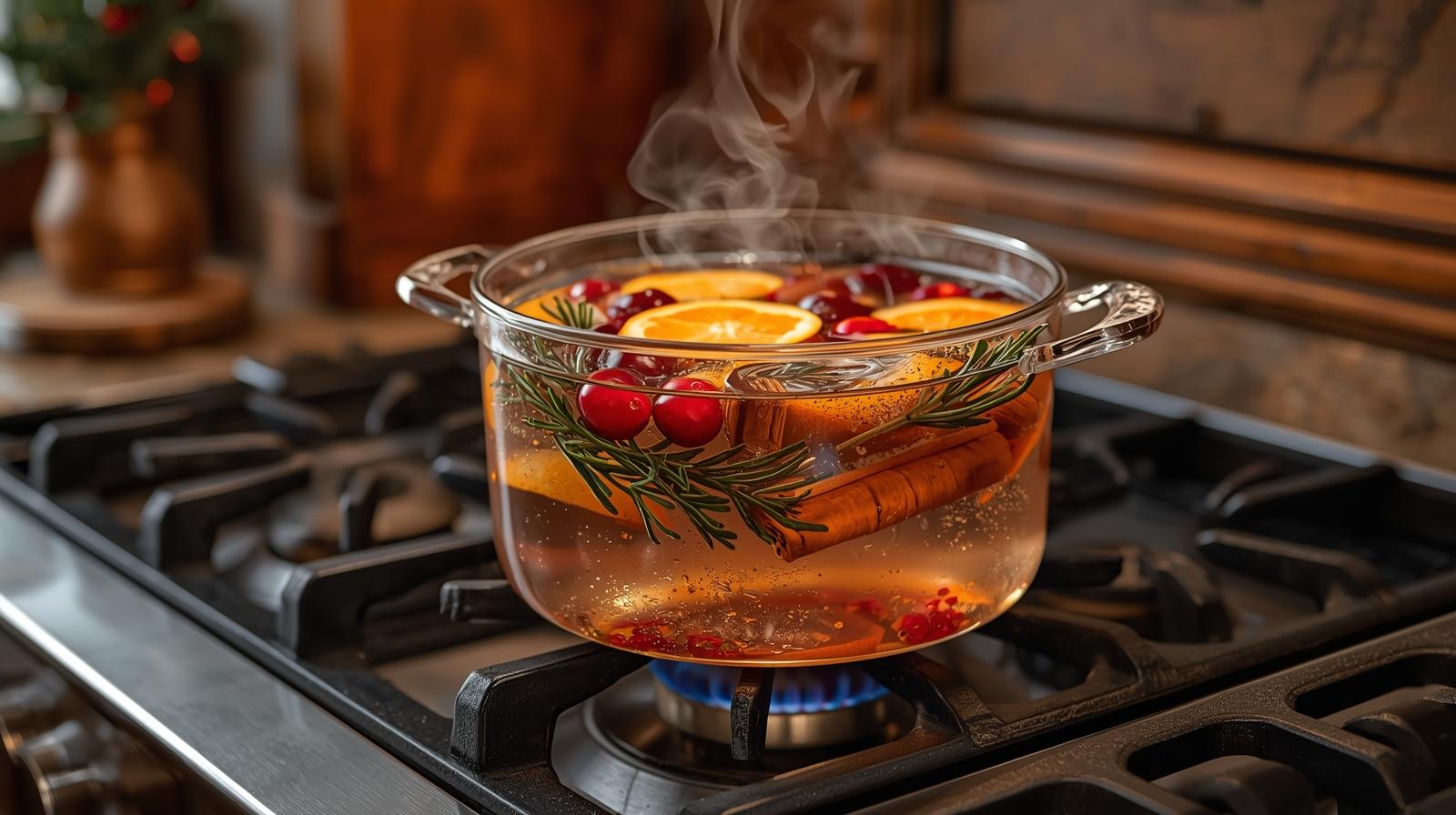
When the weather turns cold, there’s something comforting about a pot quietly bubbling on the stove, filling the house with a deep, layered scent that feels lived-in and intentional. Winter simmer pots are simple, affordable, and customizable, and they beat artificial sprays every single time. No flames to babysit, no overpowering chemical smells, just real ingredients doing what they’ve always done best.
What Is a Winter Simmer Pot?
A simmer pot is exactly what it sounds like. You add water and fragrant ingredients to a pot, bring it to a gentle simmer, and let the steam carry the scent through your home. This isn’t about exact measurements or perfection. It’s about building a scent that matches the season and your mood.
Winter blends warm, spicy, citrusy, and slightly earthy. Think kitchens that smell like something good is always happening, even if nothing’s in the oven.
Classic Winter Simmer Pot Ingredients
You don’t need anything fancy. Most of these are already sitting in your kitchen.
Citrus fruits like oranges, lemons, or grapefruit add brightness and keep heavier spices from smelling too dense. Cinnamon sticks are the backbone of most winter blends, warm and familiar without being sugary. Cloves add depth, but go easy, a little goes a long way. Star anise brings a subtle licorice note that feels old-world and cozy. Fresh rosemary or pine needles give that evergreen, just-cut-tree vibe without smelling like a cleaning product.
Easy Winter Simmer Pot Combinations
Orange slices, cinnamon sticks, cloves, and star anise create a classic winter kitchen scent that works all season long.
Apple slices, cinnamon, nutmeg, and a splash of vanilla extract feel like baking without turning on the oven.
Lemon slices, rosemary sprigs, and a few peppercorns give a clean, woodsy scent that’s perfect if you don’t love sweet smells.
Cranberries, orange peel, and cinnamon sticks look beautiful in the pot and smell festive without screaming holiday.
How to Use a Simmer Pot Safely
Add all ingredients to a pot and cover with water. Bring to a gentle simmer, then lower the heat so it barely bubbles. Never let it boil dry. Check the water level every hour or so and top it off as needed. You can reuse the same ingredients for a day or two, but once they lose their scent, toss them and start fresh.
If you don’t want the stove on, you can also use a small slow cooker on low.
Related: The Old Ways of Drying Fruit & Simple Seasonal Crafts to Try
Why Simmer Pots Just Feel Better
Simmer pots don’t just make your house smell good. They create atmosphere. They say “someone lives here,” not “someone sprayed something.” They pair beautifully with wax melts, incense, and seasonal décor, especially during winter when everything else feels a little quiet.
When the weather turns cold, there’s something grounding about a pot gently simmering on the stove, filling the house with a warm, familiar scent. Winter simmer pots are simple, affordable, and easy to customize, and they’re a solid alternative to sprays and plug-ins.
No complicated steps. No exact measurements. Just real ingredients doing what they’re supposed to do.
What a Winter Simmer Pot Is
A simmer pot is water plus fragrant ingredients heated on low. As it warms, the steam carries the scent through your home. That’s it. You’re not cooking anything, just letting the ingredients slowly release their aroma.
Winter blends usually lean warm, citrusy, and slightly spicy without being sweet or overpowering.
Related: DIY Cinnamon Pinecones: The Easiest Way to Make Your Home Smell Like the Holidays
Common Ingredients That Work Well
Most simmer pots start with fruit. Oranges, lemons, or apples are easy and reliable. Cinnamon sticks add warmth without smelling sugary. Cloves bring depth but should be used sparingly. Star anise adds a subtle, earthy note. Fresh rosemary or pine gives a clean, woodsy edge that feels natural, not artificial.
Use what you like. Skip what you don’t.
Easy Winter Simmer Pot Combinations
Orange slices with cinnamon sticks make a classic, all-season winter scent.
Apple slices with cinnamon and a small splash of vanilla smell like baking without being heavy.
Lemon slices with rosemary create a clean, fresh blend that works well if you don’t enjoy sweet scents.
Cranberries with orange peel and cinnamon look good in the pot and smell bright without being over the top.
How to Use a Simmer Pot
Add everything to a pot and cover with water. Bring it to a gentle simmer, then lower the heat so it barely bubbles. Check the water level occasionally and add more as needed. Don’t let it boil dry.
If you prefer, a small slow cooker on low works just as well.
Why Simmer Pots Are Still Popular
They’re simple, inexpensive, and flexible. They make your home smell good without overpowering it, and they feel more natural than most store-bought options. In winter especially, that kind of low-key warmth goes a long way.It’s simple, old-fashioned, and honestly kind of magical in the best way.
Lisa Crow contributed to this article. She is a true crime junkie and lifestyle blogger based in Waco, Texas. Lisa is the Head of Content at Gigi’s Ramblings and Southern Bred True Crime Junkie. She spends her free time traveling when she can and making memories with her large family which consists of six children and fifteen grandchildren.