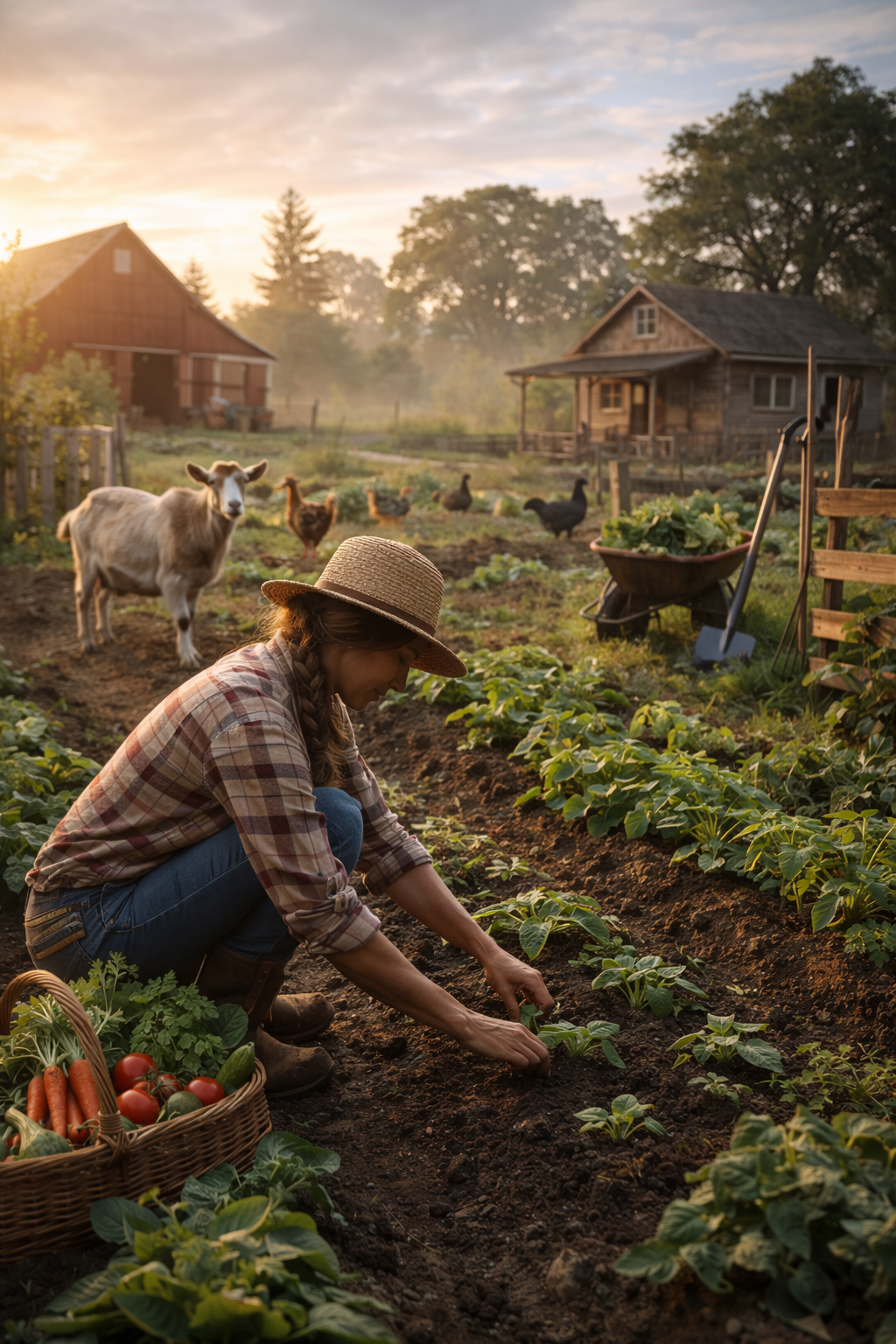
Homesteading has grown in popularity over the past few years, and it is easy to see why. A slower pace, a closer connection to food, and a stronger sense of independence are often sought after in a world that rarely slows down. However, behind the charming images of gardens and fresh bread, real work is being done every single day.
Because of that, a wide range of practical homesteading skills are relied on daily. From growing food to fixing broken equipment, homesteaders tend to wear a lot of different hats. Still, the lifestyle becomes incredibly rewarding once those everyday skills are learned and practiced.
Gardening and Growing Food
At the heart of most homesteads, a garden is usually found working quietly in the background. Vegetables, herbs, and fruit are often grown seasonally, which means attention must be given almost daily.
Seeds are planted, weeds are pulled, and soil is constantly being improved. In addition, weather conditions are watched closely so plants can be protected when necessary. Over time, a strong understanding of growing food is developed simply through observation and experience.
Because of this daily rhythm, gardening becomes one of the most important homesteading skills. Fresh food is produced right outside the door, and grocery store trips slowly become less frequent.
Food Preservation
Once a garden starts producing, another important skill quickly becomes necessary. Food preservation allows all that hard work to last well beyond harvest season.
Canning, dehydrating, freezing, and fermenting are commonly used methods. Vegetables can be stored for months, fruits can be turned into jams, and herbs can be dried for later use.
As a result, nothing goes to waste. Shelves often begin to fill with jars of home-preserved food, and the satisfaction of opening something months later is hard to beat.
Basic Animal Care
Many homesteads include animals, which means daily care becomes part of the routine. Chickens, goats, ducks, and even a few cows are often found on small homesteads.
Animals must be fed, watered, and checked on regularly. Additionally, their living spaces are cleaned and maintained to keep them healthy.
Over time, animal behavior becomes easier to understand. Small changes in appetite or movement are often noticed quickly, which allows problems to be handled before they become serious.
Related: Planning a More Self-Sufficient Life Through Gardening and Canning
Simple Repairs and Problem Solving
On a homestead, things break. Fences loosen, tools wear out, and equipment occasionally refuses to cooperate. Because help is not always immediately available, problem-solving becomes an important skill.
Small repairs are often handled without calling anyone in. A fence might be tightened, a leaky hose might be patched, or a tool handle might be replaced.
As a result, confidence grows with each fix. Eventually, many homesteaders become surprisingly handy simply because daily life requires it.
Cooking From Scratch
A well-used kitchen is often the center of a homestead. Fresh ingredients are brought in from the garden, eggs are collected from the coop, and meals are created from what is available.
Cooking from scratch becomes second nature. Bread might be baked weekly, soups might simmer on the stove, and vegetables are often prepared in creative ways to avoid waste.
Because ingredients are produced at home, meals tend to feel a little more meaningful. The connection between the land and the table becomes very clear.
Time Management and Daily Routine
Perhaps the most overlooked homesteading skill is time management. So many moving parts are involved that a routine naturally develops.
Animals must be cared for in the morning and evening. Gardens must be watered. Food must be prepared and preserved when harvests are ready.
While it might sound busy, a comfortable rhythm is usually found. Tasks are spread throughout the day, and slowly the routine begins to feel less like work and more like a lifestyle.
The Quiet Skills That Make It All Work
When people picture homesteading, they often imagine big gardens, barns, and long country drives. Yet the real magic is found in the everyday skills quietly practiced behind the scenes.
Gardening, food preservation, animal care, repairs, cooking, and time management all work together to keep a homestead running smoothly. None of these skills are learned overnight, but they are gradually built through patience and experience.
And honestly, once those homesteading skills become part of daily life, it starts to feel pretty natural. A little dirt on the hands, a pantry full of jars, and the satisfaction of knowing things were done the old-fashioned way can make the effort completely worthwhile.
Lisa Crow contributed to this article. She is a true crime junkie and lifestyle blogger based in Waco, Texas. Lisa is the Head of Content at Gigi’s Ramblings and Southern Bred True Crime Junkie. She spends her free time traveling when she can and making memories with her large family which consists of six children and sixteen grandchildren.