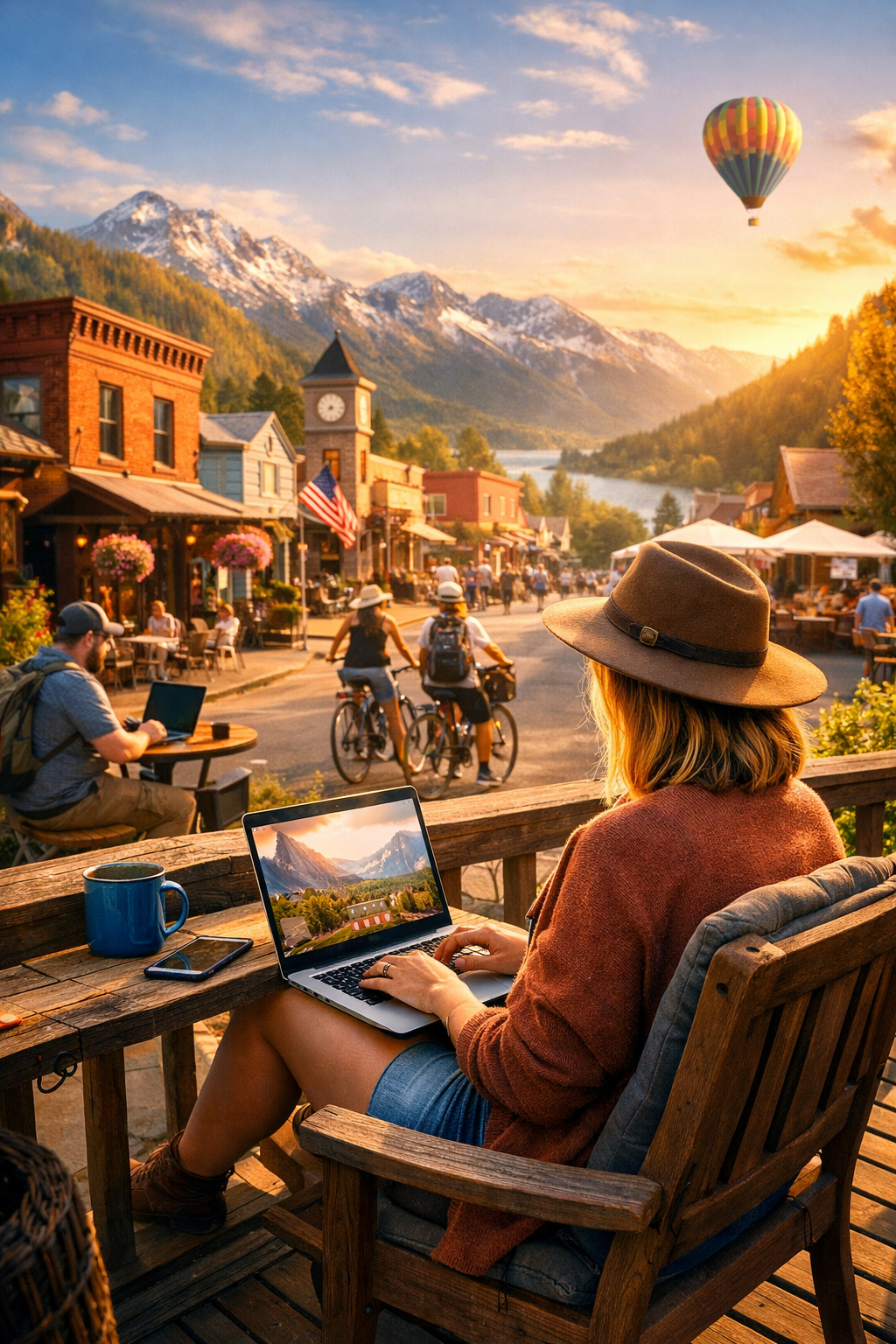
Over the past few years, the traditional idea of where people live and work has been quietly reshaped. Thanks to remote work, many professionals are no longer tied to big city offices or crowded urban apartments. Instead, a growing number of workers are choosing a different path. Small towns across the country are becoming home to a new wave of residents known as digital nomads.
The rise of digital nomads in small towns is being driven by flexibility, lifestyle changes, and the simple desire for a slower pace of life. While major cities once held all the opportunities, that dynamic has started to shift. As long as there is a reliable internet connection and a laptop, work can now happen almost anywhere.
Because of this shift, small towns that were once overlooked are now seeing renewed energy and growth.
Why Digital Nomads Are Leaving Big Cities
For decades, cities were viewed as the center of opportunity. However, remote work has changed the equation. Many professionals discovered during the pandemic that their jobs could be done just as easily from home.
As a result, expensive rent, traffic congestion, and crowded neighborhoods started to feel less appealing. When work can be done online, the need to stay in a large city disappears.
Small towns offer something many people feel has been missing. There is more space, quieter surroundings, and often a stronger sense of community. Additionally, the cost of living is usually much lower. For digital nomads, this means money stretches further while quality of life improves.
Because of these advantages, the migration away from cities has slowly gained momentum.
How Small Towns Are Attracting Remote Workers
Many small towns have started recognizing the opportunity that digital nomads bring. In response, local governments and community leaders have begun promoting their towns as remote work destinations.
Programs offering relocation incentives have even been introduced in some areas. These programs sometimes include cash bonuses, coworking memberships, or housing assistance for remote workers who move there.
At the same time, small towns are investing in infrastructure. Faster internet, improved community spaces, and local coworking hubs are being developed to support the needs of digital professionals.
As these improvements continue, the appeal of small-town living becomes even stronger.
Related: The Rise of Backyard Businesses
The Lifestyle Appeal of Small Town Living
Lifestyle plays a major role in the rise of digital nomads in small towns. While city living often comes with noise, high costs, and constant pressure, small towns offer a slower and more balanced rhythm.
Morning commutes can be replaced with walks through quiet neighborhoods. Lunch breaks might include time spent outdoors rather than standing in line at a crowded café. In the evenings, local events, farmers markets, and community gatherings provide a different type of social connection.
For many remote workers, this balance helps reduce stress and improve overall well-being. Work can still be accomplished efficiently, yet life outside of work begins to feel more meaningful.
Because of this, the small town lifestyle is becoming increasingly attractive.
The Economic Impact on Small Communities
The arrival of digital nomads can bring noticeable economic benefits to smaller communities. When remote workers move into a town, they begin spending money locally.
Restaurants, coffee shops, boutiques, and service providers often see an increase in customers. In some cases, new businesses are even launched by the digital nomads themselves.
Additionally, property values in certain small towns have started to rise due to increased demand for housing. While this can create challenges if not managed carefully, it also signals economic growth and renewed interest in communities that may have been struggling before.
Because of this economic activity, many towns are welcoming the digital nomad movement.
Related: Digital Marketing and Digital Products: A Beginner’s Guide
Challenges That Come With the Trend
Although the rise of digital nomads in small towns offers many benefits, it also comes with challenges. One concern involves housing affordability for long-time residents. When demand increases quickly, home prices and rent can climb.
Another challenge involves infrastructure. Some towns must upgrade internet services, utilities, and transportation systems to handle a growing population.
There can also be cultural adjustments. Digital nomads often bring new ideas, work styles, and lifestyles that may feel unfamiliar at first. However, when communities embrace open dialogue, these differences can lead to positive growth and fresh perspectives.
With thoughtful planning, many of these challenges can be managed successfully.
What the Future Looks Like for Digital Nomads
Looking ahead, the rise of digital nomads in small towns is likely to continue. Remote work has proven that productivity does not depend on a traditional office environment.
Companies are also beginning to accept distributed teams as a long-term solution. As a result, more professionals will have the freedom to choose where they live.
Small towns that invest in internet access, welcoming communities, and local amenities will likely attract even more remote workers. At the same time, digital nomads will continue searching for places that offer both affordability and a high quality of life.
This shift is not just a temporary trend. Instead, it represents a new chapter in how people think about work, lifestyle, and community.
For many people, the future of work may not be found in a crowded downtown office building. It may be found in a quiet small town, with a laptop open on a porch and a strong internet connection keeping the world within reach.
Lisa Crow contributed to this article. She is a true crime junkie and lifestyle blogger based in Waco, Texas. Lisa is the Head of Content at Gigi’s Ramblings and Southern Bred True Crime Junkie. She spends her free time traveling when she can and making memories with her large family which consists of six children and fifteen grandchildren.