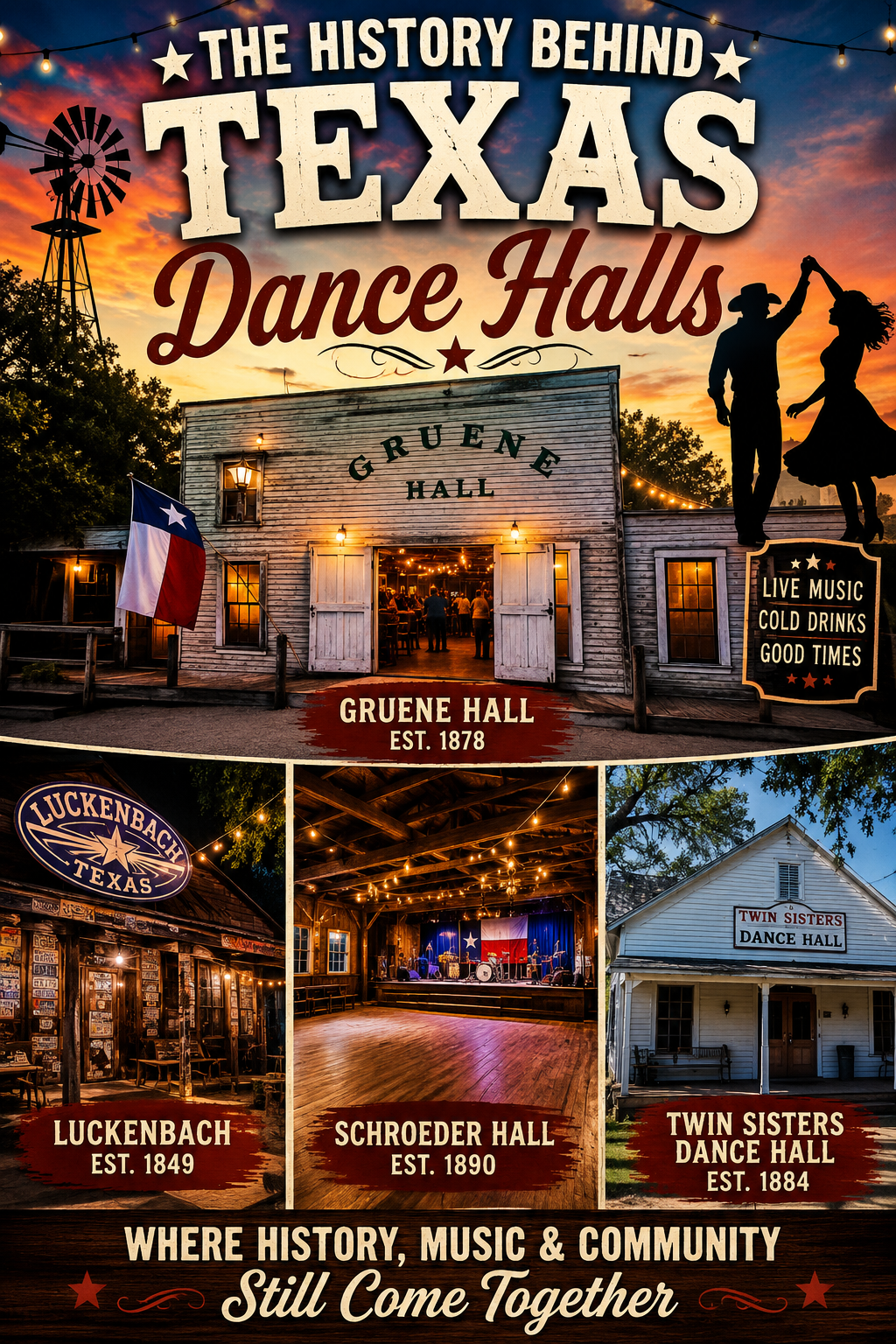
There are few places that capture the spirit of Texas quite like an old dance hall. Long before giant concert venues and flashy entertainment districts took over, these simple wooden buildings were where neighbors gathered to celebrate, socialize, and dance the night away. They were more than just places to hear music. They became the heartbeat of countless communities, bringing together generations through laughter, storytelling, and two-stepping.
I’ve always loved learning about Texas history, and dance halls are one of those traditions that feel uniquely Texan. They tell the story of immigration, family, music, and small-town life all rolled into one. Even today, many of these historic halls continue welcoming visitors who want to experience a piece of living history.
How Texas Dance Halls Began
The roots of Texas dance halls stretch back to the mid-1800s when German, Czech, Polish, and other European immigrants settled throughout Central Texas and the Texas Hill Country. These communities often built gathering halls where families could hold weddings, festivals, church events, and community meetings. Before long, dancing naturally became part of those celebrations.
Unlike today’s entertainment venues, these halls served many purposes. During the week they might host political meetings, school events, or holiday dinners. By Saturday night, however, they transformed into lively dance floors filled with families, neighbors, and traveling musicians.
Many of the earliest dance halls were built almost entirely by local residents using native lumber. Their simple construction, high ceilings, and large open floors created the perfect environment for dancing even during hot Texas summers.
The Music That Shaped a State
Music has always been the soul of every Texas dance hall. Early musicians blended European folk traditions with Mexican influences, cowboy ballads, blues, and later country music. Over time, this unique combination evolved into what many people now recognize as classic Texas music.
Western Swing exploded in popularity during the 1930s and 1940s thanks to legendary musicians like Bob Wills. Often called the “King of Western Swing,” Wills combined fiddle music, jazz, blues, and country into an energetic style that packed dance floors across the state.
As decades passed, dance halls welcomed artists ranging from local fiddle players to future country legends. For many musicians, performing in these halls became an important stepping stone before reaching national fame.
More Than Just Dancing
While dancing brought people through the front door, the halls offered something much deeper. In many rural communities, they served as the social center where families stayed connected throughout the year. Friendships formed, romances blossomed, and countless marriages began with a simple invitation to dance.
Parents often brought their children, making dance halls one of the few places where multiple generations gathered together regularly. Grandparents, parents, and grandchildren could all be found sharing the same dance floor, creating traditions that lasted for decades.
These gatherings also strengthened communities during difficult times. Whether facing droughts, economic hardships, or world wars, neighbors found comfort in spending an evening together with music and familiar faces.
Famous Texas Dance Halls That Still Stand
Several historic dance halls continue operating today, allowing visitors to experience an authentic piece of Texas history.
Gruene Hall, built in 1878, is the oldest continually operating dance hall in Texas. Its weathered wooden floors have welcomed countless performers, including future country superstars before they became household names.
Luckenbach has become almost legendary thanks to its laid-back atmosphere and strong connection to Texas country music. Although it’s a tiny community, its dance hall and outdoor music scene continue drawing visitors from around the world.
Schroeder Hall dates back to 1890 and remains one of the oldest dance halls still hosting live music. Its rustic charm offers a glimpse into what a Saturday night looked like more than a century ago.
Another beloved landmark is Twin Sisters Dance Hall, which continues preserving many of the traditions established by early German settlers.
Why Dance Halls Still Matter Today
Although modern entertainment has changed dramatically, Texas dance halls continue attracting loyal crowds. Some visitors come for the history, while others simply enjoy hearing live music in a setting that feels genuine rather than commercial.
Many dance halls have carefully preserved their original wooden floors, hand-built stages, and historic architecture. Walking inside often feels like stepping back in time, where every scuff mark and weathered beam tells part of the story.
Additionally, these venues help preserve traditional music styles that might otherwise fade away. Young musicians still perform alongside seasoned veterans, ensuring the next generation carries these musical traditions forward.
Related: The History of the Texas Ranger
A Living Piece of Texas Heritage
Texas dance halls represent far more than old buildings. They reflect the state’s rich cultural heritage, blending immigrant traditions, small-town values, and unforgettable music into something entirely unique. Every two-step, fiddle tune, and worn wooden floor tells a story that has been unfolding for well over a century.
Whether you’ve spent countless Saturday nights on a dance floor or have never set foot inside one, visiting a historic Texas dance hall offers a chance to experience Texas as generations before us did. In a fast-changing world, these treasured gathering places continue reminding us that good music, good neighbors, and a little dancing never go out of style.
Lisa Crow contributed to this article. She is a true crime junkie and lifestyle blogger based in Waco, Texas. Lisa is the Head of Content at Gigi’s Ramblings and Southern Bred True Crime Junkie. She spends her free time traveling when she can and making memories with her large family which consists of six children and sixteen grandchildren.