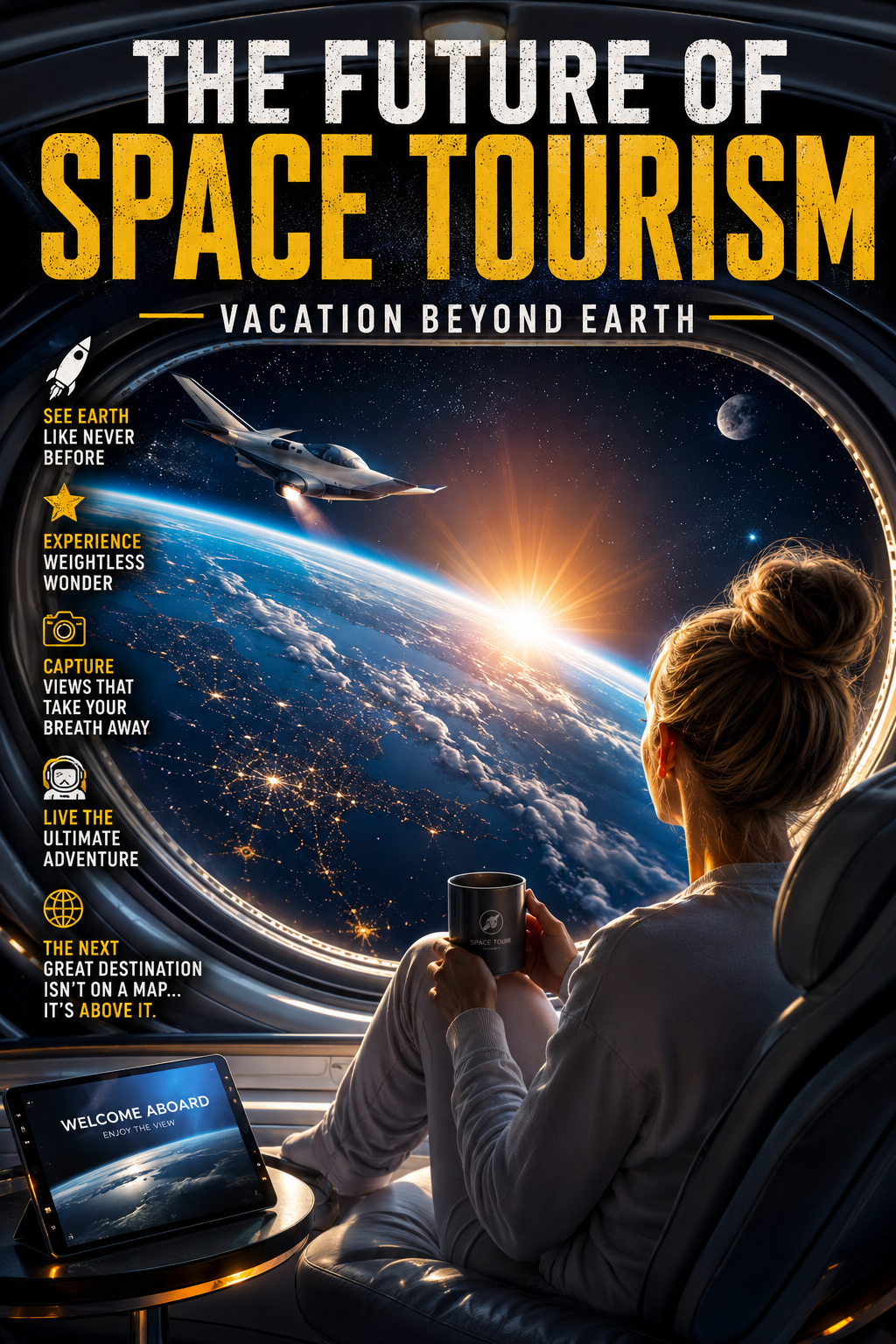
For generations, space travel belonged to astronauts, scientists, and the occasional billionaire with deep enough pockets to fund the adventure. Today, that reality is beginning to change. While a vacation in orbit is still far beyond the average travel budget, commercial spaceflight has moved from science fiction into the real world.
Companies are already sending paying passengers to the edge of space, and plans for hotels, lunar missions, and even trips to Mars continue to gain momentum. The future of tourism may not stop at tropical beaches or mountain resorts. One day, your dream vacation could involve watching Earth rise through the window of a spacecraft.
Space Tourism Is Already Here
Space tourism is no longer just an idea floating around in Hollywood movies. Several private aerospace companies have successfully launched civilians into space, marking the beginning of an entirely new travel industry.
Most current flights are suborbital. That means passengers travel beyond the internationally recognized boundary of space before returning to Earth without completing a full orbit. Although these trips last only minutes, they provide incredible views of our planet and several unforgettable moments of weightlessness.
Orbital tourism is even more impressive. Travelers spend days circling Earth while experiencing life aboard a spacecraft. These journeys remain extremely expensive, but each successful mission helps pave the way for broader public access in the future.
Why People Want to Travel to Space
Space tourism isn’t simply about bragging rights. Many travelers describe the experience as deeply emotional.
Seeing Earth from above offers a completely different perspective. Instead of political borders and busy highways, passengers see one beautiful blue planet surrounded by endless darkness. Astronauts have long described this experience as life changing, often referring to it as the “Overview Effect.”
Others are simply drawn by adventure. Just as people climb Mount Everest or dive into the deepest oceans, some dream of pushing the limits of human exploration. Space represents the ultimate bucket-list destination.
Related: We’re Back in Deep Space and the Internet is Losing Its Mind
What a Space Vacation Might Look Like
Future space vacations will likely offer far more than a quick ride above Earth’s atmosphere.
Imagine spending several days aboard an orbiting hotel where large windows provide breathtaking views every ninety minutes as the station circles the planet. Guests could float through hallways, enjoy specially prepared meals, watch spectacular sunrises and sunsets, and sleep while gently drifting inside specially designed sleeping pods.
Entertainment could include:
- Zero-gravity sports
- Space photography workshops
- Telescope viewing sessions
- Educational science demonstrations
- Virtual reality experiences combined with real views of Earth
Although it sounds futuristic, engineers are already designing concepts that resemble luxury hotels more than traditional spacecraft.
Space Hotels Could Become Reality
Several companies have proposed commercial space stations designed specifically for tourists rather than astronauts.
Unlike today’s government-operated stations, future orbital hotels may include private rooms, restaurants, observation decks, and recreational areas. Artificial gravity, created through rotating sections of the station, could make extended stays more comfortable for visitors.
Construction presents enormous engineering challenges, but advancements in reusable rockets and commercial partnerships continue bringing these ambitious projects closer to reality.
The Cost Will Eventually Come Down
Right now, one of the biggest obstacles is price.
Current space tourism flights cost anywhere from hundreds of thousands to tens of millions of dollars depending on the destination and length of the trip. That puts them far beyond the reach of most travelers.
However, history suggests prices often fall as technology improves. Air travel once seemed like an extravagant luxury reserved for the wealthy. Over time, competition, innovation, and increased demand made flying much more affordable.
The same pattern could eventually happen with commercial space travel. While it may take decades, future generations could view space vacations much the same way we view international cruises today.
Safety Remains the Top Priority
No matter how exciting space tourism becomes, safety must always come first.
Space remains one of the harshest environments humans have ever explored. Extreme temperatures, radiation exposure, high launch speeds, and the challenges of reentry require careful planning and extensive testing.
Passengers will likely undergo training before every flight. Even short missions require travelers to learn emergency procedures, communication systems, and how to function in weightlessness.
As technology advances and companies gain more experience, safety standards will continue improving.
Life Without Gravity
One of the biggest attractions of space tourism is experiencing microgravity.
Simple activities become completely different when gravity disappears. Drinking water, brushing your teeth, sleeping, and even moving from one room to another require new techniques. Instead of walking, travelers gently push themselves through the cabin while floating effortlessly.
Many visitors say the feeling is surprisingly natural after just a short adjustment period. Floating through space offers a freedom unlike anything possible on Earth.
Environmental Concerns
As commercial launches become more common, scientists continue studying their environmental impact.
Rocket launches produce emissions that differ from those generated by airplanes. Researchers are working to better understand how increased launch activity affects Earth’s atmosphere.
Fortunately, many aerospace companies are investing in cleaner fuels, reusable rockets, and more efficient propulsion systems. These innovations could reduce both costs and environmental impacts over time.
Balancing exploration with environmental responsibility will remain an important part of the industry’s future.
Could Families Travel to Space Someday?
It may sound unbelievable today, but many experts believe ordinary families could eventually visit space.
Early commercial flights will likely remain limited to healthy adults who can complete basic physical training. Eventually, improvements in spacecraft design may allow older adults, children, and people with certain physical limitations to participate safely.
Just as commercial aviation evolved from experimental flights into family vacations, space tourism may follow a similar path over the coming decades.
Beyond Earth Orbit
Earth orbit is only the beginning.
Future missions could include flybys of the Moon, lunar hotels, research vacations, or even extended stays on permanent lunar bases. Looking even farther ahead, Mars remains one of humanity’s greatest ambitions.
Although a vacation to Mars won’t happen anytime soon, every advancement in commercial spaceflight brings humanity one small step closer to making interplanetary travel possible.
A New Era of Travel
Space tourism is still in its early days, but its progress has been remarkable. What once seemed impossible is now happening on a regular basis, thanks to rapid advances in technology and growing investment from private companies.
Nobody knows exactly how quickly the industry will grow, yet one thing seems certain. Human curiosity has always driven us to explore places we’ve never been. From crossing oceans to flying across continents, every generation has expanded the boundaries of travel.
The next great destination may not be another country or another continent. It could be the incredible view of Earth from hundreds of miles above the planet we call home.
Lisa Crow contributed to this article. She is a true crime junkie and lifestyle blogger based in Waco, Texas. Lisa is the Head of Content at Gigi’s Ramblings and Southern Bred True Crime Junkie. She spends her free time traveling when she can and making memories with her large family which consists of six children and sixteen grandchildren.