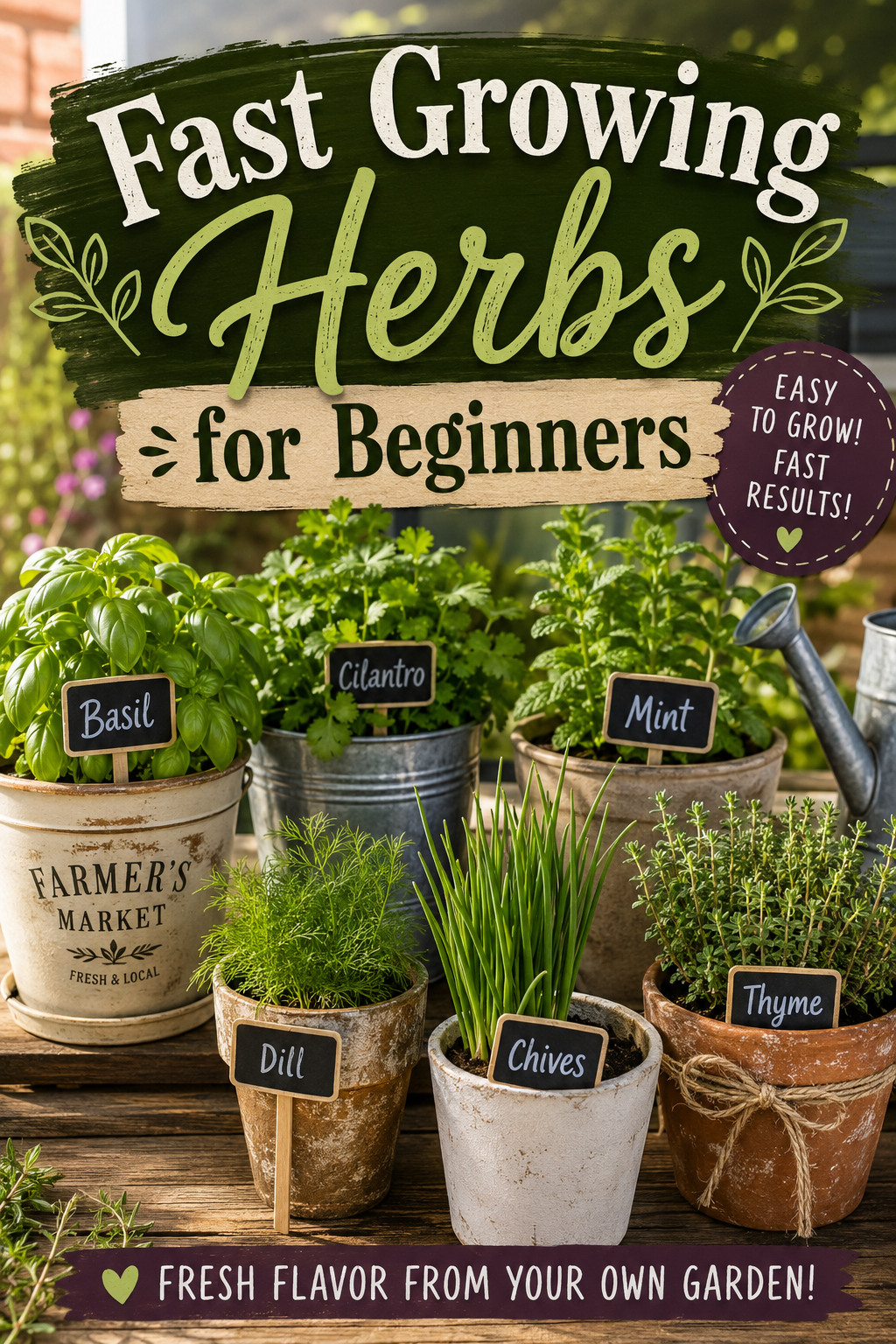
If you’ve ever dreamed of stepping outside to snip fresh herbs for dinner, you’re in luck. Plenty of herbs grow surprisingly fast, even if you’ve never planted a thing in your life. Better yet, many of them thrive in containers, raised beds, or a sunny corner of your yard, making them perfect for beginners who want quick results without a lot of fuss.
One of the best parts about growing herbs is how rewarding they are. Unlike vegetables that may take months before you see a harvest, many herbs can be picked within just a few weeks. Once they get going, they’ll often keep producing throughout the season with just a little care.
Why Herbs Are Perfect for Beginner Gardeners
Starting with herbs helps build confidence because they’re generally forgiving plants. Most don’t require expensive equipment, complicated fertilizers, or years of gardening experience. Give them sunshine, decent soil, and regular watering, and they’ll usually reward you with healthy growth.
Additionally, herbs don’t take up much space. Even if all you have is a small patio, balcony, or sunny windowsill, you can still grow an impressive collection. That makes herbs one of the easiest ways to begin gardening without investing a lot of money.
Basil Grows Like Crazy
If there’s one herb every beginner should grow, it’s basil. Once the weather warms up, basil grows incredibly fast and often becomes bushier each time you harvest it. In fact, regularly pinching off the tops actually encourages even more growth.
Basil loves sunshine and warm temperatures, so don’t rush to plant it until the danger of frost has passed. Keep the soil slightly moist, and you’ll soon have plenty for homemade pesto, pasta dishes, sandwiches, and fresh salads.
Cilantro Gives You a Quick Harvest
Cilantro is one of the fastest herbs to sprout from seed. Many gardeners are harvesting fresh leaves within three to four weeks after planting. That’s hard to beat if you’re looking for quick gratification.
However, cilantro prefers cooler weather. During the hottest part of summer, it tends to bolt and produce flowers instead of leaves. Because of that, many Southern gardeners plant it in early spring and again in the fall for the best harvest.
Dill Practically Takes Off Overnight
Dill grows so quickly that it often surprises first-time gardeners. The feathery foliage appears in no time, and before long you’ll have enough to season fish, potatoes, dips, and homemade pickles.
Since dill develops a long taproot, it’s happiest when planted directly where you want it to grow. Fortunately, it doesn’t ask for much beyond sunshine and occasional watering. If you let a few plants flower, they’ll often reseed themselves for next season.
Chives Keep Coming Back
Chives may not shoot up quite as dramatically as basil, but they’re incredibly dependable. Once established, they continue producing fresh leaves that can be snipped whenever you need them.
Even better, chives are perennial in many areas, meaning they’ll return year after year. Their pretty purple flowers also attract bees and other pollinators, making them a welcome addition to any garden.
Mint Grows Almost Too Well
Mint is famous for growing fast, and that’s not an exaggeration. In fact, many gardeners quickly discover that mint likes to spread everywhere if it’s planted directly in the ground.
For that reason, it’s usually best to grow mint in containers. You’ll still enjoy plenty of fresh leaves for tea, lemonade, desserts, and cocktails without worrying about it taking over your flower beds.
Parsley Is Worth the Wait
Parsley takes a little longer to sprout than some herbs, but once it gets established, it grows steadily for months. It’s one of those herbs you’ll find yourself reaching for almost every day in the kitchen.
Flat-leaf parsley tends to have a stronger flavor, while curly parsley is often used as a garnish. Either variety is easy to grow and appreciates regular harvesting, which encourages fresh new growth.
Oregano and Thyme Are Easy Keepers
Oregano and thyme may not grow quite as explosively as basil or mint, but they’re still excellent choices for beginners. Once established, they’re hardy, drought-tolerant, and require very little attention.
Both herbs thrive in full sun and well-drained soil. As an added bonus, their fragrant leaves are wonderful for seasoning grilled meats, roasted vegetables, soups, and homemade sauces.
Tips to Help Herbs Grow Faster
Healthy herbs grow faster when they’re given the right conditions from the beginning. Most herbs prefer at least six hours of direct sunlight each day, along with well-draining soil that doesn’t stay soggy after watering.
It’s also important to harvest regularly instead of letting plants become overgrown. Snipping stems encourages many herbs to branch out, creating fuller plants and an even larger harvest. Finally, avoid overwatering, since many herbs actually perform better when the soil dries slightly between waterings.
Start Small and Enjoy the Harvest
You don’t need a huge backyard or years of gardening experience to grow fresh herbs. A handful of pots on the porch can provide more than enough basil, parsley, dill, and chives to brighten everyday meals. Before long, you’ll probably find yourself adding more containers because growing herbs is just plain satisfying.
The hardest part is deciding which one to plant first. Fortunately, you really can’t go wrong with any of these fast-growing favorites. With a little sunshine, regular harvesting, and a bit of patience, you’ll be enjoying homegrown herbs long before the season is over.
Lisa Crow contributed to this article. She is a true crime junkie and lifestyle blogger based in Waco, Texas. Lisa is the Head of Content at Gigi’s Ramblings and Southern Bred True Crime Junkie. She spends her free time traveling when she can and making memories with her large family which consists of six children and sixteen grandchildren.