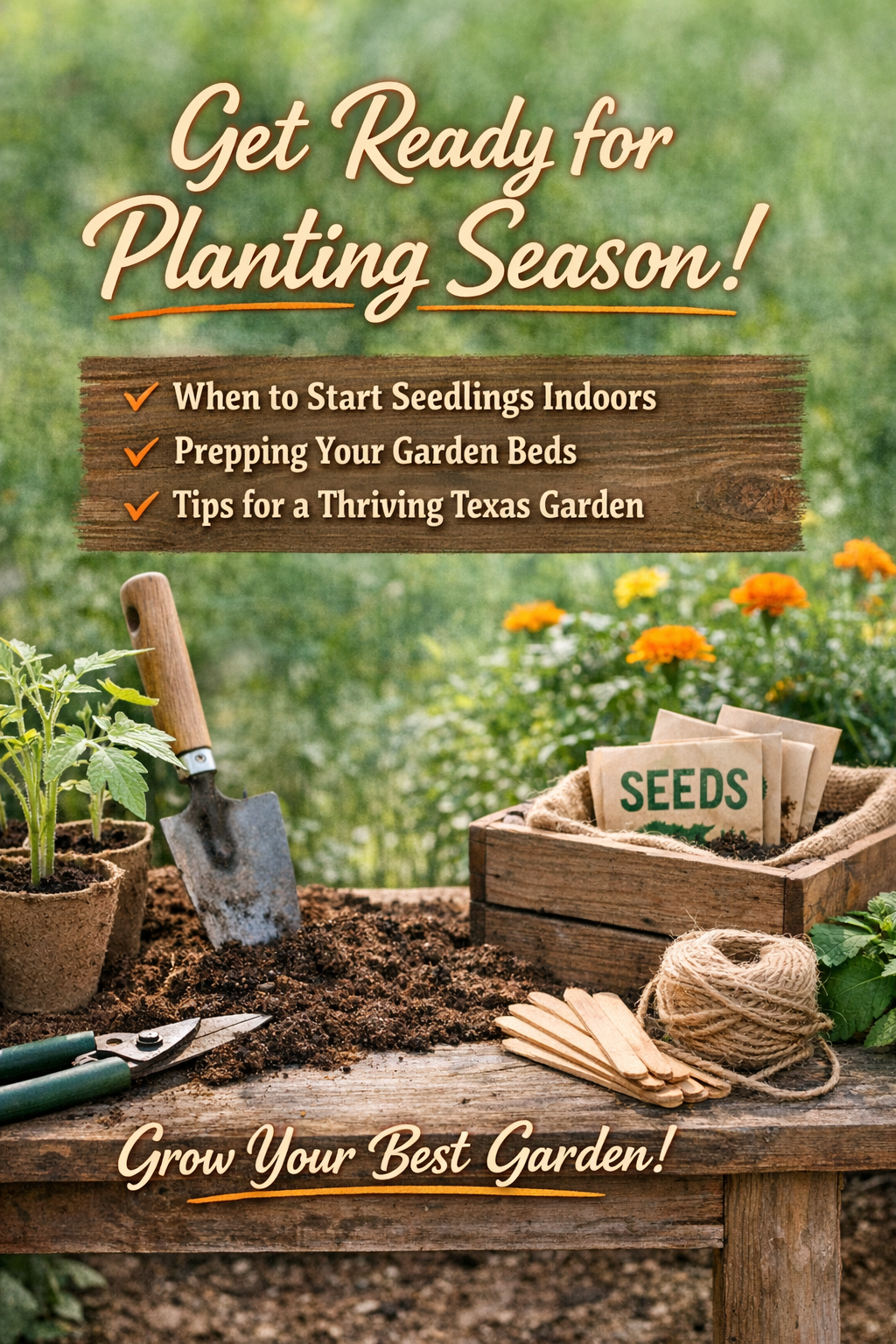
Getting a jump on gardening season starts long before you ever stick a shovel in the dirt. The secret to a lush, productive garden is timing and preparation. When you know when to start your seedlings indoors and how to prep your garden beds ahead of planting time, you set yourself up for fewer problems and better harvests.
Whether you are growing tomatoes, peppers, herbs, or flowers, a little planning now saves you a whole lot of frustration later.
Why Starting Seeds Indoors Matters
Starting seeds indoors gives your plants a head start. Instead of waiting on unpredictable spring weather, you get strong seedlings ready to go the moment the soil warms up.
Indoor starting is especially helpful for slow-growing plants like tomatoes, peppers, eggplants, and many flowers. These plants need weeks to mature before they can handle outdoor conditions.
By the time your neighbors are just planting seeds, you are already putting healthy young plants into the ground.
Related: Planning a More Self-Sufficient Life Through Gardening and Canning
When to Start Your Seedlings Indoors
The timing depends on your last average frost date. Most seed packets list how many weeks before that frost date you should start indoors.
For most areas in Texas and the South, the average last frost falls between late February and mid March. That means most seedlings should be started between mid-January and early February.
Here is a simple guide for common garden plants:
- Tomatoes, peppers, and eggplants: Start 6 to 8 weeks before last frost
- Broccoli, cabbage, and cauliflower: Start 6 to 8 weeks before last frost
- Herbs like basil and parsley: Start 6 to 10 weeks before last frost
- Flowers like marigolds and zinnias: Start 4 to 6 weeks before last frost
- Cucumbers, squash, and melons: Start 3 to 4 weeks before last frost or direct sow later
If you start too early, seedlings become leggy and weak. If you start too late, you lose valuable growing time.
How to Start Seeds Indoors the Right Way
- Use clean containers with drainage holes. Seed starting trays, yogurt cups, and recycled containers all work as long as excess water can escape.
- Use a light seed starting mix, not heavy garden soil. Regular soil holds too much moisture and can cause rot and fungus.
- Plant seeds at the depth listed on the packet. Many small seeds just need to be pressed into the soil and lightly covered.
- Water gently. Mist or bottom water to avoid washing seeds away.
- Place seedlings in bright light. A sunny window is not always enough. Grow lights help prevent tall, skinny plants.
- Keep soil warm. Most seeds like soil around 70 to 75 degrees to sprout.
Hardening Off Before Transplanting
Before seedlings go into the garden, they must be hardened off. This means slowly exposing them to outdoor conditions.
Start by placing them outside in the shade for one to two hours a day. Increase the time and sunlight over a week. This prevents shock and leaf burn.
Skipping this step is one of the fastest ways to kill healthy seedlings.
Related: DIY Gardening: Tips for Starting Your Spring Garden
How to Prep Your Garden Before Planting
Prepping your garden early makes planting season smoother and more productive.
Clean Out Old Debris
Remove dead plants, weeds, and leftover mulch. This gets rid of pests and disease that may have overwintered in your soil.
Test and Improve Your Soil
Healthy soil grows healthy plants. Add compost, aged manure, or organic matter to improve drainage and nutrients.
If your soil is heavy clay, add compost and coarse material to loosen it. If it is sandy, compost helps it hold moisture.
Loosen the Soil
Use a shovel, fork, or tiller to loosen soil at least 8 to 12 inches deep. This helps roots grow strong and deep.
Add Fertilizer
Before planting, mix in a balanced organic fertilizer or compost. This gives seedlings a nutrient boost right when they need it.
Plan Your Layout
Decide where each crop will go. Keep tall plants from shading shorter ones. Group plants with similar watering needs together.
This prevents overcrowding and helps avoid disease.
When Your Garden Is Ready for Planting
Your soil should be workable, not soggy. If you squeeze a handful and it stays in a wet clump, it is too wet. Wait a few days.
Once the danger of frost has passed and the soil is warm, it is time to transplant your seedlings.
Final Thoughts
Starting seeds indoors and prepping your garden ahead of time is the secret to a thriving growing season. It gives you stronger plants, earlier harvests, and fewer problems down the road.
A little work now means you get to enjoy watching your garden flourish instead of scrambling to catch up later.
Lisa Crow contributed to this article. She is a true crime junkie and lifestyle blogger based in Waco, Texas. Lisa is the Head of Content at Gigi’s Ramblings and Southern Bred True Crime Junkie. She spends her free time traveling when she can and making memories with her large family which consists of six children and fifteen grandchildren.