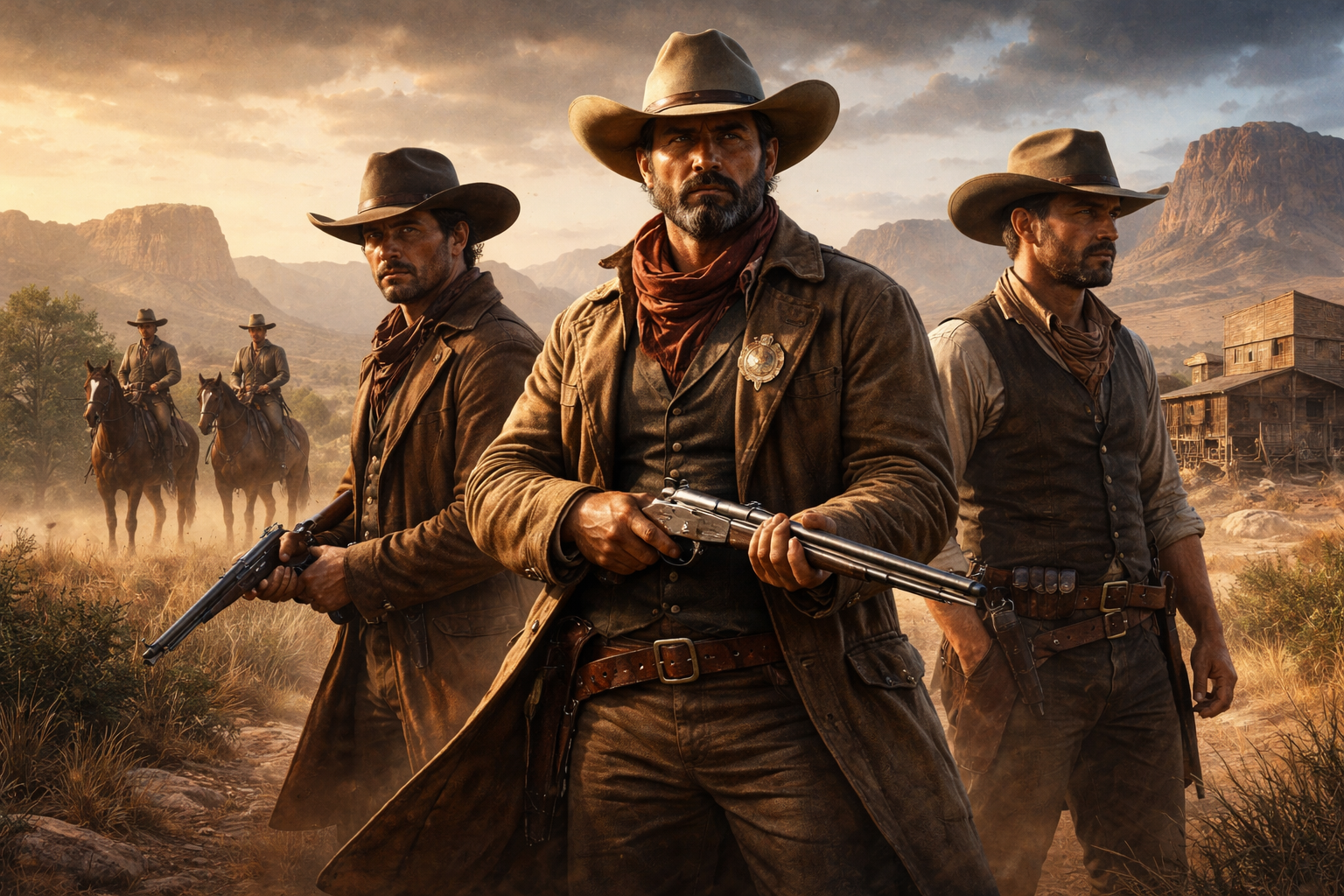
Few law enforcement groups carry the same legendary reputation as the Texas Rangers. Their story is deeply woven into the history of Texas itself. From protecting early settlers on the frontier to investigating modern crimes, the Texas Ranger has evolved into one of the most respected investigative forces in the United States. The history of the Texas Ranger is filled with stories of grit, danger, and determination that helped shape the identity of Texas.
Although the image of the Texas Ranger often brings to mind horseback riders chasing outlaws across dusty plains, their role has changed dramatically over the past two centuries. Today’s Rangers are elite investigators who handle complex cases across the state, yet their roots remain firmly planted in the rugged Texas frontier.
Related: Quick DFW Getaway: Wax Haul, Food & True Crime Stops
The Early Frontier and the Birth of the Texas Rangers
The history of the Texas Ranger began in 1823 when empresario Stephen F. Austin organized a small group of men to protect settlers in Mexican Texas. At the time, the region was wild and dangerous. Communities faced raids, bandits, and constant uncertainty along the frontier.
Austin needed dependable men who could patrol the land and defend settlements. These early Rangers were not formal law enforcement officers. Instead, they were volunteers who supplied their own weapons, horses, and gear. Their job was simple in theory but incredibly dangerous in practice. They rode long distances across harsh terrain to protect families trying to build new lives.
As settlements expanded, the need for organized protection grew. Over time, these small patrol groups developed into what would eventually become the Texas Rangers. Even in those early years, the Rangers built a reputation for toughness and independence.
The Texas Rangers During the Republic of Texas
The Texas Rangers became more organized during the years of the Republic of Texas between 1836 and 1845. After Texas gained independence from Mexico, leaders realized that a stronger frontier defense force was necessary.
During this time, the Rangers began conducting larger patrols and organized campaigns against hostile threats along the borderlands. Many of their missions involved tracking raiders, protecting trade routes, and maintaining order in newly formed towns.
The Rangers’ effectiveness came from their mobility and knowledge of the land. Unlike traditional armies, they traveled light and moved quickly. Their ability to adapt to the terrain gave them an advantage when pursuing outlaws or responding to threats in remote areas.
As a result, the reputation of the Texas Rangers spread far beyond the frontier. Stories of their bravery and relentless pursuit of criminals began to circulate throughout the region.
Related: Texas Ghost Stories You Haven’t Heard a Hundred Times
The Rangers in the Old West
When people think about the history of the Texas Ranger, the Old West era usually comes to mind. During the late 1800s, the Rangers became legendary figures who pursued some of the most infamous criminals of the time.
The Rangers often tracked cattle rustlers, train robbers, and violent outlaws who threatened growing communities. In many cases, they were the only form of law enforcement available in remote areas. Because of this, Rangers were expected to handle everything from murder investigations to large-scale manhunts.
One of the most famous Rangers of the period was Captain John Coffee “Jack” Hays, whose leadership helped transform the force into a more disciplined organization. Hays encouraged Rangers to adopt revolvers and aggressive tactics, which made them far more effective during armed encounters.
Another well-known Ranger was Frank Hamer, who later gained national attention for tracking down the notorious criminals Bonnie Parker and Clyde Barrow in 1934. Their capture helped cement the Rangers’ reputation as relentless investigators willing to go wherever the trail led.
Stories from this era helped build the mythology surrounding the Texas Rangers. Books, newspapers, and eventually movies turned many of these real-life lawmen into larger-than-life figures.
Modernization of the Texas Rangers
As Texas continued to grow, the role of the Texas Ranger changed as well. By the early 1900s, the state began transforming the Rangers into a more structured law enforcement organization.
In 1935, the Rangers were officially placed under the newly created Texas Department of Public Safety. This change helped standardize training, procedures, and oversight. The Rangers moved away from their frontier patrol roots and toward investigative work.
Modern Texas Rangers specialize in major criminal investigations. They often assist local police departments with difficult cases such as homicides, public corruption, officer-involved shootings, and organized crime.
Although their duties have changed, the selection process remains extremely demanding. Becoming a Texas Ranger typically requires years of law enforcement experience and a proven investigative track record.
The Texas Rangers in Popular Culture
The legend of the Texas Ranger has had a huge impact on American culture. Television shows, movies, and books have helped keep their image alive for generations.
Perhaps the most famous modern portrayal came from the television series Walker, Texas Ranger, starring Chuck Norris. The show introduced the Rangers to a new audience and reinforced the image of Rangers as fearless defenders of justice.
Long before television, however, dime novels and western films helped shape the public’s perception of the Rangers. Many of these stories exaggerated their exploits, turning real Rangers into near-mythical heroes.
Even with the dramatization, the real Texas Rangers continue to command respect in the law enforcement community.
The Legacy of the Texas Rangers
Today, the Texas Rangers remain an elite investigative division within the Texas Department of Public Safety. While their work now involves forensic evidence, digital investigations, and multi-agency cooperation, the spirit of the Texas Ranger still reflects its frontier origins.
Their history represents the evolution of Texas itself. What began as a small volunteer patrol protecting scattered settlements eventually became one of the most recognized law enforcement organizations in the country.
The history of the Texas Ranger is not just about chasing outlaws or riding across the frontier. It is a story of adaptation, resilience, and a deep connection to the state they serve. For nearly two centuries, the Texas Rangers have stood as a symbol of Texas law and order, carrying forward a legacy that continues to grow with each generation.
Visit the Texas Ranger Museum right here in Waco!
Lisa Crow contributed to this article. She is a true crime junkie and lifestyle blogger based in Waco, Texas. Lisa is the Head of Content at Gigi’s Ramblings and Southern Bred True Crime Junkie. She spends her free time traveling when she can and making memories with her large family which consists of six children and fifteen grandchildren.