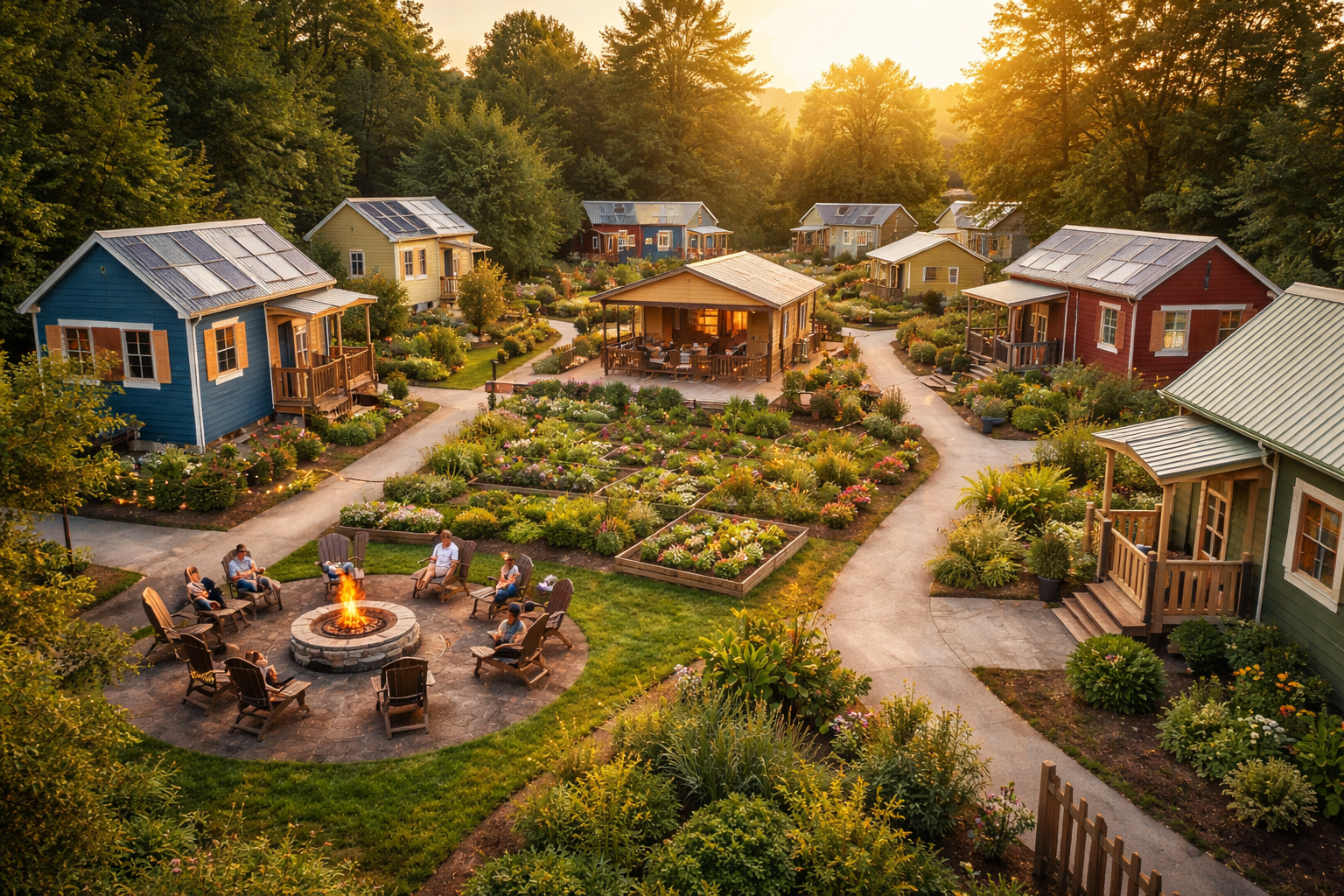
Drive through parts of Texas, Florida, or even the Carolinas right now and you might notice something different. Instead of rows of oversized houses, you’ll see clusters of small, well-designed homes gathered around shared spaces. These are tiny home communities, and they are spreading faster than most people realize.
What started as a niche lifestyle has quietly turned into a full-blown housing movement. And honestly, it’s not hard to see why.
What Exactly Is a Tiny Home Community?
At its core, a tiny home community is a planned neighborhood made up of small homes, usually between 100 and 400 square feet, built around shared amenities and common areas.
But it’s not just about smaller houses. It’s about a completely different way of living.
Instead of every homeowner needing their own everything, these communities often share amenities such as gardens, workspaces, laundry areas, and even social gathering spots. That shift alone changes how people interact with both their space and their neighbors.
Why They’re Suddenly Everywhere
This isn’t happening by accident. Several big shifts are pushing tiny home communities into the spotlight.
Rising Housing Costs Are Forcing Change
Let’s be real, traditional homeownership has gotten out of reach for a lot of people. Between high interest rates and skyrocketing prices, many folks are looking for alternatives that don’t involve a 30-year financial chokehold.
Tiny homes offer a way out of that. Many owners either have no mortgage or significantly lower monthly costs, which is a massive draw.
Communities take that one step further by making land and utilities more affordable through shared systems.
People Are Craving Simpler Living
There’s been a noticeable shift in mindset lately. People are starting to question whether bigger really means better.
Tiny home communities tap into that desire to simplify. Less space means less clutter, fewer expenses, and honestly, less stress. But instead of isolating yourself in the middle of nowhere, you’re surrounded by people who chose the same lifestyle.
Remote Work Changed Everything
Once people weren’t tied to offices anymore, location stopped mattering as much. Suddenly, living in a smaller, more affordable community became way more realistic.
In fact, with a significant portion of the workforce now working remotely, many are choosing lifestyle over commute for the first time.
That’s opened the door for these communities to grow in both rural and suburban areas.
Built-In Community Is a Huge Selling Point
Here’s something people don’t always talk about: a lot of folks feel isolated in traditional neighborhoods.
Tiny home communities flip that on its head. Shared spaces naturally create interaction, whether that’s a community garden, fire pit nights, or just running into your neighbor more often.
It’s kind of like bringing back that old-school neighborhood feel…without the oversized houses.
Read More: Spring Porch Styling on a Budget
What Living There Actually Looks Like
These communities aren’t one-size-fits-all. Some feel like peaceful retreats out in nature, while others are more like modern, walkable neighborhoods.
Many newer developments are intentionally designed with:
- Walkable layouts instead of car-heavy streets
- Central gathering areas
- Shared kitchens or coworking spaces
- Eco-friendly systems like solar power
In fact, many newer communities are focusing on shared amenities rather than on bigger homes, giving people access to more without increasing their personal space.
So instead of upgrading your house, you’re upgrading your environment.
It’s Not Just About Lifestyle—It’s Solving Real Problems
Tiny home communities aren’t just trendy. They’re being used as real solutions in some cases.
Affordable Housing
Cities are starting to recognize tiny homes as a way to ease housing shortages. Some areas are even offering incentives to build them as rental units or workforce housing.
Homelessness Solutions
In some parts of the country, tiny home villages are being developed to provide stable housing for people experiencing homelessness. These communities offer not just shelter, but structure and support.
Retirement Living
There are even tiny home communities designed specifically for retirees, offering affordability along with a strong sense of community. Some developments already have waitlists, which tells you everything you need to know about demand.
The Downsides Nobody Likes to Talk About
Now, it’s not all perfect.
Zoning laws are still one of the biggest headaches. Many areas simply weren’t designed to accommodate tiny homes, which can make it difficult to build or even legally live in one.
There’s also the lifestyle adjustment. Downsizing sounds great until you realize just how much stuff you have to get rid of. And living close to neighbors? That’s either a perk…or a dealbreaker depending on your personality.
Where This Is All Headed
Tiny home communities are moving from experimental to mainstream faster than expected.
With housing costs continuing to climb and more people rethinking how they want to live, these communities are starting to look less like an alternative and more like a smart, practical option.
They’re not about giving something up. They’re about choosing what actually matters and building a lifestyle around it.
And judging by how fast they’re spreading, a whole lot of people are starting to agree.
Lisa Crow contributed to this article. She is a true crime junkie and lifestyle blogger based in Waco, Texas. Lisa is the Head of Content at Gigi’s Ramblings and Southern Bred True Crime Junkie. She spends her free time traveling when she can and making memories with her large family which consists of six children and sixteen grandchildren.